https://https://au.trip.com/toplist/tripbest/poi/shanghai-popular-museums-10230000002011


Best things to do

Annual
2026 Global 100
Annual
2026 Asia 100
Trip.Best Popular Museums in Shanghai
Shanghai Museum
4.6
/5
9426 reviews
8.2
Free

Based on 4,866 reviews

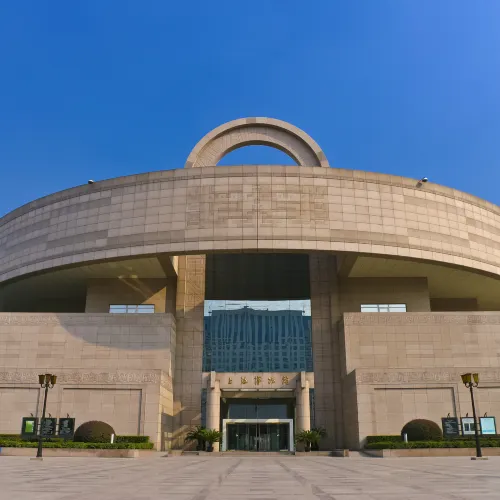
The Shanghai Museum, located in the bustling heart of Shanghai, is a large, comprehensive museum. It houses a vast collection of precious historical artifacts and works of art, ranging from ancient bronzes to modern paintings and calligraphy. The museum not only showcases the profound depth of Chinese culture but also reflects the historical evolution of Shanghai.
People's Square Area /Shanghai
296m from downtown Shanghai
Highlights: Located on the southern side of People’s Square, the Shanghai Museum is a large and comprehensive museum dedicated to showcasing Chinese art and history. Originally founded in 1952, the museum's collection has expanded over the years as the institution played an important role in saving historic artifacts during tumultuous periods in Chinese history such as the Great Leap Forward and the Cultural Revolution. The Shanghai Museum's current building is a distinguished architectural combination of traditional culture and modern spirit. The museum's ten galleries dedicated to its permanent collection give visitors a broad perspective on the many facets of Chinese history and culture. As one of the premiere history museums in China, the Shanghai Museum is a true culture treasure and well worth a visit.
Shanghai Natural History Museum
4.8
/5
9093 reviews
6.9
Based on 413 reviews

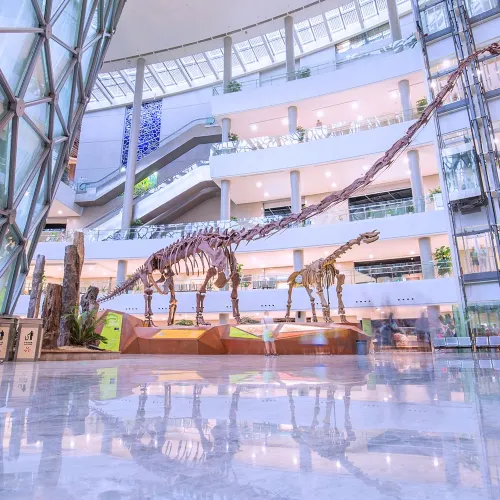
The Shanghai Natural History Museum has many exhibits, primarily the dinosaur exhibition. It covers the history of dinosaurs and dinosaur fossils from various regions. Dinosaur fossils from various historical periods offer a wealth of information. There are also other animal and plant exhibits, which I highly recommend visiting.
Jing'an District/West Nanjing Road /Shanghai
1.2 km from downtown Shanghai
Highlights: Shanghai Natural History Museum is located in Jing'an Sculpture Park. The museum is housed in a purpose-built space designed to resemble a nautilus shell. Natural elements are depicted across the building’s façades. The 44,517 square meter exhibit space offers visitors the opportunity to explore the natural world. On display are more than 10,000 artifacts from all seven continents. Visitors can learn about the history of the development of the universe, observe various animals, and excavate fossils with their own hands. The Shanghai Natural History Museum is an excellent choice for a family outing.
Shanghai Auto Museum
4.7
/5
6041 reviews
6.4
From VND 203704

Based on 64 reviews

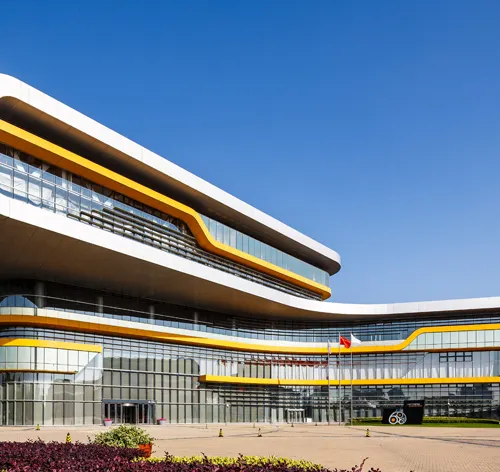
Highly recommended this place. It is a large collection of unique car.
Jiading Xincheng /Shanghai
29.3 km from downtown Shanghai
Highlights: The Shanghai Auto Museum covers an exhibition area of approximately 12,000 square meters, divided into sections including the History Hall, Treasure Hall, Technology Hall, Children's Auto Playland, Temporary Exhibition Area, and the Jia Auto Study Business Lounge. It currently displays nearly 100 classic antique cars, featuring around 50 domestic and international automotive brands, spanning over 130 years of automotive history. By integrating exquisite exhibits, precious historical materials, and rich multimedia interactions, the museum offers both family-friendly entertainment and aesthetic lifestyle experiences. It creates a multifunctional, one-stop automotive cultural leisure space for visitors while providing an excellent platform for display and exchange among domestic and international automakers, cultural institutions, and private collectors.HISTORY PAVILION (1st floor)Arranged chronologically, the history hall integrates key stages of automotive development into 9 themed exhibition areas. Through classic representative vehicles and introductions to significant events, it showcases milestones in global automotive progress, reflecting how the evolution of cars has profoundly impacted human society.Collection Pavilion (2nd Floor)The exhibition showcases nearly 40 classic car models from the late 19th century to the 1980s, along with a series of fueling equipment and daily utensils, vividly illustrating humanity's inseparable connection with modern automobiles. Visitors can appreciate the marks of time and the brilliance of technology and art.MAGIC MOTOWN Modu Children's Car Playground (4th Floor)Welcome aboard the time-traveling train to "Motor City," a dreamy car-themed wonderland designed just for kids. This immersive parent-child experience offers interactive spaces for families with children aged 2–10 to explore the world together.HOME STUDY Wo Jia Auto Study Room (5th Floor))It features diverse functional areas including parent-child reading, automotive culture classes, and research material lending. The bright environment design and comfortable seating provide a relaxing space for readers seeking quiet reading time.
Shanghai Museum East
4.8
/5
159 reviews
6.1
Free

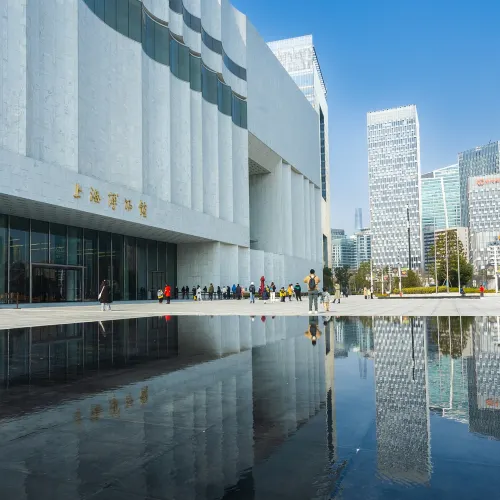
An excellent museum. It's large, with modern facilities, and the low-reflective glass used in the display cases makes it easy to take clear photos even with a mobile phone. The artifacts in each exhibition hall, as well as the digital exhibition hall, are very beautiful; the cultural and creative shops offer a wide variety of exquisite products; the special exhibitions in the China Eastern Airlines and Guangming exhibition halls are particularly精彩纷呈 (splendid and diverse); and the unique policy of being open on Mondays and closed on Tuesdays is very convenient.
Pudong New International Expo Center/World Expo Area /Shanghai
6.3 km from downtown Shanghai
Highlights: The Shanghai Museum has a collection of bronze artifacts from various periods since the Xia Dynasty. Many of them are national treasures with a long history of transmission and numerous records, forming a collection that features a complete system, a wide range of categories, and many fine products.The "Ancient Chinese Bronze Museum" in the East Hall is the sixth exhibition reconstruction in 50 years. It will present the most complete exhibition of ancient Chinese bronzes at home and abroad. The current exhibition features more than 500 exhibits, reflecting the occurrence, development and evolution of ancient Chinese bronzes over a period of 3,600 years from the late Xia Dynasty in the 18th century BC to the mid-Qing Dynasty in the mid-19th century AD.The exhibition hall is based on the development history of Chinese bronze craftsmanship and is divided into seven sections: the embryonic period, the nurturing period, the heyday, the transformation period, the renewal period, the integration period, and the retro period. The exhibits fully demonstrate the characteristics of bronze craftsmanship in different periods and jointly show the splendid splendor of Chinese bronze art. There is also a bronze production technology section, which vividly shows how the ancient working people created the splendid Chinese bronze culture with their amazing wisdom and dexterous hands.Compared with the People's Square building, the bronze exhibition hall in the East Hall has been adjusted and upgraded in terms of section structure, section content, unit description, instrument description, and exhibits.
Shanghai Film Museum
4.7
/5
2935 reviews
5.8
From VND 222223
Based on 27 reviews

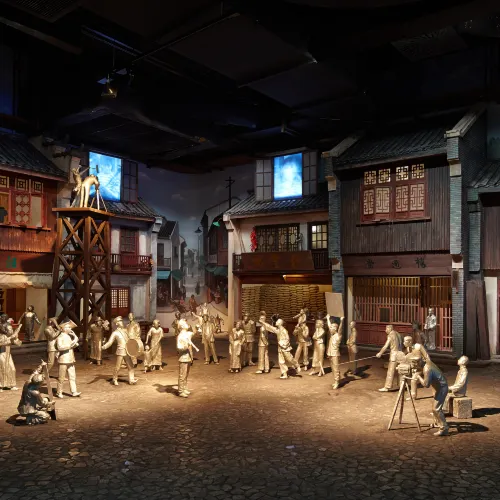
You can learn about the history of Chinese film development. There are many precious images and line drawings of the older generation of filmmakers. It is worth going to see. There were not many people during the National Day holiday. The facilities in the exhibition hall are relatively thin compared to many museums in Shanghai. I hope it can be updated.
Xujiahui District /Shanghai
5.9 km from downtown Shanghai
Highlights: Located in Shanghai’s trendy Xuhui District, the Shanghai Film Museum is a 15,000 square meter exhibition combining interaction, observation, and experience to give visitors a sense for film history and the film-making process. The museum’s several floors each feature a different theme. There is an exhibit on famous figures in cinematic history, a detailed look at how films are made, and an exhibit chronicling major milestones in Shanghai’s film history. Overall this is an interesting museum for film lovers and those who enjoy a good museum.
Shanghai Museum of Glass
4.4
/5
1917 reviews
5.4
From VND 222223
Based on 38 reviews

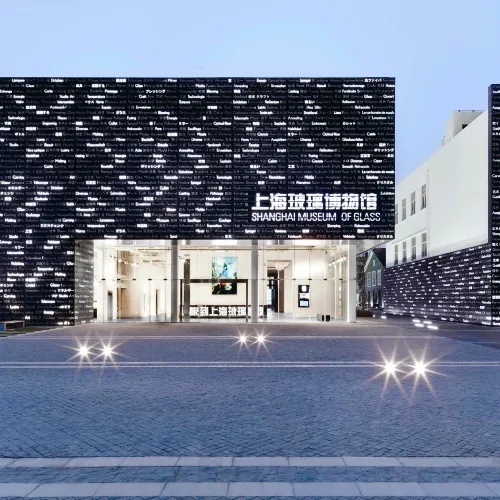
I've been to the Glass Museum several times, and each time I've noticed its progress, which is fantastic. This time, I took my kids to see the exhibition. The exhibition was well-organized, with interactive displays that blended science with art, ensuring both adults and children would have a great time. This time, I discovered several new glass DIY projects. I tried hot-blowing, and the master technicians supervised me one-on-one, ensuring safety and patient instruction. The kids had a blast. The lampwork techniques also made me eager to try them, but the procedures are quite complex and delicate, making them less child-friendly. I'll try them myself next time. The maze was also fun, and even adults found it fascinating and engaging. The DIY projects are a bit pricey, so I decided to just spend the money and experience it.
Baosteel Industrial Park /Shanghai
12.7 km from downtown Shanghai
Highlights: The Shanghai Museum of Glass sets "innovative iteration" as its standard, creating a high-quality visitor experience and making it a cultural and lifestyle destination that inspires imagination and aspiration. The permanent exhibition at Shanghai Museum of Glass underwent a comprehensive upgrade during the May Day holiday in 2024. The upgraded exhibition now includes Hall 1 "Science, History & Technology", Hall 2 "Art", Hall 3 "The World of Glass", and Hall 4 "NXT Virtual Reality Lab", offering diverse experiences for visitors of all ages. It showcases the limitless possibilities of glass while pioneering a new museum lifestyle. The Children's Glass Museum is the first glass-themed, parent-child cultural destination in Shanghai and even China, specifically designed for children. It is dedicated to providing an engaging interactive space for knowledge, culture, and art for children aged 4–12. The new Children's Glass Museum 2.0 is a contemporary art and design museum where curious kids (and their parents) can explore and learn more about this versatile material. Combining novel creativity, fun design, and an edutainment concept, it opens the door to an imaginative glass world for children. Here, they can freely wander through a wonderful world of their own, not only finding joy but also inspiring them to cultivate an independent spirit of exploration, discovery, and creation. The Hot Glass Show is dedicated to breaking traditional exhibition and performance models, interpreting the inheritance and innovation of glass craftsmanship in a highly dramatic way. The extreme sensation of glass and its unpredictable qualities will be fully presented in various captivating ways. Unlike traditional hot glass making demonstrations in glass museums, the Hot Glass Show breaks tradition by combining superb glassmaking techniques with artistic theatrical performances, sound, light, and electricity, showcasing the extraordinary aspects of hot glass craftsmanship to the audience. Currently, Shanghai Museum of Glass has developed two Hot Glass Show performances: "Dream" and "Wanderer." The Glass Maze is inspired by one of the world's oldest games and reimagined into a unique design experience across its 575-square-meter space. This maze fully utilizes the material properties of glass and mirrors, showcasing refraction and reflection in a visually stunning way to create a surreal, "endless" psychedelic space. Enhanced by carefully designed lighting and music, the maze elevates the thrill of the game, while the challenge of finding geometric checkpoints adds an extra layer of exploration. Please stay safe in the maze—remain calm, stay engaged, and embrace bold attempts. Completing the maze challenge promises a full day of surprises and joy! DIY handicraft courses cover ten mainstream glass manufacturing techniques. Both adults and children can find the joy of hands-on creation here. The glass-making DIY courses offered by the museum include lampworking, blowing, fusing, stained glass, painting, mosaics, and beading, among other courses of varying difficulty.
World Expo Museum
4.7
/5
648 reviews
5.2
Free

Shanghai Exhibitions | The free Ancient Greece exhibition ends on the 26th of this month! Don't miss it if you have two days left! This exhibition is jointly presented by the Shanghai World Expo Museum, the Ministry of Culture of the Hellenic Republic, the Hunan Museum, the Nanjing Museum, and the Capital Museum. It features 270 rare exhibits from 14 Greek cultural institutions, including gold, bronze, pottery, sculpture, and more. The exhibition will present a panoramic view of ancient Greek civilization through archaeological evidence. It's like embarking on a time-traveling exploration of ancient Greece, a journey through millennia of art. Don't miss it!
Dapuqiao Area /Shanghai
4.1 km from downtown Shanghai
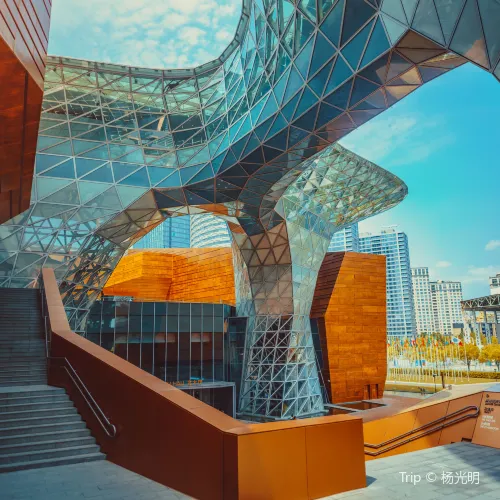
Highlights: The World Expo Museum is dedicated to promoting understanding about the mission and values of the World Expos. It is located in Shanghai’s Huangpu District across the Huangpu River from Expo Park. The World Expo Museum is tasked with recreating the real atmosphere of Expo for visitors in a proactive, creative, and interactive display manner, and realizing the digital display of the exhibits by applying information technology, multimedia technology, network technology, and other high-tech means. In addition, the museum’s futuristic design make it an attractive building for those interested in architecture.
Shanghai Postal Museum
4.7
/5
770 reviews
5.1
Free

Based on 52 reviews

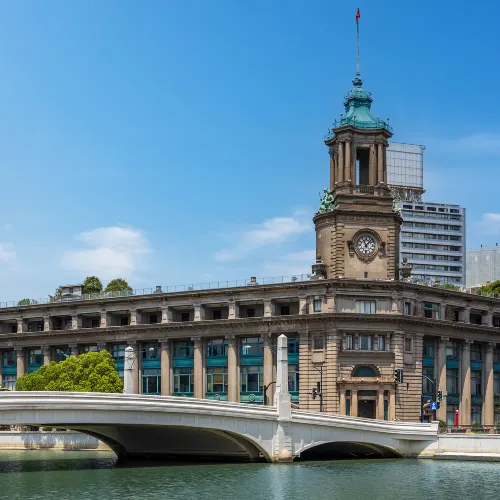
Built in 1924, the Shanghai General Post Office building boasts a magnificent granite facade, a stained-glass dome, and a clock tower. Its precious postal collections range from Qin Dynasty clay seals to modern postal items, including the world's first postage stamp, the "Penny Black," and China's first set of stamps, the "Large Dragon Stamps." The rooftop garden, the best viewing platform, offers breathtaking panoramic views of the Suzhou Creek and the Lujiazui skyline, making it an excellent spot for photographing the Bund and Pudong.
The museum is free to the public and currently does not require reservations. This is remarkably convenient compared to other places on the Bund, where advance booking is often essential and tickets are frequently sold out.
The Shanghai Postal Museum is not only a window into the century-long history of China's postal service but also a place where you can simultaneously appreciate the beauty of architectural art and the charm of the city.
The North Bund Area /Shanghai
1.9 km from downtown Shanghai
Highlights: Shanghai Post Museum is located on the north bank of Suzhou River, in the Shanghai General Post Office Building. In this historic old building, you will see an interesting train carriage post office and various interesting old mailboxes and mailboxes, and you can also learn about the development history of the postal service, which is especially eye-opening for young people. The General Post Office Building was built in 1924. As soon as you enter the gate, you will see Roman-style columns, spiral staircases, and gorgeous chandeliers hanging on the roof, all of which are full of European architectural styles. The whole building is in the shape of "U", and the atrium on the ground floor displays the postal carriages of the Qing Dynasty, the first postal car purchased in 1917, the first regular air mail plane, and the post office of the "action mail car" train carriage. Model, you can also see the scene of the Qing Post Office. The second floor is a spacious postal hall, which is divided into four exhibition halls, telling the history of postal development in ancient and modern China and abroad. You can see various old mailboxes and mailboxes with peculiar appearances. The treasure hall also displays many rare stamps, such as Stamp treasures such as "Penny Black", "Dragon Stamp" and "Green Matchmaker". Here, children can simulate writing letters and experience the feeling of delivering express in the old post office. The fifth floor of the building is a roof garden. There is a baroque clock tower in the southeast corner. Standing on this viewing platform, you can enjoy the scenery of Suzhou River and the beautiful scenery of both sides of the Pujiang River. It is very suitable for taking pictures.
1


About
Payment methods
Our partners
Copyright © 2025 Trip.com Travel Singapore Pte. Ltd. All rights reserved
Site Operator: Trip.com Travel Singapore Pte. Ltd.
Site Operator: Trip.com Travel Singapore Pte. Ltd.