Things to do in Changji Prefecture
Explore top experiences
Top 10 attractions in Changji Prefecture


Tianshan Mountains
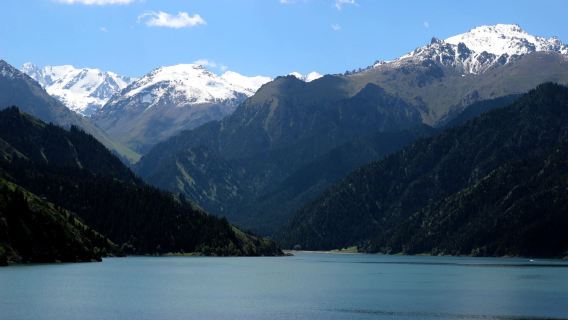
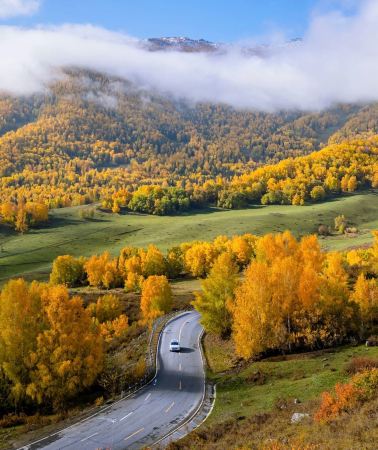
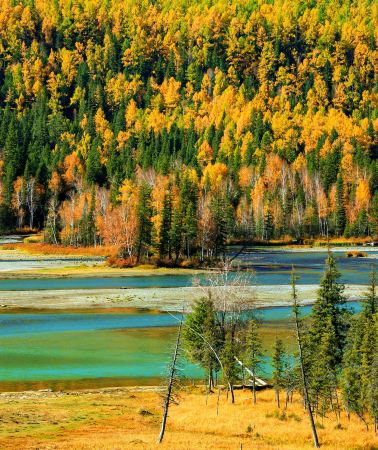
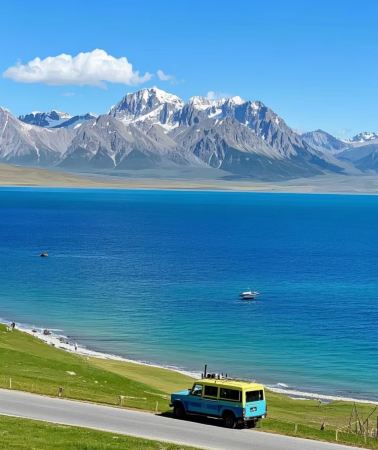
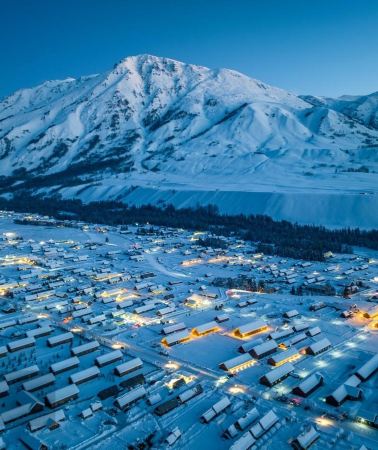
The Tianshan Mountains are a massive mountain range spanning central Asia, stretching over 2,500 km. The main peak, Tomur Peak, has an altitude of over 7,400 m, and the summit is covered in snow all year round. The Ili River, as well as the Syr Darya and Chu rivers in Central Asia, all originate from this mountain range. From the grassland pastures at the foothills, to the spruce forests on the mountainsides, and up to the glaciers and snow-capped peaks at higher altitudes, locals often use the phrase "four seasons in one mountain" to describe the vertical landscape here. The terrain here is rugged, gradually transitioning from the foothills to high-altitude areas, forming natural landscapes with distinct vertical variations, such as forests, grasslands, alpine lakes, and glaciers.Fukang · 33.3km from downtown

Gurbantunggut Desert
The Gurbantunggut Desert covers an area of approx. 48,800 sq km and is one of the few sand seas among China's eight major deserts dominated by fixed and semi-fixed sand dunes. Most of the sand dunes here are anchored by desert vegetation such as saxaul and white saxaul, so it does not look like a vast expanse of pure yellow sand, but rather a vast wilderness where sand dunes and shrubs intermingle. Unlike the barren deserts in one's imagination, the water conditions here are relatively good, and each season has its own highlights: in winter, there is stable snow cover, and the snow outlines the undulating curves of the sand dunes; after the snow melts in spring, ephemeral plants like *Chorispora bungeana* and *Isatis violascens* complete their germination, flowering, and seeding in just a few weeks, decorating the rolling sand dunes like a carpet covered with small flowers, presenting a rare desert blooming scene; in summer, shrubs like saxaul spread their greenery, bringing another kind of vitality. Little known is that the hinterland of this desert also hides the "Eurasian Pole of Inaccessibility," which is more than 2,000 km away from the coastline.Fukang · 48.5km from downtown

S101 Hundred-Mile Danxia Viewing Platform
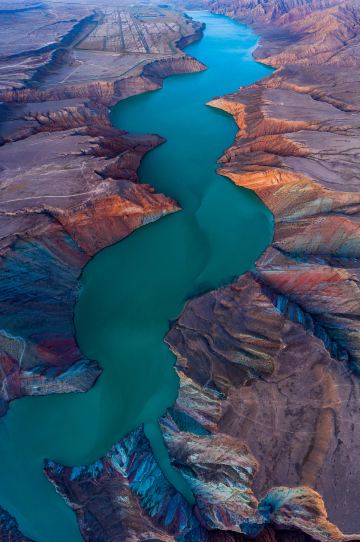
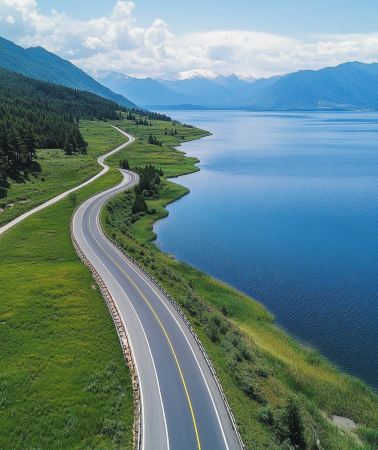
S101 Baili Danxia Observation Deck is located in Xinjiang, in the unique Danxia landform area, attracting many tourists with its magnificent natural scenery. The Danxia landform here is famous for its colorful hills and peculiar rock forms, especially at sunrise and sunset, when the sun shines on the mountains, presenting a rich color change, which is breathtaking. The observation deck provides an ideal view, where tourists can overlook the vast Danxia landform and feel the uncanny workmanship of nature. In order to better appreciate the scenery, tourists can bring binoculars and cameras to capture this magnificent natural painting. There are trails around the observation deck for tourists to explore on foot and experience the unique charm of the Danxia landform up close. The observation deck is about a few hours' drive from nearby cities. It is recommended to drive there by yourself so that you can arrange your itinerary flexibly. Whether you are a photography enthusiast or a nature explorer, this is a destination worth visiting.Hutubi · 55.5km from downtown

The Xinjiang Museum
The Xinjiang Museum is a comprehensive autonomous region-level museum in Xinjiang, located in downtown Urumqi. The building was fully unveiled in 2022 following renovation and expansion, with an architectural floor plan shaped like the Chinese character "he" (union). The museum's collection is noted for its textiles, paper documents, painted clay sculptures, and ancient mummy specimens. Permanent exhibitions include the "Exhibition of historical relics of Xinjiang," "The dead across a millennium—exhibition of ancient mummies in Xinjiang," "Treasures of the vast sea—exhibition of exquisite ancient costumes in Xinjiang," and "Historical records of China—exhibition of unearthed documents in Xinjiang." The main exhibition halls are concentrated on the second floor, while the third floor features special exhibitions such as musical instruments of the Silk Road. The museum has two signature highlights. First is the Han dynasty brocade armguard unearthed from the Niya ruins in Hotan, inscribed with the phrase "Five stars rise in the east, benefiting China," interspersed with cloud and animal motifs. This artifact is considered one of the masterpieces of Han dynasty brocade craftsmanship and is listed among China's prohibited overseas exhibition relics. Second is the mummy display: thanks to Xinjiang's arid climate, ancient corpses have been preserved for millennia without decay. Among them, the 3,800-year-old "Beauty of Loulan" is particularly famous. The same hall also displays the "Princess of Xiaohe" and the remains of General Zhang Xiong, a high-ranking military officer from the Gaochang Kingdom. Such permanent exhibitions are quite rare in domestic museums. You can start your visit with the historical artifacts exhibition on the second floor, which traces thousands of years of Xinjiang's history in chronological order, from the pre-Qin period through the Han, Wei, Jin, Sui, and Tang dynasties, to the Song, Yuan, Ming, and Qing dynasties. The exhibition hall covering the period from the Han to the Sui and Tang dynasties features a relatively concentrated collection of treasures. In the clothing exhibition, the red wool robe with human, animal, and tree patterns from the Yingpan cemetery displays a Hellenistic artistic style. The painted wooden figurine of the Heavenly King is carved and assembled from over thirty pieces of wood, with even the teeth being removable. The Old Uyghur "Maitreya-samiti-nataka" in the literature exhibition is also worth a close look. If you are sensitive to the subject of mummies or are visiting with children, you may want to check the exhibition content in advance and plan accordingly. The museum is a modern three-story building that also incorporates Xinjiang's architectural styles such as arched windows and domes, giving it distinctive features. It houses several permanent exhibition halls. The first floor features the Xinjiang ethnic customs exhibition and the ancient historical relics exhibition of Xinjiang. The second floor is divided into left and right sections: the left side contains the historical textiles exhibition hall and the "Forever with the Motherland" themed exhibition, while the right side displays ancient mummies and a white jade exhibition hall. Additionally, the museum frequently hosts temporary exhibitions and displays, which are worth visiting if available. The Xinjiang ethnic culture exhibition hall is located on the first floor, showcasing the folk customs of 12 major ethnic groups in Xinjiang, including the Uyghur, Kazakh, Mongolian, and Xibe peoples. Visitors can see displays of their musical instruments, daily necessities, yurts, and houses, as well as characteristic clothing like hats and scarves, most of which feature vibrant colors, embodying the distinctive ethnic charm of Xinjiang. A notable highlight is the Xibe people's houses. Since this ethnic group migrated from northeast China, their dwellings still feature the traditional northeastern heated brick bed (kang). Additionally, the furniture and tableware with Russian ethnic influences are also quite distinctive. The ancient historical artifacts exhibition of Xinjiang showcases a variety of unearthed relics from the Silk Road, spanning from ancient times to the present. It includes many Central Plains artifacts from the Han and Tang dynasties, which are highly characteristic of ancient Chinese culture. There are also numerous artifacts from the Western Regions, featuring murals with angelic figures and many objects unique to the Western Regions. These highlight Xinjiang's distinctive role as a bridge between East and West, making it an exhibition not to be missed. The mummy exhibition and the "Forever with the Motherland" exhibition on the second floor are the highlights of the museum. The mummy hall displays ancient corpses from thousands of years ago. Thanks to Xinjiang's arid climate, these bodies have been preserved from decay and are extremely precious. Among them, the "Loulan Beauty" mummy is one of the museum's top treasures. The "Forever with the Motherland" exhibition features precious cultural relics such as the "Five stars from the east" brocade and the seal of the Han-appointed Qiang chieftain. The "Five stars from the east" brocade is particularly valuable, and its legendary story is fascinating—definitely worth learning about.Urumqi · 30.6km from Changji Prefecture

Flyover the World · Xinjiang City Park
Flying Around the World·Xinjiang Living Room is located at the foot of Tianshan Tianchi Scenic Area, a national 5A-level scenic Attraction in Xinjiang Uygur Autonomous Region. Flying Around the World·Xinjiang Living Room covers an area of about 16,000 square meters. It is a cultural and entertainment complex that includes immersive flight experience, themed cultural creation, and themed Dining. Using a variety of simulation experience equipment such as V-Ride, i-Ride, and m-Ride, it creates a new immersive digital technology experience in Xinjiang!Fukang · 5.2km from downtown

Liyushan Park
Liyu Mountain Park is the largest original ecological park in Urumqi City. The Street Garden near the east gate of Liyu Mountain Park is about 5,000 square meters. There are nearly 100 fitness facilities including chess tables, table tennis tables, and exercise machines. It is a good place for residents to relax and exercise.Urumqi · 28.1km from Changji Prefecture

Xinjiang International Grand Bazaar
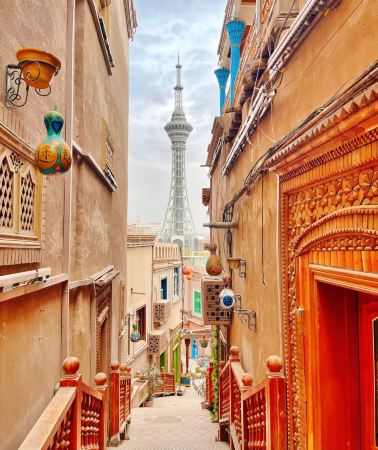
The Xinjiang International Grand Bazaar in Ürümqi's Tianshan District is a favorite destination for visitors of Ürümqi. “Bazaar” is the Persian word for “marketplace”. The architectural style of the Xinjiang International Grand Bazaar has a distinctive Islamic design, yet it combines culture, shopping and entertainment. There are many shops selling goods full of distinctive characteristics of the local ethnic population. Visitors can buy all sorts of local Xinjiang specialties such as raisins, dried apricots and essential oils. This is also a one-stop shop for all kinds of Xinjiang delicacies. You can taste nearly every kind of Xinijang fruit, rice pilaf, lamb and more.Urumqi · 35.7km from Changji Prefecture

Urumqi Botanical Garden
Urumqi Botanical Garden currently features 11 specialized areas, including the Rose Garden, Perennial Flower Area, Planting Demonstration Area, Desert Plant Area, Lawn Recreation Area, Honeysuckle Area, Medicinal Plant Area, Fruit Tree Area, Nectar Plant Area, Rosaceae Area, and Conifer Area. It has introduced over 600 types of plants, including endangered wild plants native to Xinjiang such as the desert poplar, Euphrates poplar, Siberian pine, Chinese bush clover, Caragana, and Iris. The Perennial Flower Area is a particularly popular scenic spot, planted with over 500 peonies across more than 40 rare varieties. In addition, various colorful irises, columbines, bleeding hearts, blue flax, and phlox bloom in competition, creating a vibrant view with flowers blooming across three seasons that makes visitors stop to admire.Urumqi · 23.9km from Changji Prefecture

Moon Land Traditional Village in Mulei County
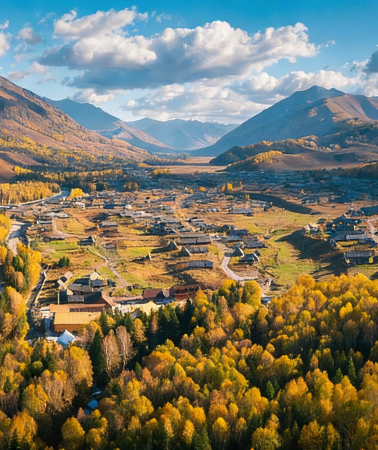
Moon Land Traditional Village in Mulei County is located in Yinggebao Township, Mulei Kazakh Autonomous County, Changji Hui Autonomous Prefecture, Xinjiang. It is a traditional Chinese village integrating cultural experiences, agricultural sightseeing, and leisure vacations, as well as a renowned rural tourism destination in Xinjiang.Mulei · 26km from downtown

Hongshan Park
Hongshan Park is an urban mountain park in the center of Urumqi, named after the solitary Hongshan peak within it. The ochre-red mountain rises abruptly among the city's buildings and has long been considered a landmark of Urumqi. Fossils of ancient fish, such as the ancient cod, have even been discovered in its rock strata. The mountain is not high. Climbing the more than 300 sandstone steps, you will be shaded by trees along the way, and it takes about 30 minutes to reach the summit at a leisurely pace. Hongshan Tower stands on the summit. It is a six-sided, nine-story solid brick tower that complements the ochre-red mountain rocks. The platform below the tower offers an expansive view, with the entire Urumqi city area in sight. In the evening, the setting sun makes the mountain look even redder, perfectly matching the park's "Tower Reflecting the Setting Sun" scene. Beside the tower stands a white marble statue of Lin Zexu, who was once exiled to Xinjiang. Halfway up the mountain, you will pass the three-story Distant View Pavilion, built in the style of the Qing Dynasty, which also offers views of the entire city. Walking down the mountain path, you will find the Great Buddha Temple, built into the mountainside, which houses statues of Sakyamuni, Guanyin, and the Eighteen Arhats. Near the South Lake at the foot of the mountain, there are stone arch bridges, zigzag bridges, and a lake pavilion, with an artificial waterfall hanging below the cliff. The Ferris wheel in the park, with a diameter of more than 40 m, is also one of the city landmarks of Urumqi.Urumqi · 32.8km from Changji Prefecture
Experiences you can't miss in Changji Prefecture
Featured Cultural experiences in Changji Prefecture
View all Cultural experiences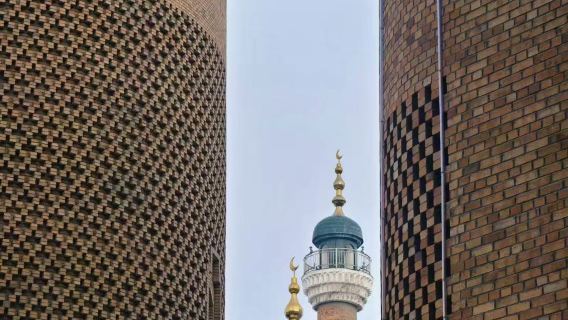
FromUS$ 89.81
FromUS$ 221.53
Free cancellation
Instant confirmation
Book now for tomorrow
FromUS$ 14.82

5.0/5
· 1 reviewFree cancellation
Book now for tomorrow
FromUS$ 216.02

Free cancellation
Book now for tomorrow
FromUS$ 14.82


Featured Outdoor experiences in Changji Prefecture
View all Outdoor experiences
4.4/5
· 21 reviews· 126 bookedInstant confirmation
Book now for tomorrow
FromUS$ 64.64
5.0/5
· 1 reviewFree cancellation
Instant confirmation
Book now for tomorrow
FromUS$ 72.80

Free cancellation
Instant confirmation
Book now for tomorrow
FromUS$ 93.38

Free cancellation
Book now for tomorrow
FromUS$ 221.12

5.0/5
· 1 reviewFree cancellation
Book now for tomorrow
FromUS$ 272.15

FromUS$ 244.93
Free cancellation
Book now for tomorrow
FromUS$ 408.22

FromUS$ 341.03
More ways to travel from Changji Prefecture
Private Tours in Changji Prefecture
View More Private Tours in Changji Prefecture




Group Tours in Changji Prefecture
View More Group Tours in Changji Prefecture




Free things to do in Changji Prefecture
Tianshan Mountains
Fukang · 33.3km from downtownGurbantunggut Desert
Fukang · 48.5km from downtownS101 Hundred-Mile Danxia Viewing Platform
Hutubi · 55.5km from downtownThe Xinjiang Museum
Urumqi · 30.6km from Changji PrefectureFlyover the World · Xinjiang City Park
Fukang · 5.2km from downtownLiyushan Park
Urumqi · 28.1km from Changji PrefectureXinjiang International Grand Bazaar
Urumqi · 35.7km from Changji PrefectureUrumqi Botanical Garden
Urumqi · 23.9km from Changji PrefectureMoon Land Traditional Village in Mulei County
Mulei · 26km from downtownHongshan Park
Urumqi · 32.8km from Changji Prefecture
What travellers say about Changji Prefecture

Jerry_Z*^_^*3 September 2026
5.0
The Gurbantünggüt Desert, located in the central Junggar Basin of Xinjiang (east of the Manas River and south of the Ulungur River), is China's second largest desert and its largest fixed and semi-fixed desert, covering an area of approximately 48,800 square kilometers. The desert features a dendritic sand dune landscape, with dunes accounting for over 50% of its area, creating a unique morphology. Unlike common shifting sand deserts, the Gurbantünggüt Desert's dunes are relatively fixed, with high vegetation cover. After the spring snowmelt, numerous short-lived plants sprout on the desert surface, presenting a vibrant scene of interwoven green and yellow foliage. The desert also contains rich underground oil resources and features typical Yardang landforms such as the Urho Ghost City, making it an important natural and cultural landscape in northern Xinjiang.
Gurbantunggut Desert

M93***4729 October 2024
5.0
The most beautiful time of Baili Danxia is from the end of June to the beginning of July. The grass is green and the scenery is the best at this time. The S101 highway is free throughout. From Urumqi Yaxin, the end of the road is the junction of Duku Highway. It takes 10 hours to walk and take photos.
S101 Hundred-Mile Danxia Viewing Platform

M26***6326 September 2026
5.0
The guided tour experience at the Xinjiang Museum was top-notch! ✨ The guides were professional and engaging, providing a wealth of information and vividly recounting the history of the Silk Road. They explained the museum's most prized artifacts in detail, revealing many background stories not found in books. It was far more rewarding than visiting on your own. A guided tour is a must when visiting Xinjiang!
The Xinjiang Museum

阳凡妈妈6 January 2022
4.0
I took my child on the two-hour round trip and played for two hours. After watching Flying Over China, nothing else was interesting. There was too little content. What is worth praising is that the service attitude is very good. It is recommended to add some activities with high participation.
Flyover the World · Xinjiang City Park

Princesstt20 March 2020
4.0
It is also a park in the central area of Urumqi. This park is also named after a beautiful carp fairy legend, so many college entrance examination students will come here to take a walk, and the park can be as famous as the legend.
Liyushan Park

摩羯食杂记16 September 2026
4.0
Hidden in the heart of the city, this park boasts the best sunset viewing platform in Urumqi 😃😃. Unfortunately, the sky wasn't cooperating today, with only dark clouds ☁️☁️. However, the view of Urumqi's city lights from the top was still quite nice 👌🏻👌🏻
Park Tips:
① The park is named for the reddish-brown color of the mountain.
② The Red Mountain Pagoda at the summit, built in the 53rd year of the Qianlong Emperor's reign (1784), is a worthwhile spot for photos.
③ Entry to the park is free, but admission to the Yuanwang Tower requires a fee.
Hongshan Park


