Things to do in Changyang
Explore top experiences
Top 10 attractions in Changyang


Yangtze River Three Gorges
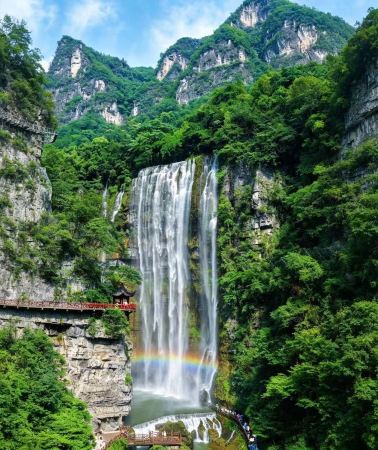
The Yangtze River Three Gorges is a grand canyon formed by the Yangtze cutting through the Wushan Mountains. It stretches nearly 200 km from White Emperor City in Fengjie, Chongqing, in the west to Nanjin Pass in Yichang, Hubei, in the east, connecting three gorges—Qutang, Wuxia, and Xiling—from west to east. This stretch of river has served as a vital waterway between Ba and Chu since ancient times. Li Bai's verse "Departing at dawn from White Emperor City veiled in colorful clouds" depicts the eastbound journey from the gorge entrance, while Du Fu left his famous line "The endless Yangtze rolls on and on" in Fengjie. Each gorge has distinct characteristics, often summarized as "majestic Qutang, graceful Wuxia, and perilous Xiling." Qutang Gorge spans only about 8 km but is renowned for its sheer cliffs. At Kuimen, its entrance, the river abruptly narrows to less than 100 m between knife-cut bluffs—a scene featured on the back of China's fifth series CNY 10 banknote. Ancient plank road holes and Wind Box Gorge's hanging coffins remain visible on the cliffs. Wuxia Gorge extends over 40 km like a winding gallery, with the Twelve Peaks lining its banks. Goddess Peak stands elegantly photogenic in morning mist. Xiling Gorge was once notorious for rapids, but the Three Gorges Dam has transformed its upper reaches into a "high gorge with placid waters." Riverside landmarks like White Emperor City and Huangling Temple are worth visiting. Cruising is the best way to experience the gorges. Long-distance ships sail downstream, while short round-trip boats shuttle through key sections. Watching peaks drift by from the deck offers a more immersive perspective than shore viewing. Morning mist often creates ideal conditions for photographing Kuimen and Goddess Peak. Cliffside plank road relics and inscriptions may flash by during the cruise—keep an eye out to avoid missing them.Yichang · 32.2km from Changyang

The Three Gorges Dam Tourism Area
The Three Gorges Dam Tourism Area is located in the Xiling Gorge section of the Yangtze River in Yichang, Hubei. It is a scenic attraction built around the Three Gorges hydro project, covering over ten square kilometers. Currently, it offers travelers three viewing spots: Tanzi Ridge, the 185 viewing platform, and the river closure memorial park. The dam crest itself is not open to travelers, so visits primarily revolve around these three attractions. Tanzi Ridge is the highest accessible point in the dam area, named for its jar-shaped summit viewing platform resembling an overturned jar. It also served as the survey site for the dam's initial location selection. From the ridge top, visitors can overlook the Three Gorges Project in its entirety—the dam, power station, and twin five-level ship locks are all visible. The five lock chambers cascade down the mountainside, earning the nickname "Fourth Gorge of the Yangtze." The park displays engineering artifacts like ancient riverbed stones, river closure rocks, and foundation stones from the dam site, complemented by model exhibits that help visitors intuitively understand the origins and development of this mega-project. The 185 observation platform is located on the left bank of the dam. It gets its name from sharing the same elevation of 185 m as the dam crest. Standing on the platform feels like being atop the dam: on one side, the dam and vertical ship lift are within close reach, offering a chance to witness ships "riding the elevator" over the dam; on the other side lies the vast, tranquil reservoir upstream. The stark contrast between the stillness above and the dynamism below the dam is striking. The closure memorial park is situated on the right bank downstream of the dam, preserving artifacts like tetrahedral closure stones and large loading machinery used during the construction. It's an ideal spot to view the dam's full frontal grandeur. During flood seasons when the dam releases water, torrents rush out from the deep outlets, creating towering mist and thunderous echoes that reverberate through the valley—a truly awe-inspiring spectacle. The three attractions are far apart, and the scenic area provides shuttle buses for transportation. It is recommended to reserve half a day to visit them in order.Yichang · 42.5km from Changyang

Yichang Museum
Yichang Museum is located in Yichang City, Hubei Province. The museum's collection includes ceramics, bronzes, jades, gold and silver wares, lacquered wooden wares, calligraphy and paintings, etc. The museum's exquisite cultural relics have been exhibited in Hong Kong and Taiwan. Currently, the museum's precious collections include the Changyang Man fossil, the Eastern Zhou Dynasty Qin Wang Beiming Bell, the Spring and Autumn Period lacquered wooden zither, and the Spring and Autumn Period polished black-skinned pottery jar.Yichang · 24.4km from Changyang

Gezhouba Dam
Gezhouba Dam is situated in the lower reaches of the Nanjin Pass of the Three Gorges Exit of Yichang City. The dam reaches north of Jingbei Mountain, Jiangbei Town and south of the Lion Pack of Jiangnan. It is majestic and magnificent. After the Yangtze River comes out of the Three Gorges Gorge, the water flow turns from Tokyu to the south and the river surface widens. Due to sedimentation, Gezhouba and Xiba islands were formed on the river and the Yangtze River is divided into Dajiang, Erjiang and Sanjiang. Dajiang is the main river course of the Yangtze River, and the Erjiang and Sanjiang rivers are cut off during the dry season. The Gezhouba Water Control Project spans Dajiang, Gezhouba, Erjiang, Xiba and Sanjiang.Yichang · 28.7km from Changyang

Yichang Three Gorges Tourist Resort
Experience breathtaking scenery and heartfelt hospitality; you'll never truly know the beauty of the Three Gorges until you visit. As the cruise sets sail, you'll enjoy the scenic gems of the Three Gorges and the world-renowned hydroelectric city of Yichang along the Riverside Avenue: World Peace Park, Yiling Yangtze River Bridge, Yichang's Little Bund—Binjiang Park, the Fourth Pavilion of the Yangtze River—Zhenjiang Pavilion, Yichang's water town—Xiba Island, and Gezhouba Dam. Passing through the ship lock offers a unique experience, with stunning views of the natural beauty of Xiling Gorge unfolding before your eyes. The cruise navigates through the single-line ship lock at Gezhouba Dam, allowing you to experience the unique sensation of rising with the water, while taking in the panoramic view of the majestic Gezhouba Dam. The journey continues into the picturesque Three Gorges Gallery—Xiling Gorge, which spans 76 kilometers, with the cruise covering 38 kilometers of its most scenic section, offering an endless array of breathtaking views. The segment between Gezhouba Dam and the Three Gorges Dam, known as "Two Dams and One Gorge," features the natural grandeur of the eastern section of Xiling Gorge. Due to the construction of the Three Gorges Dam, the western section of Xiling Gorge, along with the entire Wu Gorge and Qutang Gorge, has been submerged, raising the water level by 60 to over 100 meters, altering some of the original landscapes. However, the Xiling Gorge section between the two dams retains its pristine gorge scenery, making it highly valuable for sightseeing. The Qu Yuan's Hometown Scenic Area is located in the new county town of Zigui, adjacent to the Three Gorges Dam, just 600 meters away. Covering approximately 500 acres, it offers stunning views of the high gorges and tranquil lakes. The area features 24 relocated cultural relics from the gorge, including the Qu Yuan Temple and Jiangdu Temple. The main attractions include the Qu Yuan Memorial Scenic Area centered around Qu Yuan Temple, the Three Gorges Ancient Residence Area highlighting Xintan ancient dwellings, gorge stone carvings, and ancient bridges, as well as the Qu Yuan Cultural and Art Center and the waterfront scenic belt.Yichang · 32.9km from Changyang

Gezhou Dam Ship Lock
The Gezhouba Ship Lock is a gate for ships to pass through the Gezhouba Hub Navigation Project. It is a large-scale water conservancy hub project built on the main stream of the Yangtze River. Among them, the Three Gorges double-line five-level ship lock is unparalleled in the world. It is 6.4 kilometers long, with a main part of 1.6 kilometers and a navigation channel of 4.8 kilometers. The water level difference of the ship lock is very large.Yichang · 29.9km from Changyang

Binjiang Park
Binjiang Park is an open park next to the street and the water. It was originally a river beach. After the construction of the Gezhou Dam project, it was gradually built into a riverside park with green as the mainstay and Jingtuoyuan. Green is the main color of Binjiang Park. Among the green trees and flowers, the antique buildings in the park, Zhenjiang Pavilion, Qu Yuan Statue, Shuangting Square, Nanxu Bonsai Garden, are integrated with Yanjiang Avenue, along the river bank protection, and Yiling Yangtze River Bridge. It is picturesque and unique. The elevation of the entire park is similar to the water level of the Yangtze River, and it can be seen against the river surface.Yichang · 25.1km from Changyang

Gezhou Dam Park
Gezhouba Park is located in Yichang, Hubei Province. It is an urban park that integrates natural landscape and cultural history. The park is located next to the Yangtze River and the Gezhouba Water Conservancy Project, providing an ideal location for viewing the magnificent river view. The park is shaded by trees and has a quiet environment, making it an ideal place for citizens to take a leisure walk. There are many trails in the park, suitable for morning jogging and walking, along which you can enjoy rich vegetation and diverse flowers. The Gezhouba Monument in the park is a good place to learn about the history of local water conservancy projects. The inscription records the process and achievements of the construction of Gezhouba in detail. In addition, there are children's play areas and fitness facilities in the park, which are suitable for family tourists. Visitors can overlook the Yangtze River from the observation deck of the park and feel the spectacular sight of the rushing river. The park is usually open from morning to evening. Visitors are advised to choose sunny weather to visit in order to better appreciate the natural scenery. The park is conveniently located around the park and can be reached by many bus routes in the city. It is a good place for Yichang citizens and tourists to relax.Yichang · 29.7km from Changyang

Qingchuan Pavilion
Qingchuan Pavilion is located on Hanyang's Tortoise Mountain and faces the Yangtze River, across the river from the Yellow Crane Tower. Qingchuan Pavilion was built in the Ming Dynasty and was named after the Tang Dynasty poet Cui Wei. The pavilion as it exists today was rebuilt in the 1980s according to historical photos. The scenic area consists of three main buildings: Qingchuan Pavilion, Wuhan Dayu's Palace, and Tiemenguan. There are also a number of other attractions such as various stone tablets and monuments, decorated archways, and cloisters, all rich in classical Chinese charm. It is very pleasant to climb up to the pavilion, feel the wind from the river, and enjoy the view of the river. The classical architecture and the greenery here complement each other perfectly, and the beautiful scenery has caused this to become a popular spot for wedding pictures in Wuhan.China · Wuhan

Zhenjiang Pavilion
Zhenjiang Pavilion is located on the banks of the Yangtze River, about 4,000 meters downstream from the Gezhouba Dam. It is a historical site that has witnessed over 300 years of flooding in Yichang. Known as the "Fourth Greatest Pavilion Under Heaven," Zhenjiang Pavilion is majestic and imposing, commanding respect across the three rivers. Originally built in the 38th year of the Kangxi Emperor's reign, the current structure is a reconstruction in the 1980s, built in an antique style.Yichang · 26.2km from Changyang
More ways to travel from Changyang
Group Tours in Changyang
View More Group Tours in Changyang


Free things to do in Changyang
Yangtze River Three Gorges
Yichang · 32.2km from ChangyangThe Three Gorges Dam Tourism Area
Yichang · 42.5km from ChangyangYichang Museum
Yichang · 24.4km from ChangyangGezhouba Dam
Yichang · 28.7km from ChangyangYichang Three Gorges Tourist Resort
Yichang · 32.9km from ChangyangGezhou Dam Ship Lock
Yichang · 29.9km from ChangyangBinjiang Park
Yichang · 25.1km from ChangyangGezhou Dam Park
Yichang · 29.7km from ChangyangQingchuan Pavilion
China · WuhanImmediate access, Book now for today, Cancel anytimeZhenjiang Pavilion
Yichang · 26.2km from Changyang
What travellers say about Changyang

191***3230 April 2026
5.0
The scenery was beautiful, especially after the rain, like walking through a painting; the tour guide at the Three Gorges Dam was beautiful, had a lovely voice, and provided thorough explanations; the young man who accompanied us was professional, dedicated, and provided detailed explanations and made excellent arrangements! Highly recommended!
Yangtze River Three Gorges

E11***958 October 2026
5.0
The tour takes approximately 3.5 hours. From the visitor transfer center, take a sightseeing bus to Tanziling. After descending Tanziling, proceed to the 185 Park, where you can take an electric cart or walk. From the 185 Park, take a sightseeing bus to the Interception Memorial Park. Finally, take a sightseeing bus to the Miniature Landscape Park (the park's exit), concluding the tour.
The Three Gorges Dam Tourism Area

爱吃香槟的猫啊8 May 2025
5.0
踏入宜昌博物馆的 “巴楚夷陵” 展厅,仿佛踏入了一条时光隧道,带我穿越回了那个巴楚文化交织碰撞的古老时代,让人沉浸其中,感受颇深。展厅内丰富的文物和详实的史料,生动地展现了巴楚两国文化在宜昌地域的相互影响、渗透和排斥。从精美的青铜器、漆器、陶器上,能看到巴文化的质朴与楚文化的浪漫相互融合。比如一些青铜器上,既有巴人独特的图腾和纹饰,又兼具楚人精湛的铸造工艺,这种文化的交融让人不禁感叹古人的智慧和创造力。看着这些文物,仿佛能看到巴楚两地的人们在这片土地上交流、贸易、通婚,文化在无形之中相互传递、相互借鉴,逐渐形成了独具特色的巴楚夷陵文化风貌,这是一种跨越时空的文化对话,让人对这片土地的历史底蕴有了更深刻的认识。
Yichang Museum

M37***9719 September 2026
5.0
Gezhouba Dam is my country's earliest hydroelectric project and has now become a popular tourist destination. The cruise ship departs from Yichang's No. 9 Wharf and arrives at Gezhouba Dam in about an hour, offering breathtaking views of city lights and beautiful mountains along the banks.
Gezhouba Dam

M29***123 October 2026
4.0
The Three Gorges of the Yangtze River stretches 193 kilometers from Baidi City in Fengjie County, Chongqing, in the west to Nanjin Pass in Yichang City, Hubei Province, in the east. Along the way, towering peaks and steep cliffs stand on both sides, and from west to east, they are Qutang Gorge, Wu Gorge, and Xiling Gorge.
Yichang Three Gorges Tourist Resort

D23***0518 December 2025
5.0
Experience two different ship lifting methods: the Gezhouba Dam uses a rising water level to raise the boat, while the Three Gorges Dam uses an elevator-like lifting system. This contrasts traditional and modern mechanics, representing a qualitative leap! A cruise also offers unique views of the Xiling Gorge and the Yangtze River villages, making it a truly rewarding experience and highly recommended!
Gezhou Dam Ship Lock

bjbillyjiao2 June 2023
5.0
Riverside Park is located in the center of Yichang City, lying on the bank of the Yangtze River. It is 11.3 kilometers long and 65 meters wide on average. It is an open park along the street and the water. The riverside of Yichang is clean and tidy, with green plants everywhere. It is particularly comfortable to watch the sunset in the evening and walk slowly along the riverside.
Binjiang Park
爱旅游桂城武小花16 May 2025
5.0
踏入葛洲坝公园,就像踏入了一个远离喧嚣的世界。仿生树墩铺就的小径充满野趣,我漫步其间,头顶是繁茂枝叶交织的绿网,洒下星星点点的光。抬眼望去,长江水奔腾不息,尽显大自然的磅礴;身旁雄伟的葛洲坝水利枢纽工程,又展现着人类的智慧与坚韧 。看着船只有序过闸,感受着历史与现代的交融,这一趟,满是收获
Gezhou Dam Park

沅大王30 September 2026
5.0
The scenic area is filled with the fragrance of osmanthus blossoms. From the top, you can enjoy panoramic views of the Yangtze River Bridge and the Yellow Crane Tower. At the very top, watching the ships on the Yangtze and the cars and trains on the bridge, with the breeze blowing, is very pleasant, and it's not too crowded. The scenic area isn't large; a leisurely hour is about right to appreciate the scenery.
Qingchuan Pavilion and Guishan Scenic Area are directly connected by the Iron Gate Pass, which leads to the West Gate of Guishan. Climbing the mountain and enjoying the breeze and osmanthus fragrance is a wonderful experience.
Qingchuan Pavilion

桃子妖妖妖29 September 2026
5.0
Yichang residents also have their own Yellow Crane Tower.
Do you know what the "Fourth Tower Under Heaven" is?
Before coming to Yichang, I had never heard of this term. After arriving, I learned that "Fourth Tower Under Heaven" is the affectionate nickname Yichang residents have for Zhenjiang Pavilion.
How much do Yichang people love Zhenjiang Pavilion? Besides calling it the Fourth Tower Under Heaven, it also has a local nickname: "Little Yellow Crane Tower."
From a distance, Zhenjiang Pavilion and the Yellow Crane Tower share a similar architectural style. Especially at night, when illuminated, it is magnificent and imposing, looking even more like the Yellow Crane Tower in Wuhan.
Zhenjiang Pavilion was originally built in 1699, but was destroyed in war. The existing Zhenjiang Pavilion is a reconstruction in the 1980s, an antique-style building. In this respect, Zhenjiang Pavilion is the same as the Yellow Crane Tower. The Yellow Crane Tower was also a later reconstruction, and even has an elevator inside.
Zhenjiang Pavilion is located at the confluence of the Dajiang, Erjiang, Sanjiang, and Juanqiao Rivers. Historically, the area suffered numerous floods. Merchants from the city pooled their resources to build the pavilion, intending to ward off floods and protect the people. Built outside the ancient town of Zhenchuan in Yichang, the pavilion's construction resembled a temple, its purpose being to suppress floods—the city gate guarding the river, the pavilion guarding the water.
The main body of Zhenjiang Pavilion is a four-story hip-roofed building. A memorial archway stands in front of the pavilion, and plaques bearing the three characters "Zhenjiang Pavilion" hang on both the pavilion and the archway. From the pedestrian walkway along the riverside avenue, one can capture the archway, the pavilion, and both plaques in a single frame.
There's an interesting story about the plaques at Zhenjiang Pavilion.
Attentive viewers may notice that the character "镇" (zhen, meaning "town") is missing a stroke. At first glance, it might seem like a typo, but it was actually copied from the calligraphy of the great Northern Song Dynasty calligrapher Mi Fu during the reconstruction. Because Mi Fu wrote in running script, which allows for the omission of strokes, the character "镇" (zhen, meaning town/town) had two horizontal strokes instead of the three traditional ones.
A local friend said that the omission of one horizontal stroke in the character "镇" actually subtly alludes to the symbolism of the Gezhouba and Three Gorges Dams, signifying "two dams controlling one river." It's unclear whether this was intentional or a stroke of luck.
As a new landmark in Yichang, Zhenjiang Pavilion is definitely worth a visit. Highly recommended.
Zhenjiang Pavilion


