Danyang

Things to do in Danyang

Search attractions or local attractions & tours
Search

Explore top experiences

Top 10 attractions in Danyang

View all Attractions
Sanshan Scenic Area

Sanshan Scenic Area

6.7
5.0/5
2 reviews

The Sanshan Scenic Area in Zhenjiang is a tourist destination that brings together natural landscapes and profound cultural heritage. Located on the south bank of the lower reaches of the Yangtze River, it consists of three major scenic areas—Jinshan Park, Jiaoshan Mountain, and Zhenjiang Beigushan Scenic Spot—each with its own unique charm. Although they are low hills, their proximity to the Yangtze River gives them a magnificent appearance, making them a representative natural and cultural landscape belt in Zhenjiang. These three mountains offer distinct views that complement each other. Among them, Jinshan Park is famous for the architectural marvel of temples wrapping the mountain, where layers of halls and pavilions envelop the mountain itself. It is also the setting for the Flooding of Jinshan story in the Legend of the White Snake, adding a rich mythological aura to the landscape. Jiaoshan Mountain is an island surrounded by water in the Yangtze River, known as the Floating Jade in the River. The mountain is covered with ancient, towering trees and hidden temples, creating a serene mountain wrapping the temple scene. It is also a famous mountain of calligraphy in the Jiangnan region, home to a precious forest of stone steles. Zhenjiang Beigushan Scenic Spot is situated among the three mountains and is renowned for its steep terrain and rich historical sites, having long been a strategic military location and a subject of literary works.

Zhenjiang · 29.1km from Danyang
Slender West Lake
2026 Global 50 - Spring Outings

Slender West Lake

8.5
4.7/5
83.7k reviews

"In March when flowers bloom, head to Yangzhou." When visiting Yangzhou in spring, a trip to Slender West Lake is a must. This narrow stretch of waterway offers the perfect blend of natural beauty and cultural heritage. Stroll along the banks to admire scenic views, explore historic pavilions adorned with classical poetry and paintings, or cruise the lake by boat to experience the leisurely pleasure Emperor Qianlong once enjoyed during his royal visits. The attraction is quite expansive, stretching from the Great Rainbow Bridge in the southeast all the way north along the lake to Guanyin Mountain, passing dozens of attractions along the way. There are four main entrances (east, south, west, and north), with most visitors starting their tour at the south entrance on Great Rainbow Bridge Road. This renowned lakeside garden boasts breathtaking natural views. In spring, the area is shaded by lush willows and adorned with camellias, pomegranates, azaleas, and peach blossoms, attracting visitors from across the country to enjoy the seasonal blooms. For centuries, countless literati have lingered here, composing poetry and creating paintings that left behind numerous artistic treasures and stories. The site also features many landscape structures ingeniously designed to harmonize with its natural surroundings. The Five Pavilion Bridge in Shugang Slender West Lake Scenic Area is the iconic attraction with over 200 years of history. Featuring five wind pavilions atop, each of the bridge's fifteen arches cradles a moon during full moon nights. Another renowned attraction is the Twenty-Four Bridge, inspired by Du Mu's poetic line "Where is the jade-like beauty teaching flute-playing on the moonlit Twenty-Four Bridge?" While the original bridge no longer exists, visitors can admire its reconstructed version today. This was also a stop during Emperor Qianlong's southern tours in the Qing Dynasty. Architectural views like the Great Rainbow Bridge, Slender West Lake Scenic Area's Fishing Terrace, White Pagoda, and the Twenty-Four Bridges' Xichun Platform all bear inseparable historical anecdotes connected to Emperor Qianlong. During summer nights, the illuminated pavilions and moonlit reflections on the lake create a magical atmosphere. The nightlife experience here is entirely boat-based, offering a relaxing way to beat the summer heat while enjoying gentle lake breezes.

Yangzhou · 46.8km from Danyang
China Dinosaurs Land
2026 Global 100 - Family-friendly Attractions

China Dinosaurs Land

7.4
4.6/5
64.3k reviews

China Dinosaurs Land is a large dinosaur culture-themed amusement park, known as the "Jurassic of the East." The park creates scenes around the thread of dinosaurs from survival and reproduction to evolution and extinction, integrating science popularization exhibits with mechanical amusement rides, allowing visitors to step into the ancient dinosaur world while having fun. As the landmark building of the park, the exterior of the China Dinosaur Museum makes full use of biomimetic architectural techniques. Seen from afar, it looks as if three dinosaurs are raising their heads high and whispering to each other, while a plump and enormous dinosaur body presents a freehand-style form, thus outlining the museum's space for exhibition, entertainment, and science popularization. The total area of the museum is more than 20,000 square m, the highest point of the dinosaur heads reaches 71 m, and the highest point of the museum's dome reaches 36 m. The China Dinosaur Museum has five main halls and six auxiliary halls. Among them, the main halls include the atrium, exhibition hall, view hall, sightseeing hall, and film and television hall; the auxiliary halls include the entrance lobby, VIP reception hall, academic lecture hall, reserve exhibition hall, as well as spaces such as the rooftop garden and souvenir shop. The halls are connected through logical routes, with both separation and convergence, and are interrelated. With the history of biological evolution as the design background, it focuses on the conceptual main line of dinosaurs from survival, reproduction, and evolution to extinction, revealing the profound theme that life and the environment depend on each other and that humans must protect ecology and the environment. Park layout: The Dinosaur Park is divided into the China Dinosaur Museum, Lubula Area, Kuksuk Grand Canyon Area, Magic Rainforest Area, Dream Manor, Adventure Harbor, and Crazy Dinosaur People. Among them, the China Dinosaur Museum is the core venue for showcasing dinosaur culture; the thrilling mechanical amusement rides are mainly in "Kuksuk" and "Lubula" Thrilling rides: Numerous high-altitude mechanical amusement rides make this a destination for thrill-seekers: you can board the high-altitude swinging ride "Crazy Fire Dragon Drill" to experience an intense sensation of weightlessness; or climb aboard the "Babel Tower" to seek the thrill of a sudden plunge from the sky; there is also a 4D roller coaster that lets you experience the exhilaration of high speed and rapid spins in an instant. Relaxing activities: The park also offers relaxed and leisurely options: you can view a variety of Chinese dinosaur fossils in the China Dinosaur Museum, where you will learn about dinosaur culture. You can also try less thrilling rides such as the "Brontosaurus Roller Coaster," letting you seek fun in a bit of mild tension; in different venues, you can also watch programs such as musicals, magic shows, and live-action stunt performances. Water world and night park: Dinosaur Park's Jurassic Water World delivers a refreshing, exhilarating experience all summer long. Classic water attractions let you forget the summer heat, the cool water fun lets you unleash all your passion, and sizzling performances ignite every cell in your body. Let the kids enjoy an unforgettable summer vacation. Most attractions remain open in the evening as well, and you can experience the thrills of the water world's giant water slide, the Tornado, and the 30-meter plunge on the giant slide, or splash it out in a giant water fortress (the water world requires a separate admission ticket).

Changzhou · 42.6km from Danyang

Experiences you can't miss in Danyang

Featured Food & drink in Danyang

View all Food & drink

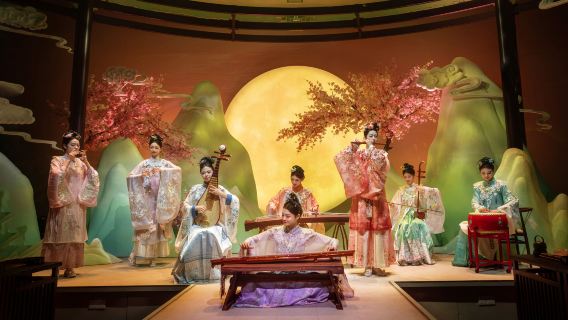
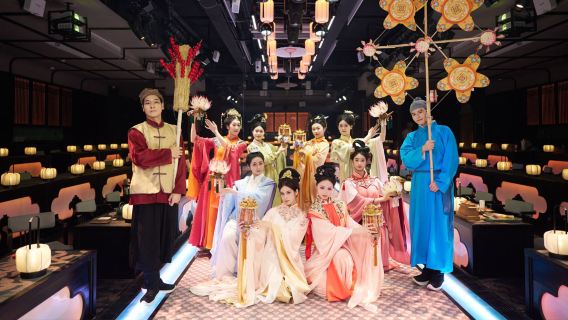
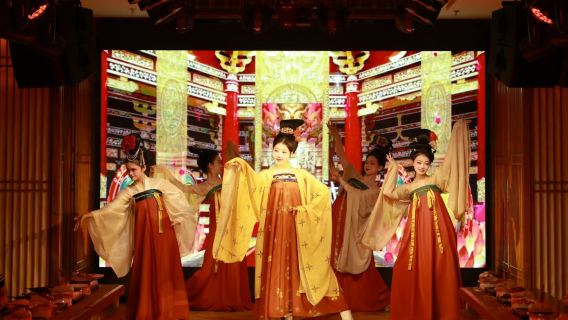
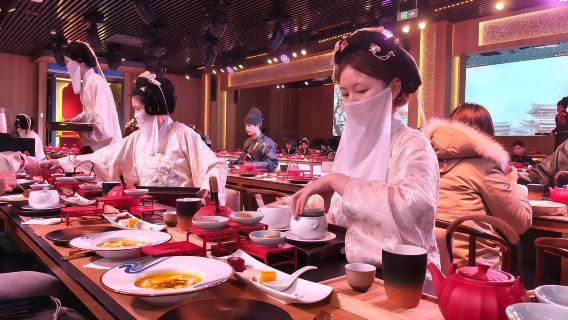
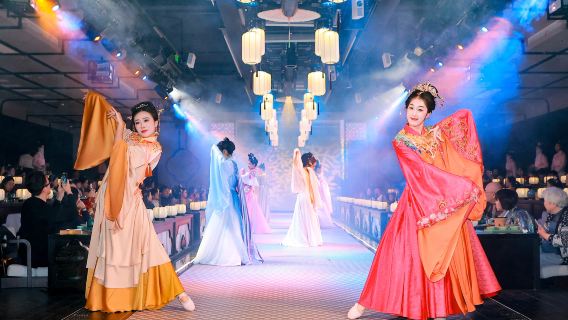
Nanjing Jinling dream of splendor palace banquet (ancient imperial-style royal feast + spectacular song and dance performance)
󱌍
5.0/5
· 1 review· 56 booked
Duration: 2 hrs
English
Free cancellation
Book now for tomorrow
FromPLN 174.79
Jinling Dream Splendor: Ming Dynasty Themed Banquet +Hanfu Styling + Traditional Performances & Food
󱌍
FromPLN 409.39
Nanjing imperial banquet feast world · immersive journey through Jinling's millennium-spanning royal feast
󱌍
FromPLN 116.72
Nanjing Yanle Feast Under Heaven | Immersive Six Dynasties Royal Banquet Show
󱌍
Duration: 2 hrs
English
Free cancellation
Instant confirmation
Book now for tomorrow
FromPLN 316.14

Featured Culture & history in Danyang

View all Culture & history
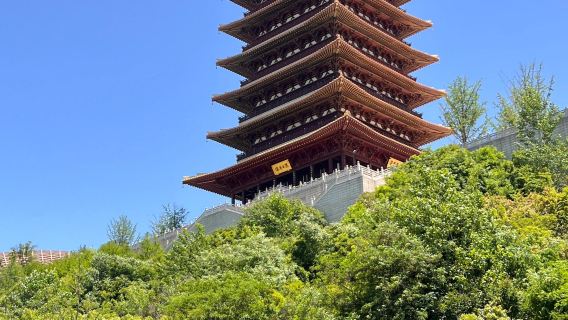
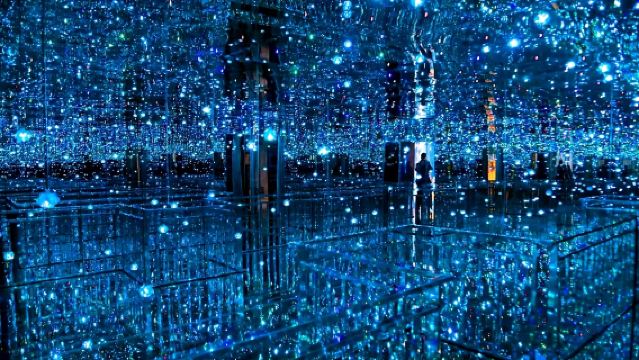
Nanjing Van Gogh Star Sky Art Museum (immersive 4D light show + sunflower field tour)
󱌍
4.0/5
· 7 reviews· 83 booked
Duration: 2 hrs
English
Free cancellation
Instant confirmation
FromPLN 26.40
Nanjing Private Guided Day Tour: Dr. Sun Yat-sen's Mausoleum, The Ming Tomb, and Meiling Palace
󱌍
FromPLN 347.72
1-day tour to Wuxi Plum Garden + Huishan ancient town + Nanchang Street + Xihui Scenic Area with Chinese and English-speaking service
󱌍
5% off
Limited-time sale
FromPLN 563.82PLN 593.5
2-Hour Premium Private Guided Tour of Nanjing Museum
󱌍
FromPLN 1,165.99
Danyang Today's weatherClear 3-12℃
Danyang weather for the next 2 days11/11: 9-16℃, 11/12: 13-18℃

Free things to do in Danyang

What travellers say about Danyang

user-avatar
Anonymous user7 November 2026
5.0
Beigu Mountain truly lives up to its reputation as "the most beautiful landscape under heaven." The mountain isn't high, making it easy to climb. At the summit lies Ganlu Temple, which tells the story of Liu Bei's marriage proposal during the Three Kingdoms period. Climbing Beigu Tower offers panoramic views of the Yangtze River. Recalling Xin Qiji's poem, one feels the river breeze on one's face; the landscape blends seamlessly with history, boasting abundant historical sites and a captivating atmosphere—definitely worth a visit.

Zhenjiang Beigushan Scenic Spot

user-avatar
pan_voyag612 April 2026
4.0
The museum was smaller than I imagined but very well organized and maintained. I booked the ticket through Trip.com and it got me through the entrance gate with the QR code provided which was smooth. Don’t bother talking to the lady at the ticket office, since she was not very friendly. Just go directly to the gate, and scan the QR code.

China Vinegar Culture Museum

user-avatar
火 火5 February 2026
5.0
Zhenjiang Three Mountains Scenic Area is a national 5A-level tourist attraction in Zhenjiang City, Jiangsu Province. Composed of Jinshan, Jiaoshan, and Beigushan, the three mountains are distributed along the Yangtze River, each with its own unique characteristics, and are renowned as "the best in Southeast China among the Three Mountains of Jingkou." I. Jinshan – Temples Wrapped in the Mountain, Mythical Legends "Jinshan Temple Wrapped in the Mountain"—Buildings such as Cishou Pagoda and Jiangtian Temple are built against the mountain, so from a distance, only the temple is visible, not the mountain itself. It is one of the four most famous Buddhist temples in China, along with Putuo Temple, Wenshu Temple, and Daming Temple. Main Attractions: Jiangtian Temple (Jinshan Temple): An ancient temple from the Eastern Jin Dynasty, the origin of the legend of the White Snake flooding Jinshan Temple. Cishou Pagoda: Climb the pagoda for panoramic views of the Yangtze River and Zhenjiang city. Fahai Cave: The place where the Tang Dynasty monk Fahai practiced, contrasting with the legend. The First Spring Under Heaven: Zhongling Spring, praised as "the best under heaven" by Lu Yu of the Tang Dynasty. II. Jiaoshan Mountain – A Natural Landscape, a Hidden Gem of Steles Jiaoshan Mountain, a temple nestled within the Yangtze River, is an island surrounded by water. Reaching the island requires a boat trip. It is renowned for its cliff carvings, stele forest, and ancient fort. Main Attractions: Dinghui Temple: An ancient temple dating back to the Han Dynasty, where Emperor Kangxi once stayed during his southern tour. Jiaoshan Stele Forest (the largest stele forest south of the Yangtze River): Contains a fragment of the *Yizheming* stele (considered the "ancestor of large-character calligraphy"). Cliff Carvings: Inscriptions by literati throughout history, including authentic works by Lu You and Mi Fu. Ancient Fort: Relics of the Opium War resistance against the British. III. Beigushan Mountain – Scenic Beauty, an Epic of the Three Kingdoms Centered on the culture of the Three Kingdoms, it is known as "the most beautiful landscape under heaven," and has been the subject of countless poems and inscriptions throughout history. Main Attractions: Ganlu Temple: The site of the story of Liu Bei's marriage proposal, originally built during the Eastern Wu period of the Three Kingdoms. Beigu Tower: The place referred to in Xin Qiji's poem, "Where can one gaze upon the Central Plains? The scenery of Beigu Tower fills the eyes." Sword Testing Stone: Legend has it that Liu Bei and Sun Quan tested their swords on this stone. Iron Pagoda: A remnant from the Song Dynasty, witnessing the vicissitudes of history.

Sanshan Scenic Area

user-avatar
Anonymous user6 November 2026
5.0
Jinshan Temple in Zhenjiang, also known as Jiangtian Temple, was first built during the reign of Emperor Ming of the Eastern Jin Dynasty (around 320 AD), boasting a history of over 1600 years. It is the origin of the legend of "Lady White Snake flooding Jinshan Temple" and the ancestral temple of the Chinese Buddhist Water and Land Dharma Assembly. The temple is nestled within the mountain, so one sees the temple but not the mountain itself. Jiangtian Temple: The plaque bearing the inscription "Jiangtian Temple" was personally inscribed by Emperor Kangxi during his southern tour. The magnificent Mahavira Hall is the core of Jinshan Temple. Cishou Pagoda: A landmark of Jinshan, this seven-story, octagonal brick and wood pagoda stands approximately 30 meters tall. Climbing the pagoda offers a panoramic view of the confluence of Jinshan Lake and the Yangtze River, making it a prime location for taking panoramic photos. Fahai Cave and Bailong Cave: Core photo spots related to the Legend of the White Snake. Fahai Cave is where the founding patriarch, Fahai, practiced asceticism; Bailong Cave is said to connect directly to West Lake in Hangzhou. Legend has it that after Lady White Snake flooded Jinshan Temple, Xu Xian escaped from Bailong Cave and reunited with Lady White Snake at the Broken Bridge. Miaogao Terrace: Also known as "Sun-drying Terrace," it is a place where Su Shi once admired the moon and composed poems, and where Liang Hongyu once beat the drum to fight against the Jin army. It is full of historical anecdotes. Zhongling Spring: Located on the west side of the scenic area, it was already famous in the Tang Dynasty and was known as "the No. 1 Spring under Heaven". The spring water is clear and sweet.

Jinshan Park

user-avatar
YoYo_D1l9r9b12 May 2026
5.0
Xijindu's ancient street starts uphill from Changjiang Road, with tire tracks in the middle of the stone-paved road. The brick and stone houses are old and worn, and the steps are quite steep. The Zhaoguan Stone Pagoda stands in the middle of the road, and you can pass underneath it. From the hilltop, you can see the dock and the Yangtze River; at night, the river reflects the lights. There are some old shops on both sides selling pot-lid noodles and braised pork; you can sit down and have a bowl when you're tired from walking. It's less crowded than Shantang Street, but still lively on weekends.

Xijin Ferry Historical and Cultural District

user-avatar
江左盟梅长酥26 October 2026
5.0
Jinshan Temple is worth a visit. It has a strong Buddhist atmosphere, and you can overlook Zhenjiang from the top of the mountain. The buildings inside are also very beautiful and suitable for taking photos. It is also one of the filming locations for The Legend of the White Snake.

Jinshan Temple

user-avatar
老钱贝勒31 October 2026
4.0
Visit Jiaoshan to see the "Epitaph for the Buried Crane," considered the ancestor of large-character calligraphy. The Jiaoshan Stele Forest (Baomoxuan) is located on Jiaoshan Mountain in the heart of the Yangtze River in Zhenjiang. It is the premier stele forest south of the Yangtze River, and is considered on par with the Xi'an Stele Forest. Western Slope Cliff Inscriptions: Stretching over 200 meters along the riverside cliff, there are more than 80 inscriptions from the Six Dynasties to the Song and Qing Dynasties, including Tang Dynasty verses from the Diamond Sutra, an inscription by Mi Fu, and Lu You's inscription on viewing the "Epitaph for the Buried Crane" in the snow. Courtyard and Corridor Display of Steles: Over 400 steles spanning the Six Dynasties, Tang, Song, Yuan, Ming, Qing, and Republican periods, encompassing regular, cursive, clerical, and seal scripts. Treasure of the Museum: The "Epitaph for the Buried Crane" The "Epitaph for the Buried Crane" is a cliff inscription commemorating the burial of a crane, praised by Huang Tingjian as the ancestor of large-character calligraphy. Origin of the Original Stone: Originally carved on the cliff face of Leihongyan at the western foot of Jiaoshan Mountain, it is said to have been carved in the thirteenth year of the Tianjian era of the Southern Liang Dynasty (514 AD). At some unknown time, the cliff collapsed and fell into the Yangtze River, where it remained submerged for over seven hundred years. In the fifty-first year of the Kangxi reign of the Qing Dynasty (1712 AD), Chen Pengnian raised funds to salvage the stone, retrieving five fragments containing 93 characters (11 of which are missing). These fragments were moved to Dinghui Temple and protected with a pavilion. Later, they were moved to a special room in the Stele Forest for preservation and exhibition, which is the original stone we see today. The original text contained approximately 178 characters, but only fragments remain today. Rubbings are divided into two categories: the precious Song Dynasty "pre-drowning rubbing" (rubbings before it fell into the water) and Qing Dynasty rubbings after it was recovered from the water. The mystery of the author (unresolved). The inscription uses only the pseudonym: "Written by Huayang Zhenyi, written by Shanghuangshan Qiao," without a real name. Several schools of thought have emerged regarding its authorship: Mainstream: Tao Hongjing of the Southern Dynasties (a recluse in Huayang, the most widely accepted). Others: Wang Xizhi, Gu Kuang of the Tang Dynasty, Wang Zan, etc., with ongoing academic debate. The calligraphic style is a landmark cliff inscription marking the transition from seal script and clerical script to regular script, blending the two styles with elements of running script: Brushwork: Primarily rounded strokes with concealed tips, occasionally using angular turns, with a strong seal script influence, seemingly soft yet powerful; Character structure: Broad and spacious, adapting to the shape of the stone, characters vary in size and posture, without deliberate uniformity; Composition: Rarely seen in ancient times, read vertically from left to right, elegant and unrestrained, with a lofty and ancient feel, reminiscent of a crane soaring into the distance; The "Shimen Ming" in the north and the "Yizhe Ming" in the south are considered twin peaks of cliff inscriptions, influencing countless calligraphers such as Huang Tingjian and Gong Zizhen. Huang Tingjian famously said: "No large characters surpass the 'Yizhe Ming.'"

Jiaoshan Mountain

user-avatar
吴哥℡¹⁸⁶⁷⁸⁹⁶8 November 2026
4.0
The scenery in riverside parks across the country is pretty much the same, as that's the feeling after a short stroll around the entrance. It's only near the Twenty-Four Bridges that the core scenery of Slender West Lake truly comes into view (unfortunately, the weather was overcast and rainy). If you're short on time, I recommend entering from the South Gate, strolling to the Twenty-Four Bridges, taking a boat back to the South Gate (1 hour 30 minutes stroll, 10 minutes boat ride back to the entrance) (except for those planning to exit from the North Gate). It's effortless to walk with kids! 👍 I won't go into the scenery photos, but the ducks and geese in the lake are quite content. 👀

Slender West Lake

user-avatar
点都不沉默3 September 2026
5.0
The biggest surprise of my trip to Danyang wasn't just getting a pair of satisfactory glasses, but also discovering a hidden gem of a park. Wanshan Park is located in the city center, easily accessible by bus or taxi. The park is exceptionally quiet and clean, a true paradise for birds. Various birds flew around, chirping incessantly; I even encountered one that seemed to talk! I absolutely loved Wanshan Park, and I'm so glad I didn't miss it.

Wanshan Park

user-avatar
M30***036 November 2026
5.0
This was my second time visiting the Dinosaur Park. They added a lot of fun attractions for Halloween, but it was incredibly crowded. The queues for popular attractions were basically 1-2 hours or more. I suggest limiting the number of visitors to ensure a better experience.

China Dinosaurs Land

Trip Moments in Danyang

Popular cities near Danyang

Frequently asked questions

Get help anytime, anywhere within 30 secondsContact customer support

Change and cancellation policies vary by attractions and tours. Please check the product details page for more information.

Ticket prices may vary between weekdays and weekends, as well as during peak and off-peak seasons. When booking with Trip.com, you can also use Trip Coins to get extra savings. For more tips on booking discounted tickets, please visit Trip.com for the latest information.