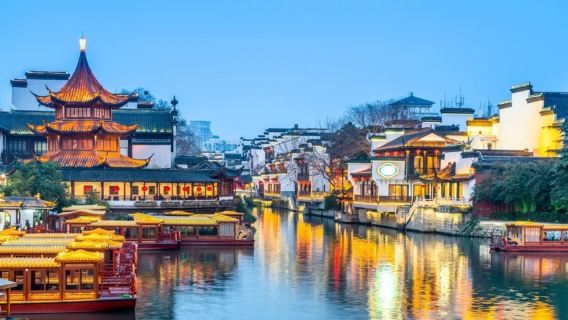
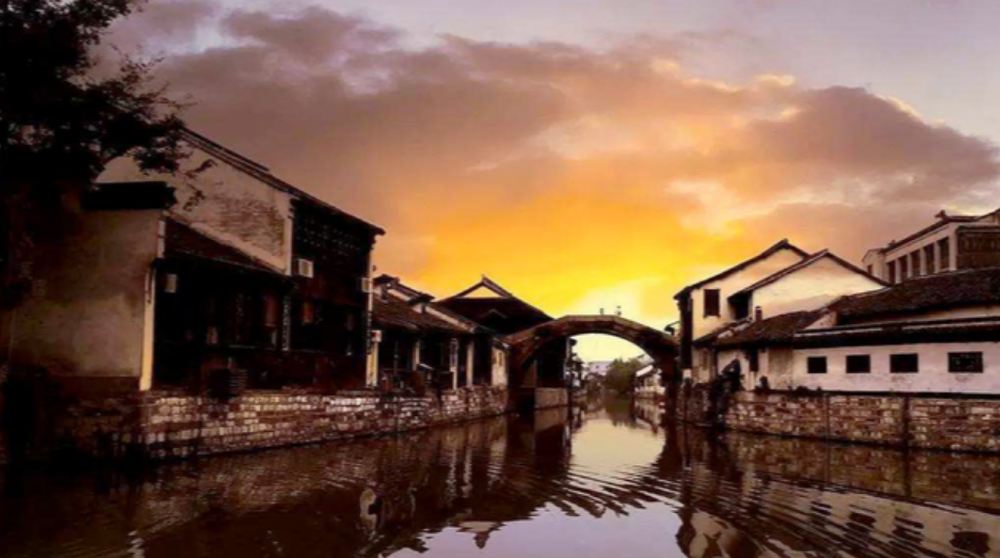
Gaochun Old Street, also known as Chunxi Old Street, was officially established as a market street during the Song Dynasty and boasts a history of over 900 years. Most of the existing buildings date back to the Ming and Qing Dynasties. The street is located adjacent to Guanxi River to the south and connects to Gucheng Lake to the east. The main street runs east-west, stretching over 800 meters in length. The area preserves well-maintained ancient Huizhou-style architecture. The street's central pathway is paved with horizontal pink rouge stones, while the sides feature longitudinal bluestone slabs. Lined with traditional black-tiled, white-walled buildings, the street is bustling with shops, most of which are two-story structures with wooden facades.
Strolling along the old street, be sure to admire the exquisite wood carvings beneath the shop eaves and the elegant black-and-white floral patterns under the horse-head walls. The old street takes on a special charm on rainy days - rainwater dampens the smooth stone-paved road, wooden storefronts reveal deeper hues than on sunny days, and umbrella-carrying maidens passing by inevitably evoke images of the long, melancholic alley from Dai Wangshu's poem "Rainy Lane." Some attractions are located along the main street while others branch off onto side lanes, all clearly marked with directional arrows.
The main attractions from west to east include: the Qianlong Ancient Well, said to have been used by Emperor Qianlong during his third southern tour in 1762; the Guanwang Temple, built in 1489 during the Ming Dynasty, which honors loyal military figures like Zhang Fei, Li Jing, and Qi Jiguang; the Carving Exhibition Hall displaying wood, stone, and brick carvings; Yang Hall, originally the luxurious residence of Zhao Zhuang, Gaochun's wealthiest family; the Wu Clan Ancestral Hall (former headquarters of the New Fourth Army's First Detachment); a Jesus Church with traditional Chinese white walls and black tiles; the former site of the New Fourth Army's Gaochun Office; and the Gaochun Intangible Cultural Heritage Exhibition Hall, which introduces visitors to local opera, folk customs, handicrafts, and displays clothing and tools. Except for the Guanwang Temple, Carving Exhibition Hall, Yang Hall, New Fourth Army's Gaochun Office site, and Gaochun Intangible Cultural Heritage Exhibition Hall, all other attractions are free.
Among these, the Wu Clan Ancestral Hall located in the middle section of the old street is the most magnificent structure, originally built during the Qianlong era of the Qing Dynasty. The complex consists of three sections: the front section features a stage behind the main gate, while the central and rear halls are supported by precious nanmu wood pillars. The ancestral hall showcases an abundance of intricate wood carvings, particularly on the stage, which represent the finest examples of wood carving artistry on the old street. Dragons, phoenixes, lions, and scenes from folk tales are all vividly depicted.
On the eastern section of the old street, south of the Gaochun Intangible Cultural Heritage Exhibition Hall, there is a folk performance venue. Performances are usually only held during holidays like National Day. The shows mainly include Water Margin martial arts displays, Wuchang dance, large and small horse lantern dances, clam fairy dance, and local operas. Admission to the performances is free.
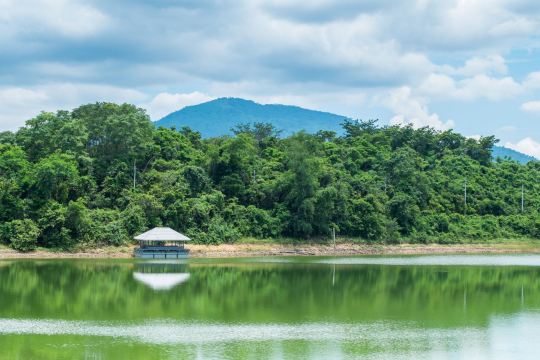
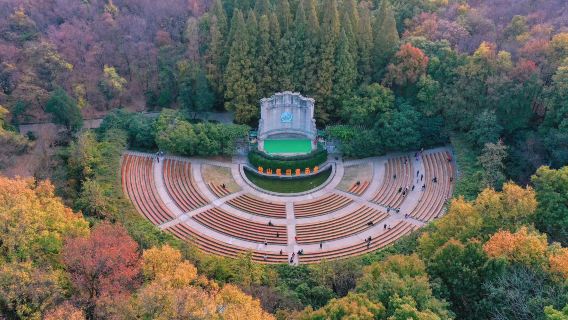
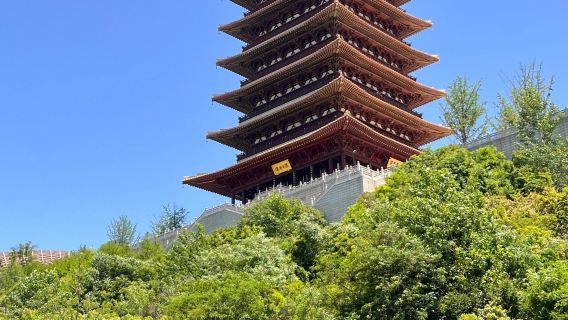
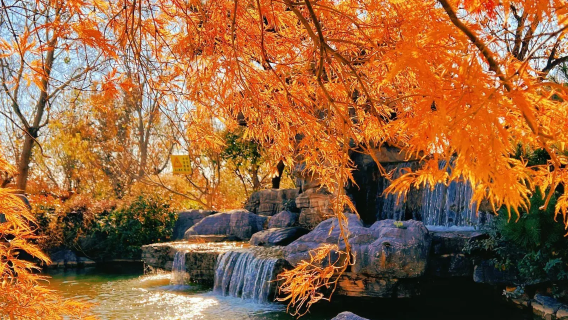
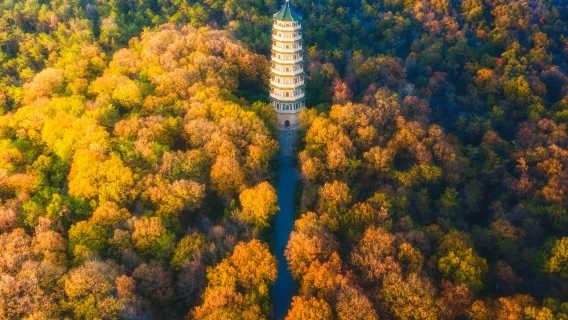
Nanjing Youzi Mountain Leisure Tourism Area: "The landscape here is so beautiful, yet I remain a traveler in a foreign land." Over 2,000 years ago, Confucius ascended Youzi Mountain and was inspired by the sentiment of "a wanderer longing for home." Later generations named the mountain Youzi Mountain in his honor, and it has since become the "sacred mountain" in the hearts of the people of Gaochun and surrounding areas for centuries. Located in the central part of Gaochun District, Nanjing, the Nanjing Youzi Mountain Leisure Tourism Area covers a total area of 650 hectares, with a forest coverage rate of 89%. It serves as the ecological core of Gaochun and is known as the "green lung" of the region. The tourism area embodies Gaochun's rich historical and cultural heritage, described by experts as a "treasure trove" of Chinese folk culture. It integrates Confucianism, Buddhism, and Taoism, showcasing the "wanderer" culture of Youzi Mountain. "One Youzi Mountain, a thousand years of appreciation." Its millennia-old culture narrates the mountain's storied past, while numerous historical relics and legends highlight the unique charm of this land. Far from the hustle and bustle of the world, Youzi Mountain is a perfect destination for stepping into a forest oxygen bar, exploring nature, and returning to a green paradise.
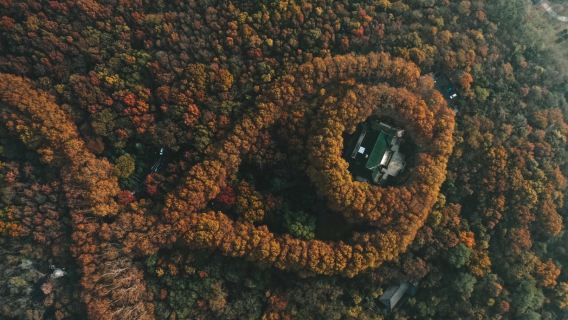
Sanjiaolong Area: The Sanjiaolong Ecological Leisure Zone is composed of landscapes such as forests, tea gardens, orchards, bamboo groves, and reservoirs. The name "Sanjiaolong" is quite unique, originating from the distinctive geographical features of this attraction. When viewed from above, the three ridges resemble three winding and undulating dragons, hence the name "Sanjiaolong," which is a homophone for "three dragons."
Qifu Garden: Drive 3 kilometers along the winding mountain road from the entrance of Qifu Garden to reach the summit of Youzi Mountain's main peak, Dayou Mountain. Standing at 188 meters above sea level, Dayou Mountain is the highest point in Gaochun District and is renowned as the "Scenic Wonder of Laizhu."
Zhenru Temple: Zhenru Temple is one of the four major Buddhist sacred sites in China and a branch temple of Jiuhua Mountain in Anhui. It was reconstructed in 1997 under the leadership of Venerable Shi Huishen, the president of the Jiuhua Mountain Buddhist Association. Covering an area of approximately 7 hectares, it stands out among the branch temples of Jiuhua Mountain. The temple square features a towering gilded statue of Amitabha Buddha, standing 21 meters tall and weighing nearly 1,000 tons. Additionally, three grand halls are nestled within the mountain. The central Mahavira Hall is the most prominent among all the branch temples of Jiuhua Mountain, enshrining the Buddhas of the Three Ages, flanked by the Eighteen Arhats, with the Guanyin of the Southern Sea at the back. The two side halls are the Great Vow Hall, which houses a sacred statue of Ksitigarbha Bodhisattva, and the Great Compassion Hall, which enshrines a sacred statue of Thousand-Armed and Thousand-Eyed Guanyin Bodhisattva.