Things to do in Yingshan
Explore top experiences
Top 10 attractions in Yingshan

Jiuhua Mountain
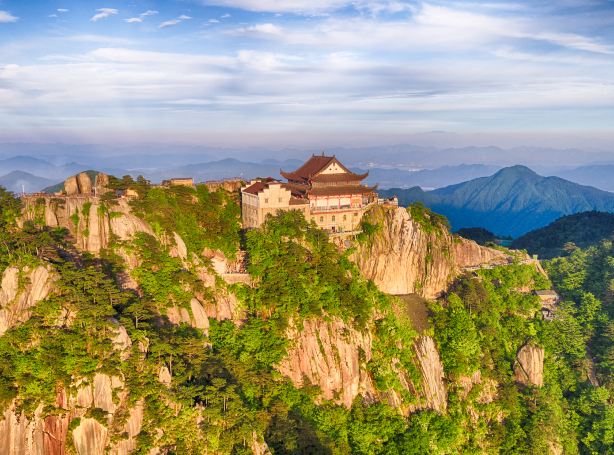
Jiuhuashan is located within Chizhou, Anhui Province. It is a scenic mountain area characterized by Buddhist culture and natural and archaeological sights. Jiuhuashan is one of the four great Buddhist mountains in China and was among the first group of tourist attractions to receive a national 5A designation. It is the first location in China to receive both a natural and cultural heritage designation and is the focal point of the popular “two mountains and one lake” Anhui travel itinerary.China · Qingyang

Wunvzhou Resort
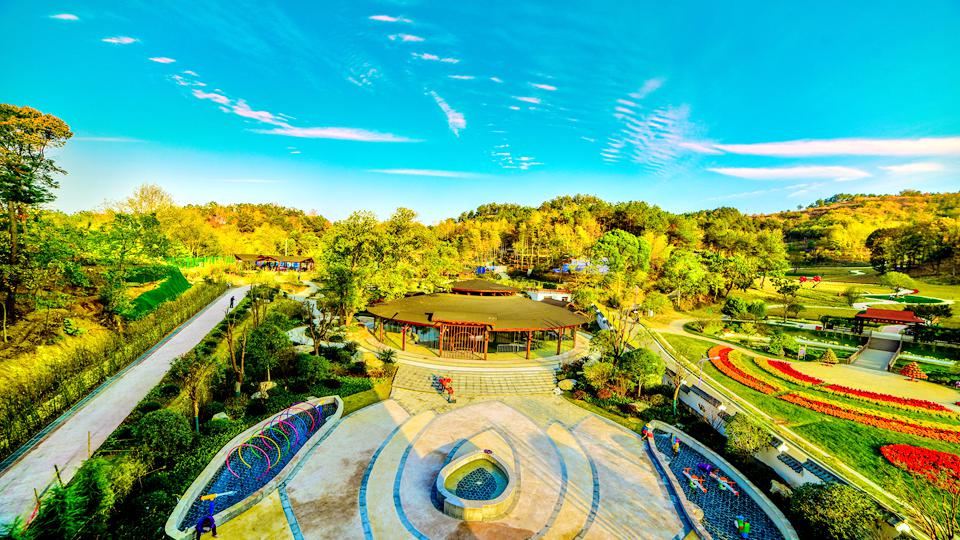
The resort is centered on the legend of the Wu girl flying to the sky, featuring the new Huizhou architectural style, and is a comprehensive holiday destination integrating sightseeing, leisure and vacation, parent-child entertainment, conferences and exhibitions. The park covers seven business types including "Encounter·Wuyuan", Huiyi culture, intangible cultural heritage experience, night tour experience, leisure and vacation, gourmet shopping, conference and exhibition, etc. , meeting, leisure and all-round travel needs......China · Wuyuan

Jingdezhen China Ceramics Museum
The Jingdezhen Ceramics Museum is a large-scale ceramics special art museum. The contents of the exhibition are divided into “history department”, “new China department” and special exhibition hall. The Jingdezhen Ceramics Museum exhibits five generations of celadon, the Qing Dynasty white porcelain of the Song Dynasty, and the blue and white porcelain of the Ming Dynasty. Not only can you appreciate the fine porcelain, but you can also learn about porcelain. It is a good place for a relaxing holiday.China · Jingdezhen

Huizhou Ancient City
The ancient city of Huizhou is located in Shexian County.LianjiangNorth Bank, originally built in the Qin Dynasty, became the seat of the ancient Huizhou Prefecture after the Tang Dynasty. Tang Xianzu's line, "My life's most cherished dream, yet I never dreamt of Huizhou," has captivated countless hearts. The city gates, archways, and the unique prefectural government offices still allow visitors to experience the ancient charm.Huizhou PrefectureThe legacy of the past. There are several roads leading into the ancient city, and it doesn't really matter which road you choose. The ancient city isn't very big; you can visit all the main attractions by walking around. It's near Renhe Tower in the north.Huiyuan GardenTicket offices are available at both the Nanqiao Tower and the Duojingyuan visitors Center outside the southern barbican. Among the several city gates of Huizhou Ancient City, the Nanqiao Tower is quite unique, with 13 pairs of pillars forming the gate frame, arranged in a row inside the gate opening to support the tower. It is said that this "row of pillars" is the authentic city gate style of the Northern Song Dynasty. The Xu Guo Stone Archway, located inside the East Watchtower (Yanghe Gate), is the essence of the entire ancient city, built in the twelfth year of the Wanli reign of the Ming Dynasty (1584 AD). The archway has eight pillars, with a cross-section shaped like the Chinese character "口" (kou), creating a three-dimensional structure. Both the four exterior and four interior sides can be viewed. Twelve stone lions guard the base of the pillars, and the upper part features exquisite stone carvings. Currently, this is the only ancient archway of its kind, highlighting the distinguished status of its owner, Xu Guo, a veteran of three reigns. Many attractions in the ancient city radiate from the Xu Guo Stone Archway. To the west, you can visit the Huizhou Prefectural Government Office, a modern reconstruction modeled after the Ming Dynasty government office; to the east, you can visit the memorial hall of Tao Xingzhi, a native of Shexian County; and to the north, you can visit...Huiyuan Garden,butHuiyuan GardenThe area is filled with antique-style buildings. Doushan Street, located in the northeast of the ancient city, brings together Hui-style ancient residences, archways, and ancient wells. Strolling along the ancient street paved with bluestone slabs and cobblestones is a truly delightful experience. Leaving the ancient city from the barbican, cross the "Taiping Bridge," a stone bridge built during the Hongzhi era of the Ming Dynasty, and you will arrive at...LianjiangSouth bank, here isTaibai TowerHe Xin'an Stele Garden.Taibai TowerBuilt to commemorate Li Bai, the Xin'an Stele Garden houses the Ming Dynasty calligraphic works *Yu Qingzhai Tie* and *Qingjiantang Tie*, which are worth visiting for calligraphy visitors. Along...LianjiangHeading east, the Changqing Temple Pagoda, built in the second year of the Xuanhe era of the Northern Song Dynasty (1119 AD), is rarely visited. However, it offers a truly unexpected surprise to visitors who get close: each layer of the outer pagoda has colorful murals, which have become blurred over the years and cannot be seen from a distance. The last attraction, Yuliang Scenic attraction, is located 2 kilometers east of the ancient city. The entrance is at...LianjiangThe north bank is the only way to get back to the north bank after visiting Changqing Temple Pagoda; if you're coming from the south bank, you'll need to cross Taiping Bridge again.Yuliang DamYou have to go around to Ziyang Bridge to cross the river. The main attractions of Yuliang attraction areLianjiangMing DynastyYuliang DamWhether or not you can walk up to the dam depends on...LianjiangThe water level is high; if it floods the ancient dam, it becomes impossible to climb it. When you reach the dam, remember to look for the small stone slabs, called "ingot locks," embedded horizontally between the long stone slabs; these help stabilize the dam. Also, look for the sluice gate in the center of the dam for drainage. If you'd like to take a ride on one of the locals' small boats along the shore...LianjiangThe price is negotiable. Residents still live on Yuliang Old Street on the north bank, and as always, they hang their bedsheets to dry in front of the ancient buildings; time seems to stand still here. The ancient city is lit up at night, offering stunning night views. (The text abruptly shifts to a description of the ancient city.)Tao Xingzhi Memorial HallThe nearby Shexian Jiuyue Huizhou Inn (Huizhou Ancient City Branch) offers accommodation, and there are more options outside the ancient city. Restaurants are concentrated in...Huiyuan GardenIn addition, local specialties include Huizhou Yipin Guo (a type of hot pot), a large pot layered with chicken, duck, meat, and fried tofu, garnished with egg dumplings, which is very tempting. Other dishes worth trying include hairy tofu and stinky mandarin fish. If you come across a vendor selling preserved vegetable pancakes, you can buy some to eat while you stroll around; they are very delicious.China · She County

Yue Yang Tower
"Be the first to worry about the world's worries and the last to enjoy its pleasures"—this line from Fan Zhongyan's Northern Song dynasty essay "Yueyang Tower chronicle" made Yue Yang Tower by Dongting Lake a household name. The main tower, Yueyang Tower, is said to have evolved from a naval review tower built by Lu Su of Eastern Wu during the Three Kingdoms period. Alongside Yellow Crane Tower in Hubei and Tengwang Pavilion in Jiangxi, it is hailed as one of the three great towers of southern China. Poets like Li Bai, Du Fu, Meng Haoran, and Bai Juyi once climbed it to compose verses. From the top floor, leaning on the railings, you can take in the vast expanse of Dongting Lake stretching hundreds of miles, with Junshan Island visible across the waters—where timeless verses and the lake's beauty converge in this moment. The tower itself is an architectural treasure: its three-story, triple-eave structure is built entirely of wood with mortise-and-tenon joints—no iron nails used—and four golden nanmu pillars run straight from the ground to the rooftop. The helmet-shaped roof, called "helmet crown," is supported by layered ruyi bracket sets, a rare design among surviving ancient towers in China. Inside, carved Qing-dynasty panels of "Yueyang Tower chronicle" are preserved—pause to admire them when ascending. The small attractions within the attraction each have their own highlights: near the gate, the "Five-dynasty towers" use bronze miniature models to recreate Yueyang Tower's different architectural styles from the Tang, Song, Yuan, Ming, and Qing dynasties, showcasing a millennium of changes at a glance. On the lakeshore in front of the main tower, ancient iron artifacts resembling shackles and weighing several tons are displayed—their casting era and purpose remain debated, forming a long-standing historical mystery. Additionally, there are the Shuanggong Shrine commemorating Fan Zhongyan and Teng Zijing, the stele corridor engraved with poems about the tower from various dynasties, and the Xiaoqiao Tomb—said to belong to the wife of Three Kingdoms general Zhou Yu—waiting to be explored. If you wish to extend your itinerary, you may also take a boat tour of Dongting Lake and visit Junshan Island on the opposite shore. The nearby Bianhe Street, a cobblestone-paved antique-style street, is lined with local snack stalls and souvenir shops, making it convenient to explore along with the nearby Baling Square.China · Yueyang

The National Archaeological Site Park of Nanchang Han Dynasty Haihun Marquis
The National Archaeological Site Park of Nanchang Han Dynasty Haihun Marquis was developed based on the capital city ruins of Zijingcheng from the Western Han Dynasty Haihun Marquisate, the mausoleum of its first marquise Liu He, and the burial clusters to the west and south of the city. It represents the most well-preserved and structurally intact settlement ruins of a Han Dynasty marquise state capital discovered in China to date. Liu He, the tomb's occupant, was Emperor Wu's grandson who was deposed after merely 27 days on the throne, later becoming the Haihun marquise and moving south before being buried here. Since archaeological excavations began in 2011, over 10,000 artifacts including goldware, bronzes, jades, lacquerware, and bamboo slips have been unearthed, bringing this historically obscure "deposed Han emperor" back into public view with remarkable completeness. The park is divided into six functional zones: the ruins museum area, tomb exhibition area, Zijingcheng exhibition area, archaeological reserve area, entrance service area, and historical experience & ecological leisure area. The visitor center at the entrance adopts the shape of a jade bi disk—its white circular structure resembles a jade button when viewed from above, symbolizing "offering jade to heaven." The ruins museum takes its design inspiration from the dragon-shaped jade artifact unearthed from Liu He's tomb, appearing like a coiled dragon resting between mountains and waters. Permanent exhibitions such as "Golden Haihun," "Scholarly Haihun," and "Vermilion Lacquer Haihun" are housed here, alongside the interactive "Encountering Haihun" gallery. Among the over 1,000 displayed artifacts, gold items like cakes, horse-hoof ingots, unicorn-toe ingots, and plates are arranged in rows—their quantity and variety being exceptionally rare among excavated Han tombs. A complete set of bianzhong bells and bianqing stone chimes shares the stage with a bronze goose-fish lamp, whose curved neck holds a fish; rotating its dish adjusts brightness while smoke filters through water in the goose's belly without escaping, mirroring the ingenuity of the Changxin Palace lamp. A bronze lamp inscribed with "Nanchang" stands as a rare Han-dynasty physical testament to the city's name. Among the over 5,000 bamboo slips unearthed from the tomb of Liu He, the long-lost "Qi version of the Analects" was discovered after being missing for more than 1,800 years. The restoration achievements are showcased in the "Fragrance of Haichun" bamboo slips exhibition, where over a hundred newly restored original slips are displayed alongside Han Dynasty manuscripts like the "Book of Songs." Travelers who appreciate ancient texts and calligraphy will find it worth a closer look. The wooden back of the lacquered mirror depicting Confucius and his disciples features portraits and biographical accounts. While the original is still under restoration, the museum presents a full-scale replica with enlarged images to highlight details—another exhibit not to be missed. Beyond the museum, the Liu He Mausoleum at Guodun Mountain is another key attraction. The mausoleum complex features a trapezoidal layout, with the two main tombs of Liu He and his marquise wife sharing the same burial ground but in separate chambers at the central elevated platform. Surrounding them are auxiliary burial sites and remnants of ritual structures such as ancestral halls, resting chambers, garden walls, and gate towers. Outside the complex lies a rare chariot-and-horse burial pit seldom seen south of the Yangtze River. The Guodun Yuan ruins exhibition area built atop the mausoleum offers a panoramic view of the main tombs' wooden chamber structure from an encircling observation deck, while a 360-degree suspended screen recreates the mausoleum's construction process and Han Dynasty marquise funeral rites. The chariot pit preserves its original excavated state, with a restored quadriga carriage model showcasing the grandeur of Han nobility's travels. The park is planned around the grand heritage site, covering a vast area with its core visitable zones concentrated at the traveler center, ruins museum, and Liu He's tomb complex. The Zijingcheng city site is primarily preserved in its original state, so focus your visit on the museum and tomb area. As distances between zones are considerable, shuttle services are available—we recommend allocating half a day. The Han-style gate towers and golden imperial carriage at the entrance are popular photo spots. Throughout the park, Han cultural activities like costume parades and themed markets occasionally take place; keep an eye out while exploring the exhibitions.China · Nanchang

Mingtang Mountain
The history of Mingtang Mountain dates back to Emperor Wu of Han, who established a place of worship here over 2000 years ago. The area is known for its unusual rock formations and conifer trees that line the edges of the cliffs. A waterfall is located at the foot of the mountain. There are five different areas within the visitor site, each of which has its own unique character.Yuexi · 41.9km from Yingshan

Jiangxi Provincial Museum
Jiangxi Provincial Museum is located in Xinzhou on the Lancang River in Nanchang City. It is surrounded by Fuhe River in the east, Zhongshan Bridge in the south, Lijiang River in the west and Tengwang Pavilion in the north. The environment is beautiful. The main building is made of the white porcelain three-tube excavated from Jingdezhen Yuyao in the Ming Dynasty. The museum, the revolution hall and the natural museum are all in one. The ancient ceramic art and modern architectural style are ingeniously integrated into one, solemn and elegant, unique.China · Nanchang

Tianzhu Shan
Tianzhu Mountain is located in Qianshan City in southwest Anhui Province. This scenic area is renowned for its majestic peaks, secluded caves, unique pines, and peculiar rocks, and is designated as a UNESCO Global Geopark. Tianzhu Mountain offers breathtaking beauty, thrilling adventures, and endless fun. You can hike to the summit to admire Tianzhu Peak from afar, traverse the exhilarating Qinglong Ridge, explore ancient passes and fortresses, delve into Mystery Valley, or enjoy a panoramic view of the stunning Liandan Lake. The sea of clouds at Tianzhu Mountain is also a spectacular sight. Travel tips Spring, summer and fall are the best seasons to visit Tianzhu Mountain. The attraction mainly consists of the west and east sections, with three typical routes: the small west loop, the new west route, and the grand loop. The small west loop is relatively easy and suitable for visitors with less than a day. The new west route is a classic itinerary covering the entire west section, requiring a full day. The grand loop allows you to enjoy both sections' scenery but demands good physical condition, so a two-day hike is recommended. The south gate is the main entrance to the attraction. However, after purchasing admission tickets at the visitor center, there is a mountain road leading to the south gate. Visitors can take the scenic bus to the lower station of the cableway. Currently, Tianzhu Mountain has three operating cableways: Muyanghe cableway (cableway 1), Dalongwo cableway (cableway 3), and Longtanhe cableway (cableway 4). Tour guide From the south gate, you can either hike or take the Dalongwo cableway to ascend the mountain. It is recommended to take the cableway up to avoid a less scenic section. After the cableway ride, there are two diverging paths leading to Zongguanzhai or Shenmigu (mystery valley). It's suggested to take Shenmigu, where massive rocks form various caves, then visit Feilaifeng (flying peak) and Tianzhufeng (heavenly pillar peak), before returning via Zongguanzhai for descent. This forms the west gate small loop route. Tianzhu peak stands at an elevation of approx. 1,488 m and cannot be climbed, only admired from a distance. However, it remains shrouded in clouds and mist for approx. half of the year, so spotting it depends on luck. Crossing the "Immortal crossing bridge" leads to the summit of Tianchi peak, which offers one of the best vantage points for viewing Tianzhu peak. On clear days, this spot provides expansive views and serves as an excellent location for watching sunrises, sea of clouds, and sunsets. After viewing Feilai peak and Tianzhu peak, if time permits, you can continue along the new route to admire Penglai peak, visit Baiyue platform, then pass by Writing desk - Immortal cave - Qinglong ridge - Qinglong pavilion - Lotus peak, and reach Liandan lake. If you have good stamina, you can continue descending via Huamei ridge - Yingzhen peak - Dansha pavilion - Tianzhu mountain villa route. If you have two days and are in good physical condition, you may choose to stay overnight at Tianzhu mountain villa and explore Dongguan the next day. The Qinglong ridge is a massive, narrow mountain ridge on Tianzhu mountain, offering an exhilarating walk that leads to the Wanjing platform, a viewing deck surrounded by cliffs on three sides. Standing on the platform amidst swirling clouds and mist feels like soaring through the skies. Nestled on the mountainside, the Liandan lake is another breathtaking attraction of Tianzhu mountain. The view from above is especially stunning, and you can also descend to stroll along its shores. As the saying goes, "the east route is perilous while the west route is scenic." The east route presents greater climbing challenges than the west route, featuring more steps carved directly into bare boulders with often bottomless cliffs on one side, requiring extra caution. It's particularly demanding on physical stamina (the east route sequence: Immortal peach rock - Warbler ridge - Echo platform - Thousand-zhang cliff - Great heaven gate - Magpie bridge - Mysterious valley ladder - East gate). Da Tianmen is a valley between two mountain peaks, featuring a long and steep stone staircase that ascends imposingly towards the sky, making it the most physically demanding section of the Dongguan route. The Queqiao bridge beyond Da Tianmen is even more perilous, with cliffs on one side and a sheer drop on the other. Although guarded by iron railings, extreme caution is required when crossing. The Qigu ladder is renowned for its steepness and narrowness, resembling a "thread of sky" in some sections, where climbers must use both hands and feet to pass through.Qianshan · 74.5km from Yingshan

Cheng Kan
Chengkan is located 31 kilometers north of Tunxi District, Huangshan. Its layout is in accordance with yin, yang and 8 diagrams. The scenery is not inferior to Hong Village, but not its reputation. But if you prefer less crowd, it is the place for you. There are many 3-story buildings from the Ming Dynasty that were described as “high-rises” at that time, as well as rare buildings dating back to the Song and Yuan Dynasties.China · Huangshan City
Experiences you can't miss in Yingshan
Featured Day tours in Yingshan
View all Day tours
5% off
Limited-time sale
FromBRL 978.09BRL 1,029.57
5% off
Limited-time sale
FromBRL 978.09BRL 1,029.57

5% off
Limited-time sale
FromBRL 815.08BRL 857.98

5% off
Limited-time sale
FromBRL 978.09BRL 1,029.57
Free things to do in Yingshan


What travellers say about Yingshan

🌸花间树里24 October 2026
5.0
The peaks resemble lotus blossoms, shrouded in mist and clouds; Jiuhua Mountain in the rain looks like a traditional Chinese ink painting. The Tiantai and Huatai platforms offer expansive views, and the plank roads connecting the peaks are perfect for taking photos. However, heavy fog on rainy or foggy days is a bit of a disappointment; it's recommended to visit on a sunny day for a better experience.
Jiuhua Mountain

Anonymous user23 October 2026
4.0
feel welcome and clean. Comfortable beds for family with kids .
Wunvzhou Resort

136***7421 October 2026
5.0
Thank you, Ms. Yu, for your professional, meticulous, and engaging lecture. In just two hours, we learned about the history of porcelain development from the Song, Yuan, Ming, and Qing dynasties, as well as the Republic of China and the founding of the People's Republic of China, and appreciated exquisite porcelain pieces from each dynasty. Furthermore, Ms. Yu used her extensive professional knowledge to introduce various methods for identifying the age, type, use, style, and quality of porcelain, opening a new world for us. She even thoughtfully reminded us of the precautions for taking photos with the Silent Buddha. Her lecture was truly sincere and packed with valuable information. This trip was incredibly rewarding and I'm full of energy! 🥰
Jingdezhen China Ceramics Museum

田园生香菜14 August 2026
5.0
The Huizhou Prefectural Government Office truly lives up to its reputation as the core government office of ancient Huizhou. Restored to its original site according to Ming Dynasty regulations, its central axis layout is orderly and solemn, with the ceremonial gate, main hall, and second hall unfolding in sequence, showcasing the grandeur of an ancient government office. The exquisite Hui-style wooden structure and intricate carvings add to its charm. Visitors can also watch live court performances, gaining a direct experience of the ancient government office system. The office exudes a rich historical atmosphere, making it more than just a place for taking photos; it's a perfect opportunity to quietly appreciate the cultural heritage of Huizhou and a must-see cultural highlight in the ancient city of Huizhou.
Huizhou Ancient City

道士不好惹19 October 2026
5.0
Yueyang Tower, located on Dongting North Road in Yueyanglou District, Yueyang City, Hunan Province, sits atop the western city wall of the ancient city of Yueyang, close to the shore of Dongting Lake. Overlooking Dongting Lake and facing Junshan Mountain, it was built atop the ancient Yueyang Gate and is considered one of the "Four Great Towers of Ancient China," along with the Yellow Crane Tower, Tengwang Pavilion, and Penglai Pavilion. Yueyang Tower, along with the Yellow Crane Tower in Wuhan, Hubei Province, and the Tengwang Pavilion in Nanchang, Jiangxi Province, are known as the Three Great Towers of Jiangnan.
Yue Yang Tower

血凤凰的泪21 October 2026
5.0
I took the 8:30 bus (666), and around 10:00 AM I exchanged my ticket, made some tea, and boarded the scenic shuttle bus to begin my visit. I took the 666 bus back at 3:20 PM. I highly recommend visiting this place.
The National Archaeological Site Park of Nanchang Han Dynasty Haihun Marquis

Voyager31 August 2026
5.0
Mingtang Mountain Scenic Area is cool and refreshing, perfect for escaping the summer heat. The scenery is beautiful, and the crowds aren't too large. Prices are also very low, with the same price both up and down the mountain. To ascend, you can choose a completely free hiking route, or an easier route combining a shuttle bus, cable car, and magic carpet. For an extra fee, you can descend via a slide, cable car, and glass rafting experience, which is very convenient for seniors.
Mingtang Mountain
Anonymous user18 October 2026
5.0
Teacher Xiaoyu's explanation was excellent. She really wanted to tell us about the treasures of the Jiangxi Provincial Museum in a short time. You could feel her passion for her work. I am grateful to have had the opportunity to hear her explanation.
Jiangxi Provincial Museum

M47***9918 October 2026
4.0
Tianzhu Mountain is very beautiful. The weather was great the day we went, so it was truly stunning. It was very convenient to take the cable car up and down the mountain with our elderly relatives. The only downside is that the overall price is a bit high, but it's still worth a visit.
Tianzhu Shan

M13***4623 October 2026
5.0
Chengkan was my favorite attraction on this trip. During the day, I explored the historical sites, and at night, I watched the fish lantern show. Participating in the activities created a festive atmosphere, making it hard to leave. Highly recommended! Staying in the village is best for a more immersive experience!
Cheng Kan


