Maizhokunggar

Things to do in Maizhokunggar

Search attractions or local attractions & tours
Search

Explore top experiences

Top 10 attractions in Maizhokunggar

View all Attractions
Potala Palace
No. 1 of Best Things to Do in Tibet

Potala Palace

8.2
4.7/5
22.5k reviews

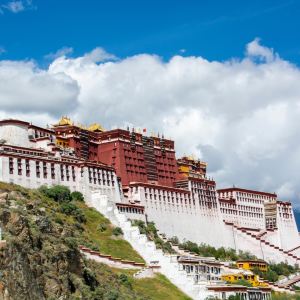
The Potala Palace is the symbol of Xizang and a sacred place in the hearts of all pilgrims! "Potala" is a Sanskrit word, also translated as "Putuo", which originally refers to the residence of Guanyin Bodhisattva. When you come here, you can not only view the large number of historical relics collected in the palace, appreciate the wonderful architectural art of the Tibetan people, but also have a baptism of the soul in that holy atmosphere. The origin of the Potala Palace According to historical records: In the 1930s of the seventh century AD, the 33rd Tibetan King Songtsen Gampo moved the capital to Lhasa and began to build the Potala Palace. Since then, major religious and political ceremonies have been held here, and it has become the ruling center of Xizang integration of politics and religion. The White Palace and the Red Palace The Potala Palace has a distinct Tibetan style and is majestic. It is the existing complete palace-style building complex in Xizang and is known as one of the world's top ten earth buildings. Its main buildings are divided into two parts: the White Palace and the Red Palace. The White Palace is named after its white exterior wall. It is the place where the lamas live and conduct political activities. Because the sun shines all day long, it is called the East and West Sunlight Palaces. The Red Palace is located at the top center of the Potala Palace. Its outer wall is red and it consists of many stupas and various Buddhist temples. Historical relics The Potala Palace houses and preserves a large number of historical relics, including stupas, statues, murals, thangkas, scriptures and books, as well as gold books, jade books, gold seals granted by the emperors of the Ming and Qing dynasties, which show the historical relationship between the Xizang local government and the central government, as well as gold and silver wares, jade wares, porcelain, enamel and handicrafts. Among them, the eight stupas from the fifth generation are eye-catching. They are all magnificent and decorated with a dazzling array of gems, which can be called a palace of art.

Lhasa · 62.4km from Maizhokunggar
Ganden Monastery

Ganden Monastery

4.5
4.6/5
109 reviews

The Ganden Monastery consists of more than 50 buildings, mainly including the Tsongkhapa Hall, the Tsongkhapa Dorm, the Yangbajian Sutra House, the Tsongkhapa Lingta Temple, Jiangzi Dratsang, Xiazi Dratsang and 23 Kang villages, 20 It consists of a rice village. Among the 23 Kang villages, each Kang has a scripture hall. Most of them are two-story buildings. They are built along the mountain, layer upon layer. From a distance, they occupy the entire half of the mountain. The scale is grand and spectacular. The main hall of Cuoqin (meaning Dajing Hall, namely Daxiong Hall) was built in 1409. There are 108 large columns, which can accommodate 3300 monks chanting sutras at the same time. The main offering in the hall is the future Buddha Jampa Buddha, and later offerings to Tsongkhapa and other gilded bronze Buddhas. There are five golden lions in the hall, named "Gandan Picking Red", which is the seat after Tsongkhapa founded the Yellow Sect. There is a very strange pillar in the main hall. It is a palm-thick distance from the ground. People who come to the Ganden Monastery to worship Buddha must touch the bottom of the pillar to pray for good luck. On the left side of the Cuoqin Hall is the Yangbajian Academy, which is four stories high. It is said that it cost 900 taels of silver to cast, and the pagoda is decorated with a large number of precious jewels, which is magnificent. The Ling Pagoda is covered with a yurt-like sandalwood tent with a curtain inside, and the top of the pagoda is covered with an umbrella, which is very beautiful. There are two major Zhacangs in Ganden Monastery, Xiazi Zhacang and Jiangzi Zhacang. Jiangzi Zhacang (meaning "North Summit Monastery") is the dormitory of Gandan Tribac's master and his daily retreat. Xiazi Dratsang (meaning "Dongding Monastery") was built by Tsongkhapa personally passed on to Sherpa Rinchen Gyaltsen. The murals and sculptures in the halls of Ganden Monastery are very exquisite, and there are many cultural relics and treasures in the temple. Among them, in 1757, Emperor Qianlong of the Qing Dynasty bestowed the temple with armors inlaid with gold and silver jewels, the armor in four languages of Han, Manchu, Mongolian and Tibetan, and the complete set of "Ganjur" in the Tibetan "Tripitaka" written by pure gold Khan. Buddhist scriptures, as well as many beautifully made silk "Thangkas", Tsongkhapa's seat and the meditation bed at his death. There are 24 thangkas gifted by Emperor Yongle of Ming Dynasty, and cushions of Gushi Khan, all of which are rare treasures. All this is enough to show the long history of Ganden Monastery and the lofty religious status. Twenty-four of the thangkas are displayed to the monks and believers every year for three weeks, and the annual "Gandan Embroidery Tang Festival" is also formed.

Lhasa · 26km from Maizhokunggar
Jokhang Temple
No. 1 of Global Traveller-Picked Attractions in Lhasa

Jokhang Temple

7.1
4.5/5
4.6k reviews

Jokhang Temple, known as "Jokhang" in Tibetan and also called "Tsulag Khang," is the ultimate destination for Tibetan Buddhist devotees. In their hearts, Jokhang Temple is as sacred as the Potala Palace. Both geographically and spiritually, Jokhang Temple is the true holy site and center of Tibetan Buddhism, holding an exceptionally lofty and pure status in Tibetan Buddhist history. Built in the mid-7th century by Tibetan King Songtsen Gampo to enshrine the 8-year-old life-sized statue of Sakyamuni brought by his Nepalese princess Bhrikuti from her hometown of Kathmandu, Jokhang Temple gained further prominence in 1409 when Tsongkhapa, the founder of the Gelug school, propagated Buddhist teachings and held the Great Prayer Festival here, solidifying its pivotal role in Tibetan Buddhist history. In the 8th century, the 12-year-old life-sized statue of Sakyamuni brought by Princess Wencheng of the Tang Dynasty from Chang'an was enshrined in Jokhang Temple, becoming its most treasured relic and a must-see for travelers and pilgrims alike. In addition, the temple houses nearly 1 km-long Tibetan-style murals depicting "Princess Wencheng's journey to Tibet" and "The construction of Jokhang Temple," as well as two embroidered thangkas of guardian deities from the Ming Dynasty, which are rare artistic treasures. Lhasa has three circumambulation routes—inner, middle, and outer—all centered around Jokhang Temple. The inner route, called "Nangkhor," circles the Jokhang Hall within the temple. The middle route, called "Barkhor," goes around the outer perimeter of Jokhang Temple. The outer route, called "Lingkhor," encompasses the Potala Palace, Chakpori Hill, Ramoche Temple, and Jokhang Temple. Attraction guide: Entering Jokhang Temple through the main gate leads to a courtyard. On the east side of the courtyard are rows of butter lamps, which remain lit year-round as devotees replenish the butter daily. Behind the butter lamps is the main entrance to Jokhang Temple's central hall. To the left of the entrance is a statue of Padmasambhava, founder of the Nyingma school, and to the right is Jampa Buddha, also known as Maitreya or the Future Buddha. The right wall features murals depicting the temple's founding, including scenes of the Potala Palace in the 7th century and the lake-filling construction of Jokhang Temple. Proceeding clockwise, visitors encounter the chapel dedicated to Tsongkhapa, founder of the Gelug school, and his eight disciples. Continuing right, passing the Yaksha and Naga chapels, and beyond hundreds of butter lamps lies the renowned "Jokhang" Hall—the heart and essence of the temple. At its center is the main assembly hall, where monks chant and meditate, surrounded by smaller chapels. The unmissable highlight is the central chapel housing the 12-year-old life-sized golden statue of Sakyamuni, brought by Princess Wencheng. This sacred center of Jokhang Temple is the ultimate destination for devout pilgrims. Stairs beside the courtyard lead to the second and third floors. The second floor features the Dharmaraja Chapel, with statues of King Songtsen Gampo, Princess Wencheng, and Princess Bhrikuti, as well as the Palden Lhamo Chapel dedicated to the protective deity. The spacious terrace on the second floor offers a panoramic view of the Potala Palace, making it an ideal photo spot. The third floor's golden roofs are another attraction, though this level is rarely open to the public. If fortunate enough to ascend, visitors are awestruck by the four resplendent golden pinnacles.

Lhasa · 61.2km from Maizhokunggar
Maizhokunggar Today's weatherClear -5-10℃
Maizhokunggar weather for the next 2 days11/10: -5-8℃, 11/11: -5-9℃

Free things to do in Maizhokunggar

What travellers say about Maizhokunggar

user-avatar
安迪珠宝1 April 2025
5.0
The scenery of the Sichuan-Tibet Highway is very beautiful. You can go for fun if you pass through Kangding, or go to Bomi and Nyingchi to see the peach blossoms, or go to Basu to see Dongda Mountain. The only difference is that the altitude is a bit high, so you have to take care of your health.

Sichuan-Tibet Highway

user-avatar
M29***624 April 2020
5.0
Drikung Thil Monastery is located in Menba Township, Mezhokungkha County, Lhasa City, Tibet Autonomous Region. Drikung Thil Monastery once had a very glorious position in the local political history and religious history of Tibet. It is the golden ancient road connecting the northern Tibetan grasslands and the Lhasa plain. It is a Tibetan Buddhist Drikung Kagyu monastery and the main monastery of the Drikung Kagyu sect. Drikung Thil Monastery, whose full name is "Drikung Thil Miyan Sattha Bodhizhou Garden", is the ancestor of the Drikung Kagyu sect of Tibetan Buddhism.

Drikung Thil Monastery

user-avatar
whlyh28 June 2025
4.0
【景色】高速经过米拉山垭口,打卡照相,海拔4700米,在国道上观景台应该风光无限【趣味】一般【性价比】免费

Mila Pass

user-avatar
勇敢的哥12 November 2024
5.0
The scenery is gorgeous in late autumn, with snow-capped mountains and colorful forests along the way. There are parking areas and parking strips along the way, where you can park and enjoy the view safely, and the drone has a better visual effect. You can also drive with G318 or turn into it to enjoy it slowly.

Lhasa-Nyingchi Expressway

user-avatar
M29***0330 September 2026
5.0
Our tour guide, Mr. Cheng, was very handsome, gave a very detailed explanation, and had excellent service. If you have the chance, you must experience the charm of the Potala Palace. Highly recommended! 👍👍👍

Potala Palace

user-avatar
好景致29 July 2023
5.0
Ganden Monastery (also known as Ganden Monastery) was personally planned and built by Tsongkhapa, the founder of the Gelug Sect of Tibetan Buddhism, in 1409 (both Drepung Monastery and Sera Monastery were built by Tsongkhapa's disciples). It is also known as the mother temple or ancestral temple of the Yellow Sect. In the 1960s, a catastrophe razed Ganden Monastery to the ground. Local villagers successfully hid the statue of Tsongkhapa, which was the only cultural relic in Ganden Monastery that escaped the looting. The buildings seen now were newly built after 1980.

Ganden Monastery

user-avatar
李肢强8 October 2026
5.0
Visiting Jokhang Temple again after many years, the entrance has been significantly improved, making it look more like a proper tourist attraction. The interior remains the same, but the management is more comprehensive; however, the third floor is no longer open to the public. It's a must-see attraction on any trip to Lhasa.

Jokhang Temple

user-avatar
Anonymous user31 July 2026
5.0
When visiting Lhasa, seeing the Princess Wencheng Theater is a must-do attraction. The theater is quite large, with a museum nearby, and the Potala Palace is visible in the distance directly opposite. It's definitely worth a visit.

Princess Wencheng Theater

Trip Moments in Maizhokunggar

Popular cities near Maizhokunggar
Frequently asked questions

How can I contact Trip.com customer support?

Get help anytime, anywhere within 30 secondsContact customer support

Change and cancellation policies vary by attractions and tours. Please check the product details page for more information.

Ticket prices may vary between weekdays and weekends, as well as during peak and off-peak seasons. When booking with Trip.com, you can also use Trip Coins to get extra savings. For more tips on booking discounted tickets, please visit Trip.com for the latest information.