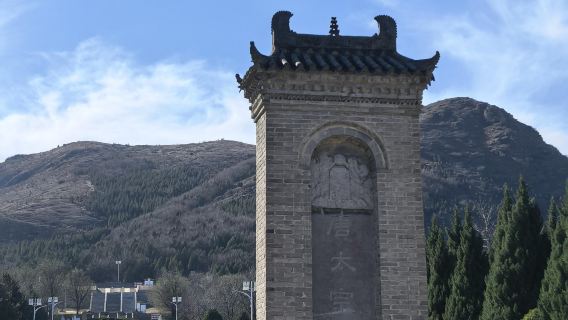
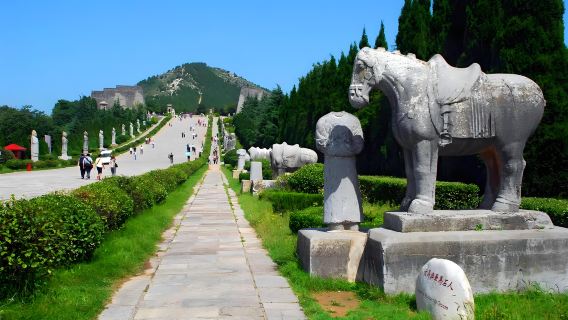
▲ Maoling Mausoleum: In pursuit of Emperor Wu of Han and Huo Qubing Maoling, the tomb of Emperor Wu of Han, is a large-scale imperial mausoleum of the Western Han Dynasty. The stone carvings at Huo Qubing's tomb in Maoling Museum are national treasures, including the iconic "Horse trampling a Xiongnu warrior" and other sculptures renowned for their bold simplicity—they represent China's early stone carving art. Here, visitors can envision Emperor Wu's grand territorial expansion and reflect on the legendary tales of the young general Huo Qubing.

▲ Maoling attraction consists of two core sections: the Maoling imperial mausoleum area and Maoling Museum (Tomb of Huo Qubing). The vast mausoleum complex houses over 20 satellite tombs, where prominent Western Han figures such as Huo Qubing, Wei Qing, Huo Guang and Lady Li rest, forming an extensive imperial mausoleum site spanning 66.5 km² at Maoling Museum.

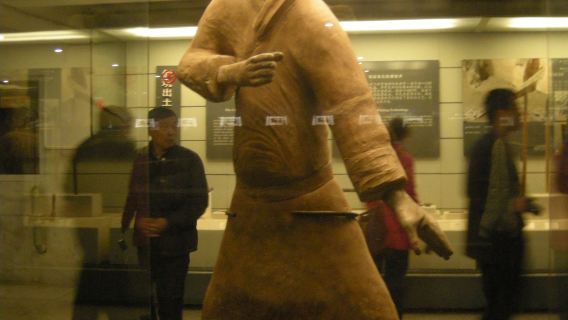
▲ Maoling Museum was built around the tomb of Huo Qubing, which was deliberately shaped like the Qilian Mountains to commemorate his military victory in the Hexi region. The museum houses a **group of large-scale Western Han Dynasty stone carvings**, with "Horse trampling a Xiongnu warrior" as the most iconic piece. It contains 17 Han Dynasty round-carved stone sculptures, representing China's earliest surviving and best-preserved monumental stone carvings. These works, characterized by their primitive simplicity and majestic vigor, are milestone achievements in ancient Chinese sculpture history, with many classified as national treasures. The museum's exhibition halls also display numerous Han Dynasty artifacts unearthed from Maoling, including gilded bronze ware, copper vessels, and roof tiles, offering a vivid glimpse into the prosperity of the Western Han era. Stroll through Maoling, where the towering pyramidal mausoleum of the emperor stands on the Guanzhong Plain, ancient cypresses shade Huo Qubing's tomb, and stone carvings from two thousand years ago stand silently. Here, you can understand the era of Emperor Wu of Han's territorial expansion, feel the youthful ambition of Huo Qubing's declaration, "How can I settle down when the Xiongnu remain unvanquished?" and immerse yourself in the majestic and profound civilization of the Han Dynasty.

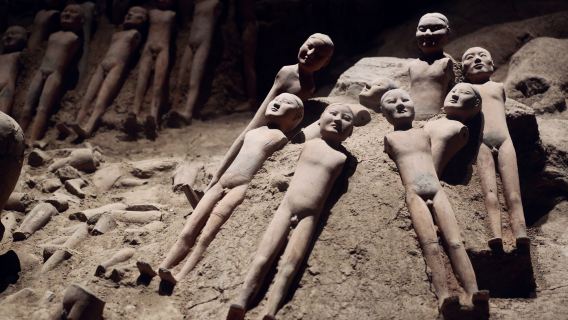
▲ The Yangling Mausoleum of Emperor Jing of Han witnesses the prosperous era of recuperation. It features the world's first underground ruins museum, a glass walkway overlooking the original archaeological pit, and unique Han Dynasty dressed pottery figurines. Compared to popular major attractions, it offers a quieter experience, ideal for calmly understanding the early Western Han mausoleum system and experiencing the daily lives of ordinary people in the Han Dynasty.


▲ The attraction highlight is the **outer burial pits protection and exhibition hall of the emperor's mausoleum**, the world's first fully underground ruins museum. Travelers walk on the glass walkway, directly overlooking the original archaeological pit, and view the famous Han Dynasty nude pottery figurines (dressed pottery figurines) up close. Over 100,000 pottery figurines, animal figurines, and daily utensils have been unearthed here, earning it the title of an underground miniature Han Dynasty. Supporting exhibition halls: the archaeological exhibition hall (selected unearthed cultural relics), the south gate ruins protection hall (one of the earliest and highest-ranking triple-gate ruins extant in China), and the ancestral temple ruins.