Things to do in Damxung
Explore top experiences
Top 10 attractions in Damxung


Jokhang Temple
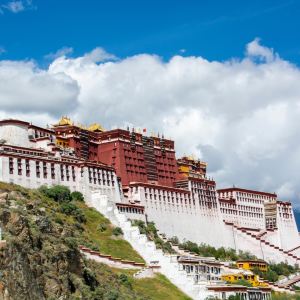
Jokhang Temple, known as "Jokhang" in Tibetan and also called "Tsulag Khang," is the ultimate destination for Tibetan Buddhist devotees. In their hearts, Jokhang Temple is as sacred as the Potala Palace. Both geographically and spiritually, Jokhang Temple is the true holy site and center of Tibetan Buddhism, holding an exceptionally lofty and pure status in Tibetan Buddhist history. Built in the mid-7th century by Tibetan King Songtsen Gampo to enshrine the 8-year-old life-sized statue of Sakyamuni brought by his Nepalese princess Bhrikuti from her hometown of Kathmandu, Jokhang Temple gained further prominence in 1409 when Tsongkhapa, the founder of the Gelug school, propagated Buddhist teachings and held the Great Prayer Festival here, solidifying its pivotal role in Tibetan Buddhist history. In the 8th century, the 12-year-old life-sized statue of Sakyamuni brought by Princess Wencheng of the Tang Dynasty from Chang'an was enshrined in Jokhang Temple, becoming its most treasured relic and a must-see for travelers and pilgrims alike. In addition, the temple houses nearly 1 km-long Tibetan-style murals depicting "Princess Wencheng's journey to Tibet" and "The construction of Jokhang Temple," as well as two embroidered thangkas of guardian deities from the Ming Dynasty, which are rare artistic treasures. Lhasa has three circumambulation routes—inner, middle, and outer—all centered around Jokhang Temple. The inner route, called "Nangkhor," circles the Jokhang Hall within the temple. The middle route, called "Barkhor," goes around the outer perimeter of Jokhang Temple. The outer route, called "Lingkhor," encompasses the Potala Palace, Chakpori Hill, Ramoche Temple, and Jokhang Temple. Attraction guide: Entering Jokhang Temple through the main gate leads to a courtyard. On the east side of the courtyard are rows of butter lamps, which remain lit year-round as devotees replenish the butter daily. Behind the butter lamps is the main entrance to Jokhang Temple's central hall. To the left of the entrance is a statue of Padmasambhava, founder of the Nyingma school, and to the right is Jampa Buddha, also known as Maitreya or the Future Buddha. The right wall features murals depicting the temple's founding, including scenes of the Potala Palace in the 7th century and the lake-filling construction of Jokhang Temple. Proceeding clockwise, visitors encounter the chapel dedicated to Tsongkhapa, founder of the Gelug school, and his eight disciples. Continuing right, passing the Yaksha and Naga chapels, and beyond hundreds of butter lamps lies the renowned "Jokhang" Hall—the heart and essence of the temple. At its center is the main assembly hall, where monks chant and meditate, surrounded by smaller chapels. The unmissable highlight is the central chapel housing the 12-year-old life-sized golden statue of Sakyamuni, brought by Princess Wencheng. This sacred center of Jokhang Temple is the ultimate destination for devout pilgrims. Stairs beside the courtyard lead to the second and third floors. The second floor features the Dharmaraja Chapel, with statues of King Songtsen Gampo, Princess Wencheng, and Princess Bhrikuti, as well as the Palden Lhamo Chapel dedicated to the protective deity. The spacious terrace on the second floor offers a panoramic view of the Potala Palace, making it an ideal photo spot. The third floor's golden roofs are another attraction, though this level is rarely open to the public. If fortunate enough to ascend, visitors are awestruck by the four resplendent golden pinnacles.Lhasa · 91.6km from Damxung

Nam Co Township
Namtso Township is under the jurisdiction of Damxiong County, Lhasa City. Located in the northern part of the county, with a total area of 40,000 square kilometers and a population of 4,000 people, it is accessible by road.Damxung · 28.7km from downtown

Princess Wencheng Theater
Princess Wencheng Theater is located in Cijuelin Valley on the south bank of Lhasa River. It reconstructs the epic of marriage 1,300 years ago with an open-air stage at an altitude of more than 3,000 meters. This high-altitude live-action theater, backed by the mountains projected by the Potala Palace, uses the natural mountain as a curtain, and uses the starry sky, snow-capped peaks and Tibetan watchtowers to interpret the magnificent chapter of the integration of Han and Tibetan civilizations. The core of the theater is the 90-minute large-scale live-action drama "Princess Wencheng". On the stage of more than 20,000 square meters, more than a dozen Tibetan and Han actors recreate the legend of the princess carrying the life-size statue of Sakyamuni at the age of 12 into Tibet with scenes such as galloping horses, moving Buddhist temples, and pouring waterfalls. Scenes such as the collapse of the Winter Palace, the snowy wedding, and the Tibetan wedding, combined with laser-projected thangkas and real herds of cattle and sheep, draw the audience into the torrent of history. The theater is surrounded by rich supporting facilities, and the Princess Wencheng Tibetan Cultural Park is full of special cultural and creative products. Every time there is a performance, there will be a grand garden party, which is very lively.Lhasa · 94.6km from Damxung

Nam Co Sheng Xiang Tian Men
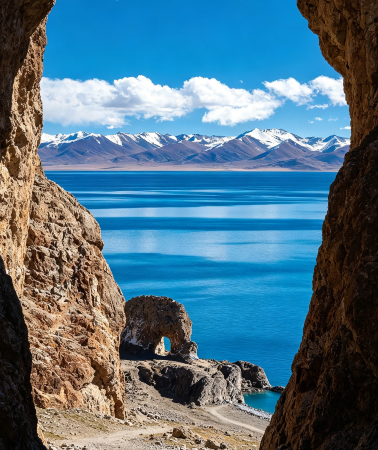
Nam Co Sheng Xiang Tian Men is located in Qinglong Township Village 5, Baingoin County, Nagqu Prefecture, on the Qiaduo Langka Island in the northern part of the holy lake Nam Co attraction. The entrance to the Nam Co Sheng Xiang Tian Men tourism town leads to the dry karst cave, Sansheng Stone, Couple Stone, and the Sheng Xiang Tian Men tourism view belt. The attraction covers an area of 59 square kilometers. The Nam Co Sheng Xiang Tian Men tourist attraction boasts a rich variety of resource types, with a large number of distinctive resource entities. Following the "Classification, Investigation, and Evaluation of Tourism Resources" (GB/T 18972-2003) and considering the distribution of tourism resources in the area, a comprehensive survey, exploration, organization, classification, and summary of tourism resources were conducted. In terms of resource types, the attraction encompasses all seven major categories outlined in the "Classification, Investigation, and Evaluation of Tourism Resources" (GB/T 18972-2003), covering all primary types and most subcategories and basic types under the national resource classification standard. These include: - 9 basic types of geological landscapes - 3 basic types of water scenery - 4 lake wetlands - 2 natural hot springs - 7 basic types of biological landscapes - 3 basic types of celestial and climatic phenomena - 3 basic types of historical relics - 3 basic types of architectural and facility resources - 4 basic types of tourism commodities - 4 basic types of cultural activities The Nam Co Sheng Xiang Tian Men tourist attraction holds significant heritage value, scientific research value, and tourism experience value. The relic resources remain unaffected by industrialization, tourism development, or other human activities, preserving their original appearance and maintaining the integrity of the resource entities. Nam Co Sheng Xiang Tian Men combines diverse natural landscapes including plateau snow mountains, lakes and rivers, marsh meadows, and celestial phenomena with unique Tibetan nomadic culture, highland village views, and sacred Tantric Buddhist sites. ·Tianmen of the Sacred Elephant Legend has it that on the northern Qiaduo Langka Island of Nam Co Sheng Xiang Tian Men, there are many naturally formed Buddha images and inscriptions on the cliffs, which people have endowed with religious significance as sacred relics. When practitioners came to Qiaduo Langka Island, lacking houses or temples, they carved caves into the cliffs for long-term meditation. As more practitioners arrived, Qiaduo Monastery was built on the island, belonging to the Gelug school, now over 370 years old. During its peak, Qiaduo Monastery had over 500 monks chanting and practicing. In front of and behind Nam Co Sheng Xiang Tian Men stand two small independent reefs resembling fierce crocodiles, guarding the sacred site on either side. The unique "gateway" of Nam Co Sheng Xiang Tian Men offers distinctive views when looking through the heavenly gate.Nam Tso Lake and Nyenchen Tanglha Mountains stand side by side in perfect harmony. In the many caves on the northwest side, ancestors have left numerous historical rock paintings. These paintings date back to ancient times, featuring rich content where themes of nature and religion intertwine, encompassing profound Tibetan cultural significance. As early as 1996, the People's Government of Xizang Autonomous Region and the People's Government of Baingoin County designated this area as an autonomous region-level cultural relic protection site. Crescent Bay At the mountaintop beside Nam Co Sheng Xiang Tian Men, overlooking the lake and its crescent-shaped shoreline, lies the Moon Bay - a classic photography spot for capturing reflections of the lake waters and snow-capped mountains. - Sansheng Stone The peninsula extending into the lake near Nam Co Sheng Xiang Tian Men is called the "Stone of Three Lives," symbolizing the past, present, and future according to legend.Baingoin · 70.9km from Damxung

Yangbajing Temple
Yangbajing Temple is located in Yangbajing Town, Dangxiong County, Lhasa City. Yangbajing Temple was built in 1490 from the fourth living Buddha of the Red Hat Department, Chozha Yeshi, to the three centuries when the reincarnation was stopped in 1791. It was successively added and expanded, forming a grand temple complex. There are many cultural relics in the monastery, and the monastery assets are also extremely considerable due to the financial support from the local forces of Renpengpa Dunyue Dorje and the local government of Zangba Khan. Yangbajing Temple was destroyed during the "Cultural Revolution". The Third Plenary Session of the Eleventh Central Committee of the Communist Party of China gradually implemented the party's ethnic and religious policy. In 1985, the government allocated funds to repair it.Damxung · 85km from downtown

Barkhor Street
Barkhor Street, also known as Bajiao Street located in Lhasa, Tibet. The street is a well known ancient street representing the culture and folk customs of Tibet. While walking on the street, you can experience what life was like in the past, and experience the food and culture of natives to Lhasa. You can view and learn things from traditional dress, and dances, to traditional meals, to the architecture of the town itself, which has been well preserved throughout the years. Barkhor Street is a must-visit location to experience in Lhasa.Lhasa · 91.6km from Damxung

Tibet Museum
The Tibet Museum is located across the road in the east of Norbulingka in Lhasa City. It is the first museum with modern functions in Tibet. There are many precious cultural relics in the museum, showing the splendid culture and long history of the unique charm of the Tibetan nation. The museum is divided into three floors, the first floor is a tourist souvenir shop, the second floor is a Tibetan history exhibition, and the third floor is special exhibitions and temporary exhibitions such as thangkas, animals and plants, and jade. The exhibition hall of the museum consists of four major parts: prehistoric culture, indivisible history, culture and art, and folk culture. Each exhibition hall displays a wealth of treasures in the collection, such as statues of Buddha and Bodhisattva in various textures and shapes, handwritten Tibetan classics dipped in gold powder, silver powder, coral powder, etc. Jade sticks used in rituals, colorful thangkas, various musical instruments and instruments, handicrafts with distinctive national characteristics, pottery with unique styles, etc., from Tibetan history, culture, art, religion, folk customs, etc. It shows the audience the splendid culture and long history of the Tibetan people's unique charm. The prehistoric culture exhibition hall displays the stone chips, stone cores and other Paleolithic tools of daily life excavated in northern Tibet in the early days, as well as stone adzes, stone axes, stone chisels and stone clusters, bone cones, bones unearthed in Qamdo in the late Neolithic Age. The needles and various red, grey and black pottery utensils completely reproduce several representative eras before Tibet entered a civilized society: the Paleolithic, Neolithic, Bronze Age and Iron Age. The inseparable history exhibition hall intuitively reveals that Tibet has been an important and inseparable part of China since ancient times through some precious historical materials. The two exhibition halls of culture and art and folk culture vividly show the audience the long history and splendid culture of Tibet with exquisite Buddhist statues, thangkas, pottery, scriptures and other precious cultural relics. A must-see in all the collections of the Fifth Golden Seal is the Fifth Golden Seal. At that time, Ngawang Lobsang Gyatso went to Beijing for pilgrimage in order to obtain the support of the central government of the Qing Dynasty, and he was bestowed upon him after the fifth Ngawang Lhasang Gyatso was enshrined in Shunzhi. The golden seal is made of pure gold and weighs 8.5 kilograms. The seals are written in Han, Tibetan, Manchu and Mongolian. In addition, there is also a legend that Princess Wencheng drew a "witch map" thangka about the terrain of the Tibetan area. In the picture, a witch is lying on her back. There are temples built in twelve important parts of her body, such as the joints and the heart. The Jokhang Temple is located at the heart of the witch, which has a profound meaning. Audio guides are available in the museum and can be rented for free at the gate. Entering the exhibition hall, in front of different exhibits, you can hear the explanations of the exhibits in four languages including Tibetan, Chinese, Japanese and English. For the protection of cultural relics, the museum stipulates that photography is not allowed in the exhibition hall, please follow the regulations.Lhasa · 91.7km from Damxung

Sera Monastery
Sera Monastery is located at the foot of Sera Utsé Mountain in the northern suburbs of Lhasa, one of the three great monasteries of Lhasa and the second largest monastery in Tibet. The architecture within the monastery is of Tibetan style, with the main hall being resplendent and grand. The monastery houses numerous Buddha statues, as well as a vast collection of precious artistic treasures such as scriptures, exquisite thangkas, appliqué thangkas, and murals, making it an excellent place for worship or sightseeing. Famous debate: The debate at Sera Monastery has long been renowned in Tibet and is a highlight for visitors. The debate ceremony takes place in the debate courtyard north of the monastery, starting daily at 3 p.m. and lasting until 5 p.m., except on Sundays and special holidays. During the debate, monks sit on the ground while another stands opposite, engaging in exaggerated motions to argue scriptures, which is quite fascinating. Exploring Sera Monastery's architecture: Visitors can walk around to admire the monastery's halls. The entire monastery has a perimeter of approx. 1.5 km, with its layout centered around the Tsokchen Hall, surrounded by numerous buildings of various colleges. Unlike Han Chinese Buddhist architecture, Sera Monastery is not symmetrically arranged but scattered across the mountainside. Notable halls include the Hayagriva Chapel and the Tsokchen Hall, which are must-sees. The Hayagriva Chapel enshrines the famous statue of Hayagriva, a powerful guardian deity in Tibetan Vajrayana Buddhism believed to ward off evil and resolve difficulties. Legend has it that this statue was unearthed by Tsongkhapa, founder of the Gelug school, after he heard a horse's neigh during a walk. Thus, it is said to possess strong exorcising powers in Tibetan Buddhist lore. This is also a focal point for devotees visiting Sera Monastery, where one can join the faithful in prayers for blessings and protection. The central Tsokchen Hall is the largest structure in Sera Monastery, supported by 108 pillars and capable of accommodating over 8,000 monks during religious ceremonies. Inside, a statue of the monastery's founder, Shakya Yeshe, features a unique hat inscribed with Sanskrit, gifted by the Yongle Emperor of the Ming Dynasty during his preaching in inland China—a detail worth discovering firsthand. Hiking the back mountain for a panoramic view of Lhasa: The back mountain of Sera Monastery offers a high vantage point, with the summit providing a full view of Lhasa, making it a favorite spot for hiking enthusiasts. The mountain has a relative height of approx. 500 m, and the hike takes around 4 hrs, requiring moderate physical fitness. However, even a slight ascent along the trail rewards hikers with expansive views of Lhasa, so travelers with limited stamina or those prone to altitude sickness are advised not to push to the summit.Lhasa · 86.7km from Damxung

Temple Visits in Lhasa
China · Lhasa

Norbulingka
Norbulingka is a palace and surrounding park in Lhasa, Tibet, which has a lot of relics and treasures remained. As a huge and exquisite park of Tibet, there are more than 300 rooms in it. Norbulingka has a beautiful scenery surrounded by various types and numbers of plants and flowers, which is like a wondering place of the earth.Lhasa · 91.3km from Damxung
More things to do
Private Tours in Damxung
View More Private Tours in Damxung


Group Tours in Damxung
View More Group Tours in Damxung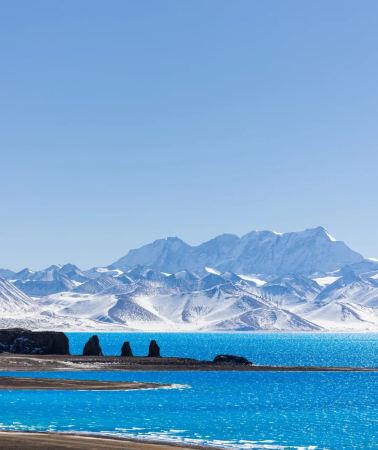
Free things to do in Damxung
Nam Co Township
Damxung · 28.7km from downtownNam Co Sheng Xiang Tian Men
Baingoin · 70.9km from DamxungYangbajing Temple
Damxung · 85km from downtownBarkhor Street
Lhasa · 91.6km from DamxungTibet Museum
Lhasa · 91.7km from DamxungNorbulingka
Lhasa · 91.3km from Damxung
Sichuan-Tibet Highway
China · Maizhokunggar
Lhasa River
Lhasa · 91.9km from Damxung
Zashi Lhamo Temple
Lhasa · 89km from Damxung
Karola Glacier
China · Gyantse
What travellers say about Damxung

李肢强8 October 2026
5.0
Visiting Jokhang Temple again after many years, the entrance has been significantly improved, making it look more like a proper tourist attraction. The interior remains the same, but the management is more comprehensive; however, the third floor is no longer open to the public. It's a must-see attraction on any trip to Lhasa.
Jokhang Temple

周周自驾游中国5 December 2022
5.0
If you are visiting Namtso for the first time, you must walk slowly as the altitude here is relatively high. There is also accommodation in Namtso Township. You can choose to stay in Namtso Township or return to Dangxiong County for accommodation.
Nam Co Township

Anonymous user31 July 2026
5.0
When visiting Lhasa, seeing the Princess Wencheng Theater is a must-do attraction. The theater is quite large, with a museum nearby, and the Potala Palace is visible in the distance directly opposite. It's definitely worth a visit.
Princess Wencheng Theater

史麦戈25 August 2026
5.0
Namtso truly lives up to its name as a sacred lake; its waters are as blue as the Mediterranean Sea, reflecting the Nyainqêntanglha Mountains. Although the journey is long, it's still worthwhile—the scenery is beautiful, and the roadside views are even better!
Nam Co Sheng Xiang Tian Men

enjoyzent20 July 2020
4.0
Yangbajing, or Yangbajing Town, is located in Dangxiong County, more than 90 kilometers northwest of Lhasa, Tibet. The full Tibetan name "Tudeng Yangbajing" means "Buddhist Guangyan City". Yangbajing Temple is the main temple of the Red Hat Sect of Tibetan Buddhism Karma Kagyu. Karma Kagyu is one of the four major branches of Tabu Kagyu.
After the raid, the temple property was confiscated, and the temple was given to the management of the Gongde Linjilong Hutuktu Living Buddha who had made great contributions to the pacification of Gurkhas. The monks were converted to the Gelug Sect, and the temple was able to survive.
Yangbajing also has the highest hot spring in the country, as well as rare explosive springs and intermittent hot springs.
Yangbajing Temple

Michelle Okano Anzanello26 September 2023
4.0
Barkor Street where you can buy souvenirs for a fair price. On weekends you will find many locals on their way to Jokhang Temple. If you want some Western food, I’m this street also has a KFC and Pizza Hut.
Barkhor Street

cat litter boxes2 August 2026
5.0
The Tibet Museum boasts a rich and precious collection, comprehensively showcasing the long history and unique folk culture of the Tibetan Plateau. Thangka paintings, gold and silver artifacts, and Buddhist relics are particularly noteworthy, and the exhibition halls are clearly and easily understood. Admission is free, but advance reservations are required. It's an ideal place to learn about Tibet before your actual trip, making for a fulfilling and meaningful experience.
Tibet Museum

黑豹A1 September 2025
5.0
Sera Monastery, officially known as "Sera Mahayana Monastery," is located at the foot of Sera Utse Mountain in the northern suburbs of Lhasa. It is one of the six principal monasteries of the Gelug school of Tibetan Buddhism, and along with Drepung Monastery and Ganden Monastery, is considered one of the three great monasteries of Lhasa. Construction began in the 17th year of the Yongle reign of the Ming Dynasty by Tsongkhapa's disciple Shakya Yeshe and was completed in 1434. The monastery houses the Tsokchen Hall, three large datsangs, and other buildings, housing tens of thousands of Buddha statues and numerous murals. Its unique Buddhist debates make it a vital venue for understanding Tibetan Buddhist culture.
Sera Monastery
Anonymous user16 August 2025
5.0
While Norbulingka lacked the stunning blue skies and white clouds, the moist air made mainland tourists feel more relaxed. Our Tibetan guide, Jiazhen, provided a very detailed explanation, which was a welcome change from a cursory visit. There's also a small zoo within the park, which was a delight for the children.
Norbulingka