Pre-departure notice & meeting information (important tips)
Within 24 hours after booking, our staff will contact you via the WeChat/WhatsApp you provided. Please be sure to leave a valid WeChat/WhatsApp.
One day before your trip, we will confirm the departure time with you. Please gather at the designated location and time. As this is a join-in tour, there may be some waiting; we appreciate your understanding.
Meeting time and location:
For the convenience of all VIP guests, between 07:30 and 08:00, we will provide pickup and drop-off at hotels within the designated area of Chongqing.
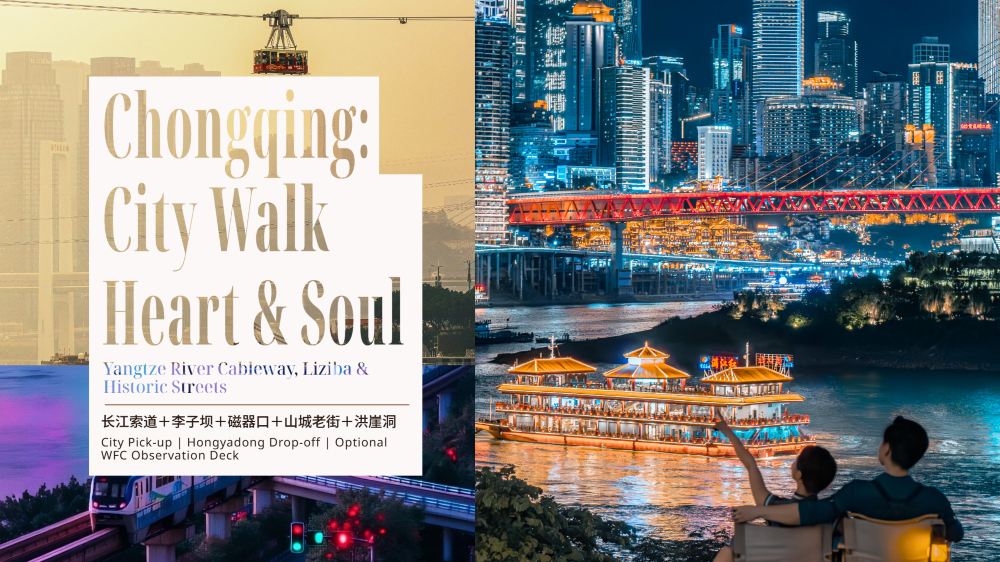
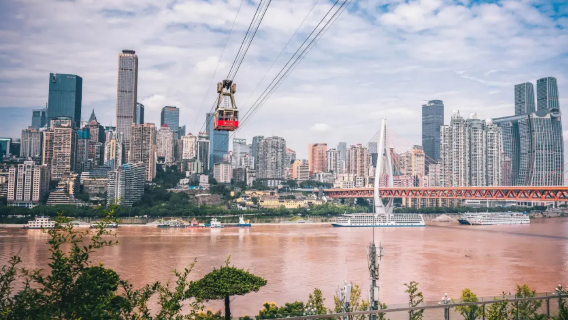
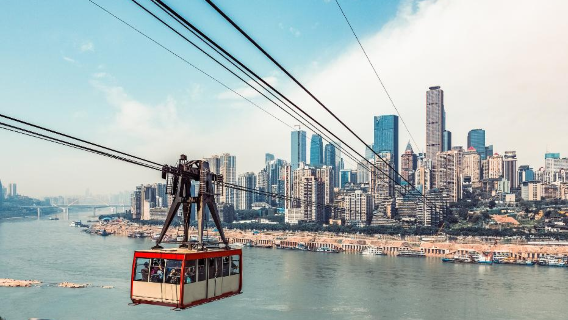
Super internet-famous - Yangtze River Cableway
It is the first urban cross-river passenger cableway, connecting Xinhua Road in Yuzhong District with Shangxin Street in Nan'an District, spanning the Yangtze River with a total length of approx. 1166 m. Soaring high above the river surface, with dense high-rises and mountains on both sides, it offers an intuitive understanding of Chongqing's "three-dimensional" nature
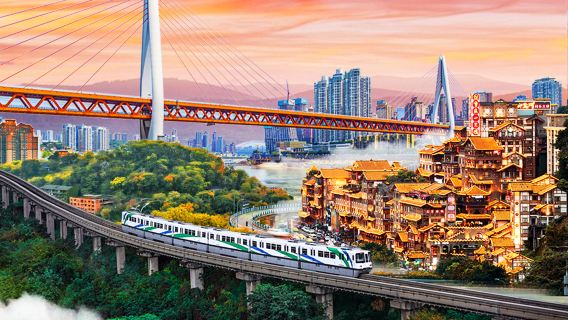
️Liziba light rail passing through a building
The train passes through the middle of a 19-story residential building, a rare urban view in the world
Chongqing The People's Great Hall
Construction began in 1951 and was completed in 1954, making it an important public building in Chongqing during the early years of the People's Republic of China. Designed by Zhang Jiade, it imitates the palace style of the Ming and Qing dynasties, with its circular pyramidal roof referencing the silhouette of the Hall of Prayer for Good Harvests at the Temple of Heaven, complemented by colonnades and flying eaves—a large assembly hall featuring a "Chinese-style roof and modern structure."
️Ciqikou Town
Bluestone main street, wooden shopfronts, and a riverside wharf — this is one of Chongqing's more completely preserved old market town layouts, dense with snacks and teahouses: mahua, ciba, and hot and sour noodles; teahouses feature seated Sichuan opera singing, the deep alleys are quieter than the main street, and walking toward the river you can see the old wharf.
Baigongguan Prison site
From 1939, it was converted by the Kuomintang Military Statistics Bureau into a detention center where political prisoners were held, known together with Zhazidong as the "Military Statistics Concentration Camp." In November 1949, on the eve of Chongqing's liberation, a large-scale massacre occurred here. It is now a Major Historical and Cultural Site Protected at the National Level and an important site of Red Crag history.
️ Eighteen Ladders Traditional Style Area
"Shibati" is a long stairway block connecting the upper and lower parts of Yuzhong. There are various folk explanations for its name, such as wells and steps. This area was once a typical working-class residential district of old Chongqing, with houses built along the mountain slopes in tiered layers. After comprehensive renovation, it reopened to the public, retaining the street layout and some old buildings.
️Mountain City Alley
Located in the Nanjimen area of Yuzhong District, this old alley clings to the mountain and overlooks the cliff, formerly known as "Tian deng xiang" (Sky Lantern Alley). The alley retains stilted houses, old courtyards, and remnants of modern-era architecture (including the buildings around the former Ren'ai Tang founded by the church), making it a rare stretch on the Yuzhong Peninsula that still preserves the residential texture of old Chongqing.
️Hongya Cave Folk Customs Tourist Area
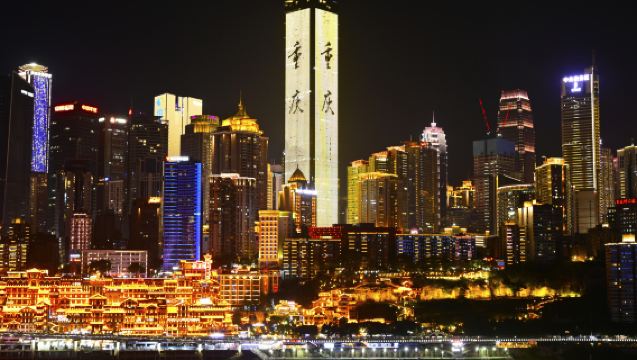
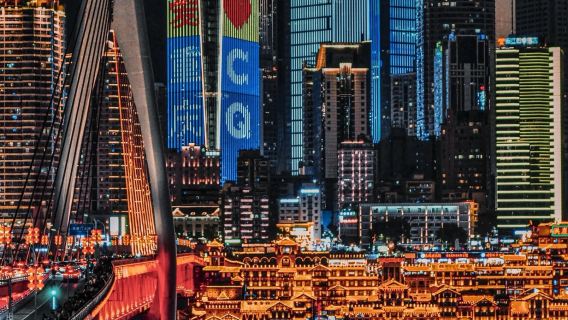
The current building complex was completed and opened in the 2000s, taking the form of stilted buildings with eleven staggered stories along the cliff face, and is "an old city gate area rebuilt in a faux-antique style." After nightfall, the entire cliff face is brightly lit, with golden roofs, flying eaves, lanterns, and reflections on the river surface appearing all at once, making it a well-known night view icon of Chongqing