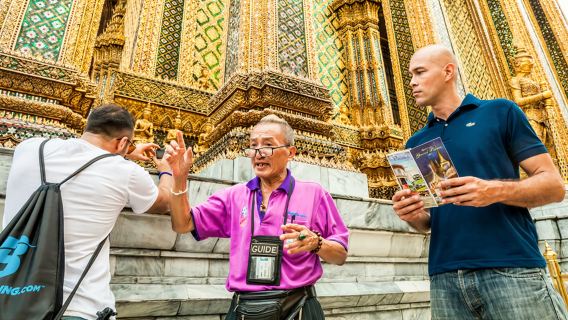
The Grand Palace stands beside the Chao Phraya River and is the most iconic historic landmark in Bangkok, Thailand. Its construction began in 1782 under King Rama I, serving as the royal residence for all monarchs of the Chakri Dynasty. Covering an area of over 218,400 square meters, the complex consists of 28 distinctive structures including Wat Phra Kaew, Chakri Maha Prasat Hall and Dusit Maha Prasat Hall.
Wat Phra Kaew, the most sacred royal temple of Thailand inside the palace compound, houses the Emerald Buddha, the country's national treasure. The architecture blends traditional Siamese gilded spires, intricate carvings and European royal styles, representing the pinnacle of Thai sculpture, mural painting and decorative art. Nowadays, the royal family no longer resides here; the palace only hosts coronations and royal ceremonies. It is an unmissable cultural site for international tourists, and the entry ticket grants access to both the Grand Palace and Wat Phra Kaew.

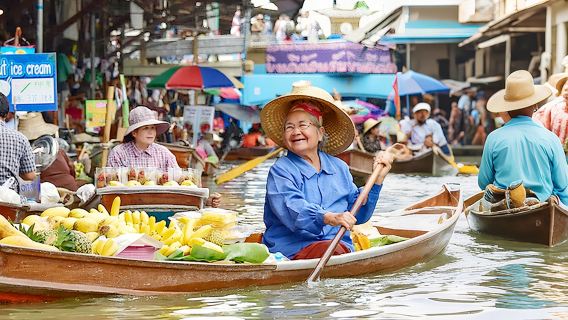
Located around 100 kilometers southwest of Bangkok in Ratchaburi Province, Damnoen Saduak Floating Market is Thailand's most famous and oldest traditional floating market, formed along the Damnoen Saduak Canal dug in the 19th century.
Canals take the place of streets here. Vendors wearing palm leaf hats paddle wooden boats loaded with tropical fruits, freshly-cooked Thai street food and handmade souvenirs. Visitors can rent small boats to cruise along the waterways and experience Thailand's ancient river trading culture up close. The market opens from 6:00 a.m. to 2:00 p.m., with the liveliest hours between 9 a.m. and 11 a.m. It features a bustling local vibe and has served as a shooting location for many Thai films and TV series.
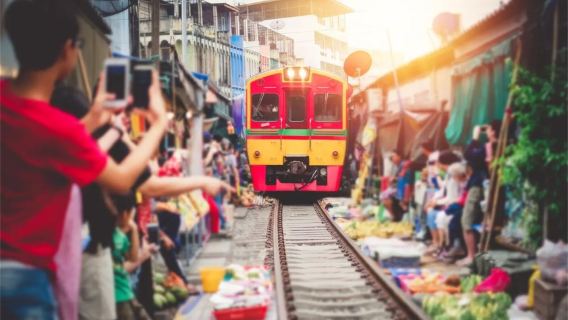
 Maeklong Railway Market, also known as Talat Rom Hup (literally "Umbrella Fold Market"), sits in Samut Songkhram Province, 80 kilometers southwest of Bangkok, and is widely recognized as the world's most unique market. An active narrow-gauge railway cuts straight through the heart of the market, with stalls selling fresh vegetables, tropical fruits, spices and local snacks lining both sides of the tracks.
Eight trains pass through the market at low speed every day. When the train whistle sounds, vendors swiftly retract their awnings and move goods aside within seconds. Right after the train passes, they reset the stalls and resume business immediately, creating a spectacular one-of-a-kind scene popular with tourists worldwide. The market opens all day with no admission fee. Visitors can watch the iconic train passing spectacle while shopping for affordable local produce and tasting authentic Thai snacks.