Guizhou

Things to do in Guizhou

Search attractions or local attractions & tours
Search

Explore top experiences

Top 10 attractions in Guizhou

View all Attractions
Huangguoshu Scenic Area
2026 Asia 100 - Best Things to Do

Huangguoshu Scenic Area

9
4.6/5
40.2k reviews

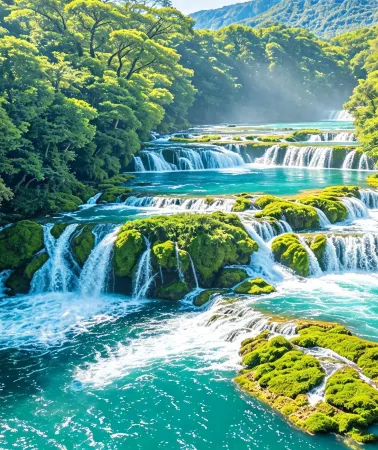
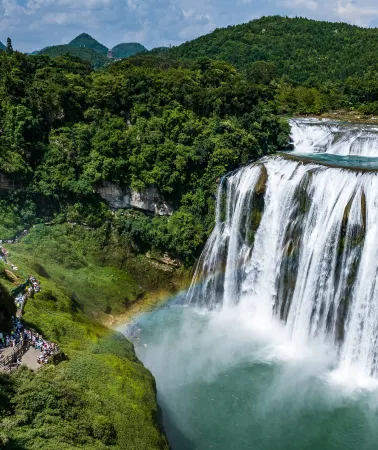
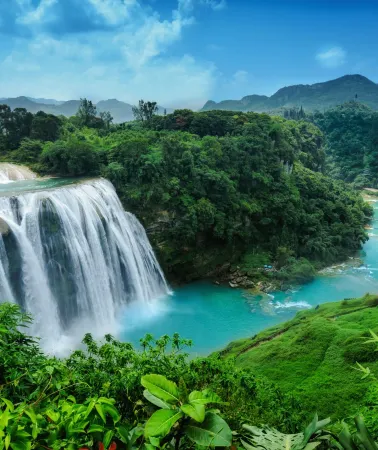
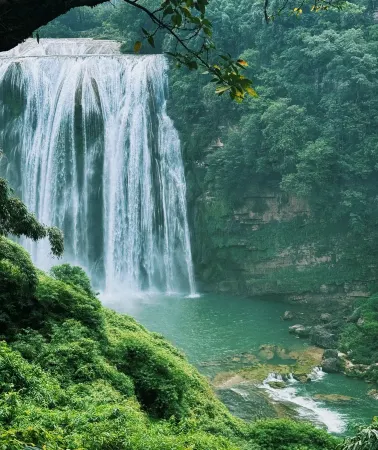
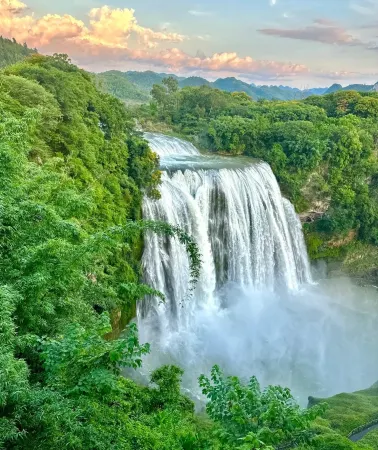
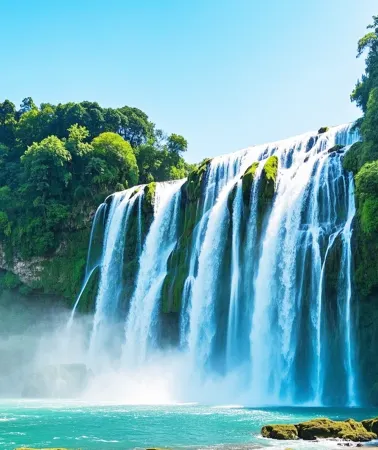
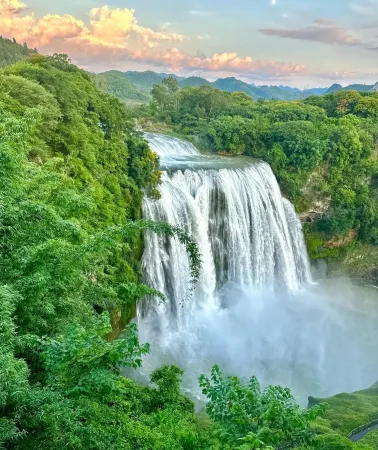
The Huangguoshu Scenic Area is located in Anshun, Guizhou, centered around the Huangguoshu Waterfall. Surrounded by deep gorges, dense vegetation, and dotted with limestone caves and stone forests, it is a typical karst landscape area. The waterfall's name originates from the locally abundant "Huangguoshu" (Ficus virens). Ming Dynasty traveler Xu Xiake visited and documented this site, contributing to its fame. The scenic area primarily consists of three main sections: the Great Waterfall, Tianxing Bridge, and Doupotang. Most travelers follow the sequence of Doupotang, Tianxing Bridge, and finally the Great Waterfall, saving the most spectacular view for last. The grand waterfall has a drop of nearly 80 m and a width of over 100 m. The Baishui River plunges from the cliff top into Rhinoceros Pool, creating a vast mist. Multiple viewing platforms around it allow visitors to experience its grandeur, wonder, steepness, and beauty from different angles—above, below, front, back, left, and right. A particularly unique experience lies behind the waterfall: a 100 m long Water Curtain Cave runs horizontally through its midsection, featuring cave windows and halls. Reaching through a window, one can touch the cascading water. The cave served as the filming location for the Water Curtain Cave in the 1986 TV series Journey to the West. Due to the heavy humidity inside, bringing a raincoat in advance is recommended. Tianxing Bridge is renowned for its harmonious blend of rocks, water, trees, and caves—where rocks rise from the water, caves hide within rocks, and trees stand beside caves. The stepping stones along the path are engraved with dates, allowing travelers to find their own "birthday stone." The attraction is divided into upper and lower sections. Many travelers turn back after completing the upper section, missing the Silver Chain Waterfall in the lower part—where water cascades like silver chains into a funnel-shaped pool, the highlight of Tianxing Bridge. The Doupotang waterfall is located approx. 1 km upstream from the grand waterfall. With a width of over 100 m at its crest, the water spreads out smoothly like a beaded curtain. During the high-water season, its deep roar earns it the nickname "roaring waterfall." The scene of the four pilgrims leading their horse across the river in the 1986 TV series Journey to the West was filmed here. In summer and fall, the waterfalls are full and powerful, while in winter and spring, the flow becomes gentler, offering different viewing experiences. Nearby, visitors can also enjoy local snacks like sticky rice, love tofu, and Anshun spring rolls.

China · Zhenning
Fanjing Mountain
2026 Asia 100 - Best Things to Do

Fanjing Mountain

9
4.6/5
23k reviews

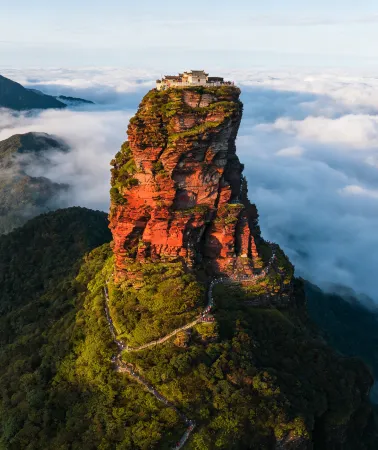
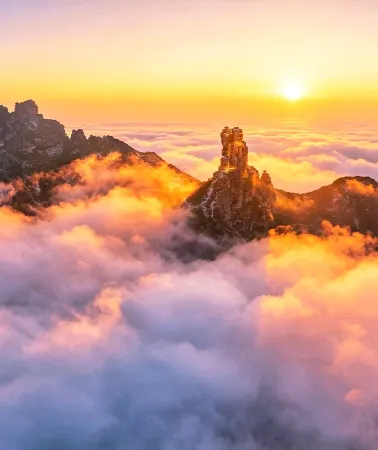
Fanjing Mountain is located in Tongren City in the northeastern part of Guizhou Province. It is the main peak of the Wuling Mountains, spanning the junction of three counties: Jiangkou, Yinjiang, and Songtao. Its highest peak, Fenghuang Mountain, rises over 2,500 meters above sea level; the Old Golden Summit is over 2,400 meters, and the New Golden Summit, also known as the Red Cloud Golden Summit, is over 2,300 meters. The three peaks stand side by side in majestic grandeur. Fanjing Mountain was originally named "Three Valleys Mountain," derived from "Fanjing Pure Land." Buddhism was introduced to this area during the Song Dynasty and flourished in the Ming Dynasty, when temples and monasteries dotted the mountain. Because its towering height rivaled the Five Great Mountains, the ancients honored it as "the patriarch of famous mountains." The Red Cloud Golden Summit is the iconic view of the entire mountain—a solitary peak rising straight from the ground and piercing the sky. The Golden Knife Gorge splits the summit from top to bottom into two halves, with only a narrow canyon where one can climb up along iron chains, and the gorge tops are connected by a flying bridge, making it extremely precipitous. At the summit, the Shakyamuni Hall and the Maitreya Hall face each other, serving as the core symbol of the Maitreya sacred site. The three main peaks connect to form a reclining Maitreya statue stretching over 10,000 m, which locals call "Fanjing Mountain." The Mushroom Stone is another representative view—a sandy slate pillar that is large at the top and small at the bottom, shaped like a mushroom, approx. 10 m tall, appearing on the verge of toppling yet having stood for many years. The surrounding stone forest peak clusters, such as the Ten Thousand Scrolls of Scriptures and Eagle Rock, are geological relics formed over a billion years ago and sculpted by wind and rain erosion. The mountain also preserves a well-intact subtropical primary ecosystem, where the Guizhou golden snout monkey is distributed, and ancient rare plants such as the dove tree also thrive and reproduce here. In fall, the layered forests are dyed in brilliant colors, and the red leaves in the mountains set off the ancient temple; you can take a cable car to overlook the autumn colors across the mountain, or follow the mountain trails to experience them up close.

China · Jiangkou
Libo Xiaoqikong Scenic Area
2026 Global 50 - Cool Water Escapes

Libo Xiaoqikong Scenic Area

8.7
4.7/5
24.4k reviews

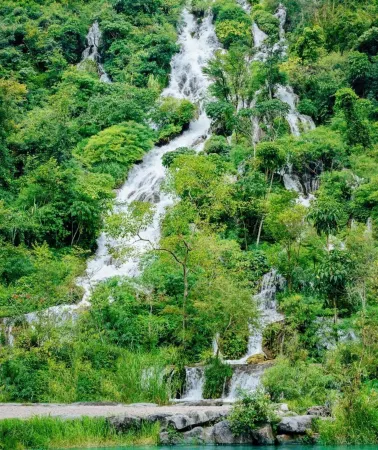
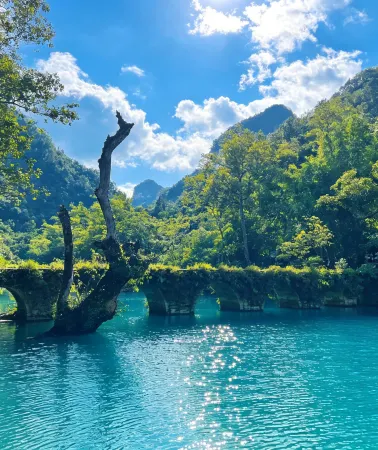
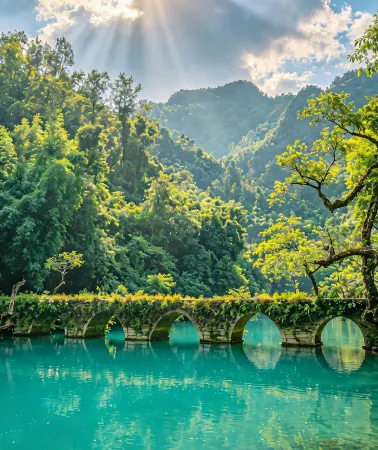
Libo Xiaoqikong Scenic Area is located among the peaks in the southern part of Libo County and is named after a seven-arch stone bridge built during the Daoguang era of the Qing Dynasty over the Xiangshui River. Set against a karst landscape, the scenic area brings together mountains, waters, forests, caves, lakes, and waterfalls, and is known as the "emerald on the Earth's belt." The Xiaoqikong ancient bridge is the attraction's signature view. The seven-arch stone arch bridge, built of bluestone, spans the Xiangshui River. Beneath the bridge, the water of Hanbi Pond is deep blue, and ancient trees tower on both banks, making it a classic photo spot. Following the Xiangshui River downstream, the 68-tier waterfall cascades in overlapping layers, with the river water dropping step by step over the karst rock surface with a roaring sound. Nearby, the Laya Waterfall pours down from the cliff beside the path, and visitors can feel the mist on their faces up close. The water forest is another unique view in the attraction, where trees take root among the streams in the water. Visitors walk along the stone stepping path through the forest, with babbling water beneath their feet and a canopy of green shade overhead. Mandarin Duck Lake is formed by two large lakes, the Male Mandarin Duck Lake and the Female Mandarin Duck Lake, connected with several small lakes. The lake surface is emerald green and serene, and boats can pass through the trees growing in the water. Wolong Pond is the surface outlet of an underground karst river. An arc-shaped stone embankment encloses the underground river water into a deep pond, and the water is as green as jade. Where the water overflows the stone embankment, a rolling-water waterfall forms, creating a striking contrast between the still pond and the moving waterfall. The area around the attraction is home to ethnic minorities such as the Bouyei and Yao, and villages like Yaoshan Ancient Village retain traditional dwellings and ethnic customs, adding cultural richness to the natural scenery. The attractions are distributed along the Xiangshui River; touring from Wolong Pond and Yuanyang Lake all the way down to the Xiaoqikong Ancient Bridge, walking along the stream is relatively effortless.

China · Libo
Xijiang Qianhu Miao Village
2026 Global 100 - Night Attractions

Xijiang Qianhu Miao Village

8.6
4.3/5
26.6k reviews

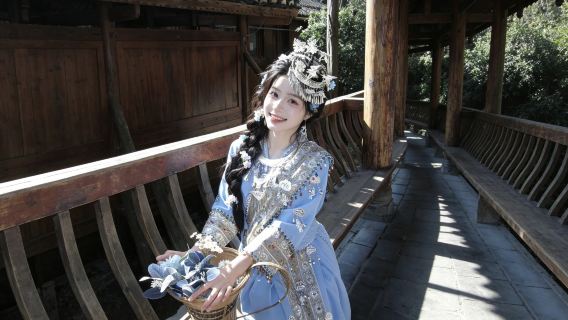
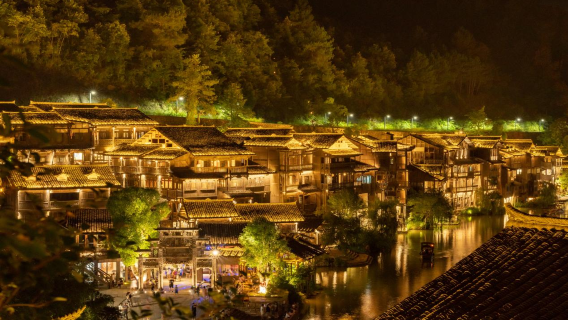
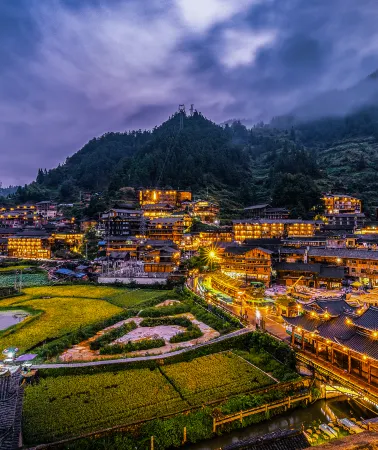
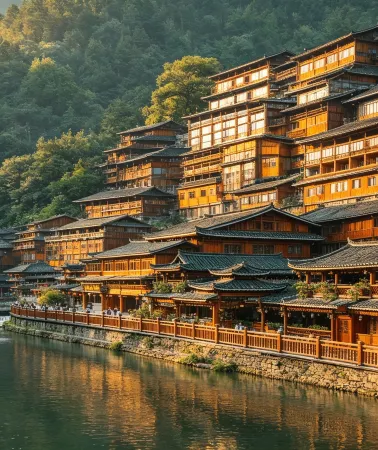
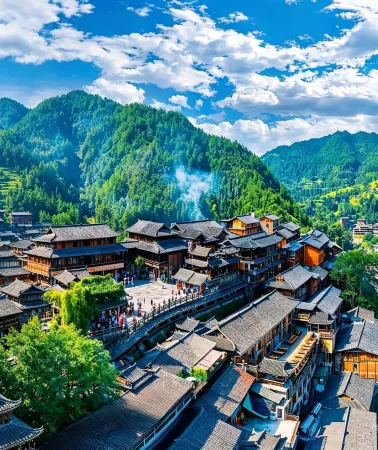
Xijiang Qianhu Miao Village is a collection of over ten natural villages built along the mountainside, inhabited by the "Xi" clan of the Miao people. The village features layers of wooden stilt houses on the slopes, with coffee-colored old houses nestled against lush green mountains. The Baishui River divides the village in two. The side of the river (to the left after entering the Xiaobei Gate for travelers) is mainly a commercial pedestrian street, while the opposite side (to the right after entering the Xiaobei Gate for travelers) is primarily the viewing platform overlooking the village. Upon arriving at Xijiang Qianhu Miao Village, you'll see a gate with the plaque "Xijiang Qianhu Miao Village" after getting off at the parking lot. From this gate to the village is a 1.5 km walk, which you can cover either by electric bikes or on foot. After this 1.5 km stretch, you'll encounter another gate similar to the one at the parking lot, also bearing the "Xijiang Qianhu Miao Village" plaque—this marks the true entrance to the village. First drink the welcoming wine, then enter the village. The first thing you see is the commercial pedestrian street, selling a dazzling array of Miao ethnic specialty products. The most eye-catching are the Miao silver ornaments. Kongbai in Xijiang town of Leishan near the Miao village is a well-known silversmith village, where almost all the men master the silver ornament making techniques, and the craftsmanship of Miao silver is exquisite. The performance venue in the pedestrian street area offers Miao ethnic song and dance shows. You can also visit the Xijiang Miao Ethnic Museum and the Drum Head's House (the Miao king's residence, where a bronze drum is enshrined). Alternatively, take a stroll along the Baishui River to see the wind-and-rain bridges with roofed eaves sheltering from the elements, or the low, narrow wooden plank bridges. At the end of the village lies a pastoral landscape, where even during peak season few visitors come. Across the river is a station for electric bikes to the viewing platform, but walking there isn't far, and several spots along the way offer excellent views. Upon reaching the viewing platform, wait for nightfall—the grand spectacle of Xijiang is just beginning. Thousands of lights illuminate from beneath the eaves of wooden stilt houses, dotted like stars to outline the entire Miao village in the shape of an ox head. It's hard to imagine such a brilliantly lit scene in a mountain village. Returning to the viewing platform at dawn, the Miao village is shrouded in mist as the first sunlight gilds the wooden houses golden. Smoke curls up from chimneys, marking the start of a new day. In Miao villages, you can often see Miao women with their hair buns coiled on top of their heads and adorned with large flowers. Just looking isn't enough—you can also rent a few sets of Miao costumes to dress up as a Miao woman yourself. It's especially beautiful and very popular among young women. Xijiang Qianhu Miao Village has mature tourism development, with no worries about food and accommodation. For dining, the famous option is the long-table banquet. Restaurants in the village will often ask if you'd like to try it—simply joining tables to make them longer counts as a long-table banquet, serving as a fun experience. The authentic long-table banquet is held outdoors, with dozens of tables connected end-to-end, sometimes so long that you can't see from one end to the other. These are set up during important festivals or when significant group tours visit, so don't miss the chance if you encounter one. The cuisine of southeastern Guizhou tends to be sour, and the village's specialty dishes include sour fish soup, pickled vegetables, and cured meat.

China · Leishan
Wanfenglin Scenic Area
No. 5 of Fall Viewing Attractions in Guizhou

Wanfenglin Scenic Area

8.1
4.7/5
5.7k reviews

Wanfenglin Scenic Area is located in the southwest of Xingyi, Guizhou, in the heart of southwestern Guizhou on the southeastern edge of the Yunnan-Guizhou Plateau. Its southern end borders Guangxi; to the west it reaches Sanjiangkou at the junction of Yunnan, Guangxi, and Guizhou; to the north it adjoins the main peak of Wumeng Mountain. The peaks rise to 1,600 m, with an average elevation of 1,200 m, and forest coverage of 68.5%. Covering a total area of more than 2,000 sq km, it is a typical area for the development of world-class cone karst peak-forest landforms. The attraction has a pleasant climate, with no severe cold in winter and no extreme heat in summer, and has been listed in the national summer resort city rankings. It is a place for health and leisure tourism in China. The attraction is dominated by cone-shaped peak forests and peak clusters developed in Triassic strata, interspersed with various geological heritage views such as karst caves, dolines, underground rivers, sinkholes, and sedimentary strata. The peak-cluster and peak-forest landscape views are wide in distribution, diverse in type, rich in form, and complete in development, and are extremely rare in China and even worldwide. They are a typical representative of the cone karst landscape views formed in the transitional slope zone from the western Yunnan-Guizhou Plateau to the Guangxi hills, and are known as the "Museum of Chinese Cone Karst." The types of landscape resources in the attraction are mainly natural views such as pastoral scenery and spectacular mountain peaks, supplemented by cultural views such as ethnic minority villages. In terms of natural resources, according to the shapes of the peak forest, it is divided into types such as karst isolated peaks, valley peak forests, karst cone peaks, and blade-shaped stone peaks, forming a majestic and vast karst view. It is a typical representative of cone karst landscape views and has significant value for geological research; in terms of cultural resources, the long history of the Bouyei ethnic group has accumulated rich ethnic culture. Its clothing, language, and living customs all embody a strong ethnic cultural flavor. The "Eight-Tone Sitting and Singing," which enjoys the reputation of "living fossil of sound" and "sound of nature," is a folk storytelling and singing art passed down from generation to generation by the Bouyei ethnic group and has been rated as a "National Intangible Cultural Heritage."

China · Xingyi
Zhong Guo Tian Yan Jing Qu
2026 Asia 100 - Family-friendly Attractions

Zhong Guo Tian Yan Jing Qu

8.1
4.5/5
6.8k reviews

Zhong Guo Tian Yan Jing Qu is nestled among the karst mountains of Pingtang, Guizhou. Built around the 500 m aperture spherical radio telescope FAST, it consists of two parts: the observation deck area in the mountains and the Pingtang Astronomy Town in Kedu Town. This telescope, known as the "China Sky Eye," rests in a natural funnel-shaped depression. More than 4,000 reflector units form a spherical-cap "wok," with a receiving area equivalent to nearly 30 football fields, and its aperture ranks among the world's largest among completed radio telescopes of its kind. From the proposal of the concept in the 1990s to its completion and commissioning in 2016, the project took more than 20 years, with site selection alone lasting over a decade. Astronomer Nan Rendong, who initiated and led the project, is therefore called the "father of China Sky Eye." Climbing to the observation deck to see the "big dish" is the highlight of the whole trip. To leave a quiet electromagnetic environment for the telescope, before entering the mountains you must store all electronic devices such as mobile phones, cameras, and smartwatches at the visitor service center, then transfer to a shuttle bus to reach the foot of the mountain and hike up more than 700 steps. Zodiac constellation patterns are embedded beside the steps, and if your stamina is limited you can also take a sightseeing bus instead. Standing on the observation deck at the summit, the 500 m aperture silver-gray "big dish" spreads out completely among the mountains, and the tiered viewing platforms let you examine its outline from different heights. There is no signal on the mountain, and you cannot take out your phone to take photos; this temporary "isolation from the world" is exactly the quiet that this telescope needs to work properly. The astronomy town at the foot of the mountain is a good place to round out the science popularization portion of the visit: the astronomy experience hall features themed exhibition halls on radio astronomy, galaxy exploration, and solar science popularization paired with sound, light, and electric interactive exhibits, and the on-site astronomical cinema screens astronomy films; electronic devices are allowed here, so you can take photos freely; the Nan Rendong Memorial Hall tells the story of the project from conception to completion in six chapters, and after seeing it, thinking back on that "pot" at the top of the mountain will feel very different; for a more thrilling experience, the motion seats in the dome flight theater can take you on a simulated "flight" over the telescope and the karst mountains. This telescope undertakes scientific tasks such as surveying neutral hydrogen in the universe, searching for pulsars, detecting interstellar molecules, and searching for signals of extraterrestrial civilizations, and it has discovered more than a thousand new pulsars since it began operation. With this background in mind, looking again at that "big wok" quietly "listening" to the universe, it is not just an artificial wonder, but more like a tireless listener to the cosmos.

China · Pingtang
Qingyan Ancient Town
No. 5 of Night Attractions in Guizhou

Qingyan Ancient Town

7.9
4.3/5
9.4k reviews

Qingyan Ancient Town is located in Huaxi District, the southern suburb of Guiyang, and is known as one of Guizhou's four ancient towns alongside Zhenyuan, Bing'an, and Longli. Established during the Ming Dynasty as a military stronghold, the town preserves numerous well-maintained ancient buildings from the Ming and Qing periods. The filming of the movie "The Missing Gun" brought Qingyan Ancient Town to wider recognition. The ancient town's architecture follows the natural mountain contours, with its city walls built from massive stones on cliffs. It features four city gates at the east, west, south, and north. The exquisite stone and wood carvings in the town's buildings are a major highlight. The south gate of the ancient town, Dingguang gate, is the most magnificent among the four main gates. Historically, it served as the first gateway guarding the southern entrance to Guiyang. The towering gate tower and city walls built with massive stones, along with the winding flagstone path outside the town and surrounding farmland, create a spectacular landscape. Many promotional photos of Qingyan ancient town are taken here. Entering the ancient town through Dingguang gate, the first sight is the Zhaolilun centenarian memorial archway. Built by imperial decree during Emperor Daoguang's reign in the Qing dynasty, this archway features an unusual design - the stone lions carved on its four pillars are upside down compared to conventional ones, creating a peculiar sight. Walking along the ancient stone-paved post road, you'll find shops on both sides selling local specialties. Unique snacks like braised pig's feet, grilled tofu, and rose candy offer distinctive flavors worth trying when you need a break from exploring. The ancient post road winding from the south gate to the north gate serves as both the central axis and main street of the ancient town. Divided by the ancient cultural square at the town center, the northern section is called North Street while the southern section is named South Street. Intersecting with the main street are East Street to the east and West Street to the west. Following East Street eastward leads to Wenchang Pavilion at No. 143, a brick-and-wood structure built during the Wanli era of the Ming Dynasty. This octagonal pavilion with multiple eaves was constructed against the mountain slope and served as a gathering place for scholars to study, socialize, and worship the Wenchang deity - visitors may also pay their respects if interested. Heading west along the main street, you'll reach various distinctive religious buildings in Qingyan Ancient Town, including Yingxiang Temple, Ciyun Temple, Wanshou Palace, and the Catholic Church, all exquisitely crafted and perfect for photography. Between South Street and West Street lies a quiet alley called Back Street. This stone-paved lane is one of the most characteristic features of Qingyan Ancient Town, with its bluish-black flagstones polished smooth by centuries of use, reflecting light like mirrors to create a profound sense of tranquility. The narrow, serene path follows the mountain's contours, flanked by layered slate walls, making it an ideal photography spot. The streets and alleys in Qingyan ancient town are deep and winding, but there are signposts on the main street and at every important intersection. Moreover, most lanes can loop back to the main street, so you don't need to worry about getting lost while exploring the ancient town.

China · Guiyang

Traveller favourites curated for you

Experiences you can't miss in Guizhou

Featured Culture & history in Guizhou

View all Culture & history
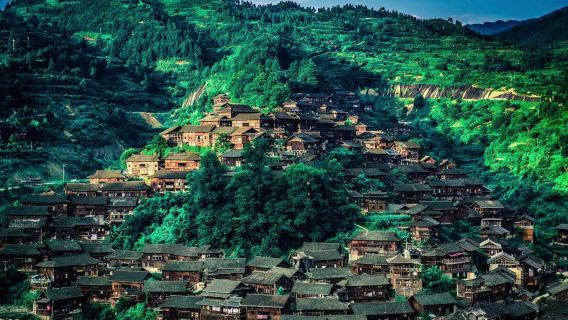
[Depart from Guiyang] One-day tour to Xijiang Miao Village with thousands of households | Stilted houses layered with lush greenery
󱌍
4.0/5
· 1 review
Duration: 10.7 hrs
English
Free cancellation
Instant confirmation
Book now for tomorrow
FromAED 162.74
Xijiang Qianhu Miao Village Fangu travel photo shoot (outfit rental + photographer follow-shoot + exquisite makeup)
󱌍
FromAED 104.10
[Departing from Guiyang] Xijiang Qianhu Miao Village Day Tour (Exploring the Millennium Miao Frontier)
󱌍
FromAED 192.15
Private Guided Day Tour from Guiyang to Zhenyuan Ancient Town, Qinglong Cave Scenic Area, and Shiping Mountain
󱌍
FromAED 264.13
Must-Visit Twin Attractions in Tongren: Private Day Tour to Tongren Grand Canyon and Cinnabar Ancient Town
󱌍
FromAED 287.29
[Depart from Guiyang] One-day tour to Wujiang Village | Starlight shimmering between stilted houses
󱌍
Duration: 9 hrs
English
Free cancellation
Instant confirmation
Book now for tomorrow
FromAED 175.25

Featured Outdoor & sports in Guizhou

View all Outdoor & sports
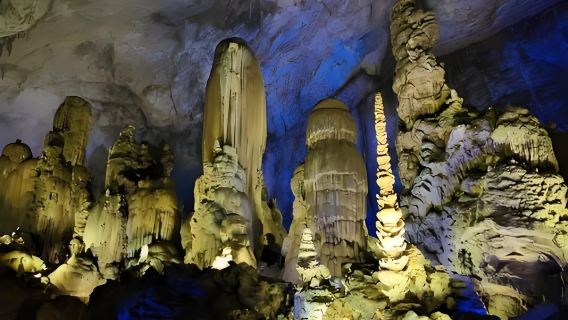
[Departing from Guiyang] Zhijin Cave & Zhijin Grand Canyon Chinese Group Day Tour
󱌍
5.0/5
· 2 reviews
Duration: 5.5 hrs
English
Free cancellation
Instant confirmation
FromAED 262.88
Private Fanjingshan Day Tour from Tongren with Entrance Ticket & Shuttle Bus
󱌍
5.0/5
· 1 review
Duration: 6.5 hrs
English
Free cancellation
FromAED 389.93
1-day tour to Zhijin Grand Canyon + Zhijindong Cave (depart from Guiyang)
󱌍
Duration: 8 hrs
English
Free cancellation
Instant confirmation
Save AED 18.77
FromAED 356.77AED 375.54
[Depart from Guiyang] One-day tour to Zhijin Cave Scenic Area and Zhijin Grand Canyon (Explore the king of China's karst caves)
󱌍
FromAED 249.11
(Departing from Guiyang) 1-day tour to Zhijindong Cave and Zhijin Grand Canyon with Chinese and English services available
󱌍
5% off
Limited-time sale
FromAED 832.43AED 876.25
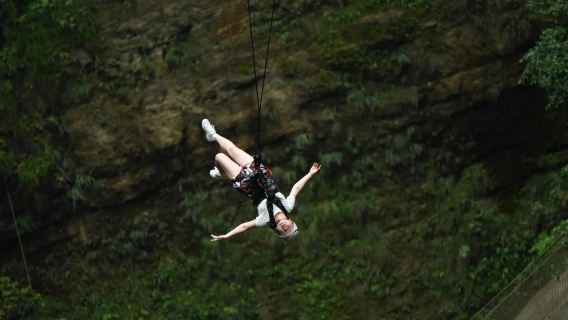
Guiyang Adventure Day Trip | Monkey Ear Sinkhole, Giant Swing, Private Transfer
󱌍
FromAED 1,187.94
Guiyang Private Day Tour: Qingyan Ancient Town, Tianhe Pool Scenic Area
󱌍
Duration: 6.6 hrs
English
Free cancellation
Instant confirmation
FromAED 205.92
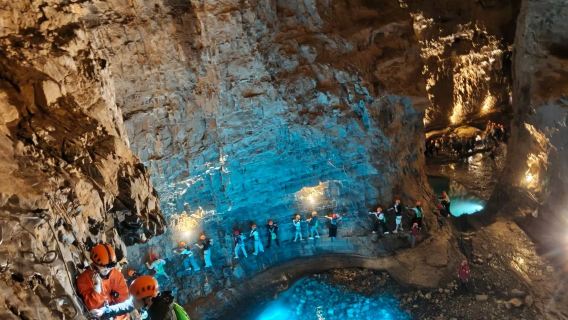
Zunyi Guizhou Shier Beihou Day Tour: Via Ferrata & Cliff‑Side Coffee
󱌍
FromAED 962.62

More things to do

Private Tours in Guizhou

View More Private Tours in Guizhou
Group Tours in Guizhou

View More Group Tours in Guizhou
Free things to do in Guizhou

What travellers say about Guizhou

user-avatar
Anonymous user2 November 2026
5.0
Walking slowly along the path, a cool mist washes over you, and the holographic projections and the waterfall's flow intertwine, like a flowing galaxy. Reaching the central viewing platform, the 77.8-meter-high waterfall transforms into a giant natural screen. Lasers pierce the night sky, and rainbows and Buyi ethnic totems appear and disappear in the mist. The roar of the waterfall and the sound of drums resonate together; at that moment, you truly forget to take out your phone and just want to stand and watch the whole thing.

Huangguoshu Scenic Area

user-avatar
hui一直在路上5 November 2026
5.0
Fanjingshan Mountain boasts stunning scenery and is definitely worth a visit! For accommodation, I recommend Yilugangwan Homestay. It's not far from the scenic area, the rooms are clean, quiet, and comfortable, the owner is warm and hospitable, and it offers great value for money. It's a perfect place to stay while hiking in the mountain.

Fanjing Mountain

user-avatar
Anonymous user5 November 2026
5.0
The park's route is well-planned (you must buy the sightseeing bus ticket). To walk easily, enter from the west gate and exit from the east gate, as it's all downhill. This route is perfect for older people and those with young children. Although it was rainy today, the overall scenery had a different kind of beauty. It's currently the off-season, but I think it's even more suitable for a leisurely stroll and appreciating the beautiful scenery.

Libo Xiaoqikong Scenic Area

user-avatar
ystephie5 November 2026
5.0
Pretty nice experience. Miao village is beautiful. The ticket however only gives you a single 24 hour bus pass and you'll need to buy another bus pass if you stay longer than a day.

Xijiang Qianhu Miao Village

user-avatar
会飞的蚂蚁14 November 2026
5.0
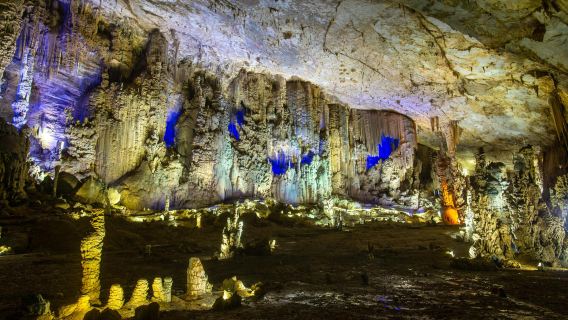
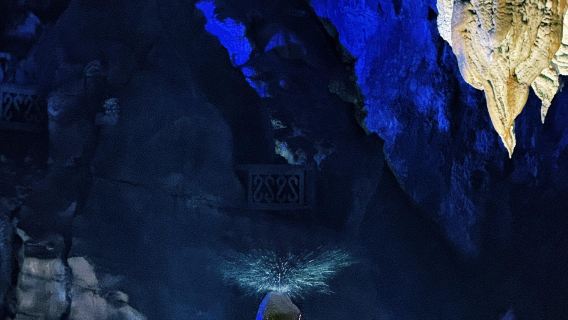
It's absolutely spectacular. It takes over an hour to walk through; it's quite dark inside, with ups and downs. Elderly people with mobility issues or poor eyesight should be cautious, as should those with claustrophobia. Of course, people with high blood pressure or heart conditions should also be careful. You should see it at least once in your life; the stalactites are of various shapes and are breathtakingly beautiful – definitely worth seeing.

Zhijin Cave Scenic Area

user-avatar
_TI***s64 November 2026
5.0
Best day in Guiyang.. keep smiling at all times for 2 hours with much impressive art. Love it. สวยงามมาก แปลกตา เกินคุ้ม แนะนำเลยครับ

Yelang Valley

user-avatar
亮哥_Charlie27 October 2026
5.0
The tour guide was fantastic, the price was incredibly reasonable, and the scenery was among the best in China. The Fengxi Café was also very unique. Riding an electric scooter through the mountain peaks was breathtaking.

Wanfenglin Scenic Area

user-avatar
SQDXT5 October 2026
5.0
A regular ticket is sufficient, as you'll find that there's simply not enough time to visit the paid attractions if you go at midday. Also, you must bring a film camera next to the Fast sign. It must be a battery-free film camera with manual metering. If possible, bring your own film, as film cameras at the attraction aren't cheap—300 yuan for 36 exposures.

Zhong Guo Tian Yan Jing Qu

user-avatar
Anonymous user4 November 2026
5.0
Enter from entrance 2 track down stairs towards on spot payment ticketed one way elevator ride up and exit via entrance 1. Worth the time for view and hike. There’s one zone passing thru the waterfall with wet stairs so step with care. Pictures shown here doesn’t do this attraction. Have to experienced it yourself physically

Maling River Canyon

user-avatar
E18***4119 October 2026
5.0
Not far from Guiyang, this ancient town offers a tranquil escape from the hustle and bustle of the city. The "Defend Qingyan" activity immerses you in the atmosphere of the revolutionary war. While the main street is teeming with tourists, a stroll into the side alleys allows for a quieter appreciation of the century-old buildings. The pig's trotters in the food street are a specialty and definitely worth trying.

Qingyan Ancient Town

Trip Moments in Guizhou

Frequently asked questions

Get help anytime, anywhere within 30 secondsContact customer support

Change and cancellation policies vary by attractions and tours. Please check the product details page for more information.

Ticket prices may vary between weekdays and weekends, as well as during peak and off-peak seasons. When booking with Trip.com, you can also use Trip Coins to get extra savings. For more tips on booking discounted tickets, please visit Trip.com for the latest information.