Things to do in HongJiang
Explore top experiences
Top 10 attractions in HongJiang


Qianyang Ancient Town
Nestled in the upper reaches of Yuanshui, Qianyang Ancient Town is one of the well-preserved examples of ancient cities dating from the Ming and Qing Dynasties. The ancient city is surrounded by water on three sides. It is a frontier town in Xiang-Chu-Miao Region and also known as the “gateway to Yunnan and Guizhou”. Of the original five city gates, four still remain to this day. The West Gate is also known as Zhongzheng Gate. The gate and the building are incredibly well preserved with the words “Zhong Zheng Men” still inscribed on the gate, written by Dai Li, dating back from the days of the Warlord Era. The well-preserved fishbone-shape road layout is formed by the two main streets in the north and south. It was called Nine Streets and Eighteen Lanes in ancient times and there are a variety of ancient buildings on both sides of the street such as the county government, academies, temples, inns and theaters.HongJiang · 2.7km from downtown

Hongjiang Ancient Commercial Town
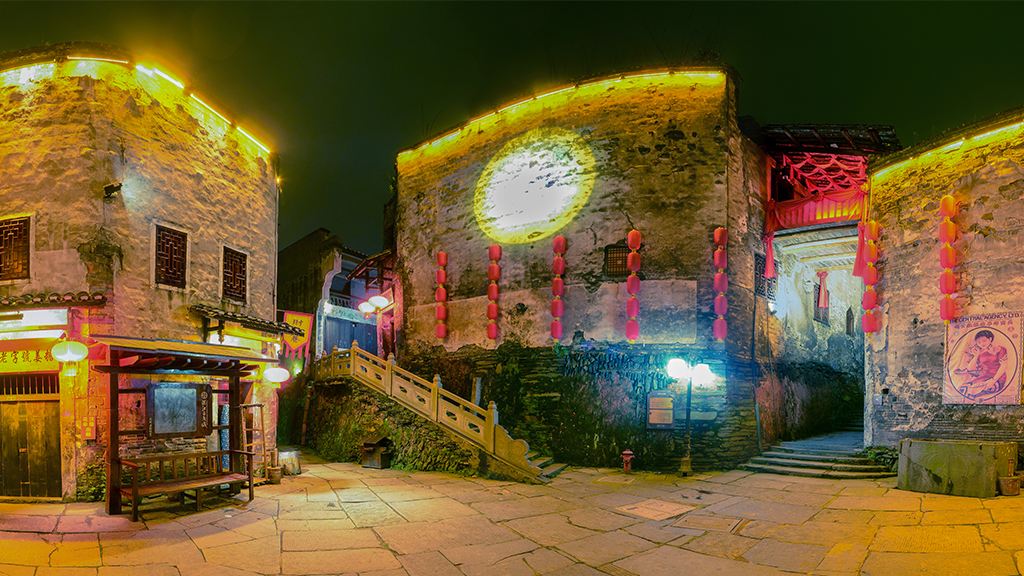
Hongjiang Ancient Commercial Town was built along the two rivers of Yuan and Wu. It took shape in the late Yuan Dynasty and early Ming Dynasty. Until now, the atmosphere of this important ancient commercial town can still be experienced. The architectural style of Hongjiang Ancient City is typical of the Ming and Qing Dynasties and the south of the Yangtze River. At the same time, it has significant characteristics of Yuanxiang. Every house in the city feels harmonious. Workers used only bricks, wood, and stone as materials, with no nails. They created solid, practical, and artistic buildings. The exquisite window frames, lattice fans, door carvings and delicate railings reflect the ingenuity of ancient Chinese architectural art.HongJiang · 19.6km from downtown

Longjin Wind and Rain Bridge
Longjin Wind and Rain Bridge spans the Wu River in Zhijiang, Huaihua. First built in the 19th year of the Wanli reign of the Ming Dynasty, it was damaged and rebuilt several times over the past 400-plus years, remaining a vital crossing point for travelers and merchants between Hunan and Guizhou. The current bridge structure dates back to a large-scale reconstruction in the late 1990s, which still utilizes traditional Dong wooden construction techniques. The entire bridge is over 200 m long and more than 10 m wide, resting on 16 boat-shaped stone piers with pointed ends facing the current, bonded with a mortar of sticky rice and tung oil. The wooden structure on the bridge is entirely joined by mortise and tenon, without the use of a single nail or rivet. The name "Longjin" is said to be derived from the sight of the boat-shaped piers "spitting water" as they cut through the waves. A long corridor with triple-eaved roofs connects the two banks, interspersed with seven five-story pavilions. With their deep blue glazed tiles and upturned eaves, they look like a long dragon lying on the river from a distance. Nearly 100 stall-style shops line both sides of the bridge, filled with local snacks like pickled radish and Zhijiang duck, as well as Dong silver jewelry and daily goods. The scent of tea drifts from teahouses where locals often sit and relax, making a walk across the bridge feel more like strolling through an old street built over the river. Climbing up to the pavilions in the middle of the bridge offers a bird's-eye view of the stilt houses along both banks of the Wu River, with the nearby Zhijiang Tianhou Temple complementing the bridge. The bronze rhinoceros statue at the bridgehead, covered in Dong patterns, embodies prayers for flood control and peace.Zhijiang · 29.4km from HongJiang

Elephant Hill Scenic Area
The Elephant Hill Scenic Area is located in the heart of Guilin, at the confluence of the Li River and the Peach Blossom River. It derives its name from its resemblance to a giant elephant stretching its trunk to drink from the sweet waters of the Li River. In his work "Records of Elephant Hill," Shu Shu, a Qing Dynasty official from the Ministry of Works, wrote: "The marvels of Guangxi lie in its mountains; the marvels of Guangxi's mountains lie in their rocks, and the elephant-shaped hill facing the provincial capital is the most marvelous of all." With its lifelike form, the attraction captivates visitors and stands as a quintessential representation of Guilin's landscape. In 1995, it was designated as the city emblem of Guilin. The main attractions in the scenic area include: Elephant Hill and Water Moon, Puxian Pagoda, Elephant Hill Scenic Area and Guilin Sanhua Liquor, Elephant Hill Scenic Area - Love Island, and Elephant Hill Scenic Area - Yunfeng Temple Taiping Heavenly Kingdom Exhibition Hall. Elephant trunk hill and water moon cave "Elephant trunk hill and water moon" is a spectacular wonder here, as described in the poem by Ji Bei Hermit of the Song Dynasty.Harmony of water, moon and caveThe poem reads: "The moon is beneath the water, the moon floats upon the water. The water flows but the moon stays, the moon departs yet the water still flows." On a moonlit night, visiting the Water Moon Cave at the Elephant Trunk Hill attraction presents a magical scene where the moon in the sky, the cave, and the water reflect each other beautifully. Inside the cave, you can find the "Poem and Preface of the Morning Sun Pavilion" by Zhang Xiaoxiang from the Song Dynasty and works by Fan Chengda.Inscription on the water and moon caveAnd over 50 precious cliff carvings including Lu You's poetry manuscripts. Xiangshan scenic area - Puxian pagoda Winding up along the rocky cliffs, you can see the Puxian pagoda standing tall amidst the greenery from afar. Built during the Ming dynasty, this 13.6m-high solid brick lama-style pagoda has a history of over 400 years. On the northern side of the pagoda, there is a line-engraved bluestone statue of a bodhisattva, with the mantra "Namo Puxian Bodhisattva" inscribed above it, hence the name Puxian pagoda in the Xiangshan attraction. Buddhist scriptures record that Puxian bodhisattva's mount is a six-tusked white elephant, making the pagoda's location atop Xiangshan mountain a perfect embodiment of this scripture. Elephant Hill Scenic Area and Guilin Sanhua liquor This is a natural wine cellar, with two-thirds of the mountain being hollow. It stays warm in winter and cool in summer, maintaining a constant temperature of 19°C and humidity above 90% year-round. Since the Song Dynasty, it has served as an official cellar for storing Sanhua wine. Sanhua wine is colorless and transparent, with a fragrant yet spicy taste. It drawsLi RiverWith the essence of the mountains and the soul of the Li River, it has become a representative of China's rice-aroma liquor. The cellar liquor was designated as a tribute to the imperial court as early as the Northern Song Dynasty and is one of the three treasures of Guilin. To date, nearly a thousand tons of liquor are stored in the caves. Love island Love island is located on the north side of the attraction, adjacent toLi RiverIt is another scenic viewpoint for distant viewing. The island boasts a beautiful environment and lush vegetation, making it a popular dating spot for locals in the 1970s, hence the name "love island". Today, it serves as an outdoor photography base for wedding celebrations against the backdrop of Guilin's landscape, where couples make their vows of love under the witness of the elephant trunk hill and the moon reflected in the water.China · Guilin

Memorial Hall of the Victory of the War of Resistance against Japanese Aggression and the Acceptance of Japan’s Surrender
Memorial Hall of the Victory of the War of Resistance against Japanese Aggression and the Acceptance of Japan’s Surrender, located in Zhijiang County, Huaihua, is a memorial site where the Chinese people accepted the surrender of the invading Japanese army. It is also one of the earliest specialized memorial halls in China to comprehensively reflect the theme of the victory and surrender of the War of Resistance. In August 1945, Japan announced its unconditional surrender, and from August 21 to 23, the Nationalist Government held the surrender ceremony here. The main buildings of Memorial Hall of the Victory of the War of Resistance against Japanese Aggression and the Acceptance of Japan’s Surrender include theSurrender Memorial Archway, the Surrender Ceremony Hall of the China Theater, and others. Among them, theSurrender Memorial Archwayis known as the "Arc de Triomphe of China." It stands 8.5m high, 10.46m wide, and 1.15m thick, featuring a blue brick and cement exterior, a "mountain" character-shaped top, four pillars with three arches, and is inlaid with Yuanzhou purple robe jade belt stone. The venue includes the restored surrender hall and an exhibition of surrender materials, housed in a typical 1940s barracks-style building. It utilizes high-tech audio, light, and electrical displays to showcase thousands of important national cultural relics and documents. The memorial hall also includes the former headquarters of the Chinese Army and the Former Site of He Yingqin's Office, where the tables, chairs, and sofas on display are original items from that time. Not far away is Huaihua Zhijiang Airport, which was once the second-largest military airport for the Allied forces in the Far East during World War II. It served as a base for General Claire Lee Chennault's Chinese-American Composite Wing and the United States Fourteenth Air Force. The Sino-American Air Force Club and the airport control tower near the airport are still well-preserved. When visiting Memorial Hall of the Victory of the War of Resistance against Japanese Aggression and the Acceptance of Japan’s Surrender, it is recommended to hire a guide to gain a more detailed understanding of the history here.Zhijiang · 29.1km from HongJiang

Fenghuang Ancient Town
The ancient town of Fenghuang is located in the southwest of Xiangxi, Hunan Province. The ancient city was built during the reign of Emperor Kangxi of the Qing Dynasty. It is surrounded by mountains and rivers, with the Tuojiang River running through the city. The red sandstone walls stand on the shore, and the Nanhua Mountain is set against the city towers from the Qing Dynasty. A narrow wooden bridge with stone piers is across the river under the north gate of the ancient city. It was the passage out of the city in those days. The bluestone streets in the city, the stilt houses by the Tuojiang River, the numerous ancient buildings and the rich customs constitute the unique charm of western Hunan. The main attractions include the former residence of Shen Congwen, the ancient city museum, Chongde Hall, etc., which are worth visiting.Fenghuang County · 85.4km from HongJiang

Qingjiang Lake
HongJiang · 18.3km from downtown

Jingping Ancient Village
Jingping Ancient Village is located on the west bank of Wushui River in Zhongfang Town, Zhongfang County, 15 kilometers away from downtown Huaihua, with very convenient transportation. There are more than 20 ancient cultures in the village, such as ancestral halls, ancient post roads, Fubo Palace, Wenchang Pavilion, Jiexiaofang, Tang Dynasty ancient wells, hydrological monuments, Longfeng Bridge, Guanyin Pavilion, Wutong Temple and old and Neolithic eras. Ruins. The area around Jingping and Wushui River was the land of Nanman in ancient times. The folk cultural elements such as wine songs, Nuo opera, fishing drums, and bawang whip that have been passed down to this day attract countless tourists. The farmhouses in Jingping Ancient Village are basically Ming and Qing buildings composed of small courtyards, which blend with the surrounding landscape and countryside, giving people a sense of simplicity and restraint. In the village, there are also ancient wells of Tang Dynasty, city walls of Ming Dynasty, former residences of Qing people, together with a thousand-year-old couple tree and ancient stone fish, allowing you to fully appreciate the richness of history and the tranquility of the ancient village. The Pan's Ancestral Hall was built in the late Ming and early Qing dynasties. Although it has experienced wind and rain, it is still elegant and antique. On the stage of the ancestral hall, visitors can enjoy the Nuo opera, Bawang whip and fishing drums written, directed and performed by Jingping villagers, which will make you feel like returning to the distant past.Zhongfang · 25.8km from HongJiang

Zhenyuan Ancient Town
Zhenyuan Ancient Town is located in Yuan County, southeast of Zhendong on the bank of Wuyang River. The river winds through the city, forming a pattern similar to the famous yin-yang symbol, so the town is sometimes called Bagua Ancient Town. It also resembles Venice, Italy, with its modes of water transportation. Zhenyuan Ancient Town is divided into two halves by the Wuyang River. The South bank contains the old acropolis, while the North bank holds the ancient city that was built during the Ming Dynasty. The city contains ancient walls and gates, and a number of ancient buildings sitting atop the hills.China · Zhenyuan County

Yangshuo West Street
West Street in Yangshuo is an old street with a history of more than 1,400 years. The buildings along the street retain the styles of the Ming and Qing Dynasties having a classical charm to it. The street is filled with bars, restaurants and hiptser cafes making it a hugely popular hangout hotspot among locals and foreigners. Due to the large number of foreigners, there are many western restaurants and English signboards along the street. The street is artsy in the day and wild at night.China · Yangshuo
More ways to travel from HongJiang
Free things to do in HongJiang
Qianyang Ancient Town
HongJiang · 2.7km from downtownBook now for tomorrow, Cancel anytimeHongjiang Ancient Commercial Town
HongJiang · 19.6km from downtownLongjin Wind and Rain Bridge
Zhijiang · 29.4km from HongJiangElephant Hill Scenic Area
China · GuilinImmediate access, Book now for today, Cancel anytimeMemorial Hall of the Victory of the War of Resistance against Japanese Aggression and the Acceptance of Japan’s Surrender
Zhijiang · 29.1km from HongJiangFenghuang Ancient Town
Fenghuang County · 85.4km from HongJiangQingjiang Lake
HongJiang · 18.3km from downtownJingping Ancient Village
Zhongfang · 25.8km from HongJiangZhenyuan Ancient Town
China · Zhenyuan CountyYangshuo West Street
China · Yangshuo
What travellers say about HongJiang

dl69066 July 2026
5.0
The ancient town is quaint and not overly commercialized, with a beautiful and comfortable surrounding environment, situated by the river. It's relatively quiet, with many shops closed and virtually no restaurants, but this adds to its tranquility.
Qianyang Ancient Town

110***1729 July 2025
5.0
Compared to Qianxi Ancient Town, I personally prefer Hongjiang Ancient Town, located 25 kilometers away. Originating in the Spring and Autumn Period, it took shape during the Tang Dynasty and reached its peak during the Ming and Qing Dynasties. It was the most prosperous commercial center in Southwest China after the reign of Emperor Kangxi of the Qing Dynasty. Its architectural style blends elements of Xiangxi, Huizhou, and Western architecture, making it more majestic than the 2,200-year-old Qianyang Ancient Town, which features more folk architecture. The ancient town is home to numerous chambers of commerce from various regions. The saying, "With just a bag and an umbrella, one comes to Hongjiang to become a boss," was a common troupe of entrepreneurs in ancient times (see Figure 1). Figure 2 shows the home of Chen Rongxin, the local tycoon. While the frontage may seem small, the courtyard is quite spacious. Figures 4 and 5 show money shops of the time, Figure 6 shows the Lijin Bureau (now the Tax Bureau), and Figures 7 and 8 show opium dens and brothels. Numerous docks surround the ancient town, demonstrating its vibrant commercial life. In terms of current ancient town management, I personally believe Hongjiang Ancient Town is more effectively managed than Qianyang (with a single ticket system), making it more convenient for visitors.
Hongjiang Ancient Commercial Town

tzy7987983 May 2025
5.0
Longjin Wind and Rain Bridge is located in Zhijiang Dong Autonomous County, Huaihua City, Hunan Province. It is a Dong wind and rain bridge that integrates trade, tourism and leisure.
The following is a detailed introduction for you:
Historical Origin
Longjin Wind and Rain Bridge was first built in the 19th year of Wanli in the Ming Dynasty (1591). It was donated by the famous monk Kuanyun. Because the bridge piers and flowing water are shaped like a dragon's mouth spraying water, it is named "Longjin Wind and Rain Bridge". The bridge has been damaged and repaired many times in history. It has always been a traffic fortress on the Hunan-Guizhou Highway, and it is also the most prosperous place for merchants and tourists to travel. It is known as the "No. 1 Bridge in the Southwest of the Three Chus". In early 1999, Longjin Bridge was rebuilt again and completed on November 7 of the same year.
Architectural features
The bridge is 246.7 meters long and 12.3 meters wide, with a sidewalk width of 5.8 meters. It is a mortise and tenon hollow wooden structure covered bridge. The highest point of the covered bridge is 17.99 meters. There are 7 exquisite bridge pavilions in between. The main building pavilion in the middle is an octagonal five-story bridge pavilion. There are 94 wing-style shops on both sides of the corridor. The architectural style has strong Dong ethnic characteristics. The corridor-style building of the bridge can shelter pedestrians from wind and rain, and the bridge pavilion is a place for people to rest. The entire wind and rain bridge is a full wooden structure without a single nail or rivet, reflecting the contemporary Dong ethnic garden architectural style.
Cultural value
Longjin Wind and Rain Bridge is a cultural relic protection unit in Hunan Province. It was included in the Shanghai Guinness World Records in December 2000 and is the world's largest wind and rain bridge. It is a perfect fusion of historical monuments and architectural art, and has become a rare cultural landscape in China.
Longjin Wind and Rain Bridge

M45***4825 September 2026
5.0
When visiting Guilin, a must-see is Elephant Trunk Hill, the city's iconic landmark. It truly lives up to its reputation as the face of Guilin's landscape; only by seeing it in person can one truly appreciate the wonders of nature. The entire mountain sits on the banks of the Li River, resembling a giant elephant bowing to drink from the water. The Water Moon Cave cuts through the mountain, its reflection shimmering in the water, creating the famous Elephant Trunk Hill and Water Moon spectacle—a flowing ink painting.
The scenic area is clean and comfortable, with walking paths built along the Li River, shaded by lush trees, making for a delightful stroll. You can climb the mountain for panoramic views of Guilin, or find classic vantage points along the riverbank to capture stunning, atmospheric photos. Boat trips are also available, offering a different and breathtaking perspective of Elephant Trunk Hill from the river.
The scenic area is conveniently located in the city center, with excellent transportation and comprehensive facilities. Every step reveals a new vista, allowing you to truly experience the unparalleled beauty of Guilin's landscape. Don't miss it when traveling to Guilin; it's definitely worth a visit.
Elephant Hill Scenic Area

苦海无边,望不到岸4 May 2022
5.0
"Eight years of war started in Lugou, and a letter of surrender came out of Zhijiang".
The Surrender Memorial Arch is the only landmark building in China that commemorates the victory of the War of Resistance Against Japanese Aggression. It is known as the "China Arc de Triomphe". It is a historical witness to the victory of the Chinese People's War of Resistance Against Japanese Aggression and the World Anti-Fascist War, and a great and immortal historical monument of the Chinese nation.
Zhijiang is the general surrender site of the Chinese theater, the first surrender site in the country, and the command center of the national surrender work. The surrender in Zhijiang handled the specific surrender terms of the millions of Japanese invaders in China, representing the victory of the Chinese People's War of Resistance Against Japanese Aggression and the World Anti-Fascist War.
Memorial Hall of the Victory of the War of Resistance against Japanese Aggression and the Acceptance of Japan’s Surrender

oueryuji13 September 2026
5.0
Fenghuang Ancient Town, located in Xiangxi Tujia and Miao Autonomous Prefecture, Hunan Province, is a border town renowned for its literary significance. A national 5A-level tourist attraction, it was praised by New Zealand writer Rewi Alley as "China's most beautiful small town." The Tuojiang River flows gently through the town, with stilted houses standing along its banks and winding ancient cobblestone alleys. This is the spiritual home of Shen Congwen's novel "Border Town," harboring unique Xiangxi charm. In the morning, a thin mist blankets the river; at night, lights reflect on the water. The landscape and culture blend seamlessly, half poetic, half down-to-earth; every step reveals the gentle warmth of time.
#TravelRecommendationOfficer #HealingScenery #FenghuangAncientTown #XiangxiTourism
Fenghuang Ancient Town

谭天扫雪6 October 2020
4.0
Hongjiang Qingjianghu Wetland Park is located in Tuokou Town, Hongjiang City, Huaihua. You can take the inter-county bus to Tuokou at the Shangmaocheng Bus Station in Qiancheng. The journey takes about 40 minutes and the fare is 7 yuan. After getting off at Tuokou Bus Station, walk forward for about ten minutes. Qingjiang Lake is very large and you can't walk it all in one day. We just strolled around the lake in Tuokou Town for a while. Because the wind was too strong and the weather was too cold, we walked for more than an hour and then left.
Qingjiang Lake

西格玛 1233 June 2025
5.0
荆坪古村是湖南省怀化市知名的古村落,位于中方县城舞水河西岸。古村落中的建筑别具一格,与周边自然景观完美相融、相得益彰。
Jingping Ancient Village

Ly7257012 September 2026
4.0
Overall, it was alright. Climbing up the mountain was quite tiring; the whole trip took about 3 hours. The path was quiet with few people, but the signs weren't very clear. We ended up on a set of steps without railings (we weren't sure if we were on the right path, because the people behind us disappeared, and we didn't know which way they went). I think this was a pleasant surprise for adventurous people, but a little unsafe for those who aren't. The descent was another pleasant surprise; we entered an ancient alleyway with many Ming and Qing dynasty courtyards (I had thought the ancient city was just the outer streets and riverbanks). Don't forget these ancient alleyways when you visit the ancient city!
Zhenyuan Ancient Town

Oyoyo is Hungry17 March 2026
4.0
If you visit Yangshuo, you shouldn’t miss West Street (Xi Jie), a historic street with a history of more than 1,000 years.At night, the street becomes very lively, filled with numerous restaurants, bars, and cafés. It’s a great place to hang out with friends and enjoy the vibrant atmosphere.
Yangshuo West Street


