Jia County

Things to do in Jia County

Search attractions or local attractions & tours
Search

Explore top experiences

Top 10 attractions in Jia County

View all Attractions
Sansuyuan Scenic Area
No. 3 of Fall Viewing Attractions in Pingdingshan

Sansuyuan Scenic Area

4.4
4.6/5
139 reviews

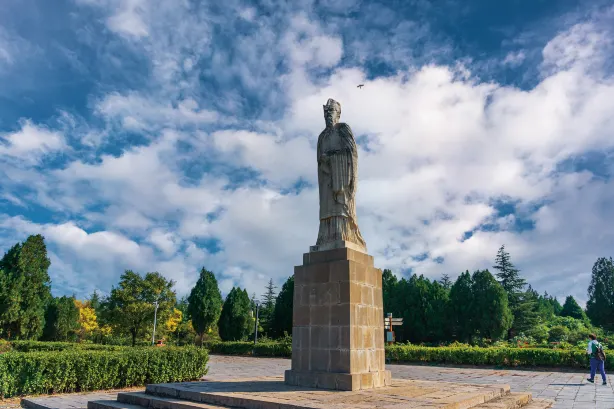
The San Attraction is located at the foot of the "Little Emei" Mountain, about 20 kilometers northwest of Jia County, Pingdingshan City. The remains of the two brothers Su Shi (Su Dongpo) and Su Zhe, two great writers of the Song Dynasty, and the clothes and hats of their father Su Xun are buried here. The Attraction mainly consists of Dongpo Lake, Guangqing Temple, San Su Temple, San Su Memorial Beilin, Dongpo Stele Forest, the statue of Dongpo in middle age, Jinwa Welcoming Guests Road, the tomb of Su Zhongnan and his wife, the Liang Tomb and the San Su Cemetery. Among the Eight Great Masters of Tang and Song Dynasties, three were from the Su family, forming a unique cultural system in the history of Chinese culture - the San Su culture. From ancient times to the present, countless students and celebrities have come here to worship the saints and left many precious masterpieces. There are tombs from the Song Dynasty, archways from the Yuan Dynasty, steles from the Ming Dynasty, tablets from the Qing Dynasty and more than 300 steles representing the high level of contemporary calligraphy art in the Attraction Garden Scenic Area. The whole Attraction faces south and sits in the north. There is a sacred road running through the Attraction. When tourists visit, they can mainly walk along this sacred road. After entering the Attraction, a red stone archway comes into view. The horizontal brow is engraved with four large characters "Qingshan Yuyi". On the back is the "Sacrificial Essay to Mr. Three Su" by Wang Shangxie, a Jinshi in the Ming Dynasty and the Right Governor of Zhejiang. The left and right stone pillars are engraved with the words of Su Shi's "In Prison to Ziyou": "This is a place where the green mountains can bury the bones, and the heavy rain will only make you sad." There are 5 vegetarian rooms on the east side of the stone archway, where celebrities used to eat vegetarian food and bathe when they worshiped the three Su. In the middle is the banquet hall, which was rebuilt in the 47th year of Emperor Kangxi. There are inscriptions from various generations in the hall, and many stone tablets are embedded in the four walls. Behind the banquet hall is the altar, and behind the altar are three tombs: the middle is Su Xun's clothing and hat cenotaph, the east is Su Shi's tomb, and the west is Su Zhe's tomb. There are six tombs in the southwest of the three tombs, which are the tombs of Su Shi's six sons. There are many ancient cypresses in the Attraction, many of which were planted during the Ming and Qing dynasties. Guangqing Temple and the Three Su Temple are located 300 meters southwest of the cemetery, with the temple in front and the temple behind. The Three Su Temple was built during the Zhizheng period of the Yuan Dynasty, and there are colorful statues of the three Su in the temple. There are stone tablets from the Jin, Yuan, Ming and Qing dynasties inside and outside the temple, among which the "Three Su Xiansheng Jiacheng Tu" tablet from the Qing Dynasty is the most prominent. Walking out of the east gate of Guangqing Temple, tourists can reach the "Little Emei" mountain, where there is a statue of Su Shi in his middle age holding a scroll in plain clothes.

Jia County · 15.9km from downtown
Shenhou Ancient Town
No. 2 of Best Things to Do in Xuchang

Shenhou Ancient Town

5.4
4.7/5
202 reviews

Shenyu Ancient Town is located 30 kilometers southwest of Yuzhou City. It is the birthplace of the famous Jun porcelain culture at home and abroad. It is the main production area and distribution center of ceramics in northern China. . Shenlong got its name from Jun porcelain and prospered because of ceramics. The word "Shenlong" has been conferred by four emperors and became famous. Jun porcelain culture is an important part and typical representative of Central Plains culture. Shenyu Old Street is commonly known as "Qili Long Street". Since the Tang and Song Dynasties, with the prosperity of the ceramics industry, many wealthy businessmen have purchased fields, built houses, and engaged in business here, and the five villages have gradually been connected together, forming the town of Shenya, which has begun to take shape. It consists of four ancient villages in the south and north. From east to west, there are East Street, West Street, Baiyitang Street, Hongshiqiao Street, Guanyemiao Street and other streets. There are many shops on both sides of the road. The complete ones include Bolingweng Temple, Dengyu Building, Wen Family Courtyard, Bai Family Courtyard, Wang Family Courtyard, Huo Family Courtyard, Miao Family Courtyard, Miao Family Ancestral Hall, etc. There are towers, ancient dwellings, and temples. The monuments witness the prosperity of the town. Walking through the town of Shenga, the ancient streets and the row upon row of old houses seem to bring people back to a distant era. From these buildings, people also witness the glory of the town in the past. "Entering Shenlong Mountain, you can see the ten-mile-long street, seventy-two kilns, fireworks cover the sky, merchants walk everywhere, and every day they make money." At the same time, Shenlong Ancient Town is also the prototype of the TV series "Children of the River" Fengling Village.

Yuzhou · 15.9km from Jia County
Longmen Grottoes
2026 Asia 100 - Best Things to Do

Longmen Grottoes

8.9
4.7/5
62.4k reviews

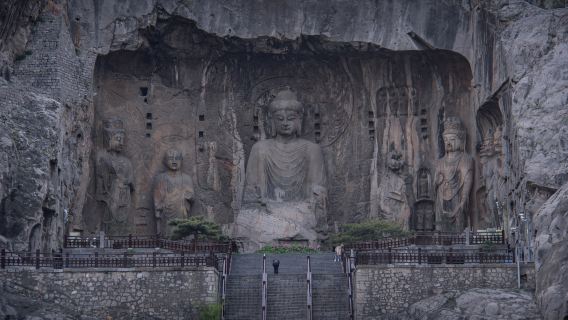
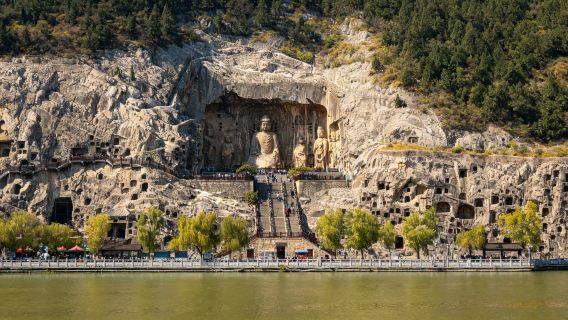
Longmen Grottoes are located in the southern suburbs of Luoyang, Henan Province, on the cliffs along both banks of the Yi River. As one of China's three major grotto art treasures, they were inscribed on the World Cultural Heritage list in 2000. The grottoes were first carved when Emperor Xiaowen of Northern Wei moved the capital to Luoyang, and construction continued through the Eastern Wei, Western Wei, Northern Qi, Sui, and Tang dynasties, with the vast majority of niches and statues left from the Northern Wei and Tang periods. Today, more than 2,000 niches and over 100,000 statues remain, along with a large number of inscriptions and steles, making the site an important representative of Chinese stone carving art. The attraction is divided by the Yi River into two parts: West Hill and East Hill. The West Hill Grottoes are the essence of the site, carved from the Northern Dynasties through the Sui and Tang periods. Famous caves include Guyang Cave, Binyang Cave, Lotus Cave, Wanfo Cave, and Fengxian Temple. The Lushena Buddha at Fengxian Temple stands about 17 m tall, making it one of the larger Buddha statues at Longmen Grottoes. Its face is dignified and serene, with a faint smile, and legend holds that it was modeled on the appearance of Wu Zetian, earning it the name "Oriental Mona Lisa." The inner walls of Wanfo Cave are densely covered with about 15,000 small Buddha statues, each only a few cm tall, neatly arranged and finely crafted. Guyang Cave is the earliest cave carved at Longmen, and its inscription calligraphy is exquisite; the selected "Twenty Masterpieces of Longmen" are representative works of Wei stele calligraphy. Binyang Cave consists of the South, Middle, and North caves and took more than twenty years to complete. Its original reliefs depicting emperors and empresses worshipping the Buddha were looted and lost overseas in the 1930s. In Binyang North Cave, a Buddha statue has a distinctive hand gesture, with the right index and middle fingers raised in a shape resembling the modern "scissors hand," though it is actually a Buddhist mudra, and it once sparked heated discussion online. The East Hill Grottoes are mostly Tang dynasty works and are smaller in scale than those on West Hill, but from the opposite bank visitors can enjoy panoramic views of West Hill from different angles, especially distant views of the Lushena Buddha. The attraction also includes Xiangshan Temple and Bai Juyi Memorial Park (Bai Garden). The Tang dynasty poet Bai Juyi lived in Luoyang in his later years and once praised it, saying, "Of the scenic splendors of Luoyang's surrounding mountains and waters, Longmen ranks first." When visiting, simply follow the route West Hill—East Hill—Xiangshan Temple—Bai Garden, proceeding in one direction without backtracking. The West Hill Grottoes are densely packed with content, so it is advisable to set aside ample time for a closer look; East Hill is quieter and more secluded, suitable for a brief visit and gazing across the river when energy is limited.

Luoyang · 93.2km from Jia County
Millennium City Park
2026 Asia 100 - Night Attractions

Millennium City Park

8.8
4.6/5
29.1k reviews

Millennium City Park is located by the shores of Longting Lake in Kaifeng. It is a large-scale historical and cultural theme park of the Song Dynasty, recreated one-to-one based on the famous painting Along the River During the Qingming Festival by Song Dynasty painter Zhang Zeduan. The park is divided into two sections by the Shuangting Bridge: the South Garden recreates the bustling street life of the Bianjing city, with taverns, eateries, teahouses, and pharmacies lined up along the streets; the North Garden is an imperial garden, with waterside halls, the Sifang Courtyard, and other palace buildings standing by the lake. Performers and street vendors in the park mostly wear Song Dynasty costumes, with ancient music lingering and bells and drums sounding, so that after a few steps visitors can easily fall under the illusion of "stepping into a painting in one morning, dreaming back a thousand years in one day." Architecture is the intuitive and tangible highlight here: the Rainbow Bridge spanning the Bian River is a replica of the famous bridge in the painting, shaped like a long rainbow, and standing on the bridge watching the grain boats pass by feels much like being inside the painting; the Fuyun Pavilion towers above all the other pavilions in the garden, with its tiered red towers and golden tiles on all four eaves, inviting one to climb from afar; the Shangshan Gate is rebuilt after the Northern Song dynasty Dongjing city gate, tall and majestic with brilliant painted decorations, making it the most imposing gate tower in the garden; and the Shuixin Xie, Shuangting Bridge, Jiulong Bridge, and other pavilions and waterside structures are scattered among the blue waves. The main attraction of the day is the immersive performances staged throughout the park: "Bao Zheng Inspects the Bian River Grain Transport" unfolds on the water on both sides of the Rainbow Bridge; "Squire Wang Seeks a Son-in-Law" features a decorated tower erected in front of Squire Wang's house where a silk ball is tossed to choose a groom; "Yue Fei Challenges Prince Xiao Liang" raises dust on the Song dynasty parade ground as horses gallop; and folk performances such as cockfighting, stilt walking, and pan drumming are interspersed throughout. To step into the action yourself, head to the Four Directions Courtyard to don traditional costumes and enter the examination cells for a hands-on Song dynasty imperial exam experience; families with children can enjoy carousel rides, roller coasters, and other amusement facilities wrapped in Song dynasty storytelling at the Song Dynasty·Royal Pleasure Ground; and in the entertainment quarters, face-changing, qigong fire-breathing, ancient magic, and other Song dynasty variety acts take turns on stage, with intangible cultural heritage feats ready to break out at any moment right beside you. After nightfall, the park takes on a different face: red lanterns light up one after another, the market streets are brightly illuminated, and it feels like a completely different park from the daytime. The large-scale water-based live performance "The Great Song Dynasty's Eastern Capital: A Dream of Splendor" is staged on the surface of Jinglong Lake. The entire show is woven together from eight classic Song ci poems and the painting Along the River During the Qingming Festival, drawing the audience back to the Northern Song dynasty's Eastern Capital a thousand years ago. The performance runs about 70 minutes, and many visitors deliberately plan their itinerary to stay until the evening to catch this show. Dining in the park is also convenient: the snack street at Dongjing Food Court brings together Kaifeng snacks such as fried liangfen, tongzi chicken, and almond tea, perfect for eating while strolling; if you want to sit down for a proper meal, you can visit the reconstructed Sun Yang Zheng Dian in the park, which was originally one of the seventy-two official restaurants of Bianjing in the Northern Song Dynasty, where you can taste traditional Henan dishes such as soup dumplings and carp with baked noodles.

China · Kaifeng
Mount Hua
2026 Asia 100 - Best Things to Do

Mount Hua

8.7
4.7/5
55.7k reviews

Mount Hua, known as the "Western Great Mountain" in ancient times, is one of China's Five Great Mountains. Located in Huayin, Shaanxi Province, it is also elegantly called "Taihua Mountain." The "Hua" in both "Zhonghua" and "Huaxia" originates from this mountain. "Steep and perilous" are the essence of Mount Hua's scenery, and the saying "there has always been only one path up Mount Hua" precisely describes its steepness—the Plank Road in the Sky, the Sparrowhawk Turn, the Thousand-Foot Precipice, the Hundred-Foot Gorge, the Laojun Plow Ditch, and other perilous sights leave every visitor awestruck. The Mount Hua attraction covers a vast area, including the main peak attraction, the Western Great Mountain Temple attraction, and the Xianyu attraction, among which the main peak attraction is the core, encompassing the five main peaks—east, south, west, north, and center—as well as the classic "Mount Hua Valley" climbing trail. The five main peaks each have their own distinctive features. The East Peak, at an elevation of approx. 2,100 m, has the open and expansive Chaoyang Terrace at its summit, making it an excellent spot for watching the sunrise, and is therefore also known as Chaoyang Peak; the natural stone patterns on the cliff face along the side of the peak resemble a giant palm print—this is the Huayue Immortal Palm, listed since ancient times as one of the Eight Views of Guanzhong. The West Peak, at an elevation of approx. 2,080 m, is named Lotus Peak because the giant rock at its summit resembles a lotus flower; the Cuiyun Palace, the Axe-Split Rock, and the Self-Sacrifice Cliff are scattered across it, and the myth of Chenxiang splitting the mountain to save his mother is said to have originated here. The South Peak, at an elevation of over 2,150 m, was called the "head of Mount Hua" by the ancients; it consists of two summits—Songgui Peak and Luoyan Peak—with a sheer cliff dropping straight down on one side. The North Peak, at an elevation of approx. 1,600 m, is also known as Yuntai Peak; it stands isolated and towering with precipitous drops on all four sides, and the story of "Taking Mount Hua by Strategy" took place here; the peak features views such as the Zhenwu Hall and the Jiaogong Stone Chamber. The Central Peak lies at the center of the East, West, and South Peaks, with serene and lush vegetation; on the peak is the Jade Maiden Shrine, said to be the place where Nongyu, daughter of Duke Mu of Qin during the Spring and Autumn period, cultivated herself, hence it is also known as Jade Maiden Peak. The Plank Road in the Sky is located on the mountainside east of the South Peak. It was built by the Yuan Dynasty Taoist He Zhizhen, who embedded stone stakes into the cliff face and laid wooden planks. At the end of the plank road, visitors can see Hezu Cave, where he cultivated himself. Visitors must press close to the cliff, hold the iron chains, and step on the wooden planks while moving sideways slowly—an extremely thrilling experience. The ridge of Canglong Ridge is as narrow as a blade, flanked by bottomless chasms, and walking on it makes one's heart race and vision blur. Golden Lock Pass is the vital gateway to the East, West, South, and Central peaks. Taoists believe that passing through this pass marks entry into a fairyland, and there is a folk saying: "Once past Golden Lock Pass, you enter another realm."

China · Huayin
Songshan Shaolin Scenic Area
No. 1 of Best Things to Do in Songshan Scenic Area

Songshan Shaolin Scenic Area

7.8
4.5/5
17.7k reviews

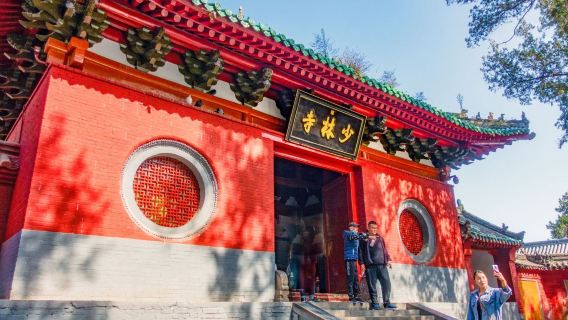
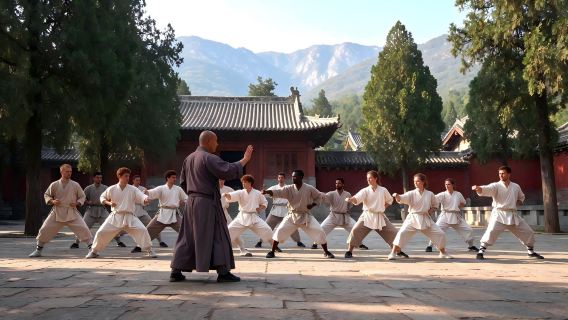
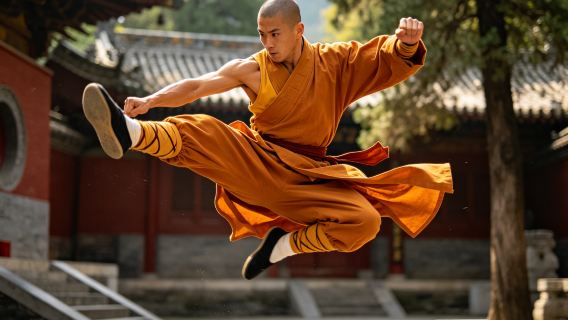
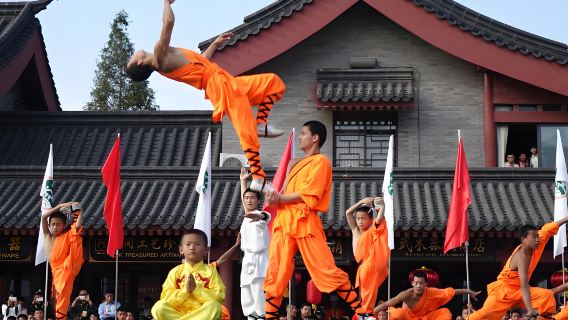
It is said that "all martial arts originate fromShaolinNot only Chinese people who grew up deeply influenced by Shaolin kung fu, but also many international friends visiting Henan will go to see Shaolin temple. It is not only a sacred place for martial arts worldwide, but also the ancestral temple of Zen Buddhism. Striking some classic martial arts poses for photos at Shaolin temple makes the swords and shadows of the martial world seem to flash before your eyes. AboutShaolin TempleTwo keywords 1. The founder of Zen Buddhism The Shaolin Temple is a sacred Buddhist site in China and the ancestral temple of Chan Buddhism. In 527 AD, the renowned Indian monk Bodhidharma (known as the founder of Zen) traveled by sea to southern China, crossed the Yangtze River northward into the Central Plains, and arrived at Shaolin. He meditated and taught dharma in the mountains behind the Shaolin Temple, first advocating the Chan teaching of "mind-to-mind transmission," thereby establishing the temple's revered status as the ancestral home of Chan Buddhism. Nowadays, many visitors come to Shaolin Temple to pray for blessings and peace. The origin of martial arts After the "Thirteen monks with staffs rescued Li Shimin" incident in the early Tang Dynasty, Shaolin Temple became renowned worldwide for its exquisite "Shaolin Kung Fu," and since thenShaolinMonks practicing martial arts has become a common tradition passed down through generations. The Shaolin Temple is the birthplace of Shaolin kung fu, andShaolinThe pai school is a martial arts sect with a wide influence, long history, and numerous boxing styles in the wulin (martial arts world). Since ancient times, it has been regarded as "the foremost martial arts sect in the world" and the supreme authority of martial arts by Chinese people. The Shaolin Temple scenic area - pagoda forest is the burial ground of Shaolin Temple's successive abbots, serene and solemn. You might even catch glimpses of the movie "Shaolin Temple" here. Travel tips What to do? How long to stay? Recommended self-guided tour activities: Half-day tour:Shaolin Temple- Pagoda forest - Chuzu nunnery - Damo cave - Songshan Shaolin scenic area -Songshan Shaolin scenic area - Shaolin temple martial arts hallPerformance The Shaolin Temple complex mainly consists of three parts: the Changzhu Yuan Pagoda Forest, the Chuzu Nunnery, and the Songshan Shaolin attraction - Damo Cave. Most visitors traveling to Shaolin Temple from Luoyang or Zhengzhou choose this route. The layout of Shaolin Temple is typical of Han Chinese Buddhist temples, featuring central axis symmetry. After entering the mountain gate, you can walk straight ahead. The temple is not large, and the visit can be completed within an hour. The Shaolin Temple scenic area - pagoda forest is located approx. 400 m west of Shaolin Temple, serving as the burial ground for the temple's eminent monks throughout history. As the Buddhist saying goes: "Saving one life is better than building a seven-story pagoda." Here, you can learn about the life stories of Shaolin Temple's eminent monks across different dynasties. The Chuzu Temple and Songshan Shaolin attraction - Damo Cave are also near the Shaolin Temple, accessible by walking. The Chuzu Temple was built by people of the Song Dynasty to commemorate Bodhidharma's wall-gazing meditation, while the Songshan Shaolin attraction - Damo Cave is the very place where Patriarch Bodhidharma meditated facing a wall for nine years. 1-day tour:Shaolin Temple-Tallinn-Sanhuangzhai In the morning, follow the half-day tour itinerary to visit Shaolin Temple first, then proceed to the Shaolin Temple attraction - Pagoda Forest. The location is approx. 5 min walking distance from the Shaolin Temple attraction - Pagoda Forest.Shaolin cablewayAfter taking the cable car to Sanhuangzhai station, it takes about 30 minutes to reach the destination on foot.Sanhuangzhai scenic areaPortal. ActivitiesSanhuangzhai scenic areaIt takes at least 3-4 hours to explore the attraction, which features many unique geological views. The Sanhuangzhai cliffside plank walk is a must-see. Walking along the cliffside path with towering cliffs on one side and a sheer drop on the other is both a physical and mental challenge. 2-day tour:Shaolin Temple- Songyang scenic area - Zhongyue scenic area Shaolin Temple andSongyang academy, Mount SongLocated in Dengfeng, visitors with ample time can purchase a combo ticket for all three sites and explore them over two days. On the first day, visitShaolin scenic areaIn the evening, watch the live performance of "Zen Shaolin Music Ceremony", and the next day, head to Songyang, which is far from downtown Dengfeng.Zhongyue scenic area. Where can I see authentic Shaolin kung fu? Nowadays, it is difficult for ordinary visitors to witness the martial arts training of Shaolin monks at Shaolin temple. However, visitors can use the Shaolin temple combo ticket to watch the Shaolin kung fu performance at the Shaolin martial arts hall in Songshan Shaolin scenic area, approx. 700 m east of Shaolin temple. Performance time: The performance time at Songshan Shaolin scenic area - Shaolin temple martial arts hall is subject to the on-site announcement. Each performance lasts 30 minutes. The cost is included in the admission ticket. Where is a good place to stay?There are some farmhouse inns and guesthouses around Shaolin Temple, but the conditions are average. If you're not in a hurry, it's not recommended to stay here. If you need to stay overnight, Dengfeng city center is a good choice, as it offers convenient access to the three major attractions of Songshan Mountain. Shaolin TempleIs vegetarian food available?Since you're visiting Shaolin Temple, don't miss the vegetarian cuisine. The vegetarian restaurant inside Shaolin Temple is called "Huanxidi" and is worth trying. Shaolin story The most stubborn holdout in history: When it comes to stubborn holdouts, they didn't just appear in modern times. As early as the Tang dynasty, the Shaolin Temple emerged as such a case. Emperor Li Yuan of Tang issued an order for its demolition but failed. When Li Shimin came to power, not only was the Shaolin Temple spared from punishment, but it also received generous rewards. Compared to today's holdouts, the Shaolin Temple can be called the most legendary stubborn holdout in history. The origin of the matter was an imperial edict issued by Li Yuan, ordering the demolition of all temples within Henan province, including the Shaolin Temple. After receiving the imperial decree, hundreds of monks at Shaolin Temple refused to comply, standing united and resolute in collective defiance. Li Yuan had no choice, as the Tang dynasty was newly established and could not afford to gain a reputation for cruelty. He tacitly allowed the temple's "retention" but revoked the 4,000 acres of temple land previously granted by the Prince of Qin. Later, when Li Shimin became emperor, he granted Shaolin Temple an additional 4,000 mu of land, permitted the temple to train monk soldiers, lift the prohibition against killing, and consume alcohol and meat. Inside the temple, there is a stele titled "Emperor Taizong of Tang's decree to the Shaolin Temple abbot," which records this historical event. You may want to see it when visiting the Shaolin Temple.

Dengfeng · 64.6km from Jia County
Laojun Mountain Scenic Spot
No. 1 of Fall Viewing Attractions in Henan

Laojun Mountain Scenic Spot

8.6
4.7/5
16.7k reviews

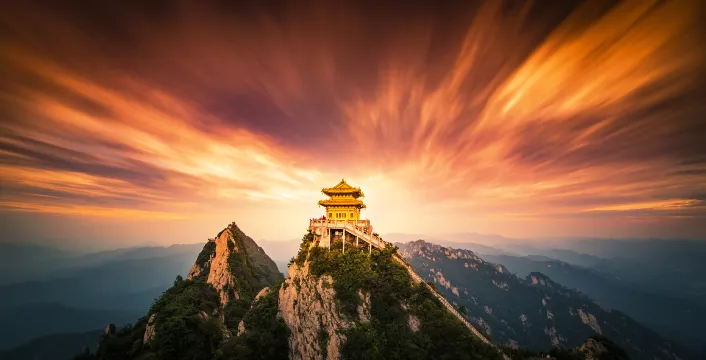
It is said that Laojun Attraction is the place where Li Er (Laozi), the founder of Taoism, practiced in seclusion. During the Northern Wei Dynasty, a temple was built in the mountain to commemorate it. Later, it was named "the famous mountain in the world" and has always been popular. The mountain is lush with trees and picturesque, and mountain springs can be seen everywhere. In the golden autumn, this is the best choice for viewing red leaves in the Souvenir areas. After the rain, Laojun Mountain is surrounded by clouds and mist in each peak, like a fairyland in the sky. The Attraction area is huge and is mainly divided into the main Laojun Mountain Attraction in the center, the Dream Valley Attraction in the west, and the Zhaigou Attraction Area in the east. Generally, tourists will spend a day to visit the main Laojun Mountain Attraction, which is also the most developed area of ​​the entire Attraction. If you go to the top of the mountain, you will also have the opportunity to see the beautiful sea of ​​clouds, sunrise, and sunset. The main Attraction of ​​Laojun Mountain includes Zhongtianmen, Jinding, Laojun Temple, Nantianmen, Yuhuangding and Mazongling. Since its construction in the Northern Wei Dynasty, Laojun Temple has been the center of worship for pilgrims from the Central Plains; the Taoist temple on Yuhuangding enshrines the Jade Emperor and is also a good place to view the scenery in the mountain; Jinding and Mazongling are good places to watch the sunrise and the sea of ​​clouds. Recommended itinerary: Day Trips Most tourists choose to spend a day to visit the main Attraction of ​​Laojun Mountain. Lingguan Hall - the statue of Laojun at the foot of the mountain - Lincu Hall - Zhongtianmen - tree-lined trail - Lying Yunsong - Bodhisattva Hall - Laojun Temple, Jinding - Yuhuangding, and then return along the original route. Tourists can choose to walk the whole way or take a "walk + cable car" tour of Laojun Mountain according to their own conditions. There is the Zhongling Cableway of the Attraction between the Lingguan Temple at the foot of the mountain and the Zhongtian Gate on the mountainside. Take the Zhongling Cableway and then walk from Zhongtian Gate to the top of the mountain, Yuhuang Peak. The road from Zhongtian Gate to the top of the mountain is not very steep and can usually be completed in about an hour. Two-day tour If you have enough time, you can spend two days to visit Laojun Mountain. The general route is: D1: Visit the main Attraction of ​​Laojun Mountain and stay in the mountain that night. D2: From the top of Laojun Mountain, choose to go down the mountain to the Dream Valley in the west or the Zhaigou Attraction in the east, and arrive at the west gate and east gate of the Attraction respectively. In the main Attraction of ​​Laojun Mountain, you can stay near Zhongtianmen on the mountainside and Laojun Temple on the top of the mountain. There are hotels near Zhongtianmen with better accommodation conditions, while the accommodation conditions Souvenir Laojun Temple are relatively poor. If you plan to go to the top of the mountain to watch the sunrise the next morning, you can stay Souvenir Laojun Temple. Compared with the Zhaigou Attraction in the east, the mountain roads in Dream Chasing Valley are smoother, and tourists can choose one of them to go down the mountain according to their preferences. There are many places in the Attraction that can provide Dining services for tourists, but the signboards on some sections of the road in the Attraction are not yet very complete, so tourists need to pay more attention when visiting.

China · Luanchuan
Song Du Huangcheng Cultural Tourism Resort

Song Du Huangcheng Cultural Tourism Resort

8.6
4.6/5
180 reviews

Song Du Huangcheng Cultural Tourism Resort is located in the northern part of the old city of Kaifeng, precisely on the site of the imperial palace of the Northern Song Dynasty's Dongjing city. The millennium-old central axis of Kaifeng runs through this area, making it the core zone of the royal culture of the Song Dynasty. Here, you can find the Song-style imperial architecture of the Longting attraction, the tales of the Yang Family Generals at Tianbo Yang's residence, and the calligraphic steles of Han Yuan Stele Forest. The Shuanglong Lane historical and cultural block, 960 Cultural and Creative Park, and Qisheng Corner have transformed old streets and courtyards into Song-style blocks perfect for leisurely exploration. The resort also connects a series of Song culture attractions: Wansui Mountain Great Song Martial Arts City stages year-round martial arts live shows and intangible cultural heritage iron fireworks, while historic sites like the Iron Pagoda, Kaifeng city wall, Zhouqiao and Bian River ruins, Shanshangan Guild Hall, Yanqing Taoist Temple, and Fan Pagoda are scattered across the old city, along with niche spots like the underground wartime grain storage. These places are hard to cover in one day, so we recommend focusing on two or three key sites. After dark, a different experience awaits as the attractions light up in unison. Boarding a painted pleasure boat on the Great Song Imperial River to watch the illuminated pavilions and towers sway with the rippling water is a popular nightlife option here.

China · Kaifeng

Experiences you can't miss in Jia County

Featured Food & drink in Jia County

View all Food & drink
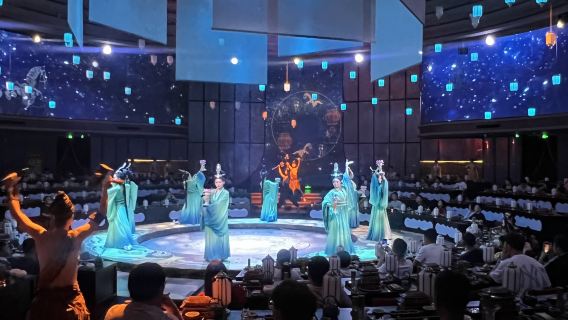
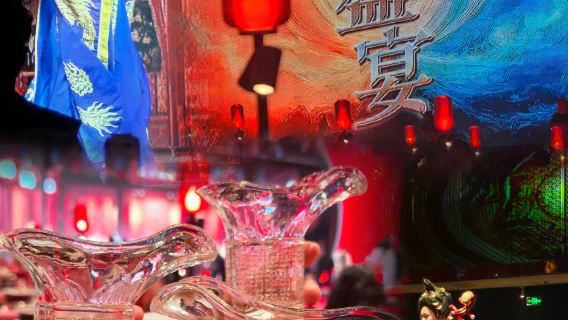
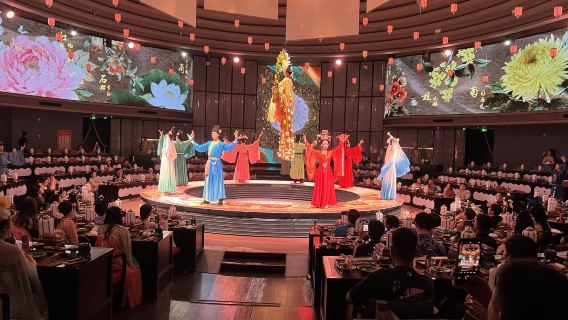
Luoyang Yanle | Ancient Costume Makeover, 360° Holographic Show & Heluo Royal Banquet
󱌍
Duration: 1.6 hrs
English
Free cancellation
Instant confirmation
Book now for tomorrow
FromBRL 133.84
Banquet Under Heaven · Banquet Music (Luoyang · Palace banquet | Immersive dining show of the divine capital of Wu Zhou)
󱌍
5.0/5
· 5 reviews· 22 booked
Duration: 1.8 hrs
English
Free cancellation
Book now for tomorrow
FromBRL 99.95
Luoyang Yanletianxia Yanle | Tang Hanfu Makeover, 360° Live Show & Heluo Royal Feast
󱌍
Duration: 1.6 hrs
English
Free cancellation
Instant confirmation
Book now for today
FromBRL 376.93

Featured Outdoor & sports in Jia County

View all Outdoor & sports
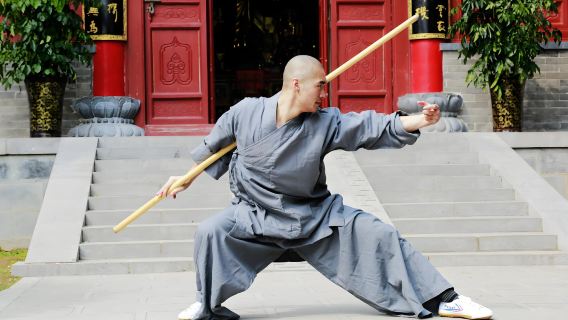
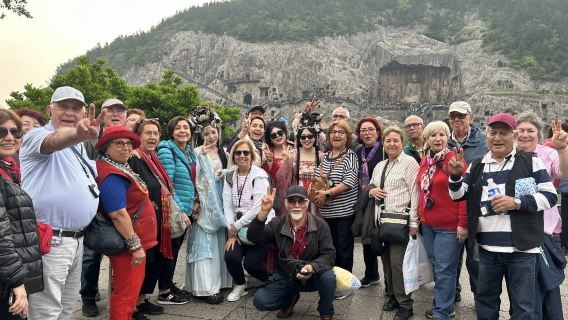
Luoyang Tour to Songshan Shaolin Scenic Including 2-Hour Kung Fu Lesson with Master
󱌍
5.0/5
· 1 review
Duration: 3.5 hrs
English
Free cancellation
Instant confirmation
Book now for tomorrow
FromBRL 664.97
Songshan Shaolin Scenic+Longmen Grottoes1-day Tour
󱌍
Duration: 9.5 hrs
English
Free cancellation
Book now for tomorrow
FromBRL 2,317.16
Exclusive Zhengzhou Private Excursion: Shaolin Temple with Kungfu Immersion and Activities
󱌍
5.0/5
· 2 reviews
Duration: 7 hrs
English
Free cancellation
Instant confirmation
Book now for tomorrow
FromBRL 2,065.00
Learn Martial Arts at Songshan Shaolin! 6-Person English Small Group | Kung Fu Experience · Kung Fu Performance
󱌍
Duration: 4 hrs
English
Free cancellation
Instant confirmation
Book now for tomorrow
FromBRL 973.60

Featured Culture & history in Jia County

View all Culture & history
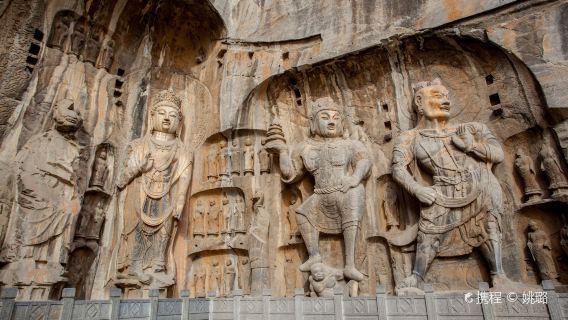
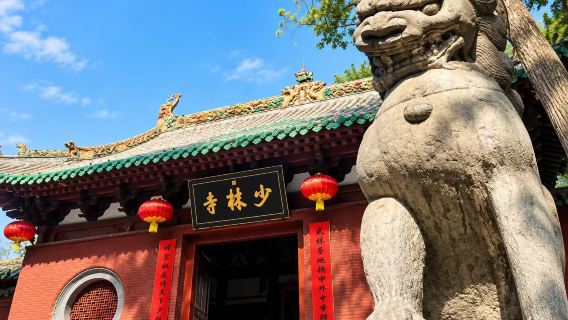
Luoyang  Shaolin Temple and Longmen Grottoes Day Tour(Optional Group Tour)
󱌍
4.4/5
· 26 reviews· 298 booked
Duration: 6 hrs
English
Instant confirmation
Book now for tomorrow
FromBRL 389.44
Luoyang Songshan Shaolin Temple + Longmen Grottoes Day Trip including martial arts performance / Small group or English-speaking guide optional
󱌍
4.9/5
· 19 reviews· 216 booked
Duration: 7.7 hrs
English
Free cancellation
Instant confirmation
Book now for tomorrow
59 travellers saved
FromBRL 286.30
Luoyang Shaolin Temple & Pagoda Forest Day Tour from Luoyang/Zhengzhou | Kung Fu Show Included, Optional Kung Fu Class or English-Speaking Guide
󱌍
4.8/5
· 10 reviews· 124 booked
Duration: 5 hrs
English
Free cancellation
Instant confirmation
Book now for tomorrow
FromBRL 337.12
1-Day Tour: Longmen Grottoes, Shaolin Temple & Songyang Academy from Luoyang
Trip.Select
󱌍
4.8/5
· 13 reviews· 65 booked
Duration: 6.6 hrs
English
Free cancellation
FromBRL 788.62
Zhengzhou Departure: Songshan Shaolin Scenic + Martial Arts Hall + Pagoda Forest + Sanhuang Village Group Day Tour
󱌍
4.4/5
· 5 reviews· 42 booked
Duration: 6.6 hrs
English
Free cancellation
Instant confirmation
FromBRL 369.97
Songshan Shaolin Scenic Area + Longmen Grottoes 1-day tour | Premium 8/15-person small group + door-to-door pickup and drop-off
󱌍
4.8/5
· 39 reviews· 386 booked
Duration: 11.5 hrs
English
Free cancellation
Instant confirmation
Book now for tomorrow
94.9% of travelers recommend
FromBRL 760.64
[Hotel Pick-up & Drop-off] Private One-Day Tour: Longmen Grottoes & Erlitou Site Museum|Attraction Reservation Support
󱌍
FromBRL 369.98
Jia County Today's weatherFoggy 9-16℃
Jia County weather for the next 2 days11/16: 7-14℃, 11/17: 5-14℃

Free things to do in Jia County

What travellers say about Jia County

user-avatar
江山雨过10 July 2026
5.0
It's a relatively niche tourist spot, with few visitors, so you can take your time to explore and appreciate it. I saw a short essay by a Su Shi fan at Su Shi's tomb; it was really well-written. I snapped a picture and uploaded it for comments, hoping more Su Shi fans will see it. I hope "Yunxi" won't mind?

Sansuyuan Scenic Area

user-avatar
Anonymous user12 November 2026
4.0
Tickets are only required to visit the Ceramics Bureau, Bolingweng Temple, and People's Cinema in the ancient street; all other areas are free. The areas requiring tickets offer interactive and immersive experiences, and each visitor receives a complimentary Jun porcelain cup. Driving to the scenic area is difficult; the location is unclear, and the surrounding roads are often congested and narrow – improvements are recommended.

Shenhou Ancient Town

user-avatar
m392117 October 2021
4.0
Linfeng Village. You can search on Baidu to learn about its history. I think many residents have moved away. It’s a pity that Zhu Zhenzhai is not open again.

Linfeng Village

user-avatar
大松树叶子12 June 2020
5.0
The Confucian Temple in Jia County, Henan Province, has preserved the Dacheng Hall, Jimen, Minghuan Temple, Xiangxian Temple, and two wings, all of which are wooden structures from the Qing Dynasty. The building covers an area of ​​50,000 square meters and has obvious characteristics: it was built a long time ago, is large in scale, and is majestic; it is well preserved; the architectural regulations are based on the essence of the two major architectural complexes of the Confucius Temple and Confucius Mansion in Qufu, Shandong Province, and it is another ancient architectural complex with oriental architectural colors. Among them, the wooden dragon pillars are even more exquisite, because the "Jia County School" of Confucius' descendants is one of the ten major schools in the Confucius Mansion in Qufu. It is now a national key cultural relic.

Jia County Confucian Temple

user-avatar
Chris14 November 2026
5.0
Visiting Longmen Grottoes was one of the highlights of my trip to Luoyang. I was genuinely amazed by the sheer scale of the site and the incredible details of the Buddhist statues carved into the limestone cliffs. It is quite mind-blowing to think about how these masterpieces were created more than a thousand years ago, especially considering the tools and technology available back then.Walking through the grottoes gave me a real appreciation of China's rich history, culture and craftsmanship. Every section seemed to have something interesting to discover, and I found myself stopping frequently to admire the intricate carvings. The scenery along the river also made the experience even more enjoyable.Definitely worth visiting if you're in Luoyang! My advice is to set aside at least 2–3 hours, wear comfortable shoes and take your time exploring rather than rushing through. An unforgettable experience!

Longmen Grottoes

user-avatar
_su***0714 November 2026
5.0
It was a lot of fun! The NPCs were very friendly, the game was very interesting, and everyone in my family had a great time. The scenery was beautiful, and the song and dance parade was excellent with beautiful performers. It was definitely worth the trip and I highly recommend it. It also made for great photos.

Millennium City Park

user-avatar
_We***4814 November 2026
5.0
There's only one path up Mount Hua since ancient times; its perilousness is world-renowned. Hiking from Yuquan Temple to the North Peak took 3.5 hours. Then, the loop route continued through the Middle Peak, East Peak, South Peak, and West Peak, with the West Peak cable car taking the descent. The entire trip took nearly 9 hours. The West Peak cable car was excellent; there were few people on the way down, no queues—perfect.

Mount Hua

user-avatar
仓小超12 November 2026
5.0
It's worth a visit. It's best to take your time exploring; it's steeped in history and culture. The temples are truly stunning. The large trees at the entrance are impressive. Walking along the path gives you the urge to learn martial arts. The Shaolin performance is also very well done. The whole walk is exhilarating. There are cars for rent at the entrance; you can rent one if you don't want to walk. There are quite a few cats along the way; they're very affectionate.

Songshan Shaolin Scenic Area

user-avatar
Anonymous user14 November 2026
5.0
Thank you to our tour guide, Mr. Chen, for your thoughtful arrangements! The itinerary at Laojun Mountain was just the right pace, the explanations were down-to-earth, and he taught us a lot of interesting facts. He took good care of us throughout the trip, and we had a very safe and enjoyable time.

Laojun Mountain Scenic Spot

user-avatar
M55***2018 August 2026
5.0
It's very worthwhile, but it's also very crowded, which might slightly detract from the overall experience. However, the people are incredibly welcoming, and there are many beautiful spots for taking photos. The food is also affordable and inexpensive, which kids enjoy. I'll definitely go back when it's less crowded.

Song Du Huangcheng Cultural Tourism Resort

Trip Moments in Jia County

Popular cities near Jia County

Frequently asked questions

What are the must-do things in Jia County?

Don't miss these attractions in Jia County: Sansuyuan Scenic Area, Shenhou Ancient Town, and Linfeng Village. If you like Food & drink, try Luoyang Yanle | Ancient Costume Makeover, 360° Holographic Show & Heluo Royal Banquet. If you enjoy Outdoor & sports, try Luoyang Tour to Songshan Shaolin Scenic Including 2-Hour Kung Fu Lesson with Master.

You can give Luoyang Yanle | Ancient Costume Makeover, 360° Holographic Show & Heluo Royal Banquet and Luoyang palace banquet · Empress Wu's Banquet (Dingdingmen store) immersive imperial banquet of Empress Wu Zetian, the female emperor of the glorious Tang Dynasty a try. Before you go, please check their opening hours and menus online. Reservations are recommended, especially during peak hours.

Get help anytime, anywhere within 30 secondsContact customer support

Change and cancellation policies vary by attractions and tours. Please check the product details page for more information.

Ticket prices may vary between weekdays and weekends, as well as during peak and off-peak seasons. When booking with Trip.com, you can also use Trip Coins to get extra savings. For more tips on booking discounted tickets, please visit Trip.com for the latest information.