
Things to do in Linqu
Explore top experiences
Top 10 attractions in Linqu


Ancient Town of Qingzhou
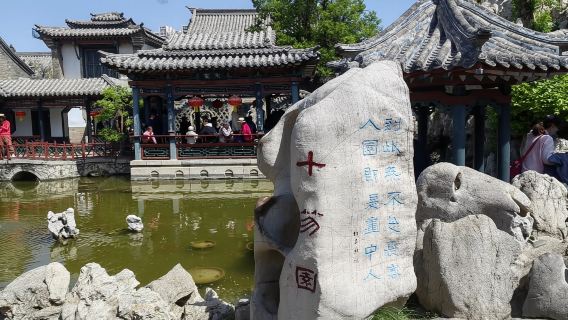
Qingzhou is one of the ancient nine provinces of China. Since the early Western Han Dynasty, six cities—Guang County, Guanggu City, Dongyang City, Nanyang City, Dongguan Weizi City, and Qicheng—were successively built on this land, with a continuous urban history spanning over two thousand years. Today, the Ancient Town of Qingzhou has been comprehensively protected and restored, forming three major districts: the Beiguan ancient block in Dongyang City, the Ouyuan historical and cultural block and the South Gate block in Nanyang City, and the Zhaode ancient block in Dongguan Weizi City. Government buildings, traditional residences, and classical gardens are scattered across hundreds of ancient streets and alleys, such as North Gate Street and East Gate Street, with their blue bricks and dark tiles showcasing distinct Ming and Qing architectural styles. Unlike many entirely reconstructed ancient towns, this is a "living ancient town," where original residents still live in the old streets and alleys, and intangible cultural heritage items like the cuoqin are passed down on the streets, blending the vibrancy of daily life with ancient charm. A visit can begin by ascending the Fucai Gate Tower at the south gate of ancient Nanyang City for a panoramic view of the town's sea of dark tiles. Ouyuan is a preserved classical garden within the town, originally the eastern garden of the Ming Dynasty's Prince of Heng's residence and later the private garden of Feng Pu, a grand secretary during the Qing Kangxi era. Its three-peak rockery embodies the grandeur of northern landscapes. Figures like Fan Zhongyan and Ouyang Xiu once served as officials here, and Li Qingzhao lived in Qingzhou for over a decade, composing numerous ci poems. Historical relics like the Qingzhou Prefecture Examination Hall are also scattered throughout the streets, where traces of this cultural legacy can often be encountered. The main street is densely lined with shops, but to avoid crowds, one can turn into the side alleys or head straight to Zhaode Ancient Street—where rows of Ming and Qing-era houses remain, with wooden doors, stone steps, and flagstone paths offering a glimpse of old Qingzhou's daily life.Qingzhou · 19.6km from Linqu

Mount Yimeng Tourism Area
Mount Yimeng Tourism Area is located in the southern part of Linqu County.Yishan Town, isYimeng MountainThe northern main range features dense forests and numerous springs, offering breathtaking scenery. Here you can admire the majestic Baizhangya Waterfall and ascend to the 1,032m-high peak.YuhuangdingEnjoy a panoramic view of the mountains, or experience the Yishan slide through the forest. You can also visit Dongzhen Temple to admire ancient steles, or go toFayun TemplePrayer and blessings. The East Gate is the entrance to Mount Yimeng Tourism Area, nearYishan Townand Changshen Expressway. After purchasing tickets at the attraction entrance, you need to take the attraction sightseeing bus up the mountain. Within the attraction, at Dongzhen Temple, Baizhang Waterfall,Fayun Temple,Yuhuangding,Waitougu, Shenlong Grand CanyonFixed waiting points are available, and you can take a sightseeing bus between attractions with your ticket. However, during the off-peak season, sightseeing buses are suspended, but visitors can drive their own cars up the mountain. You can basically visit the main attractions of Mount Yimeng Tourism Area in a full day: take the sightseeing bus to the farthest point first.Waitougu, then take a sightseeing tourYuhuangding, then take the slide or walk the trail toFayun Temple, then follow the trail down the mountain to visit Baizhangya Waterfall, and finally take a car to Dongzhen Temple for a visit. If the schedule is reasonable, inYuhuangdingYou can also take another trail down the mountain (approx. 2 hrs) to visit firstShenlong Grand Canyonthen take a car toFayun Temple. 971 meters above sea levelWaitouguYesYishan Mountainfourth highest peak. Climb to Changchun Pavilion on the summit, where three sides are sheer cliffs. Looking out,Yishan MountainThe vast, rolling mountains are spread out before your eyes, and this is also an excellent spot to watch the sunrise. FromWaitouguAccess to parking locationWaitouguAlong the trail, you will see many cliff carvings, and you can also view Shizigou, visit Lingguan Temple, and exploreBixia Shrine. YuhuangdingIt is the highest peak in Mount Yimeng Tourism Area. From the summit, you can gaze upon the surrounding mountains and enjoy a panoramic view, making it an excellent spot to watch the sunrise. Taoist buildings are constructed on the mountaintop.Jade Emperor Pavilion, majestic and grand, with nearbyWanghaiting Pavilion, Tanhai Stone, Taiqing Cave, and other attractionsNext to the Tanhai Stone, there is a stone slide where you can pay to get gloves and a sliding mat, then sit on the slide and glide down through the forest.Fayun TempleApproximately 1 km in total. Fayun TempleInitially built in the first year of Yuanhe during Emperor Zhang of the Eastern Han Dynasty (84 AD), it was a famous temple in the Shandong region, later almost completely destroyed by war. The currentFayun TempleAlthough rebuilt on its original site, you can still feel the historical atmosphere within. The Baizhangya Waterfall has a drop of over 80 meters, making it a rare large waterfall north of the river. Visiting in summer allows you to experience its incredible coolness beneath the falls, and after rain, the waterfall cascades down with a sound like surging waves, creating a spectacular sight. Yishan MountainIt has been a famous mountain in China since ancient times, ranking first among the five great Taoist mountains. Sixteen emperors, including Emperor Wu of Han (Liu Che), Emperor Taizong of Tang (Li Shimin), and Emperor Taizu of Ming (Zhu Yuanzhang), once performed the Fengshan sacrifice here. The Dongzhen Temple at the foot of the mountain was built in the early Song Dynasty, and whenever emperors and generals performed the Fengshan sacrifice,Yishan Mountain, and monuments were always erected to commemorate it. Today, you can still see those ancient steles recording history inside Dongzhen Temple, which are extremely precious. Also,There are restaurants on the mountain, such as Songlin Restaurant and Bishu Mountain Villa, that offer dining., but prices are relatively high. If you're doing a 1-day tour and not staying overnight, it's recommended to bring your own dry food and water up the mountain. If you want to watch the sunrise, there are accommodations like Guanyuntai Hotel on the mountain, but the conditions are not as good as those at the foot of the mountain. If needed, it's advisable to contact the hotel in advance to book a room (contact information can be found on the scenic area's official website).Linqu · 35.4km from downtown

Yunmen Mountain Scenic Area
[Zhonghua Shoushan · Fairyland Cloud Gate] Yunmen Mountain scenic area in Qingzhou is famous for the thousand-year-old story of "May you live as long as the Southern Mountain" and is known as "the No. 1 Mountain of Ancient Chinese Longevity Culture". This famous mountain in central Shandong, with an altitude of 421 meters, integrates geological wonders, religious heritage and cultural treasures. It is not only a national geological park, but also the core attraction of Qingzhou Ancient City Tourist Area. 🌟 Key Highlights The Longest Birthday in the World – Yunmen Offering Longevity The giant Ming Dynasty cliff carving of the character "寿" (longevity) on the shady side of the mountain is 7.5 meters high and 3.7 meters wide, with the character "寸" (inch) alone reaching a height of 2.3 meters, symbolizing "no one is as tall as an inch." Legend has it that it was carved by Zhou Quan, the official in charge of the imperial kitchen of the Prince of Heng, during the Jiajing era of the Ming Dynasty, to celebrate the Prince's birthday. Despite enduring 500 years of wind and rain, it remains imposing. Furthermore, the legend of "a snow-covered man presenting a longevity gift to the Prince of Heng" adds a mystical aura to this giant longevity carving. A thousand-year-old secret realm where Buddhism and Taoism coexist The Sui and Tang Dynasty Grottoes: 272 stone Buddhas stand quietly in the mountains in 5 grottoes in Shanyang. The earliest inscription can be traced back to the ninth year of the Kaihuang era of the Sui Dynasty (589 AD). It is a rare early Buddhist art relic in Shandong. Taoist holy sites: Wangshou Pavilion, Wanchun Cave (the final resting place of Chen Tuan) and other ancient sites are scattered throughout the area. The stone carvings with inscriptions such as "The God is Here" and "Transcending the Dust and Dreams" written by Xue Suo are elegant and vivid, fully demonstrating the Taoist immortal spirit. Geological wonders and natural scenic spots Yunmen Mountain scenic area- Yunmen Wonderland: The natural cave "Yunmen Cave" through the main peak, Dayunding, is shrouded in clouds and mist during the summer and autumn seasons, making the temples on the mountaintop appear and disappear, creating a fairyland-like atmosphere. It is known as the first of the eight scenic spots of ancient Qingzhou. Hongdan Cliff Landform: Along the way to climb the mountain, you can see ochre-red cliffs and pine trees, which are even more magnificent at sunrise. Guo Moruo once praised it as "the red trees and cliffs are worse than any painting". 🚶 Visitor Guide Classic route (2-3 hours): Mountain Gate → Guanshou Pavilion (panoramic view of the giant longevity statue) → Wangshou Pavilion → Giant Longevity Stele on Cliff (take photos) → Yunmen Cave (pass through the gate of clouds and mist) → Tianxian Yunu Temple (Ming Dynasty stone arched building without beams) → Donglangfeng Pavilion (overlooking the panoramic view of Qingzhou). Cultural Exploration: Along the way, you can admire inscriptions from various dynasties such as "Hai Dai Majestic Style" and "Old Man in a Raincoat Lying on Bean Rock", explore the stone statue of Chen Tuan and the poem inscription of "Snow Raincoat" in Wanchun Cave, and feel the artistic conception of "sleeping soundly in the deep night with white clouds rising".Qingzhou · 16.1km from Linqu

Jiulongyu
Jiulongyu is located in the southern mountainous area of Qingzhou City. There are 18 scenic spots such as Longmen Temple and Xiuzhen Palace in the scenic spot. It is called “18 Scenes in Kowloon”. The scenic area has rich natural resources, as well as mountain landscapes such as turtle stones and bamboo leaves, as well as humanistic historical resources such as Zhao Yu and Xiuzhen Palace. It is an ideal place for people to return to nature, sightseeing and summer vacation.Qingzhou · 7.5km from Linqu

Shimenfang
Shimenfang was formerly known as Shimen Mountain. The Attraction includes three major scenic spots: Shimen Mountain, Taipinggu, and Tianzhu Peak, covering an area of about ten square kilometers. It was famous for its "evening glow" in ancient times and is now famous for its red leaves. It is as famous as Beijing's Xiangshan, Nanjing's Qixia Mountain, Suzhou's Tianping Mountain, and Sichuan's Moya Luo. It is one of the five major red leaf landscapes in China and the best red leaf in Qi and Lu. Shimenfang has a rich cultural heritage, numerous cliff carvings, and unique pagodas and temples. The magical natural scenery and rich cultural landscapes are integrated, making it a famous provincial scenic spot and a provincial key cultural relic protection unit.Linqu · 12.4km from downtown

Qingzhou Sleepless Town
Qingzhou Sleepless Town is modeled after Xi'an's Grand Tang Mall, with Chinese cultural trends as its main theme, combining Shandong folk customs to create an immersive cultural tourism pedestrian street. The area features 3 large vibrant squares and various parade floats, showcasing a rich collection of intangible cultural heritage workshops and traditional Chinese performances. Visitors can enjoy a variety of activities, from strolling through the ancient-style alleys to admiring Han Dynasty pottery figurines and Tang Dynasty porcelain, gaining a deeper understanding of Qingzhou's historical culture. Additionally, Qingzhou Sleepless Town offers a wide array of delicious food, and the captivating performances by professional actors make the experience unforgettable. The illuminated walls and traditional Chinese lanterns create a unique cultural atmosphere, transporting visitors into a world of ancient charm.Qingzhou · 8.5km from Linqu

Jingtang Ancient Town
Jingtang Ancient Town is located in Qingzhou District, Shandong. It was built on the hillside in 1456, right next to the Palace of King Heng in a unique combination of Ming Dynasty architecture and Western residential architecture. The entire village is surrounded by an ancient city wall made of blue limestone. Every 30 meters along the wall, a cannon tower accentuates this impressive Ming village, reminiscent of its defensive strength centuries ago.Qingzhou · 17.4km from Linqu

Ouyuan Garden
Ouyuan, also known as "Feng Family Garden", was the east garden of the Hengwang Palace in the Ming Dynasty. It has a history of more than 500 years. Later, it became the residence of Feng Pu, a university scholar of Wenhua Palace during the reign of Emperor Kangxi of the Qing Dynasty, after he retired and returned to his hometown. The Feng family was a famous family in Qingzhou during the Ming and Qing Dynasties. Since the ancestor Feng Yu, generations of officials have been honest and upright, and the tradition of poetry, books and literature has been passed down from generation to generation.Qingzhou · 19.1km from Linqu
Qilu Songshan Canyon Rafting
Qilu Songshan Canyon Rafting Attraction is located in Linqu County, Weifang City. It is more than 8,000 meters long, with a maximum drop of 128 meters, 16 bends, and 8 rapids. While full of thrills and fun, it also fully takes into account the safety and comfort of different groups of people. The rafting scenery is beautiful, the air is fresh, the water is clear, and it is surrounded by beautiful peaks. There are deep valleys, winding streams, charming peaks, and lingering clouds and mist. Immersed in the landscape of Chinese paintings, shuttled between the magnificent boulders, watched the canyon scenery, listened to the sounds of nature, and felt the birds and flowers. "The boat is floating on the water, and people are swimming in the painting." Come to Qilu Songshan Canyon Rafting, enjoy the original scenery in the super-long exciting rafting of up to 3 hours, so that you can truly return to the countryside and feel the cool summer!Linqu · 19.2km from downtown

Tuoshan
Qilu Buddhist Kingdom - Hidden Gem of Camel Mountain Camel Mountain, a national AAA-rated attraction renowned as the "Oriental Sculpture Gallery," is celebrated alongside Yunmen Mountain as the "Twin Gems of Shandong Grottoes." This millennium-old peak, standing at 408m, harmoniously blends Buddhist artistry, Taoist mystique, and geological wonders. As a nationally protected cultural heritage site, it forms an integral part of Qingzhou's ancient city tourism district. 🌟 Core Highlights Famous grotto sculptures of Qilu - Buddhist relics from the Northern Zhou to High Tang dynasties On the southeastern cliffs of Camel Mountain's main peak, five cave temples and one group of cliffside statues stand quietly. The 638 stone Buddha statues from the Northern Zhou to Tang dynasties still retain traces of cinnabar pigments after weathering centuries. The 7.5-meter-tall Amitabha Buddha in Cave 3, with its compassionate expression and flowing robe folds resembling drifting clouds, is considered an iconic Sui dynasty masterpiece. Cave 2's Avalokitesvara Bodhisattva wears a jeweled crown with miniature Buddha figures and cascading ornaments, epitomizing the grandeur of High Tang artistry. The flying apsaras reliefs in Cave 4 appear so dynamic with their fluttering scarves that they seem ready to leap from the walls, prompting Guo Moruo to praise: "Camel Mountain's caves rival the Longmen Grottoes." China's Natural Wonder - The Mountain Buddha and Cloud Gate Longevity Character Echo Each Other from Afar From the Buddha Viewing Platform, you can gaze upon a 2,600-meter-long mountain formation resembling a reclining Buddha to the southeast. Nine mountain peaks form the Buddha's head, with an elongated nose and slightly parted lips that create the miraculous illusion of "chanting scriptures" when viewed from different angles. Even more astonishing, the Camel Mountain Grottoes were all carved facing this colossal Buddha, forming a breathtaking scene of "ten thousand Buddhas paying homage." Together with the giant "Longevity" character on Yunmen Mountain, they create the millennium wonder of "radiant longevity and Buddha." Representative Taoist architecture – Haotian Palace and Qibao Pavilion The Haotian Palace atop the mountain, originally built during the Yuan Dynasty, stands as a significant Taoist architectural complex in Shandong Province. Its stone-built, beamless arched structure—the "Seven Treasures Pavilion"—is considered an architectural marvel. Constructed entirely of stone without a single nail or rivet, it has withstood wars and bears only three bullet marks while remaining steadfast. Inside the hall, the vividly painted statues of the Three Pure Ones appear as fresh as ever. Over 120 stone inscriptions within and around Haotian Palace document its thousand-year history of rise and fall, with the Yuan Dynasty's "Imperial Incense Offering Stele" serving as a particularly valuable artifact for Taoist historical research.Qingzhou · 17.8km from Linqu
Experiences you can't miss in Linqu
Featured Cultural experiences in Linqu
View all Cultural experiences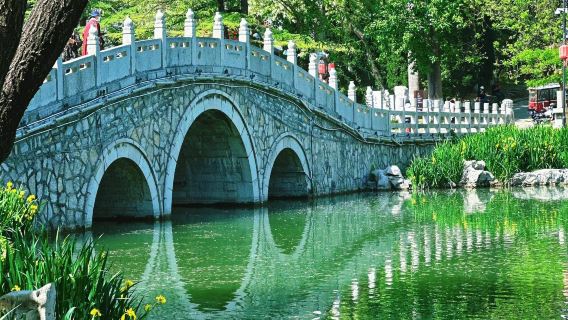
5% off
Limited-time sale
FromPLN 628.37PLN 661.45

5% off
Limited-time sale
FromPLN 628.37PLN 661.45
5% off
Limited-time sale
FromPLN 754.05PLN 793.74
5% off
Limited-time sale
FromPLN 754.05PLN 793.74
5% off
Limited-time sale
FromPLN 628.37PLN 661.45
Free things to do in Linqu
Ancient Town of Qingzhou
Qingzhou · 19.6km from LinquImmediate access, Book now for today, Cancel anytimeMount Yimeng Tourism Area
Linqu · 35.4km from downtownYunmen Mountain Scenic Area
Qingzhou · 16.1km from LinquImmediate access, Book now for today, Cancel anytimeJiulongyu
Qingzhou · 7.5km from LinquShimenfang
Linqu · 12.4km from downtownBook now for today, Cancel anytimeQingzhou Sleepless Town
Qingzhou · 8.5km from LinquJingtang Ancient Town
Qingzhou · 17.4km from LinquImmediate access, Book now for today, Cancel anytimeOuyuan Garden
Qingzhou · 19.1km from LinquQilu Songshan Canyon Rafting
Linqu · 19.2km from downtownTuoshan
Qingzhou · 17.8km from LinquImmediate access, Book now for today, Cancel anytime
What travellers say about Linqu

268***267 October 2026
5.0
When visiting Qingzhou Ancient City, the Fucai Gate Tower is a must-see, considered the heart of the ancient city. There aren't many other attractions within the ancient city, but the tower has a great location, with convenient access via sightseeing electric carts. There are also plenty of food stalls to explore nearby.
Ancient Town of Qingzhou

Anonymous user10 October 2026
5.0
The main peak, Jade Emperor Peak, is 1,031 meters above sea level, and the Baizhangya Waterfall has a drop of 65 meters. The mountains are covered with towering trees and flowing springs, and are known as the "top of the five towns". It is suitable for family outings and has fresh air. The artificial landscape "Green Wonderland" has artificial moss and flowers that look a bit out of place.
Mount Yimeng Tourism Area

阿黛adel14 October 2026
5.0
The mountain is not very high, with an altitude of just over 400 meters. However, there is not much scenery along the way, and the climb is a bit tiring. The scenery is only beautiful when you reach the character "寿" (longevity). At the top, the wind feels very comfortable.
Yunmen Mountain Scenic Area

mujinhuakai6246 October 2026
5.0
It was a lot of fun! Aside from the cave being a bit of a letdown, we bought the full package for 198 yuan and went on the roller coaster, the glass bridge, and the rafting. There was a shuttle service to and from the bottom, and we also saw a circus. It was very convenient, and the kids were thrilled. It's a great place to bring children, and the price is very reasonable.
Jiulongyu
Anonymous user10 October 2026
5.0
I visited Shimenfang over the weekend and had a very pleasant experience overall, making it a great choice for an autumn outing in the suburbs.
Entering and walking up the stone steps, the path isn't too steep, and the climb is leisurely. Along the way, you can see cliff carvings of various styles, their weathered marks adding a touch of history. Those who appreciate cultural artifacts can stop and take their time to appreciate them. In autumn, the most stunning sight is the mountainside ablaze with the vibrant red of the smoke trees, creating layers upon layers of crimson. Standing atop the mountain and looking out at the blue sky against the red leaves makes for incredibly photogenic photos. At the foot of the mountain, there's a persimmon grove, laden with bright yellow persimmons—a delightful sight.
The only downside is that it gets quite crowded on weekends during peak season, and parking halfway up the mountain is inconvenient. I recommend visiting during off-peak times. The handmade persimmon cakes at the entrance of the scenic area are quite delicious; you could buy a couple of pounds as souvenirs. If you're looking for a place to relax and breathe fresh air, Shimenfang is definitely worth a visit.
Shimenfang

এ᭄哈佛ꦿృ༊6 September 2025
4.0
There are fewer people on weekends. The Errenzhuan performance is good, which makes up for the fun of the city that never sleeps. The performance inside is not very attractive and is relatively short. I don’t know how it will be on weekends.
Qingzhou Sleepless Town

王小皮同学8 August 2026
5.0
Strolling through the secluded ancient alleys, the old houses are well-preserved, and traces of time are everywhere. The local farm food is authentic, and the villagers are warm and friendly. Away from the hustle and bustle of the city, you can immerse yourself in the slow life of the countryside and have a perfect experience.
Jingtang Ancient Town

M26***8930 September 2026
5.0
Qingzhou, one of the Nine Provinces, has a long history. Although the city wall was built later, you can see a panoramic view of the ancient city from the top. In addition, the Imperial Examination Hall is very famous and produced more than 800 Jinshi (successful candidates in the highest imperial examinations).
Ouyuan Garden

不懂爱情的我24 August 2025
5.0
As we approached the rafting starting point at the foot of Mount Songshan, a refreshing mountain breeze blew across our faces, as if nature had already prepared a welcoming gift. Young people linked arms and screamed in anticipation, while families with children jumped and laughed. Their colorful life jackets stood out in the sunlight, like a group of "water explorers" about to embark on a journey. At the river entrance, rafting rangers in fluorescent green uniforms stood ready, their presence adding both excitement and peace of mind to this adventure.
Qilu Songshan Canyon Rafting

一懒众衫小吖12 September 2026
4.0
The steps are quite high on each level, making the climb tiring. The advantage is that it's less crowded and quieter, but supplies are limited along the way; only Haotian Palace has a self-service water dispenser with a refrigerator, so bring your own water before you start. The worst part is the grottoes… they're all surrounded by metal fences… the viewing experience is poor. Parking is convenient within the scenic area.
Tuoshan


