
Things to do in Linxia Prefecture
Explore top experiences
Top 10 attractions in Linxia Prefecture


Bingling Cave-Temple Complex
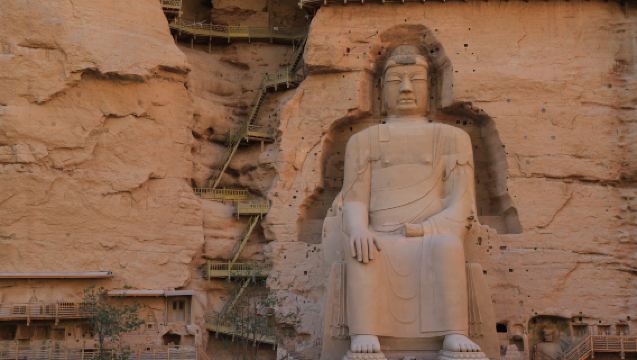
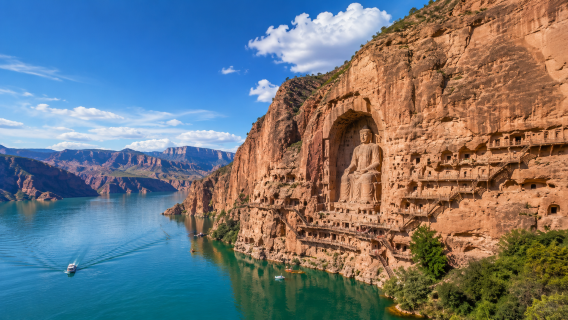
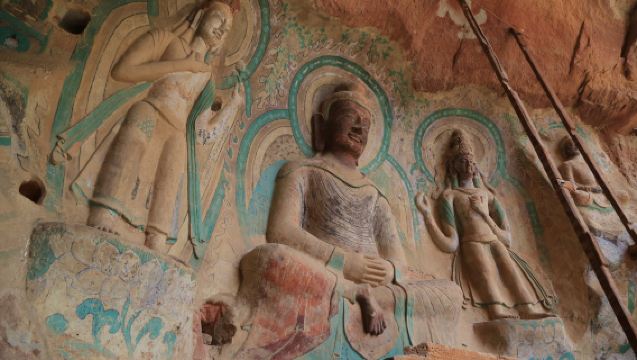
Located in the upper reaches of Liujiaxia Reservoir, on the north bank of the Yellow River in Sigouxia, southwest of Yongjing County. On the steep and dangerous red sandstone cliffs 2 kilometers long from north to south, the cave shrines are lined up one after another, and the plank roads are suspended in the air. It is magnificent and spectacular. It is one of the three largest caves in Gansu and one of the five largest caves in my country. Bingling Temple was formerly known as "Tangshu Cave", which means "ghost cave" in Qiang language. It was called "Longxing Temple" in Tang Dynasty, "Lingyan Temple" in Northern Song Dynasty, and "Bingling Temple" after the Yongle Period of Ming Dynasty. Bingling is called "Benlang" in Tibetan language, which means "one hundred thousand Buddhas". Bingling Temple Grottoes were first built in the first year of Jianhong in the Western Qin Dynasty (420 AD). Since the Sixteen Kingdoms period, it has gone through the Northern Wei, Northern Zhou, Sui, Tang, Song, Yuan and Ming dynasties, with a history of more than 1,600 years. During the period when the Western Qin Dynasty built its capital in Linxia, the king personally visited the grottoes and wrote inscriptions, the originals of which are still preserved on the rock walls. From the time the grottoes were carved in 420 AD to the Song Dynasty, the grottoes had a great influence on Han Buddhism, Pure Land Buddhism, Huayan Buddhism and Zen Buddhism. At the end of the Yuan Dynasty and the beginning of the Ming Dynasty, the Yellow School (Gelug School) of Tibetan Buddhism was introduced to Bingling Temple. Bingling Temple Grottoes, based on the inheritance of folk art from previous generations, absorbed foreign Buddhist art and created vivid sculpture and painting art with a brand-new attitude and concise approach. Its relief pagodas and Tantric murals are as famous as those of Mogao Grottoes and Maijishan Grottoes. The grottoes are divided into three parts: the upper temple, the cave ditch and the lower temple. The lower temple is more spectacular. They are distributed on a cliff 200 meters long and 60 meters high. There are 196 caves and niches in Bingling Temple Grottoes, 694 stone statues, 82 clay sculptures, and more than 900 square meters of murals. The larger Maitreya Buddha statue from the Tang Dynasty is 27 meters high, and the smaller statue is 10 centimeters high. Among them, there are 2 caves and 1 niche excavated in the Western Qin Dynasty, 8 caves and 25 niches excavated in the Northern Wei Dynasty, 2 caves in the Northern Zhou Dynasty, 2 caves in the Sui Dynasty, and 20 caves and 113 niches in the Tang Dynasty. The artistic achievements of Tang Dynasty works were quite high, and there were more than 3,000 monks at that time. The ink inscription of the famous monk Faxian in the first year of Jianhong in the Western Qin Dynasty (420 AD) in this cave is the earliest chronological inscription preserved in the caves in China. It provides a mark for the dating of other ancient caves in the country and has very important historical value. The main body of the cave statues and murals is composed of the large seated Buddha in the natural cave No. 169 and all the small and medium-sized caves in the cliff face. Cave No. 169 was formerly known as Tangshu Cave, and is now called "Tianqiao Cave". It is 15 meters high, 8 meters deep and 20 meters wide. It is one of the earliest and best preserved caves in my country. There are three types of shapes in the cave: Buddha niches, stone carvings, and stone-based clay sculptures. Niche No. 171, located on the cliff of the cave, has a large seated Maitreya Buddha statue made of stone-based clay from the Tang Dynasty. It is carved against the mountain and is 27 meters high, majestic and solemn. The Western Qin "Manjusri Bodhisattva Asking about Illness" in the cave is one of the earliest Vimalakirti Sutra Transformations seen in my country. The original Cave No. 16 is now located in the Sleeping Buddha Hall opposite the cave group. The 8.6-meter-long clay sculpture of Bingling Temple Reclining Buddha is a reclining Buddha from the Northern Wei Dynasty, which has very important research value. The 25-cm-tall maid statue from the Tang Dynasty is one of the more precious existing cave statues in my country, and fully embodies the style of the prosperous Tang Dynasty. Next to the cliff at the entrance of Bingling Temple stands the steep Sister Peak, surrounded by scenic spots such as the Mandarin Duck Cave and the Medicine Spring, with green mountains and clear waters, dangerous peaks and strange rocks.Yongjing · 27.4km from downtown

Yongjing Liujiaxia Tourist Resort
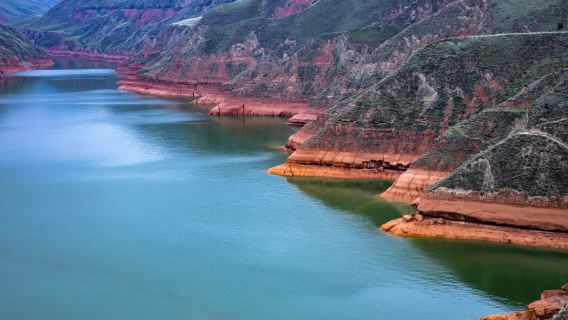
Located in Yongjing County, Linxia City, Gansu Province, Liujiaxia is home to the Liujiaxia Hydropower Station, Bingling Temple Grottoes and Tai Chi Island, as well as Liujiaxia Reservoir. Beginning from Liujiaxia Dam, Liujiaxia Reservoir reaches the narrows of Bingling Temple in the west, connects to Jiedong County and Linxia County in the south, and borders Yongjing County in the north. Liujiaxia Reservoir occupies a vast area. The reservoir sits on plateaus and in canyons, allowing visitors to return to the beauty of nature.Yongjing · 6.1km from downtown

Yellow River-Taohe River Intersection Viewing Platform
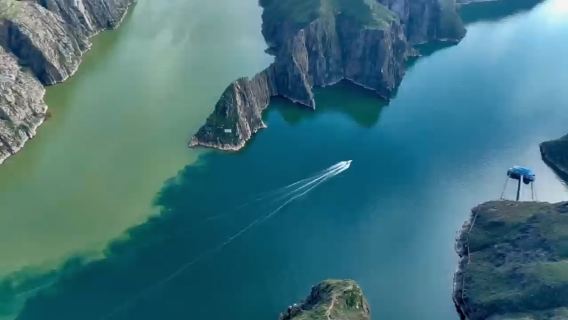
The Huangtao Intersection is a spectacular scene formed by the intersection of the Yellow River and the Tao River. It has been broadcast on CCTV channels many times. This is the place where the mother river, the Yellow River, and its second largest tributary, the Tao River, meet. The blue Yellow River meets the orange Tao River. , intersect in front of Longhui Mountain in a "Y" shape, with clearly defined Jingwei and Jingwei, forming a world wonder of the "Meeting of Huangtao". "Huang-Tao Intersection" is also known as "Two Dragons Playing with Pearls". There are two giant dragons, one orange and one blue. The intersection of the orange Tao River and the blue Yellow River forms the magnificent landscape of the Huang-Tao Intersection with clear distinctions. When you take a boat from the dam pier to Bingling Temple, you will have close contact with the "Huang-Tao Intersection" and feel the unique charm of the Yellow River. People often say that "the Yellow River in the world is noble and pure", what you will see in Yongjing is "the Yellow River in the world is always blue".Yongjing · 6km from downtown

Bafang Shisanxiang
Bafang Shisanxiang is a historic Hui ethnic district preserved in the old town of Linxia. In ancient times, people established religious quarters around eight mosques, gradually forming a settlement pattern of "living around the mosque and trading around the quarter." "Bafang" (Eight Quarters) thus became the synonym for the Hui residential area in Hezhou. With its blue-brick alleys, brick-carved gate towers, and bustling daily life intertwined, walking inside feels like unfolding a long scroll of life in an old Northwest city. On the wall of Dagaxa Lane, there is a large brick carving titled "Panoramic View of Bafang Shisanxiang" that captures the entire district. The Dagongguan old residence restores the old scenes of Bafang families drinking Gaiwan tea, receiving guests, and the historical scenes of the Tea Horse Road trade and merchant caravans. In the Handicraft Museum, you can see intangible cultural heritage crafts such as carved gourds, copper fire pots, Hezhou clay sculptures, and egg carvings. The "Dragon and Phoenix" brick-carved screen wall in front of the Beixiang Mosque, dating back to the Qianlong reign of the Qing Dynasty, is also worth stopping to admire. Themed alleys like Hezhou Suyuan Lane, Silk Road Hui Merchant Lane, and Tongqu Lane, as well as the Gaiwan Tea Square and the Hongshui River area, are all perfect for strolling and exploring at a leisurely pace. If you get tired of walking, why not sit down for some "Gua Wanzis" (tea scraping)? Learn from the locals how to use the lid to scrape the tea leaves, then blow and sip a cup of Gaiwan tea, paired with Youguoguo (fried dough) and Sanzi (fried dough twists). In Bafang Weidao Lane, you can also find local snacks such as beef offal soup, sugar oil cakes, Liangpi (cold skin noodles), and sweet wheat.Linxia · 3.3km from downtown

Zhuzigou Scenic Area
Zhuzigou Scenic Area is located in Bazigou Village, Minglu Township, Kangle, 130 km from Lanzhou, and is backed by Taizi Mountain. With an altitude of over 2,300 m, unique topography and landforms, and rich plant resources, it boasts a forest and grassland coverage rate of 95%. The average summer temperature is no more than 23°C, offering a cool and pleasant climate. It has attracted a large number of self-driving tourists over the past three years. Linxia Prefecture Hehuang Culture Tourism Investment Development Group is carrying out protective development of the Zhuzigou natural scenic area. The planning and design takes cattle culture as its theme and leisure experience as its core, creating a modern rural tourism area that integrates ecological agriculture, leisure sightseeing, experience, and entertainment.Kangle · 23.1km from downtown

Bingling Temple World Cultural Heritage Tourist Area
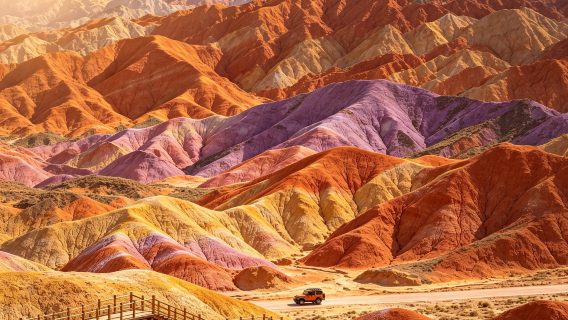
Bingling Temple World Cultural Heritage Tourist Area is located in Yongjing County, Linxia Hui Autonomous Prefecture, Gansu Province. This cultural attraction combines Buddhist cave art with natural scenery, covering a total area of 180 square kilometers. It consists of three main sections: Bingling Lake, Gansu Bingling Danxia National Geopark (Bingling Stone Forest), and Bingling Temple Caves. In December 2020, it was designated as a National 5A-level Tourist Attraction by China's Ministry of Culture and Tourism. Bingling Lake is the reservoir of Liujiaxia Hydropower Station, named after the Bingling Temple at its far end. With crystal-clear, unpolluted water meeting national Grade II drinking standards, this vast misty lake stretches like an endless green silk ribbon through mountain ranges, blending southern China's elegance with the plateau's grandeur—a dream destination for travelers. Liujiaxia Hydropower Station, China's first independently designed million-kilowatt hydro project in Asia, is recognized as a National Industrial Heritage Education Base. The Binglingshi Stone Forest is a Danxia landform composed of Cretaceous purplish-red fine sandstone from the early Cenozoic era. In 2011, it was officially designated as the Gansu Bingling Danxia National Geopark by the Ministry of Land and Resources. Within the geopark, thousands of towering peaks and countless crisscrossing ravines form a labyrinth of winding tributary valleys, creating a surreal stone forest landscape alongside uniquely shaped rock formations. This natural sculpture gallery holds immense value for geological research, tourism development, natural aesthetics, and ecological conservation. The Bingling Temple Grottoes, dating back over 1,600 years to the Western Qin period of the Sixteen Kingdoms era, is a nationally protected cultural heritage site and was inscribed on the UNESCO World Heritage List in 2014. The grotto complex consists of three main sections: the Lower Temple area, Upper Temple area, and Donggou area. It preserves 216 cave shrines, over 800 Buddhist statues, more than 1,000 square meters of murals blending Tibetan and Han Chinese artistic styles, 56 stupas, and 438 cultural relics. The site contains ink inscriptions from the first year of Jianhong era (420 AD) of Western Qin - the earliest dated Buddhist cave inscription found in China, which serves as a crucial benchmark for dating early grotto art. The Bingling Temple World Cultural Heritage Tourist Area boasts abundant resources, where natural views and cultural landscapes complement each other to create a magnificent and mysterious panorama. Every visitor can embark on a perfect journey here to explore cultural heritage and experience the beauty of nature.Yongjing · 17.7km from downtown

Liujiaxia Bridge
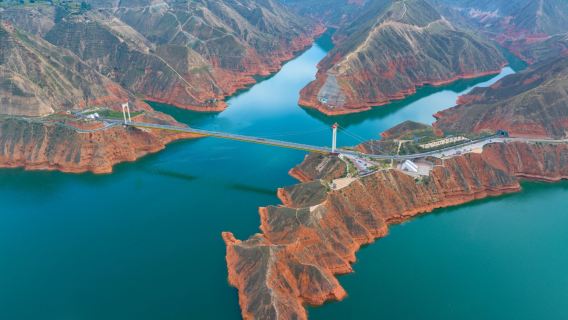
The Liujiaxia Bridge is located in Dongxiang Autonomous County and is an important bridge across the Yellow River. The Liujiaxia Bridge not only has an important transportation function, but also becomes the focus of tourists' attention because of its magnificent scenery. The bridge adopts modern bridge design technology, with a stable structure and beautiful shape. The bridge spans the Liujiaxia Reservoir of the Yellow River. The scenery on both sides of the reservoir is beautiful and surrounded by mountains, forming a unique natural landscape. Visitors can enjoy the magnificent waters and beautiful mountains on both sides of the bridge, especially at sunrise and sunset, the scenery is more charming. The Liujiaxia Bridge is not only the crystallization of engineering technology, but also the embodiment of the harmonious coexistence of man and nature. The nearby Liujiaxia Reservoir is an important water conservancy project that provides functions such as irrigation, power generation and flood control. It has also become a popular place for water activities and leisure tourism.Dongxiang Autonomous County · 22.9km from downtown

Yellow River Three Gorges
The Three Gorges of the Yellow River is located in Yongjing County, Gansu Province. The Yellow River winds and twists when passing through here, forming three tall and deep canyons, namely Bingling Gorge, Liujia Gorge and Yanguo Gorge, which are also known as the Three Gorges of the Yellow River. Within the Three Gorges of the Yellow River, there are many resort scenic spots such as Liujiaxia Reservoir, Bingling Temple Grottoes, Taiji Island, etc. There are natural scenery such as canyons and reservoirs, cultural attractions such as Buddhist temples and grottoes, and entertainment projects such as farm picking, which are rich in content. The Three Gorges of the Yellow River is only 70 kilometers away from Lanzhou, making it a short-distance travel choice around Lanzhou. Liujiaxia Reservoir is on the north side of the Three Gorges of the Yangtze River. There is a direct bus from Lanzhou. Tourists who come to play will come here first. If you come by car from Lanzhou, you will first arrive at the dam in the scenic spot, where you can see the huge lake on the Yellow River created by the water conservancy project. It is located in the upper reaches of the Yellow River, the river is very clear, the lake is also clear and green, and the environment is very beautiful. The end point of the boat is at Bingling Temple on the south side of the lake, and tickets can be purchased to enter the tour. Bingling Temple is built on the mountain. It is a cave temple mainly dominated by mountains. The surrounding mountains are all Danxia landforms, with rows of red rock walls steep and towering, as well as sister peaks, skull cliffs and other uniquely shaped red rock cliffs. Bingling Temple is a group of grottoes dug along the cliffs. There are four floors up and down, and there are more than 180 large and small grottoes. The grottoes were excavated in the Jin Dynasty. No matter their historical value, age and craftsmanship, they are no less than Dunhuang's Momo. High Grotto. Visiting the Bingling Temple Grottoes, you can see a 15-meter-high Buddha sitting in the middle of the mountain wall from a distance. There are small caves on both sides and above of the Big Buddha, you can climb up the steps to visit them one by one. The Buddha statues in the small caves are different from the Buddha statues in the mainland because the local culture was influenced by the Hu people when the statues were made. After viewing the Bingling Temple Grottoes, it is usually in the afternoon, and you can return to the dam by boat. The dam is about 1 km away from Yongjing County and can be reached by walking westward for ten minutes. Taiji Island, Zaoyuan, and Lotus Garden are located 2 kilometers west of Yongjing County, which can be reached by taxi or on foot. This area is close to the Yellow River, with many ponds, wetlands and reeds and other landscapes, which are particularly beautiful in the desolate northwestern land. You can watch birds here in spring, watch lotus flowers here in summer, and pick jujubes that are rich in the local area in autumn. There are many entertainment activities. It takes about half a day to visit Taiji Island, Jujube Garden, Lotus Garden and other attractions. At noon, you can have a special lunch at a local farmhouse, and you can try the Yellow River carp. In the afternoon, drive back to Lanzhou.Yongjing · 15.2km from downtown

Erziwaliang Scenic Area
Erziwaliang Scenic Area is located in Linxia County, Linxia Hui Autonomous Prefecture, Gansu Province, in the core section of the Taizishan Tourism Corridor. It is a mountain scenic area known for its alpine meadows, snow-capped mountain views, sea of clouds, and scenic experiences. The area is named "Waliang" because its terrain resembles a mountain ridge; "Wa" in Northwest dialect place names often refers to a mountain ridge. Local legends also include Kuafu chasing the sun and the story of Kuafu's ears turning into mountains, adding a strong folk flavor to the scenic area. From a high vantage point, the mountains present a panorama of extending ridges, spreading meadows, and swirling clouds. In autumn, one can see snow-capped peaks, colorful mountainsides, and interwoven forests and grasslands. Summers here are particularly cool, with grasslands, slopes, and distant mountains complementing each other. Stopping at the viewing platforms, along the mountain ridge trails, and on the tourism corridor, one can enjoy distant views of the main peak of Taizishan, the snow line, meadows, and canyons. Due to the high altitude, the weather changes rapidly; clouds, sunlight, and shadows constantly alter the contours of the mountains, creating a unique atmosphere.Linxia County · 18.4km from downtown

Fattai Mountain Scenic Area
Fatai Mountain Scenic Area is a full-region four-season cultural and sports tourism destination that integrates food, accommodation, transportation, sightseeing, shopping and entertainment. The Attraction is rich in tourism resources and has a strong comprehensive experience. At present, it has formed experiential tourism projects such as skiing, high-altitude rafting, 5D glass suspension bridge, mysterious shouting spring, ancient impressions, large-scale performances, Fatai night view, jungle zip line, agricultural sightseeing, and flower expo.Hezheng · 19.2km from downtown
Experiences you can't miss in Linxia Prefecture
Featured Cultural experiences in Linxia Prefecture
View all Cultural experiences
5.0/5
· 3 reviewsFree cancellation
Instant confirmation
FromMXN$2,795.64
Free cancellation
Instant confirmation
10% off
Limited-time sale
FromMXN$694.44MXN$771.6

5% off
Limited-time sale
FromMXN$3,018.02MXN$3,176.87
Free cancellation
Book now for tomorrow
FromMXN$4,487.01
FromMXN$4,606.46
FromMXN$4,606.46
Featured Outdoor experiences in Linxia Prefecture
View all Outdoor experiences
4.3/5
· 7 reviews· 76 bookedFree cancellation
Instant confirmation
Book now for tomorrow
FromMXN$1,343.82
![Liujia Gorge + Water-ink Danxia (private charter) 1-day tour [Danxia + Yellow River-Tao River confluence + Bingling Cave-Temple Complex]](https://ak-d.tripcdn.com/images/0356212000tcocgtt3D92_C_568_320.jpg?_fr=wc)
5.0/5
· 16 reviews· 95 bookedFree cancellation
Instant confirmation
Book now for tomorrow
77 travellers saved
FromMXN$1,168.58
Free cancellation
Instant confirmation
Book now for tomorrow
FromMXN$857.76
Free cancellation
Instant confirmation
5% off
Limited-time sale
FromMXN$1,750.46MXN$1,842.59
![[Private tour] Liujiaxia pure play 1-day tour ◆ Bingling Temple + Yellow River-Tao River confluence + Benchi Valley viewing platform](https://ak-d.tripcdn.com/images/0353x12000u012soo27A3_C_568_320.jpg?_fr=wc)
5.0/5
· 2 reviewsFree cancellation
Book now for tomorrow
FromMXN$1,112.67
Free cancellation
Instant confirmation
Book now for tomorrow
FromMXN$1,842.59
Free cancellation
Book now for tomorrow
FromMXN$4,574.69
Free cancellation
Instant confirmation
Book now for tomorrow
FromMXN$1,334.29
Featured Day tours in Linxia Prefecture
View all Day tours![[Private group] Liujiaxia 1-day tour + Bingling Cave-Temple Complex + Yellow River-Tao River confluence viewing platform + Liujiaxia Bridge](https://ak-d.tripcdn.com/images//0585z12000n3i2ji73790_C_568_320.jpg?_fr=wc)
5.0/5
· 10 reviews· 56 bookedFree cancellation
Book now for tomorrow
FromMXN$944.93
5.0/5
· 9 reviews· 29 bookedFree cancellation
Instant confirmation
Book now for tomorrow
FromMXN$967.3
Free cancellation
Instant confirmation
Book now for tomorrow
9% off
Limited-time sale
FromMXN$603.87MXN$670.96
![[Depart from Lanzhou] One-Day Tour to Yongjing Liujiaxia Tourist Resort + Bingling Cave-Temple + Yellow River-Taohe River Intersection Viewing Platform](https://ak-d.tripcdn.com/images/0352p12000ns8uwk7C764_C_568_320.jpg?_fr=wc)
Free cancellation
Instant confirmation
Book now for tomorrow
FromMXN$1,137.32
More things to do
Free things to do in Linxia Prefecture
Yongjing Liujiaxia Tourist Resort
Yongjing · 6.1km from downtownBafang Shisanxiang
Linxia · 3.3km from downtownLiujiaxia Bridge
Dongxiang Autonomous County · 22.9km from downtownYellow River Three Gorges
Yongjing · 15.2km from downtownErziwaliang Scenic Area
Linxia County · 18.4km from downtown
Hezheng Paleozoological Museum
Hezheng · 1.8km from downtown
Benchigou Viewing Platform
Dongxiang Autonomous County · 22.5km from downtown
Hong Garden
Linxia · 3.9km from downtown
Liujiaxia Hydropower Station
Yongjing · 5.7km from downtown
hua kai lin xia bu ye cheng
Linxia · 1.2km from downtown
What travellers say about Linxia Prefecture

游来游去的鱼鱼🐡30 September 2026
5.0
The Bingling Temple Grottoes are hailed by scholars as an "encyclopedia of Chinese grottoes," holding an irreplaceable and important position in my country's grotto art. It is not only one of the three major grottoes in Gansu, but also the first Yellow River grotto on the Silk Road.
Bingling Cave-Temple Complex

M10***512 July 2026
5.0
The Liujiaxia Reservoir is a large-scale hydroelectric power station built independently during the First Five-Year Plan. The green Yellow River and the earthy yellow mountain valleys complement each other beautifully, and the scenery along the bridge is also stunning. It's definitely worth a visit!
Yongjing Liujiaxia Tourist Resort

KS炎炎6 May 2025
5.0
The confluence of the Yellow River and the Tao River is quite spectacular. It takes at least 20 minutes to walk from the entrance of the scenic area to the viewing platform, and you have to climb a slope. The shuttle bus needs to be purchased separately. You can hear a lot of geographical explanations on the viewing platform.
Yellow River-Taohe River Intersection Viewing Platform

M37***455 September 2026
4.0
Hidden within the Eight Squares and Thirteen Lanes is China's first museum dedicated to covered bowl tea—the Hezhou Mingyuan Covered Bowl Tea Culture Museum! The entire museum is housed in an ancient Qing Dynasty residence in Northwest China, preserving the "style of the Tang and Song Dynasties and the layout of the Ming and Qing Dynasties." Even the walls are decorated with blue and white porcelain covered bowls—it's incredibly unique! A leisurely stroll through it is so relaxing!
Bafang Shisanxiang

不安分的人呀12 December 2022
5.0
Zhuzigou in Luming Township, Kangle, Linxia is part of the Taizi Mountain series and is a great place to escape the summer heat. There is a gully sandwiched between two mountains. On one side is a meadow like a green carpet, on the other side is a pine forest, with a small river in the middle. You can camp and ride horses deep in the scenic area. It is truly a Feng Shui treasure land.
Zhuzigou Scenic Area

M28***945 August 2025
5.0
I drove there on a self-driving tour from Liujiaxia Town. It was a long way to go. Some of the statues on the grotto walls were blocked by gauze and could not be seen clearly. Some were still empty. Only the Buddha statues were magnificent. I took a long detour back to the entrance. It is suitable for scholars and scholars. I think it is okay. If you want to see the special grottoes, you need to make a separate reservation and buy a ticket, which seems to be 300 yuan.
Bingling Temple World Cultural Heritage Tourist Area

虎虎升胃15 July 2023
5.0
The scenery is magnificent and pleasant, and the key is that it is free. On the way to Yongjing, I passed by Liujiaxia Bridge. The mountains and rivers are beautiful. There was a thin mist floating on the lake that day I went there. It was really beautiful. There is an observation deck next to the bridge, but the sun was too strong and I didn't go up
Liujiaxia Bridge

过客过客过客过客过客过客过客过客9 September 2023
5.0
Guide to the Yellow River Three Gorges,
[Scenery] It is recommended to stay in the scenic area,
[Fun] The natural scenery is infinitely beautiful,
[Value for money] Looking forward to your participation, there may be surprises when walking on the wooden plank road.
Yellow River Three Gorges

夏小沫@13 August 2025
5.0
【景色】景色很美,离市区大概三十公里左右,最好是自驾游,景区目前是免费的,景区都很多火锅🍲套餐,有双人餐,六人餐,很方便,营地特色1. 帐篷家营地 官方打造的“耳子屲梁帐篷家”项目已建成投用,提供配套成熟的露营平台、水电、卫生间及淋浴设施,可自带帐篷也可租用营地帐篷。2. 星空体验 高海拔与低光污染让夜晚星空格外璀璨。部分帐篷或星空房配有透明顶棚,躺在床上即可观星。
Erziwaliang Scenic Area

Anonymous user24 June 2025
5.0
There are many activities to do here, such as skiing in winter, playing on the rainbow slide and grass skiing in summer. The fee is also reasonable, and it is a good choice to bring children to play. It is just that it would be better if there was a high-speed rail directly to the transportation, which is not very friendly for friends who don't have a car.
Fattai Mountain Scenic Area


