Macheng

Things to do in Macheng

Search attractions or local attractions & tours
Search

Explore top experiences

Top 10 attractions in Macheng

View all Attractions
Macheng Tianjingshan Waterfall Rafting

Macheng Tianjingshan Waterfall Rafting

3
4.2/5
184 reviews

Tianjingshan Grand Canyon Rafting Scenic Area is located in Muzidian Town, Macheng City, only 7 kilometers away from the Wuhe Expressway Exit. The Attraction passes through the Three Gorges, Six Waterfalls, Nine Pools, and Eighteen Bays from top to bottom. It is currently a real canyon waterfall Attraction in China. The steep mountains and lush forests on both sides of the river, together with the waterfalls rushing down, have created a majestic natural scenery. The Tianjingshan Rafting River is 5.8 kilometers long, with a water level drop of 260 meters, and the whole journey takes about 2 and a half hours. The river is divided into three sections. The upper section is 3 kilometers long. Because it is covered with mountain flowers along the way, it is named "Flower Drifting"; the middle section is 1 kilometer long, and the fruits and vegetables that can be seen everywhere make this section also known as "Drifting Under the Melon"; the climax of the entire rafting is located in the 1.8-kilometer-long lower section, which integrates strange rocks, cliffs, and waterfalls. There are many rapids and beaches, which are enough to make people experience the ultimate excitement and pleasure. Tianjingshan Rafting has its unique advantages with its romantic primitive scenery, rare bluestone rafting riverbed, and safe water source guarantee. The pleasant scenery and convenient transportation allow tourists to enjoy themselves without worries.

Macheng · 28.8km from downtown
Hubei Provincial Museum
2026 Asia 100 - Family-friendly Attractions

Hubei Provincial Museum

8.5
4.9/5
7.9k reviews

The Hubei Provincial Museum has ten treasures of the museum, including those unearthed from "Tomb of Marquis Yi of Zeng" the Hubei Provincial Museum's Zenghouyi chime bells; the Yue Wang Goujian sword, a masterpiece of the cold weapon era; the fossilized skull of the Yunxian Man dating back 1 million years; and a treasure of Yuan blue-and-white porcelain: the plum vase with the Four Loves design. The museum's regular exhibitions also feature distinctive characteristics of ancient Chu culture and ancient Yangtze River civilization. The Hubei Provincial Museum consists of the comprehensive exhibition hall,Chu culture hall,Chime bell hallIt is composed of multiple pseudo-classical buildings, and the layout reflects the high-platform architectural layout format of ancient Chu architecture, namely "one terrace, one hall" and "multiple terraces forming a group." Unearthed in 1978 at "Tomb of Marquis Yi of Zeng" in the Hubei Provincial Museum - the Zenghouyi chime bells have a wide range and their excavation rewrote the history of world music; the sword of Goujian, King of Yue, a masterpiece of the cold weapon era, is still incomparably sharp to this day, and displayed beside it is the "spear of Fuchai, King of Wu"; the geological age of the Yunxian human skull fossil is approx. 1 million years ago, earlier than the Peking Man skull fossil; the Yuan blue-and-white plum vase with four loves design is an extremely rare masterpiece among Yuan dynasty blue-and-white porcelain. Hubei is located in the middle reaches of the Yangtze River and belonged to the territory of the Chu state during the Spring and Autumn and Warring States periods. The permanent exhibitions at the Hubei Provincial Museum showcase ancient civilizations of southern China that differ from the Yellow River civilization of the north. The museum's current permanent exhibitions include "Yunxian Man: Prehistoric Humans in the Middle Reaches of the Yangtze River," "Qujialing: Prehistoric Culture in the Middle Reaches of the Yangtze River," and "Panlongcheng: Bronze Civilization in the Middle Reaches of the Yangtze River." In addition to viewing cultural relics at the Hubei Provincial Museum, you can also enjoy chime bell performances. In the museum's performance hall, chime bell performances are held from Tuesday to Sunday, and it is closed on Mondays.

Wuhan · 91.5km from Macheng
Tengwang Pavilion Tourist Area
2026 Global 100 - Night Attractions

Tengwang Pavilion Tourist Area

8.7
4.5/5
30.1k reviews

Tengwang Pavilion Tourist Area is located on the east bank of the Gan River in Nanchang, with the riverside Tengwang Pavilion as its centerpiece. Originally built in the fourth year of the Yonghui era of the Tang Dynasty by Li Yuanying, Prince of Teng and son of Emperor Gaozu of Tang, it gained eternal fame through Wang Bo's "Preface to Tengwang Pavilion." Alongside the Yellow Crane Tower and Yueyang Tower, it is hailed as one of the "Three Great Towers of Jiangnan." Historically destroyed and rebuilt nearly thirty times, the current structure is a Song-style replica completed in 1989, designed based on Liang Sicheng's reconstruction sketches. With its green tiles and layered eaves, it remains a landmark of Nanchang to this day. The main pavilion follows a "three visible, seven concealed" layout: appearing as a three-story structure with encircling corridors from the outside, while actually containing seven interior floors—nine levels including the two-tiered base symbolizing ancient city walls. Turquoise-roofed galleries extend north and south from the base's flanks, connecting at their ends to auxiliary pavilions named "River-taming" and "Greenery-embracing," forming a mountain-shaped silhouette with the main tower. Below, an artificial lake and the nine-bend wind-and-rain bridge add classical garden charm to the majestic architecture. Each floor of the pavilion offers something remarkable. The white marble relief "A timely wind delivers Tengwang Pavilion" in the first-floor preface hall depicts the legend of Wang Bo riding the wind to compose his famous preface. The second-floor mezzanine features the long scroll painting "Gallery of eminent figures," gathering Jiangxi's historical luminaries like Tao Yuanming, Ouyang Xiu, Wang Anshi, and Tang Xianzu in one artwork. The third-floor mural "Linchuan dream" recreates Tang Xianzu's staging of "The peony pavilion" here. The fourth-floor "Land of wonders" painting compresses Jiangxi's iconic landscapes—Mount Lu, Sanqing Mountain, Dragon-Tiger Mountain, and Poyang Lake—into a single masterpiece. The fifth floor is the highlight for panoramic views: its central hall displays a bronze tablet inscribed with Su Dongpo's calligraphic version of "Preface to Tengwang Pavilion," while the east hall exhibits a scale model of the pavilion. Strolling the veranda offers sweeping views of the Gan River and modern skyline across the water. The top floor bears the plaque "Ninth heaven," with its west hall housing an antique-style theater flanked by replica ancient instruments like chime bells and stone chimes. Above, spiral-arranged bracket sets adorn the caisson ceiling, and between the double eaves hangs Su Dongpo's gilded "Tengwang Pavilion" plaque. After descending from the main pavilion, take time to explore the garden area: the square in front of the pavilion, the grand Song-style archway, the antique street lined with calligraphy and antique shops, and the small Suzhou-style garden Fuchang Garden with its lake reflections and bridge views—perfect for slowing your pace. To experience the poetic scene of "a solitary wild duck flying with the sunset glow, while the autumn water blends with the vast sky," an evening ascent to the pavilion is ideal. The fifth-floor corridor offers an expansive view, making it a prime spot to admire the sunset over the Gan River.

China · Nanchang
Qingchuan Pavilion
No. 4 of Best Things to Do in Hubei

Qingchuan Pavilion

8.4
4.7/5
7.7k reviews

Qingchuan Pavilion stands on Yugong Rock at the eastern foot of Tortoise Hill in Hanyang, facing the Han River to the north and the Yangtze River to the east, gazing across the river at Yellow Crane Tower in Wuchang on the opposite bank. The pavilion's name is taken from the line "the clear river reflects the trees of Hanyang" by the Tang dynasty poet Cui Hao, and it was initiated for construction by Fan Zhizhen, the Ming dynasty prefect of Hanyang. First built during the Jiajing era of the Ming dynasty, it has a history of more than four hundred years. Throughout history, Qingchuan Pavilion was destroyed and rebuilt as many as six or seven times, the last destruction caused by a windstorm; the existing structure was rebuilt in the 1980s following the style of the Guangxu era of the Qing dynasty. Long known as one of the "finest sights of the Three Chu regions" and a "grand vista through the ages," Qingchuan Pavilion echoes Yellow Crane Tower across the river and stands out distinctly along the banks of the Yangtze. The attraction is composed of three main structures—Qingchuan Pavilion, Yuji Xinggong (Yu and Ji Ancestral Hall), and Tiemen Pass—along with auxiliary structures such as the ancient archway, Chubo Pavilion, Chaozong Pavilion, Yu Stele Pavilion, Jingchu Heroic Spirit Stele, and the poetry stele corridor, forming a complex of ancient and pseudo-classical buildings standing by the river. Among them, Yuji Xinggong was first built during the Shaoxing era of the Southern Song dynasty under the original name Yu Wang Temple; during the Tianqi era of the Ming dynasty, it was renamed "Yuji Xinggong" after its worship was changed to Houji and other former sages, and it has been an important site in Wuhan for successive generations to pay homage to Yu the Great. Tiemen Pass was first built during the Three Kingdoms period and has been a strategic location contested by military strategists since ancient times; it was restored in the 1990s. Ascending Qingchuan Pavilion offers a panoramic view of the expansive river scenery where the Yangtze River and the Han River converge. Inside the pavilion, permanent exhibitions such as "Traces of Yu Across the Nine Provinces" and "Historical Paintings of Qingchuan" present Yu the Great culture and the historical heritage of Qingchuan Pavilion from multiple perspectives, ranging from water-control culture to poetry and couplets. The attraction nestles between the hills and the river, with pavilions and terraces scattered in graceful arrangement. The poetry stele corridor preserves inscribed stones bearing verses by literati and poets of successive dynasties, and strolling through it allows visitors to feel the rich historical and cultural atmosphere.

Wuhan · 97.3km from Macheng
Taoyangli Historical and Cultural District
No. 1 of Family-friendly Attractions in Jiangxi

Taoyangli Historical and Cultural District

8.5
4.6/5
12k reviews

Taoyangli Historical and Cultural District is located in the heart of Jingdezhen's old town, a historic neighborhood that grew around the ruins of the imperial kiln from the Ming and Qing dynasties. The old saying "Taoyang thirteen li, with tens of thousands of households" refers to this area. The imperial porcelain used by the royal families of the Ming and Qing dynasties was exclusively produced by the imperial kiln here, while rejected tribute items were shattered and buried on-site. The layers of underground porcelain fragments share the same origin as the collections in the Palace Museum, making this place often referred to as the key to understanding the porcelain capital. The core attractions of the district are concentrated around the ruins of the Taoyangli Historical and Cultural District and the imperial kiln museum. The ruins of the Taoyangli Historical and Cultural District have now been transformed into an archaeological site park, preserving relics such as kilns and workshops. The Longzhu pavilion, perched atop Zhushan hill, has been the iconic structure of the imperial kiln since the Ming dynasty and later became the symbol of Jingdezhen. The Zhushan hill beneath it was formed by layers of discarded porcelain fragments from imperial kilns throughout history. Nearby, the imperial kiln museum draws inspiration from traditional egg-shaped wood-fired kilns, featuring multiple brick arches arranged in a staggered layout. Many exhibits in the museum are restored from porcelain fragments unearthed at the site, including the Ming dynasty blue-and-white dragon jar—a signature exhibit pieced together from tons of discarded dragon jar fragments. Adjacent to the museum, the Xu family kiln, an old wood-fired kiln, still operates periodic firings. During kiln openings, the gate is wide open, allowing visitors to watch artisans retrieve freshly fired porcelain from saggars. The district also features winding alleyways lined with kiln-brick residences, guild halls, porcelain shops, and remnants of modern ceramic industry. The restored South goods street and Red shop street now host old teahouses, taverns, music bars, and craft workshops where you can observe traditional processes like clay throwing and porcelain painting, with some workshops offering hands-on experiences. It's recommended to set aside half a day for the visit—start with the kiln site and museum, then meander through the streets around Zhongshan north road and Longgang lane, where many historic courtyard houses hidden in deep alleys await patient discovery.

China · Jingdezhen

Experiences you can't miss in Macheng

Featured Food & drink in Macheng

View all Food & drink
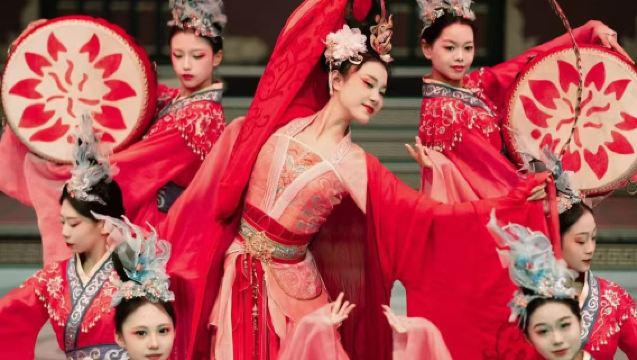
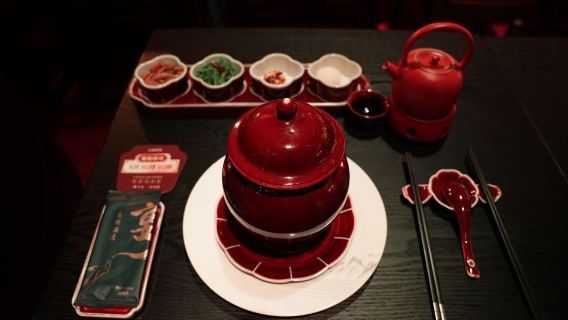
Wuhan, Hubei - "Chu-Han Royal Banquet" Immersive Royal Feast [Royal Cuisine + Court Music and Dance, a Dual Feast for Taste and Sight]
󱌍
4.4/5
· 19 reviews· 481 booked
Duration: 90 mins
English
Free cancellation
Book now for today
149 travellers saved
FromIDR 724,325
Wuhan Chao TOWN | Zhuodaoquan venue (one-stop trendy entertainment complex + bathing and sauna)
󱌍
Duration: 16 hrs
English
Free cancellation
Instant confirmation
Book now for tomorrow
FromIDR 1,121,622

Featured Outdoor & sports in Macheng

View all Outdoor & sports

Featured Culture & history in Macheng

View all Culture & history
A 2-hour guided walk of Hubei Provincial Museum by  English-speaking guide group tour
󱌍
5.0/5
· 1 review
Duration: 2 hrs
English
Free cancellation
FromIDR 1,005,592
The Han Show in Wuhan (the "red lantern" by East Lake + immersive feast on land, water and air)
󱌍
4.9/5
· 7 reviews· 199 booked
Duration: 1.5 hrs
English
Free cancellation
Instant confirmation
Book now for tomorrow
FromIDR 510,811
The Han Show Theater in Wuhan (the "red lantern" by East Lake + immersive feast on land, water and air)
󱌍
5.0/5
· 2 reviews· 45 booked
Duration: 1.6 hrs
English
Free cancellation
Instant confirmation
FromIDR 510,811
Wuhan Gray Museum (A Journey to Release Emotions, Heal the Soul, and Reconcile with Oneself)
󱌍
FromIDR 107,838
Macheng Today's weatherFoggy 9-13℃
Macheng weather for the next 2 days11/18: 0-13℃, 11/19: 0-15℃

Free things to do in Macheng

What travellers say about Macheng
user-avatar
M27***3729 October 2026
5.0
I came at a bad time today; the weather was bad, raining and very foggy. The staff were very helpful, responsible, and patient in answering my questions. Because of the weather, the view was affected, and they advised me not to go up the mountain. So I just wandered around the area for a bit and will come back another time.

Guifeng Mountain

user-avatar
还不曾去过倒悬山!1 April 2025
4.0
The growth cycle of Macheng azalea is more than one million years, and the existing trees are all over 200 years old. In April 2008, the first Azalea Cultural Tourism Festival was successfully held, and it has been held every two years since then. Macheng, China is known as the famous Azalea City in China. On April 18, 2009, Macheng Azalea was included in the Shanghai World Guinness Book of Records as "the largest ancient azalea group in China".

Guifeng Mountain Scenic Area - Rhododendron Sea

user-avatar
lhx02083170101228 March 2025
4.0
Wunaoshan Forest Park is worth a visit. It consists of five mountains: Zuonao, Jiagounao, Dujiunao, Daernao and Fenghuangnao. The main peak of the park, Bawangzhai, is 342.6 meters above sea level. The park has rolling peaks and a pleasant climate. It is a bird paradise and a natural oxygen bar; there are many places of interest and historical sites, including religious places such as Dizhu Temple, Jingyue Palace and Fahua Temple. "Fengling Chaoyun" is one of the famous scenic spots of Wunaoshan and one of the "Eight Scenic Spots" in Macheng. As the saying goes, "If there is a phoenix tree at home, it will attract phoenixes to roost." Since Magu practiced in Xiangu Cave, the mountains and ridges around Xianju Mountain have begun to become misty. There are many places of interest and historical sites in the park. There is Dizhu Temple built in the Song Dynasty in the south, and Magu Fairy Cave, Fahua Temple, Jingyue Palace, Fengling Chaoyun and other attractions in the north. Dizhu Temple is a famous Taoist temple in central China, and Fahua Temple is the center of Buddhist activities in Macheng. Therefore, Wunaoshan is famous for "Buddhism and Taoism on the same mountain, Buddhism and Taoism are one."

Wunao Mountain Forest Park

user-avatar
CallumS199125 July 2022
5.0
It was my first time drifting but I am amazed this doesn't have a higher rating. An extremely awesome experience, the surrounding scenery is serene and the drifting course alternates between relaxing and intense. the end part of the course had some extremely steep drops which felt dangerous but exhilarating. Only downsides were charging extra to use unclean showers, and the quality of the water wasn't the best. But overall a fantastic experience.

Macheng Tianjingshan Waterfall Rafting

user-avatar
M24***0415 November 2026
5.0
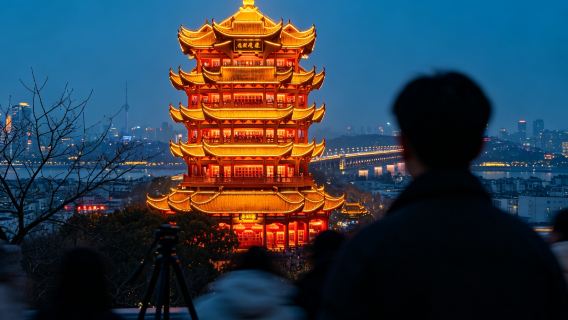
Since we were already there, we definitely had to climb to the top. The view of the Yangtze River Bridge from the top of the Yellow Crane Tower is breathtaking; you have to experience it for yourself. We took the elevator up with the whole family; it cost 10 yuan per person, which was knee-friendly. 🧑‍🤝‍🧑

Yellow Crane Tower

user-avatar
大土豆一颗4 October 2026
5.0
The exhibited artifacts were quite good; I've also been to joint exhibitions organized by museums like the Hunan Provincial Museum. The Kremlin artifacts here are well-prepared and thoughtfully designed. However, the souvenir and merchandise section was rather boring. I was thinking of buying a pendant or something, but that saved me some money.

Hubei Provincial Museum

user-avatar
M32***9816 November 2026
5.0
I went to Lushan to attend the 5th Music Festival and took a day trip to Nanchang. My first stop was Tengwang Pavilion; the first night I took a cruise with a performance, learning about the pavilion's history and enjoying the stunning night view; the second morning I climbed the pavilion for a more detailed visit. The surrounding area has a wide variety of restaurants, and it's very close to Dashiyuan Old Street. My trip to Nanchang was a complete success.

Tengwang Pavilion Tourist Area

user-avatar
Roylk15 November 2026
5.0
Seeking poetry, head to Xiufeng Peak to witness the Milky Way cascading over green mountains. With its elegant peaks, wondrous waterfalls, and serene ancient carvings, this is the most captivating sight on the southern slopes of Mount Lu. Peaks vie for prominence, waterfalls cascade, and springs flow. Xiufeng Peak holds the romantic promise of "a waterfall plunging three thousand feet," while the Qingyu Gorge cliff carvings stand quietly. The landscape blends seamlessly with poetry, creating a serene and tranquil scene, truly deserving of its reputation… Come again during the high-water season.

Lushan National Park

user-avatar
131***6210 November 2026
5.0
The trees of Hanyang stand clearly in the clear sky, and the fragrant grasses grow lush on Parrot Island. When you come to Wuhan, you must visit Qingchuan Pavilion. There aren't many people at night, and there are NPCs to guide you throughout the visit, providing explanations, interactive activities, and even silver notes that can be exchanged for nice little gifts.

Qingchuan Pavilion

user-avatar
এ᭄艾文ꦿృ༊16 November 2026
4.0
We couldn't get a reservation at the museum, and it was too crowded during the autumn break—it was packed with people, which greatly diminished the experience. If it were less crowded, we could have explored it at our leisure; the architectural design is outstanding, and there are plenty of photo spots for those who enjoy taking pictures.

Taoyangli Historical and Cultural District

Trip Moments in Macheng

Popular cities near Macheng

Frequently asked questions

Get help anytime, anywhere within 30 secondsContact customer support

Change and cancellation policies vary by attractions and tours. Please check the product details page for more information.

Ticket prices may vary between weekdays and weekends, as well as during peak and off-peak seasons. When booking with Trip.com, you can also use Trip Coins to get extra savings. For more tips on booking discounted tickets, please visit Trip.com for the latest information.