Things to do in Qingtian
Explore top experiences
Top 10 attractions in Qingtian

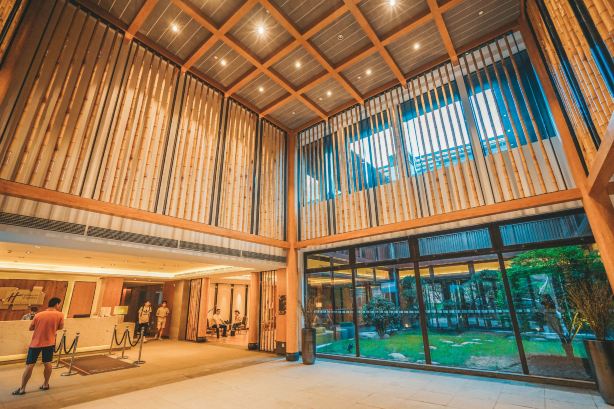
Qianxia Lake Eco-tourism Resort
Famous for its scenic beauty and historic interest, Thousand-Gap Lake is clearly a destination for a blissful adventure, displaying the spectacular fjords and eco-friendly richness of the area. Situated in the city of Lishui, within Qingtian County in the Zhejiang Province, these deep-blue sea inlets have been carved out by the the glacial activity of the long, narrow lake. Exploring tourists cruise along and savor the unique landscape of the "Nine Mountains and Half Waters Fields" among the verdant and proud high cliffs. These natural works of art highlight the serene quality and rich cultural heritage of Thousand-Gap Lake, from the rich folk customs to the traditional cuisine.Qingtian · 27.9km from downtown

Qingtian Shimen Cave
Shimendong is located in Qingtian, Lishui, Zhejiang Province, on the banks of the Lijiang River. It was discovered in the Northern and Southern Dynasties and flourished in the Song and Ming Dynasties. It was also famous for the founding father of the Ming Dynasty, Liu Ji, who was studying here. Many literati have left precious treasures here, and the cultural heritage is rich. Shimendong is a tourist attraction that integrates sightseeing, leisure and cultural experience. The now open attractions are Shimen Waterfall and Bowen Ancient Village.Qingtian · 23.1km from downtown

Lishui Zuowang Valley Scenic Area
Zuowang Valley Attraction is an eco-tourism destination with the theme of natural tranquility and spiritual relaxation. It is located in a quiet place surrounded by mountains. It attracts tourists seeking inner peace with its pristine natural scenery and tranquil environment. It is an ideal place for meditation, hiking and natural healing. The trails in the Attraction meander through dense forests and clear streams. Visitors can stroll in the embrace of nature and experience the different scenery brought by the changing seasons. The wild flowers in spring, the green shade in summer, the red leaves in autumn and the snow in winter each have their own characteristics, providing visitors with rich visual enjoyment. There are multiple viewing platforms and rest areas along the way, which are convenient for visitors to stop and enjoy the scenery or meditate. Zuowang Valley not only offers natural beauty, but also has a dedicated meditation and yoga space for visitors to relax and experience inner peace. The teahouse and vegetarian restaurant in the Attraction provide visitors with healthy eating options to further enhance their physical and mental comfort. Whether you are a tourist looking to escape the hustle and bustle of the city or a traveler seeking spiritual tranquility, Zuwang Valley Attraction provides a fulfilling and relaxing journey and is an ideal place to experience the beauty of nature and inner peace.Qingtian · 39.7km from downtown

Night tour of Taihe Lake
Five seals intertwine, painting a millennium-long cultural scroll with light and shadow Stars cascade by the Ou River's shore, a boat carries Qingtian's soul evermore. The night tour of Taihe Lake is an immersive light and art spectacle that blends Qingtian's millennia-old cultural heritage with the enchanting nightscape of the Oujiang River. Following the theme of "Five Seals," the cruise takes you along the river through a luminous corridor of time, unveiling a poetic scroll that weaves together the Oujiang River, stone carvings, agricultural heritage, overseas Chinese culture, and renowned figures. The Seal of Culture: A Timeless Dialogue with Ancient Sages Beginning with fish leaping from rice paddies, the play of light and shadow transports the audience through Qingtian's thousand-year history. AR technology brings Ming Dynasty strategist Liu Bowen "out" of historical texts, standing tall by the Ou River tides as he personally recounts how his ideals of "virtue, achievement, and wisdom" took root in Qingtian's fertile soil. This is not just a historical retrospective, but a profound dialogue with the cultural roots of the city. The Second Seal of Hometown: A Hundred-Meter Bridge Bearing a Century of Overseas Chinese History The world's rare 100-meter LED screen transforms Taihe Bridge into a flowing silver canvas, narrating the epic journey of Qingtian people who ventured to Europe since the Qing Dynasty. More than just an architectural link, this bridge symbolizes the bridge of life in the hearts of wanderers—connecting their homeland to the world, carrying both the bold spirit of stepping out into the globe and the nostalgic longing for home. Three seals of overseas Chinese hearts, fountain light sculptures transform into heartfelt letters, brimming with homesickness The innovative fountain show combines projection technology to transform dancing water screens into a "light-carved gallery." Within the play of light and shadow, yellowed letters morph into boats amid the waves, while the original song "Cloud Letter" tugs at heartstrings, vividly capturing the essence of "longing." The seal of the Four Seals Stone Carvings, with mountains as its imprint, engraves the soul of the Stone City Breaking free from traditional stages, this spectacle transforms natural mountain cliffs into a canvas, using lasers to paint on the stone as paper and the cliffs as screens, creating the magnificent scene of "Stone Wonders Under Heaven." As the foremost of China's four national stones, Qingtian stone embodies millennia of heritage within its compact form. Its resounding stone language showcases Qingtian's grandeur as the "Origin of Seal Stones," reflecting the local artisans' ingenuity and passion for turning rugged stone into legendary masterpieces. Five Seals of the World: Eastern and Western Art Dancing Together on the River World-famous paintings stand side by side with Qingtian stone carvings in the play of light and shadow, while the song "O Sole Mio" harmonizes with Qingtian folk rhymes. Eastern and Western arts engage in dialogue through light and shadow as "O Sole Mio" echoes across the Ou River. Finally, the grand finale theme song "The World Through Overseas Chinese Eyes" powerfully concludes, declaring Qingtian's heart—forever stamped with hometown love yet embracing the world's radiance. One night in Qingtian, a thousand years of resonance This is not just a night cruise, but an immersive exhibition of "living cultural archives." When technology awakens the dormant cultural heritage of the Ou River, Qingtian's purity, kindness, pioneering spirit, and inclusiveness will forever shine under the world's starry sky. Five seals, five realms. "Imprints of Qingtian" unfolds like a seal, layer by layer, inviting you to witness the world and imprint your heart upon Qingtian along the gentle waves of the Ou River.Qingtian · 646m from downtown


Hometown of Liu Bowen Scenic Area - Baizhang Waterfalls
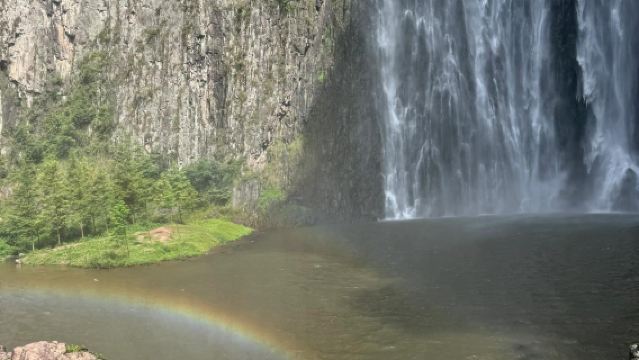
Hometown of Liu Bowen Scenic Area - Baizhang Waterfalls is located in Wencheng County, Zhejiang Province, a national ecological county, with a total area of 4.81 square kilometers. It consists of two core scenic Attraction, Liuji Temple and Baizhang Waterfall. It has a beautiful ecological environment, profound cultural heritage, rich folk customs, and distinct regional characteristics. It is a comprehensive tourist and leisure resort destination where humanities and natural landscapes complement each other and integrate multiple cultures. Liuji Temple is a Ming Dynasty wooden building complex in southern Zhejiang that is worth studying. It was built in the second year of the reign of Emperor Tianshun of the Ming Dynasty (1458) to commemorate Liu Ji (Zi Bowen), a founding hero of the Ming Dynasty and a great man who "established virtue, established merit and established words". The building is spacious and simple, with a magnificent and solemn atmosphere. In the temple, there are plaques and couplets by ancient and modern masters such as Zhang Taiyan, Cai Yuanpei and Sha Menghai. The plaques and couplets are in various styles, including cursive, running, regular and official scripts, which are rare in domestic celebrity memorial buildings. In 2001, it was listed as an important national cultural relic protection unit. Baizhang Waterfall is a waterfall formed by the collection of waters from Nantian, the "sixth blessed land in the world". It cascades down from a mountain cliff over 600 meters above sea level and rushes into a deep ravine, forming a stepped "three-fold" waterfall group with a total drop of 353 meters and a single drop of 207 meters, making it one of the most spectacular waterfalls in China. The water is like flying pearls and splashing jade, and the sound is like thunder and waves, shaking the mountains and the earth, which is spectacular. In 2013, it was certified by the Shanghai World Guinness Headquarters as "China's highest single-drop waterfall" and was selected as one of the "Top Ten Famous Waterfalls in China".Wencheng · 42.3km from Qingtian

Qingtian Ancient City
Qingtian · 450m from downtown

West Lake
West Lake is undoubtedly the epitome of Hangzhou's beauty. The famous "Ten scenes of West Lake" surround its shores, where nature and culture complement each other, forming the core area of Hangzhou tourism. You don't need to visit every attraction - instead, spend half a day or a full day strolling along the lake. However you choose to enjoy it, the experience will surely lift your spirits. West Lake is the core attraction of Hangzhou, surrounded by clouds and mountains on three sides and the city on one side. The Su Causeway and Bai Causeway stretch across the lake, dividing it into several water areas. The lakeside scenery is highlighted by the "Ten Scenes of West Lake" from the Southern Song Dynasty, along with the later "New Ten Scenes" and "Three Additional Scenes," featuring over a hundred attractions along the shore and mountains. Pavilions, temples, pagodas, gardens, causeways, and islands complement the distant mountains and nearby waters, while legends like the Broken Bridge where Lady White Snake met Xu Xian add a layer of storytelling to the landscape. West Lake extends east from Songmuchang in Hangzhou and the north of Baolu Road turning to Shaoniangong Square, passing Baisha Road, Huancheng West Road, Hubin Road, and Nanshan Road to the south of Wansong Ridge, covering all attractions including Wu Mountain, Ziyang Mountain, and Yunju Mountain. To the south, it stretches from Gulou along the eastern foothills of Wu Mountain, Ziyang Mountain, and Yunju Mountain, passing Fengshanmen and Fenghuangshan Road, then following the West Lake water diversion channel to the north bank of the Qiantang River, turning to the Coral Sand Reservoir and ending north of Liufangling. To the west, it runs from Liufangling, Zhugan Mountain, Jiuqu Ridge, and Mingren Ridge to Meiren Peak, Beigaofeng, Lingfeng Mountain, and east of the ridge line of Laohe Mountain. To the north, it follows the foothills of Laohe Mountain (west wall of Zhejiang University), turns 30 m north of Qingzhiwu Road, connects to Yugu Road, Zhejiang University Road, and Shuguang Road, ending south of Songmuchang. West Lake has over 100 attractions, renowned for its "Ten scenes of West Lake", "New ten scenes of West Lake" and "Three reviews · Ten scenes of West Lake". West Lake overview You can explore West Lake on foot, by cruise, on electric bikes, via self-drive, or by riding. Among these, electric bikes are the most convenient and effortless option, with hop-on-hop-off sightseeing vehicles circling the entire lake. Riding along the lakeshore is romantic and leisurely, with many public bike rental spots available. For a boat tour, there are nearly 10 docks around the lake offering various vessels and routes. We highly recommend taking a cruise to Three Pools Mirroring the Moon at the lake center while enjoying the scenic views. Alternatively, you can hail a hand-rowed boat for a more flexible experience with a boatman guiding your tour. North line scenery The north shore of West Lake gathers quite a few attractions, usually starting from the remnant snow on broken bridge at the northeast corner and heading west all the way to Yuewang Temple. You can walk along Bai Causeway to Solitary Hill, visiting cultural attractions like Xiling Seal Engravers' Society, Zhejiang Provincial Museum, Chinese Seal Art Museum, and Zhongshan Park's Crane Pavilion. Enjoy authentic West Lake vinegar fish at Louwailou Restaurant, then cross Xiling Bridge to leave the island - Yuewang Temple and Breeze-ruffled lotus at Quyuan Garden are just a short distance away. If it's a summer day with strong sunlight, it is recommended to stroll along Beishan road, hiding under the dense shade of trees to admire the curve of Broken bridge and the swaying weeping willows on Bai causeway opposite. There are many entrances along the way leading to Precious stone hill, where you can hike for views, and descend to reach Yuewang temple. Yuewang square has many small shops for snacks, and the Impression West Lake show here in the evening is also worth watching. If you have ample time and energy, you can also head to Su causeway from here for a walk to enjoy the panoramic view of West Lake. Southeast coast (Lakeside-Nanshan Road) Another area with a concentration of attractions is the Hubin Road-Nanshan Road along the southeastern coast. Hubin Road is located at the junction between Hangzhou's urban area and the attraction, offering views of West Lake, a dock for West Lake cruises, and the iconic music fountain. The advantage of Hubin Road is its quick access from the attraction to the downtown business district, making it suitable for travelers with a tight itinerary to make a short stop. Head south from Hubin road and walk along Nanshan road, where you can visit attractions like Orioles singing in the willows, Long bridge, Leifeng pagoda, Evening bell at Nanping hill, and Viewing fish at flower harbor. The distance between adjacent attractions is not far, so you can walk or take a sightseeing bus or public transport, which are also convenient. You can arrange a day to visit a few of them according to your preference. Among them, Leifeng pagoda and Evening bell at Nanping hill can be visited in the evening. Listening to the bell at Jingci temple and overlooking the night view of West lake from Leifeng pagoda are both great experiences.China · Hangzhou

Jiangxin Islet
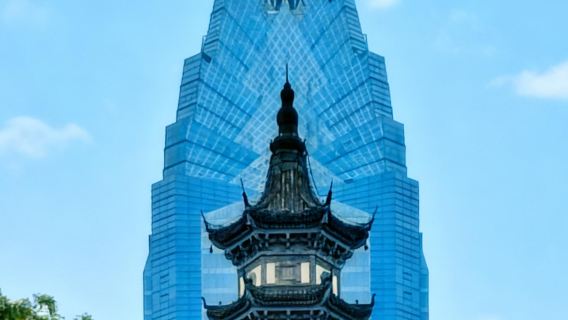
Located in the middle of the Oujiang, to the north of Wenzhou City, Jiangxin Island is a rectangular river-center island. It is one of the must-see places in Wenzhou. There are not only ancient towers and other monuments dating back the Southern Song Dynasty, but also the former site of the British Consulate in Wenzhou in the British Concession. Here, you can witness the history of Wenzhou from the Southern Song Dynasty to the opening of the port.Wenzhou · 36.5km from Qingtian

Shenxianju
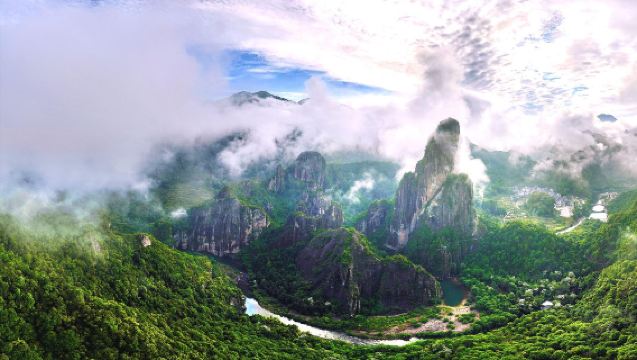
Shenxianju is nestled among the mountains of Xianju, Zhejiang, as a typical area of volcanic rhyolite landform. The rock masses left by ancient volcanic activity have been shaped by long-term weathering and erosion, forming clusters of peculiar peaks, deep valleys and cliffs, where every mountain, stream, rock and peak boasts its unique charm. Pan Lei, a scholar of the Hanlin Academy in the Qing dynasty, remarked after his visit, "Tiantai is serene and Yandang is precipitous, yet Xianju possesses both." This comment precisely captures the essence of this place, which combines the strengths of two renowned mountains. The signature photo spot in the attraction is Ruyi bridge—modeled after a traditional jade ruyi scepter, this two-tiered bridge with partial glass decking spans a deep gorge, creating a cloud-walking illusion on foggy days. Suspended bridges like Wolong bridge, Yuanmeng bridge, and Hongmeng bridge connect with viewing platforms along the way, forming a scenic loop between cliff walls. Nantian summit is a cantilevered glass platform overlooking mountain peaks; the lotus terrace near Foying Lianyun faces Guanyin peak, where rising mist makes visitors appear to stand amid clouds—a popular photography location. The Guanyin peak, resembling the Buddhist deity, serves as the attraction's icon, visible head-on when taking the cable car up from the south gate. Ancient tadpole-shaped inscriptions called "tadpole celestial script" on cliff walls remain undeciphered, adding mystery to the landscape. The attraction has two entrances and exits, south and north, connected by the Nantian and Beihai cableways respectively. An escalator named Nantian ladder is also built on the south gate side, allowing travelers to reach the ridge directly via cableway and escalator without climbing, and then take a gentle tour along the cliffside walkway. Many travelers choose to enter from the south gate and exit from the north gate, as the downhill route is more effortless. It takes about half a day to visit the main attractions. In early summer during the rainy season, the waterfalls are abundant and the mountain is cool. In winter when the temperature is low enough, the flying waterfall freezes into ice falls hanging in front of the cliff, each offering unique views. The outdoor sports area built along the cliff also features activities such as via ferrata climbing. Travelers who want to combine sightseeing and sports can give it a try.Xianju · 67.7km from Qingtian

Wangxian Valley
Vagoo is located in Wangxian Township, Guangxin District, Shangrao City, Jiangxi Province. It is a national AAAA-level scenic spot. It belongs to the Lingshan Mountains, just at the foot of the seventy-two peaks of Lingshan. The valley is remote and quiet, the stream is jubilant, and the pebbles are flying waterfalls. There are rammed earth walls, bluestone roads, yellow walls and black tiles, and original village houses unique to Jiangxi folk houses; there are also pines and bamboo seas and the unique Ganjia market. In the Vagoo, you can enjoy the folk customs, landscape and humanities of the Gan family, experience the long farming culture of our country, taste delicious food, and live a slow life for a few days. It is a good place for leisure, vacation, and parent-child study.China · Shangrao
Experiences you can't miss in Qingtian
Featured Cultural experiences in Qingtian
View all Cultural experiences
5.0/5
· 1 reviewFree cancellation
Book now for tomorrow
From£ 20.15
5% off
Limited-time sale
From£ 197.79£ 208.2

From£ 188.01
Featured Outdoor experiences in Qingtian
View all Outdoor experiences
5% off
Limited-time sale
From£ 150.09£ 157.99
5% off
Limited-time sale
From£ 173.07£ 182.18

5% off
Limited-time sale
From£ 200.11£ 210.65
From£ 305.79

5% off
Limited-time sale
From£ 175.10£ 184.32

From£ 234.89
Free things to do in Qingtian
Qianxia Lake Eco-tourism Resort
Qingtian · 27.9km from downtownBook now for tomorrow, Cancel anytimeQingtian Shimen Cave
Qingtian · 23.1km from downtownLishui Zuowang Valley Scenic Area
Qingtian · 39.7km from downtownNight tour of Taihe Lake
Qingtian · 646m from downtownHometown of Liu Bowen Scenic Area - Baizhang Waterfalls
Wencheng · 42.3km from QingtianImmediate access, Book now for today, Cancel anytimeQingtian Ancient City
Qingtian · 450m from downtownWest Lake
China · HangzhouJiangxin Islet
Wenzhou · 36.5km from QingtianShenxianju
Xianju · 67.7km from QingtianImmediate access, Book now for today, Cancel anytimeWangxian Valley
China · ShangraoImmediate access, Book now for today, Cancel anytime
What travellers say about Qingtian

M51***5630 September 2024
5.0
The scenery of Qianxia Lake is very beautiful. Because of the off-peak travel, there are not many people and it seems very quiet. It is suitable for relaxing or taking the elderly or children for a leisure tour. You can buy a ticket to take a boat to the lake. There is a cruise ship in the morning and afternoon. There is a chain of Holiday Inns inside, and there are homestays one or two kilometers around. Parking is also very convenient at the resort and the hotel. There are several restaurants nearby for dining. The overall feeling is good
Qianxia Lake Eco-tourism Resort

kk走遍中国24 March 2025
5.0
Geographical location: Located on the south bank of Oujiang River, 30 kilometers northwest of Qingtian County, across the river is National Highway 330, with convenient transportation.
Scenic spot features: National AAAA-level tourist attraction, consisting of Shimen Waterfall, Bowen Ancient Village, Chen Cheng's former residence, Kaiyun Linggu, Prince Shengjing, and Shigu Caohai.
Natural landscape: The most famous is Shimen Waterfall, which has a drop of 112.5 meters, shaped like a hanging silk, splashing like jumping beads, and scattered like silver mist. It is called "Heavenly Spring" and "Holy Water".
Historical culture: The Shimen Cave Cliff Inscription has a long history, rich and colorful content, and has high literary and artistic value.
Tourism projects: Tourists can experience Hanfu, professional makeup, clothing matching and other services, and there are professional photographers to follow up and shoot.
Qingtian Shimen Cave

太皇太后66616 February 2025
4.0
The Zuowang Valley Scenic Area is located in Qingtian County, Lishui City, Zhejiang Province. It is a tourist resort that combines leisure and entertainment with natural beauty. The scenic area is located in a verdant valley, with beautiful surroundings, fresh air, tranquility and warmth, far away from the hustle and bustle, and is an ideal place to relax.
Lishui Zuowang Valley Scenic Area


兩江總督趙14 October 2026
5.0
The scenic area is very well planned. Taking the elevator at the North Gate saves you from climbing 1,000 steps down. Then, take the elevator down to the 1st Cascade and climb another 500 steps down while enjoying the beautiful waterfall scenery. From the 1st Cascade to the 2nd Cascade Water Curtain Cave, climb another 300 steps down and receive a raincoat. From the 2nd Cascade to the 3rd Cascade, climb another 500 steps down. Finally, from the 3rd Cascade to the South Gate, climb another 300 steps down until you can take the shuttle bus back to the North Gate parking lot.
Hometown of Liu Bowen Scenic Area - Baizhang Waterfalls

OHGEN21 October 2025
5.0
Construction of the Qingtian Ancient City Wall began in 1556, the 35th year of the Jiajing reign of the Ming Dynasty, under the supervision of County Magistrate Xiong Ying, to resist the Japanese invasion. Backed by Taihe Mountain and facing the Oujiang River, the ancient city boasts a circumference of 3,308 meters and features battlements, forts, and a moat. Initially, it had four gates: East Longjin, South Qingxi, West Jinping, and North Danshan. Additional gates were later added. Floods and urban construction destroyed portions of the wall, leaving only a 983-meter-long section facing the river in the south, including six water gates (from west to east: Dengying, Tongjin, Zhongfang, Qingxi, Shizhu, and Xingchun). All six gates along the Oujiang River remain. It is considered the most complete surviving riverside wharf wall in Zhejiang Province. In 1987, it was designated a Qingtian County Cultural Relics Protection Site and continues to function as a flood control structure. It is the largest surviving ancient structure in Qingtian.
In April 25th year, I visited Qingtian, following the illustrations and text from the Canglang Workshop, and located the six water gates. Although it's not easy to find, you can search for the six city gates such as Zhongfangmen on the navigation or ask the locals (not everyone knows them). I personally think it's still very interesting.
Qingtian Ancient City

Anonymous user14 October 2026
5.0
My second visit to West Lake was great; the boat tour was excellent. The dock was easy to find, the staff were very friendly, provided clear explanations, and helped with any issues. There were also sightseeing buses, which were nice but a bit pricey. Taking the boat tour and then walking around was both perfectly fine.
West Lake

数羊小狗6 October 2026
5.0
Take a boat across the Oujiang River to reach this ancient island, known as the "Oujiang Penglai." The twin pagodas stand facing each other, silently witnessing the ebb and flow of the river, while the ancient temple's eaves hold the poetic beauty of time. Ancient trees reach for the sky, pavilions are scattered throughout the island, and stone paths wind through its gardens.
Jiangxin Islet

Fancy小房子21 October 2026
5.0
The attractions are fantastic. The cable car ride up and down is painless, but the journey is extremely long (southbound). I didn't go to the South Peak because I'm afraid of heights, but there were still surprises later on. All the bridges are openwork; the lower half of the Ruyi Bridge is glass—just looking at it made my legs weak! Then there's the Qingyun Ladder—wow, it scared me, but everyone else loved it. There are places to eat almost everywhere you get tired: Chaji, KFC, and Gu Ming are at different rest stops. If you have enough time, I recommend going southbound, as it covers 80% of the must-see attractions.
Shenxianju

M33***6520 October 2026
5.0
The lights of the stilted houses on the cliff face illuminate the mountainside, and the reflections in the stream create a truly immersive fantasy atmosphere. The best spots for taking photos are the Moon-Viewing Bridge, the Hundred-Goose Bridge, and the Cliff Library.
Wangxian Valley


