
Things to do in Tengchong
Explore top experiences
Top 10 attractions in Tengchong


Ginkgo Village
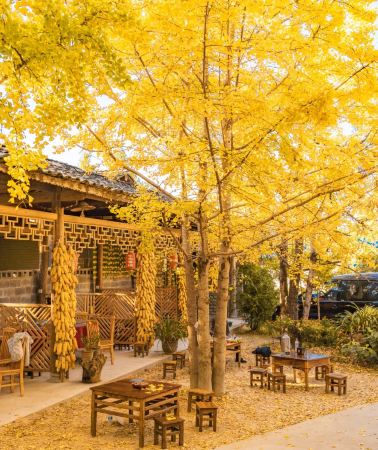
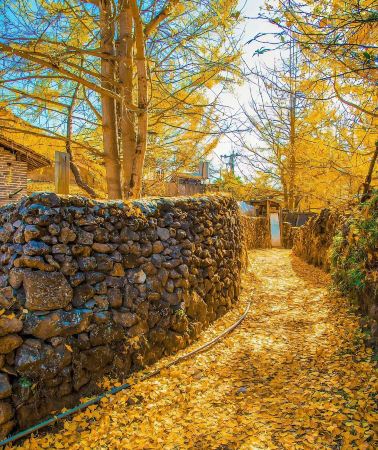
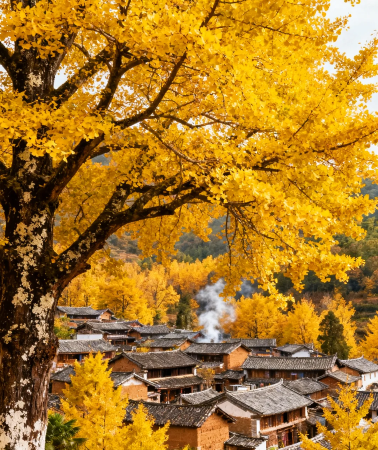
Gudong Town is located in the northern part of Tengchong County and serves as the economic, cultural, and commercial center of northern Tengchong, earning it the reputation as the "Key Town of Northern Tengchong." A 40 km drive from Tengchong County will take you to Yinxing Village in Gudong Town. With the rise of self-drive tourism, Jiangdong Yinxing Village is poised to become another new attraction in Tengchong. Mid-November to early December is the best viewing period for the ginkgo trees. The ginkgo trees in Jiangdong Village are not only ancient and naturally clustered, but also uniquely integrated with the village in a "village within the forest, forest within the village" harmony. Local houses are scattered around open spaces, surrounded by ginkgo trees of all sizes in front and behind, creating a scene of "golden carpets" when visiting this ancient ginkgo village. In recent years, villagers have continued cultivating young ginkgo trees, totaling about 33,000 across over 1,000 acres—likely one of Yunnan's largest, most concentrated, and oldest ginkgo forests discovered to date. These ancient trees stand quietly majestic, hidden among mountain ranges and revealed through the village's rustic charm.Tengchong · 31.6km from downtown

Gaoligong Mountains
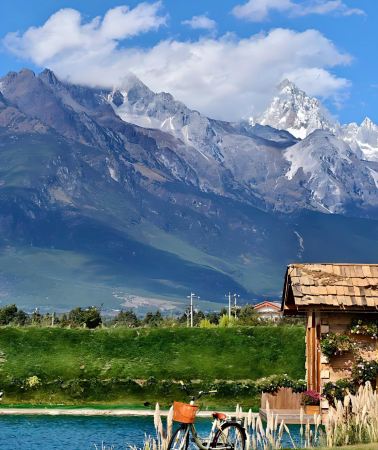
The Gaoligong Mountains are located on the west bank of the Nu River and form an important part of the Three Parallel Rivers UNESCO World Heritage Site. "Gaoligong" derives from the transliteration of a Jingpo ethnic family name "Gaoli," with "gong" meaning "mountain" in the Jingpo language—thus, "the mountain of the Gaoli family." Stretching from north to south, the Gaoligong Mountains span Gongshan, Fugong, and Lushui counties in Nujiang Prefecture, as well as Tengchong County and Longyang District in Baoshan City. Gaoligong Mountains National Nature Reserve is home to a variety of rare wildlife and plants, serving as the origin of Yunnan's eight famous flowers. Within the reserve, a giant rhododendron tree, renowned as the "King of Rhododendrons in the World," blooms over 40,000 flowers annually, creating a breathtaking spectacle. Additionally, the Gaoligong Mountains, dotted with cascading waterfalls, snow-capped peaks, and alpine lakes, also feature volcanic hot springs, making it a paradise for photographers and hikers with its stunning scenery.Tengchong · 60.1km from downtown

Mayu Valley Hot Spring Town
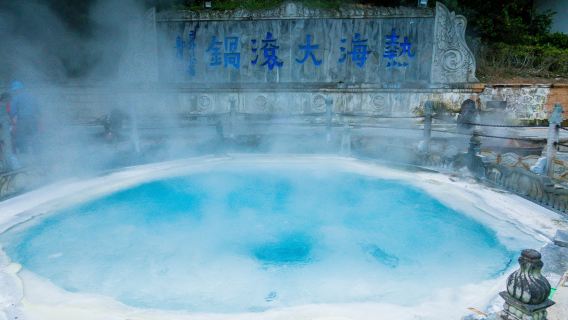
The hot spring water of Mayu Valley has been flowing in the wrinkled mountains for more than 600 years. This hot spring settlement, which coexists with the ancient village, weaves geothermal resources into daily life, creating a living philosophy of "spring in the yard, fields beside the spring". In the morning mist, the villagers still continue the tradition of using bamboo tubes to draw spring water, and use bamboo filters to filter out weak alkaline hot springs that can be drunk directly. More than 30 hot springs scattered among the terraces and bamboo forests are built in irregular natural shapes with volcanic rocks. The water temperature changes gradually from 45℃ to 28℃ with the terrain. While bathing, you can watch the migratory birds wintering in the Beihai Wetland from a distance, or pay attention to the subtle movements of the moss on the poolside stretching in the steam. In the intangible cultural heritage workshop in the center of the town, the inheritor of Xingyang oil-paper umbrellas regularly holds production classes. Bamboo strips steamed in hot spring water are more flexible. In the afternoon, you can hike along the Mayu Valley, through the meadows where chrysanthemums bloom, and touch the hot spring crystals condensed on the rock wall in front of the abandoned Ming Dynasty silver mine cave. When dusk falls, the rice field theater often stages the Lisu "Climbing the Knife Mountain" performance, and the firelight and stars are reflected in the paddy fields irrigated by hot springs. Guests staying at the rammed earth wall homestay can experience picking vegetables in the ecological vegetable garden irrigated with hot spring water, or borrow the manuscripts on geothermal utilization handed down by villagers. This valley nourished by geothermal heat is using hot springs as ink to write a poem about the temperature of the earth.Tengchong · 10.3km from downtown

National Martyrs Cemetery
National Martyrs Cemeteryis located on the banks of the Die Shui River, southwest of Tengchong, at the northern foot of Laifeng Mountain. In 1944, the 20th Army Group of the Chinese Expeditionary Force crossed the Nujiang, launched an uphill assault on the Gaoligong Mountains, and recaptured Tengchong after more than 40 days of bloody street fighting. The following year, the cemetery, initiated by Li Genyuan, was completed to bury and commemorate the soldiers who died in this battle. The name "National Martyrs" is taken from the "Chu Ci" (Songs of Chu). It is also one of the largest and best-preserved memorial cemeteries for soldiers who died on the front lines of the War of Resistance in China. Built along the slope of Xiaotuanpo Hill, the cemetery is bell-shaped, symbolizing a "warning bell that rings forever." The main gate, the Zhonglie Shrine, the martyrs' graves, and the memorial tower are arranged along a central axis, rising level by level. On the gate tower, the plaque "National Martyrs Cemetery" is written in the calligraphy of Li Genyuan. Walking up the stone steps, an inscription reading "Bixue Qianqiu" (Eternal Blood) is embedded in the wall. The Zhonglie Shrine is a hip-and-gable roof building with corridors, serving as a hall to honor the spirits of the fallen soldiers. The walls inside the shrine are embedded with tablets inscribed with the names of the fallen soldiers. Behind the shrine, Xiaotuanpo Hill, covered with tombstones, is the core of the cemetery. More than 3,000 small tombstones, each engraved with a military rank and name, are arranged in a radial pattern according to military units, surrounding the memorial tower at the top of the hill like stars around the moon. The front of the tower base is engraved with the four characters "National Heroes" in Li Genyuan's calligraphy, while the other sides of the tower are engraved with a summary of the Battle of Tengchong. Next to the Zhonglie Shrine stands a monument to the Allied soldiers, commemorating the American officers and soldiers who sacrificed their lives in the battle to recapture Tengchong. Inside the main gate, there is also an inconspicuous "Wozhong" (Japanese Grave), where the Japanese officers who occupied Tengchong are buried, forming a silent contrast with the spirits of the heroes on the slope. On the east side of the cemetery is the Western Yunnan Anti-Japanese War Memorial Hall, which is integrated with the cemetery. It mainly exhibits artifacts from the Yunnan-Burma-India theater of the war. Next to the hall, the Chinese Expeditionary Force Roster Wall is engraved with the names of over 100,000 participants. The exhibition halls on the east and west sides of the cemetery display war history photos and artifacts. Although their location is inconspicuous, they are worth a visit. Many travelers to Tengchong make a special trip here to pay their respects. The cemetery is shaded by pine and cypress trees, creating a solemn atmosphere. Please remain quiet during your visit. During Qingming Festival and other memorial periods, there are many visitors, so it is advisable to allow sufficient time.Tengchong · 1.2km from downtown

Qiluo Ancient Town
Qiluo Ancient Townis located south of Tengchong and consists of three villages: Shangqiluo, Zhongqiluo, and Xiaqiluo. It is named after the winding river in front of the village, which resembles a piece of silk. This is a hometown of overseas Chinese in Western Yunnan that was developed earlier than Heshun. Since the early Ming Dynasty, villagers have traveled to Myanmar for business, and the jade trade was once prosperous. Because the locals value education and culture, it is known as the "Cultural Hometown" of Tengchong. Xu Xiake stayed in the village during his travels in Tengchong, describing it as a "secluded place with sparse bamboo and trees, and winding fields and gullies." The ancient town still retains its original village life: stone-paved alleys crisscross the area, while Ming and Qing dynasty residences with blue bricks, green tiles, and double-eaved roofs complement the small bridges and ancient trees. Ancestral halls, temples, and shrines are scattered throughout, and the area is locally known for having "one palace, two temples, and five ancestral halls." The main attractions are concentrated in Xiaqiluo. Qiluo Wenchang Palace was built during the Wanli period of the Ming Dynasty. It sits on a small hill shaped like a golden turtle by the Qiluo River and is an architectural complex that blends the layout of a Confucian temple with Taoist shrines. The archway-style gate, the crescent-shaped Panchi pond, and the exquisite wood carvings are all worth a closer look. The village also houses the Qiluo Library, founded by villagers in 1919. It has been voluntarily maintained by locals for over a century, keeping the love of reading alive to this day. The morning street market is full of local life. You can try a bowl of roasted pork rice noodles, drink freshly brewed Tengchong small-grain coffee, and browse the stalls for jade and volcanic stone souvenirs. Compared to the bustling Heshun, this place is almost free from commercial noise, making it perfect for travelers who enjoy quiet, leisurely strolls and viewing old architecture. Consider setting aside half a day to slowly explore the ancestral halls and old houses hidden deep in the alleys.Tengchong · 3.2km from downtown

Western Yunnan Anti-Japanese War Memorial Hall
The Memorial for Anti-Japanese War in Western Yunnan is located on the east side of the National Cemetery. It is an important part of China's War of Resistance Against Japanese Aggression and an important part of the World Anti-Fascist War. The Yunnan-Western Anti-Japanese War Memorial is mainly based on the real objects of the War of Resistance, and also takes into account pictures, texts and video materials. The exhibition includes six parts: the rear of the War of Resistance, the front line of defense against the enemy, the Nujiang River confrontation, the desperate counterattack, the expulsion of the invaders, and the prayer for peace.On the west side of the memorial hall, there is a Chinese Expeditionary Force List Wall, which is engraved with the names of Chinese Expeditionary Force soldiers, Allied soldiers, local anti-Japanese guerrillas, local casualties, and co-operating troops and units who participated in the war of resistance in western Yunnan. The list wall is engraved with volcanic bluestone, symbolizing the strong will of the expeditionary soldiers; the theme wall is inlaid with the service logo of the Allied Forces in the China-Burma-India Theater, and on the left are eight large Wei-style characters "Chinese Expeditionary Force List Wall", and below is the inscription of the memorial.Tengchong · 1.1km from downtown

Simola Wa Village
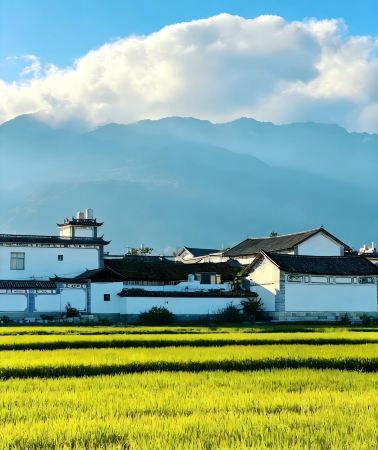
Simola Wa Villageis nestled among the green mountains of Qingshui Town, Tengchong, Yunnan. It is an ancient Wa ethnic village with a history of over 500 years. In the Wa language, "Simola" means "a place of happiness." The village is built into the mountainside, surrounded by terraced fields and bamboo forests, with the Qizi Spring and ancient banyan tree clusters dotting the landscape. The rice paddies at the village entrance change color with the seasons; they are a sea of gold around the autumn harvest, often the first thing to catch your eye when entering the village. Passing through the village gate, the ox head totems and the wooden drum house are distinct symbols of Wa culture. Walking along the stone-paved lanes, you will find the Wa Folk Customs Square, the Village Heart Pillar, and the Simola Auditorium unfolding one after another. Inside the Folk Culture Exhibition Hall, Wa costumes and old household utensils are quietly displayed, revealing traces of this ethnic group's life over the centuries. Dozens of families still live in the village, primarily of the Wa ethnic group. The sounds of looms and Wa songs can be faintly heard among the courtyards, as ancient customs continue in everyday life. The village is small and perfect for exploring on foot. The Wa people have a long tradition of making rice cakes here, and there is an experience area in the village. The freshly made rice cakes are fragrant and chewy, and are worth a taste. When you are tired from walking, you can sit for a while in the village book bar, have a cup of freshly ground coffee, and look out at the rice paddies. Thin mist often rises in the mountains in the early morning, and the evening afterglow dyes the terraced fields gold. If you want to take photos, these two times are worth waiting for. Sometimes you might even encounter a bonfire party, where you can follow the sound of the wooden drums and experience the lively atmosphere of the Wa village at night.Tengchong · 10.7km from downtown

Longjiang Bridge
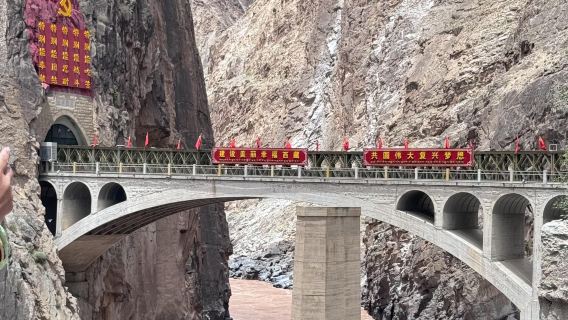
Longjiang Bridge, also known as Longjiang Grand Bridge, spans the Longchuan River Valley at the border of Tengchong and Longling in Yunnan. It is a key project of the Baoshan-Tengchong Expressway and a highly recognizable landmark for self-drive travelers entering or leaving Tengchong. This long-span steel box girder suspension bridge has a main span of nearly 1,200m, a total length of approx. 2.5 km, and the deck is nearly 280m above the river at the bottom of the valley. Driving on the bridge, you have the deep valley and the winding Longchuan River beneath your feet, offering a visually stunning experience. Since opening to traffic in 2016, the former winding mountain road that required detouring to the valley floor has been replaced by a drive of just a few minutes, and this valley barrier in the southern section of the Hengduan Mountains is no longer an obstacle to travel. The mountainous area where the bridge is located is humid and rainy all year round. In the early morning or after rain, clouds and mist often drift across the bridge deck. Driving through it feels like passing through the clouds, a common scene captured by self-drive travelers. When the weather is clear, green mountains stretch along both banks, the river at the bottom of the valley looks like a ribbon, and the view is clear and open.Tengchong · 23.6km from downtown

Tengchong volcanic field
The Tengchong Volcano Cluster is located to the west of the high peaks of Gong Mountain in the Hengduan Mountains at the edge of the Eurasian Plate. Tectonic movement occurs often and earthquakes happen frequently. When a violent earthquake occurs, lava spurts out of the volcano. After the earthquake, the lava cools and forms a unique crater. In the vicinity of the volcano craters, visitors can take gray, red, black and other colored volcanic stones as souvenirs to commemorate their visit. This volcanic stone, called pumice, is very light. Anyone can easily lift an enormous chunk, throw it into the water and watch it float instead of sink.Tengchong · 21.6km from downtown

Dadi Tea Sea Camping Site
The Dadi Tea Sea Campground is located in Yujiaying New Village, Tuofeng Community, Qingshui Township, Tengchong City, Baoshan City, Yunnan Province. It is a comprehensive camping base integrating tea culture, research and education. It not only has beautiful natural landscapes, but also relies on superior natural conditions and high-quality resources to become an important project to increase farmers' income, strengthen the village collective economy, and develop rural tourism.Tengchong · 10km from downtown
Experiences you can't miss in Tengchong
Featured Cultural experiences in Tengchong
View all Cultural experiences
FromBRL 555.33
Free cancellation
Book now for tomorrow
FromBRL 148.87
Free cancellation
Book now for tomorrow
FromBRL 148.87
![Guide for All of Yunnan|Guide] Kunming, Dali, Lijiang, Shangri-La, Xishuangbanna, Nujiang travel guide service [Chinese/English requires 3-day advance booking/certified professional guide](https://ak-d.tripcdn.com/images/0353912000sb5tcko965B_C_568_320.jpg?_fr=wc)
5.0/5
· 6 reviews· 321 bookedFree cancellation
Instant confirmation
Book now for today
FromBRL 18.80
Free cancellation
Instant confirmation
Book now for tomorrow
FromBRL 18.80
Featured Outdoor experiences in Tengchong
View all Outdoor experiences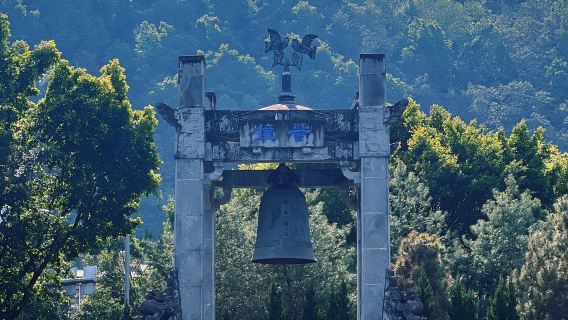
5% off
Limited-time sale
FromBRL 973.95BRL 1,025.22
![Paragliding experience in Tengchong, Yunnan [professional instructor + complimentary video recording]](https://ak-d.tripcdn.com/images//0582n12000n2istlo93D8_C_568_320.jpg?_fr=wc)
5.0/5
· 1 reviewFree cancellation
Instant confirmation
Book now for today
FromBRL 112.78
Free cancellation
Instant confirmation
Book now for tomorrow
Save BRL 11.16
FromBRL 212.14BRL 223.3
5% off
Limited-time sale
FromBRL 1,298.61BRL 1,366.96
Free things to do in Tengchong
Ginkgo Village
Tengchong · 31.6km from downtownGaoligong Mountains
Tengchong · 60.1km from downtownMayu Valley Hot Spring Town
Tengchong · 10.3km from downtownNational Martyrs Cemetery
Tengchong · 1.2km from downtownQiluo Ancient Town
Tengchong · 3.2km from downtownWestern Yunnan Anti-Japanese War Memorial Hall
Tengchong · 1.1km from downtownSimola Wa Village
Tengchong · 10.7km from downtownLongjiang Bridge
Tengchong · 23.6km from downtownTengchong volcanic field
Tengchong · 21.6km from downtownDadi Tea Sea Camping Site
Tengchong · 10km from downtown
More ways to travel from Tengchong
Private Tours in Tengchong
View More Private Tours in Tengchong


Group Tours in Tengchong
View More Group Tours in Tengchong
What travellers say about Tengchong

繁忙的不偷懒的豆豆31 March 2026
4.0
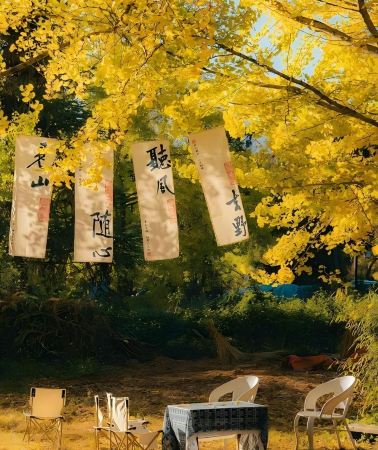
From late November to early December, Ginkgo Village transforms into a golden wonderland, a dreamlike world for photographers. I was fortunate enough to witness this beauty in mid-November. Almost every household in the village grows ginkgo trees, with the central square being particularly spectacular, especially the King Ginkgo, a witness to the passage of time. In the rustic courtyards, sitting under the thousand-year-old ginkgo tree, sunlight filtering through the golden leaves, enjoying ginkgo chicken soup, one can feel the warmth of the countryside. A young villager on a small bicycle took us through every corner of the village, telling us its stories.
Ginkgo Village

M2k***r323 September 2026
5.0
What a wonderful day! The tour guide was incredibly warm and kind. Even traveling alone, I didn't feel lonely. The tour was very well-prepared; they took photos for me while we walked and gave me edible wild fruits and medicinal herbs. The meals were also delicious and beautifully presented. Highly recommended!
Gaoligong Mountains

佛系初行者7 February 2025
5.0
Mayugu Hot Spring Town is located in Xinle Village, Beihai Township, Tengchong City. It includes six ecological villages and is a characteristic town integrating hot spring health care, leisure sightseeing, and tourism and vacation.
*Hot spring features:
The hot springs in the town are rich in fluorine, lithium, strontium and other elements. The water quality is suitable for breeding, drinking and bathing. It is a rare natural hot spring with abundant reserves. The surrounding countryside and mountains are beautiful, with good natural conditions, excellent ecological conditions and long history and culture.
*Ecological environment:
The town integrates environmental protection into every link of the town construction, respects the natural ecology, respects the local history and culture, and integrates the surrounding primitive villages, farmland scenery and natural environment.
*Healthy town:
The town takes hot spring resources as the core, relies on the advantages of local human resources, closely follows the "Healthy China" development strategy, and focuses on Yunnan Province to build world-class "green energy", "green food" and "healthy life destination" three cards. The town follows the new urbanization model of "suitable for breeding, suitable for tourism, suitable for living and suitable for business", and is committed to making the town a healthy life destination integrating health care, cultural tourism and elderly care.
*Experience:
Here, there is no urban noise, no workplace pressure, you can stroll in the fields and enjoy the beautiful scenery. Shopping is convenient, food is abundant, you can run along the health trail in the morning, soak in hot springs when you are tired, and drink mountain spring water when you are thirsty. It is really a place for leisure and health preservation that people today yearn for.
Mayu Valley Hot Spring Town

安迪珠宝21 October 2025
5.0
The National Martyrs Cemetery was built to commemorate the fallen soldiers of the 20th Group Army of the Chinese Expeditionary Force. It consists of an exhibition hall, a martyrs' shrine, a martyrs' tomb, a memorial tower, etc. It is also a demonstration base for patriotic education.
National Martyrs Cemetery

闲吃萝卜不操心8 February 2025
5.0
The old streets of the ancient town are full of fireworks. There is a local market every morning, where all kinds of vegetables, fruits, mushrooms and handmade products are sold. The library in the village is the earliest village library in Tengchong, with a history of more than 100 years. Wenchang Pavilion was built in 1609. It is an ancient building with considerable scale and characteristics, but it is not open to the public at present, and only the exterior can be seen. There is also a horse caravan courtyard on the street, which tells the history of the horse caravans on the Ancient Tea Horse Road.
Qiluo Ancient Town

Miranda-zm23 May 2021
5.0
Tengchong·Forgetting history means betrayal
[Scenery] The scenery is very nice, but the main purpose of coming here is to remember history and not forget the national humiliation. It is very meaningful for historical education. Bring your children here so that they can understand this knowledge.
Western Yunnan Anti-Japanese War Memorial Hall

DUDU10020327 August 2023
4.0
The scenic spot is free of charge, but you must buy a 20-yuan sightseeing bus ticket, otherwise you have to walk to the entrance of the scenic spot. The village is very clean and tidy, with graffiti on the walls, which is very Wa-style. The village is not big, and one hour is enough.
Simola Wa Village

M2c***4r26 September 2025
5.0
Longjiang Bridge: A timeless wonder, a city landmark worth visiting!
If you visit Longjiang City, you absolutely cannot miss the breathtaking Longjiang Bridge. It's not only a vital transportation hub connecting the north and south of the city, but also a work of art, a stunning spot where you can stop and admire the city's vibrant pulse.
Highlight 1: Spectacular Architectural Wonder
Longjiang Bridge features a modern design, integrating innovative structural technology with elegant lines. From a distance, it resembles a majestic dragon prancing across the river. At night, the bridge's lights create a dazzling, shimmering galaxy, a truly captivating sight.
Highlight 2: Magnificent Views
Standing atop the bridge, you can take in the vast expanse of the river. Whether swirling in the morning mist or shimmering in the golden sunset, the views are breathtaking. The bridge's observation decks are especially ideal for capturing stunning photos, capturing the city's vibrant and tranquil atmosphere.
Highlight 3: Rich Cultural and Historical Elements
Longjiang Bridge is more than just a modern construction; it incorporates many local cultural elements. The carvings and lighting design on the bridge tell the story of the city, allowing you to experience its rich cultural heritage while enjoying the beautiful scenery.
Whether you're a design enthusiast, a photographer, or simply looking for a relaxing place, Longjiang Bridge has something for everyone. It represents not only the city's modernization but also its people's hopes and dreams for the future. Every time you stand on the bridge, you'll be overwhelmed by its grandeur and moved by the city's resilience and vitality.
If you crave both visual and spiritual enjoyment, Longjiang Bridge is definitely worth a visit. It's more than just a bridge; it connects past and future, reality and dreams. Bring your camera and your curiosity, and come experience this urban feast!
I hope this review sparks your interest in Longjiang Bridge and encourages more people to explore this captivating landmark!
Longjiang Bridge

Laven*君*6 April 2026
5.0
Upon entering, we learned about the volcano's geology. If you go early in the morning, you can even see hot air balloons. There are several ways to tour the area, but the prices are a bit high. The off-road vehicle tour is located in a designated area near Xiaokongshan; it wasn't crowded, but it was quite interesting even though I haven't tried it before.
Tengchong volcanic field
M44***9616 April 2023
1.0
Total liar!!! More than 50 kilometers away, nothing. Group purchase, afternoon tea, tea, dinner. Just trick you into coming to the mountain valley. The restaurant forces you to arrange meals. 2 people must have 6 dishes. I advise everyone not to come. It's rubbish. You have to pay for even the place to sit.
Dadi Tea Sea Camping Site


