Xinyi

Things to do in Xinyi

Search attractions or local attractions & tours
Search

Explore top experiences

Top 10 attractions in Xinyi

View all Attractions
Yaowan Ancient Town
No. 5 of Night Attractions in Xuzhou

Yaowan Ancient Town

5.3
4.3/5
1k reviews

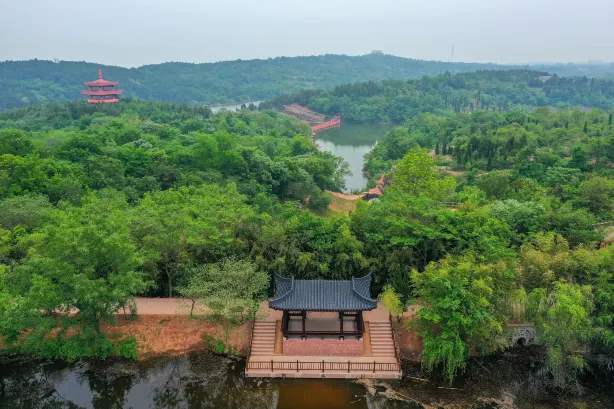
Yaowan Ancient Town is a national 4A-level tourist Attraction located at the southwest edge of Xinyi City, at the intersection of the Beijing-Hangzhou Grand Canal and Luoma Lake. It is connected to the three cities and counties of Suqian, Suining and Pizhou. It is a nationally famous water town with a thousand-year history. It is known as "looking east to the sea, looking west to Pengcheng, looking south to Huaisi, and looking north to Taishan", "Golden Waterway Golden Triangle", "Northern Jiangsu Waters Better Than Jiangnan", and "Little Shanghai". Yaowan integrates ancient town landscape, waterscape, scenic spots and historical sites, and mythical wonderland, and has a high value for viewing, sightseeing and historical research. The thousand-year-old ancient town Yaowan has a long and splendid history and culture. According to historical records, this place was under the jurisdiction of Zhongwu State in the Eastern Zhou Dynasty. During the Qin and Han Dynasties, it was used as a kiln for military supplies. In the Tang Dynasty, it was located at the junction of Pizhou and Haizhou. Because there were many kilns Souvenir, it was called Yaowan. The thousand-year-old canal has hundreds of bays, and the golden section is in Yaowan; the thousand-year-old locust tree has witnessed the rise and fall of the ancient town Yaowan; the backyard sauce jar is carved with traces of the long years; the old-style buildings exude a strong cultural atmosphere. She is like Zhouzhuang in southern Jiangsu, with lakes and water, and connected by water networks; she is also like Pingyao in Shanxi, with ancient streets and alleys, and the culture has been passed down for thousands of years. Yaowan Ancient Town has a rich cultural and historical landscape. The ancient town was first built in the early Tang Dynasty. With the prosperity of the grain transport and salt industry in the Ming and Qing Dynasties, there were many shops, merchants, pedestrians on the streets, and boats on the water. In the ancient town, the city gates, towers, shops, courtyards, palaces, temples, and halls were built from the Song Dynasty to the Qing Dynasty. The ancient streets, houses, guild halls, workshops, businesses, warehouses, pawnshops, docks and other ancient town features still basically remain.

Xinyi · 33.7km from downtown
Mount Taishan
2026 Asia 100 - Best Things to Do

Mount Taishan

9
4.7/5
62.8k reviews

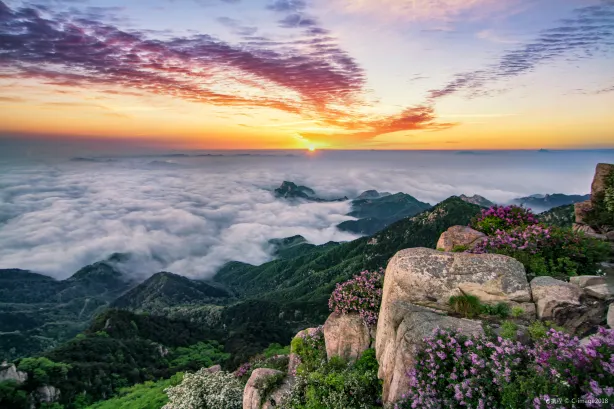
Mount Taishan is centered around Mount Taishan, the first of the Five Great Mountains, with steep and towering peaks, and the views of sunrise and sunset from the summit are breathtaking. Sea of clouds often appear among the mountains, and in winter there are spectacular rime ice views. In addition to natural scenery, the mountain also has numerous historical sites, stone inscriptions, religious temples, and other cultural views, with cliff inscriptions and steles scattered throughout the mountain, which is a major feature of Mount Taishan. Mount Taishan has its own highlights in each of the four seasons: in spring, peach and pear blossoms bloom across the mountains; in summer, the mountaintop is lush green and cool, making it a great summer retreat; in fall, the leaves are a mix of red and yellow, dyeing the layered forests in brilliant colors. There are multiple routes to the summit of Mount Taishan. The hiking trail at the Hongmen entrance is the traditional route opened during Emperor Qin Shi Huang's Fengshan ceremony, consisting mainly of stone steps. Walking from Hongmen to Zhongtianmen, you will pass by numerous attractions along the way, including Wanxian Tower, Doumu Palace, Huima Ridge, and Hutiange. This area is also where stone inscriptions are concentrated. After reaching Zhongtianmen, you can take a cable car or walk to Nantianmen and the summit area, where you can see attractions such as Eighteen Bends, Shengxian Archway, Duisong Mountain, Chaoyang Cave, and Wudafu Pines. The Tianwaicun route is a road leading from Tianwaicun to Zhongtianmen, accessible by tour bus, passing by Heilong Pool, Fanzhi Cliff, and Feng Yuxiang's Tomb. After reaching Zhongtianmen, it merges with the latter half of the Hongmen route. Travelers who prefer not to hike can choose this route. The Tianzhufeng route is relatively steep with few visitors, and is a hiking route often taken by outdoor enthusiasts. It features beautiful mountain scenery, including attractions such as Liyu Back, and at the starting point there is also the large-scale live performance "Chinese Mount Taishan: Grand Ceremony of Fengshan." The Taohuayu route is mostly chosen by travelers when descending the mountain. From Tianjie at the summit, take the ropeway to the mountainside, then transfer to a tour bus down to Taohuayu at the foot of the mountain. Along the way, you can enjoy the Colorful Stone Stream scenic area, where the colorful stone patterns at the bottom of the stream are quite magical. Dongyudao is also a walking hiking route, with attractions such as Qingyang Hall, Hanque Gate, and Dongtianmen along the way. Each route ultimately leads to the Daiding tourist area at the summit. Daiding features the main peak of Mount Taishan, Jade Emperor Peak, the Tianjie Scenic Area, as well as attractions such as Sun Viewing Peak, Daguan Peak, Zhanlu Terrace, Bixia Temple, and Confucius Temple. On clear days at the summit, you can gaze at the Yellow River in the distance and admire the wonder of the "Golden Belt of the Yellow River." The Houshiwu area is rich in varied pines and rocks, and there is a cableway leading to the North Heavenly Gate. Many visitors who want to watch the sunrise choose to climb Mount Taishan at night, usually setting off from the Hongmen route, and it is advisable to depart around 11 pm. This route is well lit at night, and a hike of about seven to eight hours will allow you to reach Sun Viewing Peak or Jade Emperor Peak at the summit before sunrise, which are ideal spots for watching the sunrise.

China · Tai'an
Tsingtao Beer Museum
No. 1 of Family-friendly Attractions in Shandong

Tsingtao Beer Museum

8.7
4.8/5
48.8k reviews

The Tsingtao Beer Museum is located at No. 56 Dengzhou Road, the birthplace of Tsingtao beer. This century-old factory, housed in a 1903 German-style industrial complex, witnesses China's beer industry journey from its infancy to prominence. As China's first beer-themed model for industrial heritage revitalization, the museum transforms weathered red-brick workshops into immersive spaces using precious early equipment like old motors, mash kettles, and boiling kettles. Visitors walking through the century-old memory corridor can touch over 30,000 artifacts from the German occupation era while overlooking the smart production lines of the "lighthouse factory" through glass walls. Through the dialogue between traditional wooden fermentation tanks and fully automated filling equipment, they decode the evolution of Chinese manufacturing from artisanal heritage to digital transformation. With the innovative concept of "living heritage + technological empowerment," the museum breaks free from the static display constraints of industrial sites. The VR brewing lab allows visitors to become brewers adjusting malt ratios, while the hop recognition system decodes the scientific secrets behind beer flavors. Personalized beer label printing customizes brews, turning taste into portable urban memories. This cultural landmark, bearing Qingdao's industrial DNA, not only showcases its benchmark value in cultural-tourism integration through honors like "national first-class museum" and "China's top 10 cultural heritage tourism cases," but also injects more sustainable vitality into the century-old factory by being selected as a "national cultural industry demonstration base." It continues to brew the city's cultural richness from industrial heritage amid the tides of time.

China · Qingdao
Niushou Mountain Cultural Tourism Zone
No. 2 of Best Things to Do in Jiangsu

Niushou Mountain Cultural Tourism Zone

8.6
4.7/5
35.3k reviews

Niushou Mountain Cultural Tourism Zone, also known asNiushou Mountain Cultural Tourism Zone, it is named for its two peaks, one in the east and one in the west, which resemble the two horns of an ox's head. Niushou Mountain Cultural Tourism Zone boasts beautiful scenery and has long enjoyed the reputation of "Spring Niushou." In ancient times, it featured such Jinling scenic spots as Niushou Smoke and Mist and Zutang Temple's Resounding Tin Staff, and it also preserves many historical sites, such as the Jiangning section of the ancient fortifications where Yue Fei fought against the Jin, and the Zheng He Cultural Park. Usnisa Palace The Usnisa Palace is themed around the enshrinement of the Buddha's parietal bone relic and is divided into two parts: the large dome and the small dome, symbolizing outer offerings and inner offerings. The Usnisa Palace utilizes the original mine pit to build an underground palace, with six levels below ground and three levels above ground, appearing very solemn and magnificent. The parietal bone relic of Shakyamuni Buddha was enshrined at the Niushou Mountain Cultural Tourism Zone in October 2015. Visitors may go to the Usnisa Palace to pay homage on special Buddhist festivals. For specific times to view the relic, please call the attraction for inquiries. A thousand years of history Niushou Mountain Cultural Tourism Zone is a Buddhist sacred site. The Buddha Cave Temple, built by Sikong Xu Du in the second year of the Tianjian era of the Liang Dynasty (503 AD), was the first temple on Niushou Mountain, and Li Yu, the last ruler of the Southern Tang, renamed it Hongjue Temple. During the Tang Dynasty, Chan Master Farong, hailed as the "Bodhidharma of East China," founded the Niutou Chan School on Niushou Mountain, known in ancient times as "Jiangbiao Niutou." The founding of the Niutou Chan School served as an important bridge in the true transformation of Indian Chan into Chinese Chan! Niushou Mountain Cultural Tourism Zone - Taohua Stream Niushou Mountain Cultural Tourism Zone - Taohua Stream is located at the east entrance of Niushou Mountain Cultural Tourism Zone, with a total area of 14.87 hectares, approximately 220 mu. The peach blossoms selected are 26 varieties suitable for growing in the Nanjing area, making it a new view created by the Niushou Mountain attraction. A small stream winds down from Yinlong Lake, its water babbling, with peach trees planted on both sides. In spring, the buds gradually bloom, and a sea of flowers is intoxicating.

China · Nanjing
Laoshan Scenic Spot
No. 3 of Best Things to Do in Shandong

Laoshan Scenic Spot

8.5
4.7/5
26.3k reviews

Laoshan Scenic Spot is located in the east of Qingdao, bordered by the Yellow Sea to the east and south. It enjoys the reputation of "famous mountain on the sea," with its highest peak at an altitude of approx. 1,100 mJufeng. The attraction, renowned for its majesty, grandeur, uniqueness, and elegance, has become a famous Taoist mountain. The Taoist temples, sunrises, and sea of clouds in the attraction are allPrestigious. The attraction is mainly composed of seven scenic areas: the Laoshan Jufeng Scenic Area, Liuqing River Scenic Area, Laoshan Taiqing Scenic Area, Huayan Scenic Area, Laoshan Yangkou Scenic Area, Laoshan Jiushui Scenic Area, and Laoshan Hualou Scenic Area. There are four tour routes in total, including three land routes (south route, east route, and central route) and one water route. The scenery in these scenic areas includes: Jufeng Sunrise, Taiqing Water Moon, Haijiao Immortal Mound,Hualou Dieshi, and Jiushui Mingyi, together forming the twelve scenic spots of the attraction. The Hualou scenic area of Laoshan is located in Beizhai Subdistrict, Laoshan District. The Jiushui scenic area of Laoshan is known for its water, with streams and springs throughout the attraction and beautiful scenery. For typical visitors, the routes truly worth exploring are the Julan Peak scenic area of Laoshan and the Liuqinghe scenic area–Yangkou scenic area of Laoshan route; one day for each of these two routes is sufficient. The Julan Peak scenic area of Laoshan and the Yangkou scenic area of Laoshan are also where the attraction's natural beauty lies. Liuxinghe attraction - the Laoshan Yangkou scenic area, also known as the southern route, is the earlier-developed attraction here. It hugs the coastline and features the famous attraction Laoshan Taiqing Palace, making it the route most people take. The basic route into the attraction is Liuxinghe attraction - Taiqing Palace scenic area - Huayan Temple, with the endpoint being the Laoshan Yangkou scenic area. Since the essence of this route lies in the Laoshan Yangkou scenic area, it is recommended that you manage your time accordingly when visiting the attractions before it. Laoshan Taiqing Palace—LiaozhaiMediumLaoshan MountainThe setting of the story of the Taoist priest. Back then, Pu Songling came to this place and was inspired by the Taiqing Palace in Laoshan, where he wrote "The Taoist Priest of Laoshan." Visitors here can see the wall through which the Taoist priest in Pu Songling's story passed through walls and walked through solid barriers. Huayan Temple — the surviving Buddhist temple in the attraction. Because the Laoshan Yangkou scenic area is close toHuanghai, where you can look at the sea and enjoy the breeze. Of course, in addition to the beautiful scenery, the Yangkou Scenic Area of Laoshan also has the challenging Mitian Cave. This cave is winding, steep, and narrow; in dark spots you cannot see your hand in front of your face, and in narrow spots you can barely squeeze through, greatly increasing the fun of the visit. You can walk or take a cable car to Mitian Cave; after climbing to the mountaintop, you can take photos, enjoy the scenery, and gaze out at the Yellow Sea. Also remember to bring a flashlight so you can take in the beautiful sights inside the cave. In addition to the Yangkou Scenic Area of Laoshan, the second beautiful spot in the attraction is the Giant Peak Scenic Area of Laoshan. The Giant Peak Scenic Area is home to the main peak of the attraction, with Laoding as the highest point. This area is mainly for mountain hiking and is one of the more physically demanding parts of the attraction. The Giant Peak Scenic Area of Laoshan features layered rocky peaks with a magnificent momentum. On clear days, you can see the sea; on cloudy days, you can watch the sea of clouds; and from Laoding, the sunrise offers a breathtakingly enchanting view.

China · Qingdao
Slender West Lake
2026 Global 50 - Spring Outings

Slender West Lake

8.5
4.7/5
83.6k reviews

"In March when flowers bloom, head to Yangzhou." When visiting Yangzhou in spring, a trip to Slender West Lake is a must. This narrow stretch of waterway offers the perfect blend of natural beauty and cultural heritage. Stroll along the banks to admire scenic views, explore historic pavilions adorned with classical poetry and paintings, or cruise the lake by boat to experience the leisurely pleasure Emperor Qianlong once enjoyed during his royal visits. The attraction is quite expansive, stretching from the Great Rainbow Bridge in the southeast all the way north along the lake to Guanyin Mountain, passing dozens of attractions along the way. There are four main entrances (east, south, west, and north), with most visitors starting their tour at the south entrance on Great Rainbow Bridge Road. This renowned lakeside garden boasts breathtaking natural views. In spring, the area is shaded by lush willows and adorned with camellias, pomegranates, azaleas, and peach blossoms, attracting visitors from across the country to enjoy the seasonal blooms. For centuries, countless literati have lingered here, composing poetry and creating paintings that left behind numerous artistic treasures and stories. The site also features many landscape structures ingeniously designed to harmonize with its natural surroundings. The Five Pavilion Bridge in Shugang Slender West Lake Scenic Area is the iconic attraction with over 200 years of history. Featuring five wind pavilions atop, each of the bridge's fifteen arches cradles a moon during full moon nights. Another renowned attraction is the Twenty-Four Bridge, inspired by Du Mu's poetic line "Where is the jade-like beauty teaching flute-playing on the moonlit Twenty-Four Bridge?" While the original bridge no longer exists, visitors can admire its reconstructed version today. This was also a stop during Emperor Qianlong's southern tours in the Qing Dynasty. Architectural views like the Great Rainbow Bridge, Slender West Lake Scenic Area's Fishing Terrace, White Pagoda, and the Twenty-Four Bridges' Xichun Platform all bear inseparable historical anecdotes connected to Emperor Qianlong. During summer nights, the illuminated pavilions and moonlit reflections on the lake create a magical atmosphere. The nightlife experience here is entirely boat-based, offering a relaxing way to beat the summer heat while enjoying gentle lake breezes.

China · Yangzhou
Baotu Spring
No. 4 of Best Things to Do in Shandong

Baotu Spring

8.5
4.6/5
59.2k reviews

Baotu Spring is located in the bustling downtown area of Jinan, with Thousand Buddha Mountain to the south, Daming Lake attraction to the north, and Quancheng Square to the east. It is a distinctive garden themed around springs, renowned as "the finest spring under heaven" and ranked first among Jinan's "72 famous springs," with a history spanning over 2,000 years. It has also appeared in literary works many times, most notably in Lao She's essay "Baotu Spring." Visitors come here to witness the magnificent sight of the three springs erupting. The main spring is the centerpiece of the park. The spring water splits into three streams, clear and crisp, gushing day and night, and reaching several feet high when the flow is abundant. Around the spring are large stone blocks with railings, where visitors can look down at the spectacular sight of the three springs surging in the pool. Beside the spring stands a stone tablet inscribed with "First Spring" in dark green, written by Emperor Qianlong himself. In addition, nearby are scattered more than thirty famous springs, including Golden Thread Spring, Shuyu Spring, Xibo Spring, Liuxu Spring, Huanghua Spring, and Dukang Spring. Due to the abundant local rainfall in July and August, this is a good season to come and admire the spring water. In midsummer, visitors can have an intimate encounter with the spring water in the park. Some springs have no railings around them, and there are stone paths in the pools with spring water flowing over them. Visitors can step down into the pools to get close to the water, and walking on the stone paths, their feet will be splashed by the spring water, giving a cool sensation. Besides getting close to the water, there are also springs beside the pools that visitors can drink from directly. To the east of the spring is the Wanghe Pavilion Teahouse, which offers visitors specially preparedThis springFragrant tea brewed with water. In addition to the springs, another sight worth seeing in the park is the South Gate. It is magnificently and elegantly decorated. The horizontal plaque above the gate, with the words "Baotu Spring" in golden characters on a blue background, was written by Emperor Qianlong of the Qing Dynasty and is acclaimed as the "first gate" of Chinese gardens. In addition, the attraction frequently hosts various cultural activities. Every year during the first lunar month, a lantern festival is held in the park, lasting 20 days. There is also the Spring Water Culture Festival, during which the park features various folk activities, calligraphy and painting exhibitions, and opera performances for visitors to enjoy. The park also hosts a chrysanthemum exhibition; in the golden fall season, when the springs all surge forth and chrysanthemums and spring water complement each other beautifully, it is well worth a visit. In addition, the attraction has also launched a cruise route. After touring the attraction, visitors who are interested can board a boat at the boat station and sail through the West Gate Bridge in Jinan's old city area, passing by the East Gate of Wulongtan Park and entering Wulongtan Lock, Jinan's first passenger lock in history, where they can experience a drop of more than 2 m. Sitting on the east side of the boat, visitors can also see the relief sculptures of the "Eight Views of Jinan." Along the way, there are many aquatic plants on the banks, and the river water is so clear that the bottom is visible.

China · Jinan

Experiences you can't miss in Xinyi

Featured Day tours in Xinyi

View all Day tours
Xinyi Today's weatherFoggy 10-20℃
Xinyi weather for the next 2 days11/7: 11-19℃, 11/8: 5-14℃

Free things to do in Xinyi

What travellers say about Xinyi
user-avatar
白驹幕府过隙4 August 2026
4.0
This town is located east of Xuzhou and is currently undergoing expansion. There aren't many tourists, probably because there's an entrance fee. It's okay to stop by for a quick visit, but not worth making a special trip for.

Yaowan Ancient Town

user-avatar
白守凡心韩天尊7 August 2026
4.0
I've realized I haven't had many proper trips this year, mostly just visiting tourist attractions in some lesser-known cities. I just visited Yanzhou and Ju County with friends in May. This time, we went to Xinyi City, under the jurisdiction of Xuzhou, and the Xinyi Malingshan Scenic Area is a vast, mysterious mountain and water landscape with a thousand-year history. It's also one of the most worthwhile culturally significant mountains around Xuzhou to explore at a leisurely pace, perfect for both historical exploration and hiking! The scenic area covers a massive 28.9 square kilometers, far too large to be explored in a quick glance. The mountains are continuous and varied, with deep valleys and streams. A complete loop of the entire scenic area requires a full day. Those with average stamina can choose shorter routes, one to the north and one to the south, each offering different scenery and preventing visual fatigue. The dense forests are rich in negative ions, making walking through them an immersive natural oxygen bar. It's especially cool and comfortable to visit in the summer. What moved me most was the profound and enduring historical heritage. This is the ancient battlefield of the Battle of Maling during the Warring States period. The remains of the Maling Road, where Sun Bin and Pang Juan outwitted each other, still exist today. Walking along the ancient road, one can almost glimpse the legendary military strategy of using reduced cooking fires to lure the enemy. Emperor Qianlong visited this place three times during his southern tours and personally inscribed the stone tablet "First Landscape of the Land," which stands quietly in the mountains, exuding the majestic aura of imperial calligraphy. There are also the Sanxian Cave, the prototype of the stories in "Strange Tales from a Chinese Studio," the long and mysterious Hidden Soldier Cave, the 5,000-year-old Huating prehistoric civilization site, and the Cretaceous dinosaur footprint rock wall. From ancient civilizations and the ancient battlefield of the Warring States period to the cultural relics of the Qing Dynasty, layers of historical imprints are scattered throughout the mountains. Each attraction comes with detailed explanations, making a visit to the mountain like flipping through a three-dimensional history book. Cultural enthusiasts will definitely find it worthwhile. Here are two practical routes and key attractions: ** **Effortless South Loop (3 hours, suitable for seniors and children):** Mountain Gate → Longtai Lake Loop → Sanxian Cave Exploration → Shanyin Ancient Temple → Red Culture Park → First River Mountain Stone Carvings. The trails are gentle and easy to walk, focusing on historical sites and cultural landmarks. Relaxing and stress-free. **Deep North Loop (3-4 hours, ideal for hiking enthusiasts):** Wuhua Peak Ascent → Thousand-Meter Hidden Soldier Cave → Xiaolonggou Mist Forest Waterfall Group → Dalonggou Glass Skywalk → Sun Bin's Military Strategy City. The popular Xiaolonggou is shrouded in mist, with cascading waterfalls and streams, perfect for photos. The glass skywalk offers stunning views of the Danxia landforms and breathtaking natural scenery. For those who don't want to hike the entire route, the scenic area offers unlimited shuttle buses for 40 yuan, taking you directly to all key stops, saving time and effort. The scenic area boasts excellent facilities, ample parking, and numerous supply points in the mountains. Rich in history, with magnificent landscapes and a vast area, it possesses both cultural and natural charm, making it suitable for both a short day trip and a leisurely two-day visit. Highly recommended for history buffs and hiking enthusiasts! The two routes I've outlined are based on consultation with customer service and the guide map. I haven't actually explored the entire scenic area myself, so the specific route will depend on your own time and other factors.

Maling Mountain Scenic Area

user-avatar
Anonymous user4 November 2026
5.0
Mount Tai, the most revered of the Five Sacred Mountains, is a must-see. Remember to bring a five-yuan ticket to check it off your list. The natural grandeur and millennia-old cultural heritage blend seamlessly. The winding stone steps are dotted with cliff carvings, and the Eighteen Bends offer a challenging and treacherous experience. Only by reaching the summit of Jade Emperor Peak can you truly appreciate the awe-inspiring feeling of "Ascending to the highest peak, all mountains appear small." For sunrise and sea of ​​clouds views, consider a night climb; be prepared for the wind at the summit. If your stamina is average, you can take a bus and cable car from Tianwai Village, choosing your route flexibly. Although the climb is arduous, the expansive feeling at the summit makes all the fatigue worthwhile. Everyone should climb Mount Tai at least once in their life.

Mount Taishan

user-avatar
迎园小区15 December 2024
5.0
The antique style is quite nice. I like it.

Tanguo Ancient City

user-avatar
150***066 November 2026
5.0
Today at the Qingdao Beer Museum, I was fortunate enough to meet guide Zhao Lin. She gave a clear and comprehensive explanation of the history of beer and the entire brewing process, making the production flow crystal clear. Her voice was soft and sweet, making the whole experience very enjoyable and a fulfilling visit.

Tsingtao Beer Museum

user-avatar
M26***ec20 June 2026
5.0
There are flower fields at Rainbow Bridge in June and July; they're very beautiful, but be sure to wear sunscreen. The lotus flowers at Mirror Lake are also beautiful. It's a great place for a family stroll. The scenic area's mini-train route has serious issues, causing you to miss most of the flower fields. To see the flowers, get off at the Children's Park station, then walk to the next intersection and turn left; that's the flower field at Rainbow Bridge (the mini-train will turn right at the intersection). Alternatively, go to Mirror Lake station to see the lotus flowers. Don't go to the flower field on the left-hand side at Mirror Lake station; there are no flowers there this season. Go to the lake on the right-hand side; walk around the viewing platform to reach Mirror Lake.

Santaishan National Forest Park

user-avatar
娟娟6 November 2026
4.0
Personally, I think the Buddha Palace is the best part of the entire scenic area. It's magnificent and ornate. You should definitely try the Heavenly Vegetarian Noodles at the Buddha Palace; they're inexpensive and taste good. The other attractions aren't as outstanding. Actually, if the weather is nice, walking up and down the mountain is quite pleasant, even without taking the minibus.

Niushou Mountain Cultural Tourism Zone

user-avatar
M46***006 November 2026
5.0
Not bad, we climbed up and took the cable car down. But I actually think we should have taken the cable car up and then continued climbing to the very top of Tianyuan, and then come down. That way we could have seen the whole panorama. We were so tired climbing up that when we saw the cable car, we didn't want to climb anymore, and we didn't reach the top; we just came back.

Laoshan Scenic Spot

user-avatar
Zhuzhu_blue3 November 2026
4.0
The scenery is beautiful and breathtaking! Worth spending a whole day there! However, I couldn't find the 9D experience; the staff didn't know either. It was a complimentary service, so I didn't bother looking for it. I'll just focus on enjoying the real scenery!

Slender West Lake

user-avatar
M27***4w6 November 2026
5.0
It's been a long time since I've been to Jinan. I took advantage of some free time to visit Baotu Spring. It didn't seem as bubbly as it used to be, but it was still alright. There were a lot of people, but I took my child there, and it was a great experience.

Baotu Spring

Trip Moments in Xinyi

Popular cities near Xinyi

Frequently asked questions

As of 7 November 2026, the reference price for day tours and activities in Xinyi is around KRW 247,983 – KRW 285,114. Rates vary by duration, group size, transport, tickets, meals, and any special admission requirements. Before you book, please confirm the billing currency and whether the price is quoted per person or per group.

Get help anytime, anywhere within 30 secondsContact customer support

Change and cancellation policies vary by attractions and tours. Please check the product details page for more information.

Ticket prices may vary between weekdays and weekends, as well as during peak and off-peak seasons. When booking with Trip.com, you can also use Trip Coins to get extra savings. For more tips on booking discounted tickets, please visit Trip.com for the latest information.