Things to do in Yangzhong
Explore top experiences
Top 10 attractions in Yangzhong


Slender West Lake
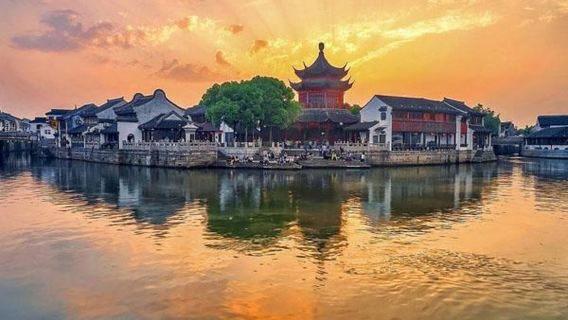
"In March when flowers bloom, head to Yangzhou." When visiting Yangzhou in spring, a trip to Slender West Lake is a must. This narrow stretch of waterway offers the perfect blend of natural beauty and cultural heritage. Stroll along the banks to admire scenic views, explore historic pavilions adorned with classical poetry and paintings, or cruise the lake by boat to experience the leisurely pleasure Emperor Qianlong once enjoyed during his royal visits. The attraction is quite expansive, stretching from the Great Rainbow Bridge in the southeast all the way north along the lake to Guanyin Mountain, passing dozens of attractions along the way. There are four main entrances (east, south, west, and north), with most visitors starting their tour at the south entrance on Great Rainbow Bridge Road. This renowned lakeside garden boasts breathtaking natural views. In spring, the area is shaded by lush willows and adorned with camellias, pomegranates, azaleas, and peach blossoms, attracting visitors from across the country to enjoy the seasonal blooms. For centuries, countless literati have lingered here, composing poetry and creating paintings that left behind numerous artistic treasures and stories. The site also features many landscape structures ingeniously designed to harmonize with its natural surroundings. The Five Pavilion Bridge in Shugang Slender West Lake Scenic Area is the iconic attraction with over 200 years of history. Featuring five wind pavilions atop, each of the bridge's fifteen arches cradles a moon during full moon nights. Another renowned attraction is the Twenty-Four Bridge, inspired by Du Mu's poetic line "Where is the jade-like beauty teaching flute-playing on the moonlit Twenty-Four Bridge?" While the original bridge no longer exists, visitors can admire its reconstructed version today. This was also a stop during Emperor Qianlong's southern tours in the Qing Dynasty. Architectural views like the Great Rainbow Bridge, Slender West Lake Scenic Area's Fishing Terrace, White Pagoda, and the Twenty-Four Bridges' Xichun Platform all bear inseparable historical anecdotes connected to Emperor Qianlong. During summer nights, the illuminated pavilions and moonlit reflections on the lake create a magical atmosphere. The nightlife experience here is entirely boat-based, offering a relaxing way to beat the summer heat while enjoying gentle lake breezes.Yangzhou · 39.6km from Yangzhong

Kouan Wood Carving Mansion Scenic Area
The Kouan Ornamental Building Scenic Area (Chaixu Ancient Town) is located at the south side of Wuyi Bridge on Jingang South Road in Taizhou City's Gaogang District. There are pavilions, boats, wood carvings, brick carvings and stone carvings. Each has its own characteristics. All are masterpieces of art. Films such as "From Slave to General," "Snowless Winter," and "Eastern Advancement Overture" were all filmed here. In 2002, the Kouan Ornamental Building was recognized by the People's Government of Jiangsu Province as a provincial-level cultural relics protection unit.Taizhou · 10.7km from Yangzhong

Geyuan Garden
Geyuan Garden was built in the Qing Dynasty on the site of the former Shouzhi Garden of the Ming Dynasty. At the time, the garden was planted with bamboo. Because the bamboo leaves were shaped like the Chinese character for “Ge”, the garden was thus called “Ge Garden.” The four rockeries in the garden are very unique; after making it around the garden, it's as if the visitor has experienced spring, summer, autumn, and winter. Geyuan Garden is not large and can be divided into three areas: the northern bamboo viewing area, the central flower garden, and the southern residential area. Compared with other traditional Chinese gardens, the essence of Geyuan Garden lies in the art of the rockeries with the theme of the four seasons. In addition to the rockeries, walking in the northern bamboo forest is a very pleasant experience. Even during hot summer days, walking in the green bamboo forest often feels quite cool.Yangzhou · 37.9km from Yangzhong

He Garden
He garden, originally named Jixiao villa, is the crowning masterpiece among Yangzhou's private gardens. It is a national key cultural relics protection unit and a national AAAA-level tourist attraction, and was named among the first batch of national key parks alongside Beijing's Summer Palace and Suzhou's Humble Administrator's Garden. The most distinctive architectural feature of He garden is its 1,500 m double-decker corridor, renowned as the "first corridor under heaven," which creates both the convenience of interconnected pathways and the beauty of winding variations. Experts consider it the prototype of China's modern overpasses. Another highlight is the "first mountain under heaven" in Pianshi mountain house, a unique rockery masterpiece created by the great painter-monk Shitao. Famous scholar Yu Qiuyu remarked that in the history of Chinese gardening, Pianshi mountain house is something to look up to. Contemporary experts in ancient architecture and gardens like Tong Jun, Liu Dunzhen, Pan Guxi, Luo Zhewen, and Chen Congzhou have all praised He garden's unique gardening techniques, calling it "a solitary example among Jiangnan gardens." Mr. Luo Zhewen even inscribed it as "the first garden of the late Qing dynasty." Stepping into He garden is like entering a magnificent historical and cultural scroll. It reveals the complex psychological journey of a legendary figure who was simultaneously an official, salt merchant, recluse, and educator. It vividly portrays the rise and fall of an aristocratic family transitioning from feudalism to enlightenment, and it brings to life the rich supplementary stories of China's turbulent modern history.Yangzhou · 36.8km from Yangzhong

Zhenjiang Beigushan Scenic Spot
Zhenjiang Beigushan Scenic Spot is home to a temple that features in the famous Chinese historical novel Romance of the Three Kingdoms. It was here that the warlord Liu Bei met the Chinese noble Lady Sun. For generations, the park has attracted visitors who wish to follow in the footsteps of these famous characters. Behind the temple are a number of buildings that offer a spectacular view over the Yangzte River and the surrounding hills.Zhenjiang · 32.1km from Yangzhong

Jiaoshan Mountain
Jiaoshan is a small hill located on the banks of the Yangtze River. It is home to a large collection of ancient trees, stone inscriptions, and temples. Dinghui Temple is located on of the hill. The Qing dynasty Qianlong Emperor stayed here during a visit to the south of China. The temple affords spectacular views over the Yangtze River. Next to the temple there is a collection of more than 400 ancient stone Chinese stele tablets, second only to Beilin Museum in Xi'an.Zhenjiang · 29.2km from Yangzhong

Yangzhou Ancient Grand Canal
Yangzhou Ancient Grand Canal refers to the section of the river from Zhuyuwan Scenic Area to Gaomin Temple. The area most sightseers visit lies between Yangzhou's Nanmen Wharf and Bianyimen Square Wharf. Along this section of road there are famous sights such as the Dongguan Street Historic Street and District. You can enjoy the sights on foot or by boat. There are good green areas beside the Ancient Grand Canal, where green willows gentely crept over the water, like poetic descriptions of Jiangnan. At night the riverside is lit up, the night scenery of which is beautiful.Yangzhou · 37.8km from Yangzhong

Jinshan Park
Mount Jin is divided into the two main areas of the Jinshan (Mount Jin) Temple on the east side and the Zhong Cold Springs on the west, separated by Yiquan Road. Jinshan Temple is the main attraction. Many famous stories take place at the Jinshan Temple. Madame White Snake Bai Suzhen magically flooded the temple, and famous female general Liang Hongyu beat the war drums here and led her army in a battle that would change the course of a war. When you climb Jinshan Temple, you can look out over the Zhenjiang cityscape. The Zhong Cold Springs are a living spring where you can still see chains of bubbles coming up out of the water.Zhenjiang · 36.1km from Yangzhong

Daming Temple
Daming TempleLocated on the central peak of Shugang Hill at the northwest corner of Yangzhou's Slender West Lake, this temple was named after its original construction during the Daming era (457-464 AD) of Emperor Xiaowu of the Liu Song dynasty. The current temple structure dates back to the Tongzhi period of the Qing dynasty. Before the renowned Tang dynasty monk Jianzhen embarked on his eastward journey to Japan, he resided here.Daming TempleThe temple gained fame for imparting scriptures and precepts. The entireDaming TempleThe complex is divided into three sections: the central area features the main temple buildings, the eastern part houses the Qiling Pagoda, and the western part consists of a landscaped rear garden called the West Garden. Visitors can tour the entire site by following the sequence: central → eastern → western sections.Daming TempleClimb up the gentle steps to the hill—only 28m above sea level—and you'll arrive atDaming TempleThe main entrance. There are many vendors selling incense along the mountain path, but do not purchase from them as outside incense is not allowed inside the temple. Incense can be obtained within the temple. The main temple buildings in the central area of the attraction are arranged along a north-south axis in three sections. From south to north along the central axis are the memorial archway, the mountain gate which also serves as the Hall of Heavenly Kings.Mahavira HallOn the west road, the main attraction is Ouyang Xiu. To the south is Pingshan Hall, built when Ouyang Xiu served as the governor of Yangzhou. Later, when Su Dongpo became the governor of Yangzhou, he constructed a memorial behind Pingshan Hall in honor of Ouyang Xiu.Gulin Hallto the north isOuyang ShrineThe abbot's quarters are located on the south side of the east road.Pingyuan TowerTo the north is the Jianzhen Memorial Hall, and to the east of the memorial hall isSutra LibraryAmong them, the Jianzhen Memorial Hall isDaming TempleAn important architectural site. Jianzhen attempted six voyages eastward, bringing Chinese Buddhism and culture to Japan. He presided over the construction of Tōshōdai-ji Temple in Nara, Japan, and passed away there. The Jianzhen Memorial Hall, built in the 1960s–70s, was modeled after Tōshōdai-ji. In front of the hall stands a white marble stele inscribed with "Monument to the Great Monk Jianzhen of the Tang Dynasty." At the center of the courtyard is a stone lantern gifted by the abbot of Tōshōdai-ji, forming a pair with another lantern at the temple. Inside the hall sits a camphorwood statue of Jianzhen in a seated posture, replicating his likeness at the time of his passing as depicted in Tōshōdai-ji. Opposite the memorial hall, the former Clear Sky Pavilion now serves as the Jianzhen Historical Exhibition Hall, where visitors can learn about his life through texts and images. To the east of the attraction stands the Qiling Pagoda, originally built by Emperor Yang Jian of the Sui Dynasty to celebrate his birthday. The current pagoda is a reconstruction based on the Sui-era design. This nine-story pagoda enshrines Buddhist relics and a camphorwood Buddha statue. Climbing to the top offers a panoramic view of the entire area.Daming TempleOverlooking the scenery of Slender West Lake and Yangzhou city. To the east and west of the Qiling Pagoda are the Bell Tower and Drum Tower respectively, while the Jade Buddha from Myanmar can be seen in the Reclining Buddha Hall to the north of the pagoda. The rear garden in the western part of the attraction, known as the Imperial Garden due to its connection with Emperor Qianlong's southern tours, features typical Jiangnan-style landscaping with rockeries, pavilions, and towers. At its center lies a release pond, with the Qianlong Imperial Stele Pavilion to the east housing three imperial steles. The pond contains the "Fifth Spring Under Heaven," a ranking given by Tang Dynasty writer Zhang Youxin in his work "Notes on Brewing Tea Water." A short walk south of the Qianlong stele leads to the "Fifth Spring" stone tablet and an ancient well.Daming TempleEvery December 31 features a lively "Bell-Ringing Ceremony to Welcome the New Year" with activity duration spanning midnight. Citizens gather in the temple to pray for peace and good fortune in the coming year while listening to 108 bell chimes at midnight. During each Bodhisattva's birthday or memorial day...Daming TempleReligious ceremonies are also held.Yangzhou · 41.7km from Yangzhong

Chui Mountain
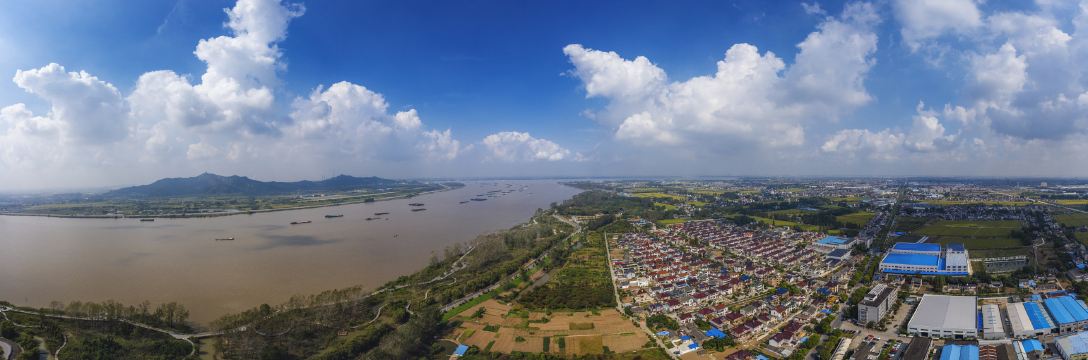
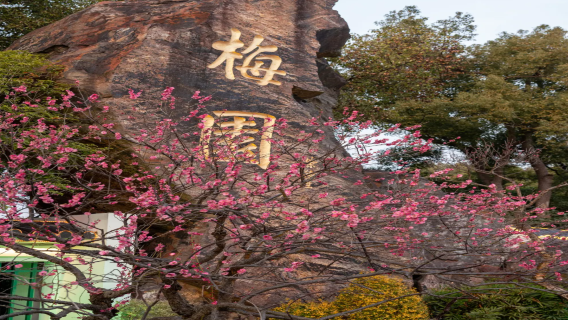
"Chui Mountain" was originally called Rui Mountain until one day, as the Qin Emperor Qin Shi Huang passed through the area and noticed the Imperial connotations surrounding the character "rui." He ordered that the symbol to the left of the "rui" character (meaning "king") be removed and that the remainder be enclosed with a "kou" symbol to prevent his Imperial splendor from departing into the land itself. Thus, the peak was renamed Chui Mountain. Chui Mountain stands guard over the Yangtze River and is also a gateway over Zhenjiang and Nanjing. Cannon emplacements at Huaishan during the Opium War of 1842 managed to repel and scatter the British invaders during the Battle of the Yangtze River.Zhenjiang · 8.5km from Yangzhong
Experiences you can't miss in Yangzhong
Featured Food & drink in Yangzhong
View all Food & drink
5.0/5
· 1 review· 48 bookedFree cancellation
Book now for tomorrow
FromPKR 12,339.55
33 booked
Free cancellation
Book now for tomorrow
FromPKR 4,637.69
5.0/5
· 3 reviews· 38 bookedFree cancellation
Instant confirmation
Book now for tomorrow
67 travellers saved
FromPKR 4,968.95
Free cancellation
Instant confirmation
Book now for tomorrow
FromPKR 12,339.55
5.0/5
· 4 reviews· 26 bookedFree cancellation
Instant confirmation
Book now for tomorrow
FromPKR 4,057.98
5.0/5
· 2 reviews· 48 bookedFree cancellation
Instant confirmation
Book now for tomorrow
FromPKR 7,784.68

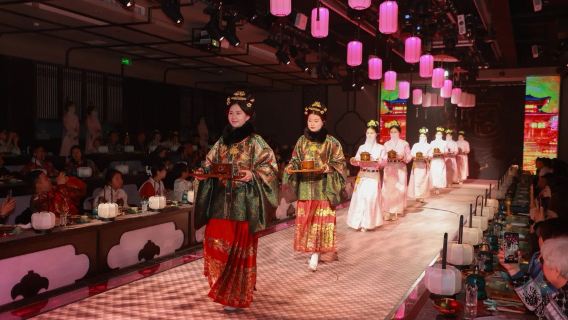
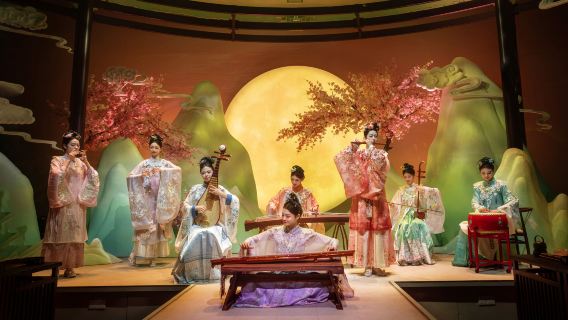
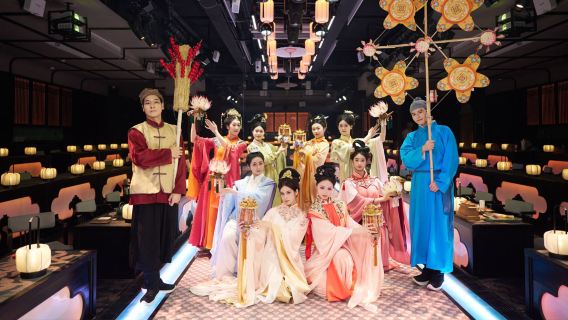
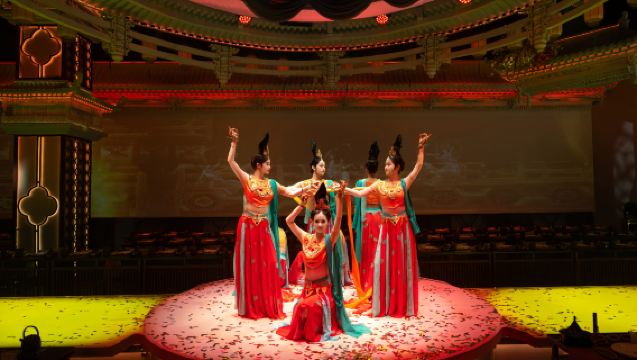
Jinling Dream Splendor: Ming Dynasty Themed Banquet +Hanfu Styling + Traditional Performances & Food
Free cancellation
Instant confirmation
FromPKR 28,902.70
Free cancellation
Instant confirmation
FromPKR 31,801.25
Featured Cultural experiences in Yangzhong
View all Cultural experiences
4.4/5
· 5 reviews· 81 bookedFree cancellation
Instant confirmation
Book now for tomorrow
FromPKR 1,863.36

1.0/5
· 1 reviewFree cancellation
Instant confirmation
Book now for tomorrow
FromPKR 6,542.45
Free cancellation
Instant confirmation
Book now for tomorrow
FromPKR 12,422.37
Free cancellation
Instant confirmation
Book now for tomorrow
FromPKR 22,318.85

Free cancellation
Instant confirmation
Book now for tomorrow
FromPKR 26,459.63

Free cancellation
Instant confirmation
Book now for tomorrow
FromPKR 27,908.91
Featured Outdoor experiences in Yangzhong
View all Outdoor experiences
Free cancellation
Instant confirmation
Book now for tomorrow
FromPKR 33,027.71

[Depart from Shanghai] Day Tour to Lingshan Giant Buddha and Taihu Lake: Private Charter Car Service
Instant confirmation
Book now for tomorrow
FromPKR 43,708.31

Free things to do in Yangzhong
Slender West Lake
Yangzhou · 39.6km from YangzhongImmediate access, Book now for today, Cancel anytimeKouan Wood Carving Mansion Scenic Area
Taizhou · 10.7km from YangzhongBook now for tomorrow, Cancel anytimeGeyuan Garden
Yangzhou · 37.9km from YangzhongImmediate access, Book now for today, Cancel anytimeHe Garden
Yangzhou · 36.8km from YangzhongZhenjiang Beigushan Scenic Spot
Zhenjiang · 32.1km from YangzhongImmediate access, Book now for today, Cancel anytimeJiaoshan Mountain
Zhenjiang · 29.2km from YangzhongImmediate access, Book now for today, Cancel anytimeYangzhou Ancient Grand Canal
Yangzhou · 37.8km from YangzhongJinshan Park
Zhenjiang · 36.1km from YangzhongImmediate access, Book now for today, Cancel anytimeDaming Temple
Yangzhou · 41.7km from YangzhongImmediate access, Book now for todayChui Mountain
Zhenjiang · 8.5km from Yangzhong
What travellers say about Yangzhong

Anonymous user20 October 2026
4.0
The performance was alright; it's worth seeing if you buy a package ticket, but individual tickets are a bit pricey. The audience seats face west, so I wouldn't recommend watching in the afternoon as the light is too harsh.
Slender West Lake

YoYo_D1l9r9b12 June 2026
5.0
The Carved Building at the Port is located in Gaogang, Taizhou. It's a private residence built during the Qing Dynasty. The building isn't large, but it's covered inside and out with wood and brick carvings. The beams and windows are decorated with scenes from operas and auspicious patterns. The garden has artificial hills and ponds, and a walk around it takes about an hour. The Jinshi Residence and the Sifang Building are also nearby and can be visited together.
Kouan Wood Carving Mansion Scenic Area
Anonymous user18 October 2026
5.0
Ge Garden in Yangzhou, a private residence of a salt merchant during the Qing Dynasty, is most stunning for its four-season rockery, a unique example within the garden. Within the garden, stones are stacked to represent the four seasons, while the bamboo groves offer tranquility and a different view at every turn. The garden connects to Dongguan Street, allowing visitors to experience the local life and atmosphere after exploring the garden, making it well worth a visit.
Geyuan Garden

M2q***p819 October 2026
5.0
He Garden (Jixiao Villa) truly lives up to its reputation as the "Number One Garden of the Late Qing Dynasty"—it's definitely worth a visit! The most stunning feature is its covered walkways and corridors, two stories high, interconnected like an ancient overpass. Even on rainy days, you won't get wet. Every step reveals a new vista, with various latticed windows framing the garden like paintings—every snapshot is a masterpiece.
The Pian Shi Shan Fang (Stone Retreat) is a unique example of rockery by the master Shi Tao, incorporating the ingenious concepts of "flowers in a mirror" and "moon in the water." The brick and wood carvings in the Shui Xin Ting (Water Pavilion) and Mu Dan Tang (Peony Hall) are exquisite, showcasing the fusion of Chinese and Western architectural styles of the late Qing Dynasty.
The garden is full of detail and rich in cultural heritage. A leisurely two-hour stroll is just right—highly recommended!
A guided tour is still necessary! A wonderful visit! Learned a lot!
He Garden
Anonymous user20 October 2026
5.0
A nice scenic area. It reminds me of the old poem "Lian Po is old, but can he still eat?" which I learned as a child. There's also Ganlu Temple and the story of Liu Bei's marriage proposal. However, the route markings within the scenic area are unclear. There are relatively few historical sites, and the newly built ones lack atmosphere.
Zhenjiang Beigushan Scenic Spot
Anonymous user15 October 2026
5.0
You need to take a ferry across the river. The scenic area is very comfortable, with cats everywhere, but also a lot of mosquitoes. You can also climb to the top of the tower on the mountaintop for a panoramic view of the Yangtze River and Zhenjiang. Dinghui Temple is always very popular with worshippers.
Jiaoshan Mountain

坎卢普斯张郃2 July 2026
4.0
The entertainment value was decent, but the lighting along the way seemed rather unremarkable, somewhat detracting from the ticket price. However, it's true that the actors worked very hard, considering the heat, the costumes, and the lighting – adding insult to injury. Thumbs up to these hardworking actors!
Yangzhou Ancient Grand Canal

远方啊远方啊远方17 October 2026
5.0
It's really good! The location is excellent, and it's incredibly crowded, but that's to be expected during the holidays. The overall ticket price is a bit high, but it's worth seeing. The view from the top is great! 😂😂😂😂
Jinshan Park

心静如水92712 October 2026
5.0
The ancient Daming Temple, with its thousand-year history, is adjacent to the Slender West Lake, boasting a tranquil environment with towering ancient trees. The Jianzhen Memorial Hall, designed by Liang Sicheng, exudes Tang Dynasty style. Climbing the Qiling Pagoda offers a panoramic view of the Slender West Lake and Yangzhou city, a truly magnificent vista. There's also Pingshan Hall and the Fifth Spring Under Heaven, combining Buddhist heritage with the literary atmosphere of Ouyang Xiu. The gentle chimes under the eaves bring a sense of peace. A visit to Yangzhou is definitely worthwhile.
Daming Temple

Matt just13 March 2025
5.0
• Unique natural landscape: Mount Qishan has rich ancient volcanic geological features, such as "36 cliffs" and "72 strange caves". The mountain is oriented north-south, and the main peak is about 200 meters above sea level. Although it is not towering into the clouds, its unique landform and rich vegetation make it a rare natural landscape. The mountains are lush with trees and the scenery varies in each season. After climbing to the top, you can overlook the confluence of the Yangtze River and Jiajiang River, as well as the thousands of acres of fertile fields and villages in Jingkou. When the weather is suitable, you can also see the sea of clouds rolling, like a fairyland.
• Profound history and culture: Mount Qishan has a long history. It was originally named Ruishan. Legend has it that Qin Shihuang believed that "Rui" had the aura of a king and changed its name. This is a battleground for military strategists. During the Opium War in 1840, the defenders of the Mount Qishan Pass Fort fought fiercely with the British army. Engels once highly praised the Battle of Zhenjiang. In addition, there is the Baoen Pagoda, the first tower of the Yangtze River, on the main peak, the thousand-year-old Shaolong Zen Temple at the foot of the mountain, and the Huayang Temple, which was built in the third year of Yuanjia in the Southern Song Dynasty.
• Rich leisure and entertainment: At the foot of the mountain, there is the Tuju Mountain RV Campground, where you can experience RV accommodation, and the camp will also hold bonfire parties and other activities. In addition, there are geothermal hot springs here, and you can go to the hot springs to relax when you are tired of climbing. Moreover, the scenic spot is open to the public for free, and it is cost-effective.
However, some tourists think that the mountain is small for people with a sports foundation, the environment on the top of the mountain is average, and there are many small vendors. But overall, the natural landscape and cultural landscape of the mountain complement each other, which can meet the needs of different tourists and is worth a visit.
The highlights of Mount Qishan mainly include natural landscapes, historical and cultural relics, leisure and entertainment, etc. The following is a detailed introduction:
Unique natural landscape
• Ancient volcanic geological features: Located in the Yangtze fold belt under the Yangtze platform, there are layered or nearly layered volcanic rocks, including perlite, zeolite and bentonite, etc., with "36 cliffs" and "72 strange caves", which integrate the four characteristics of majestic, dangerous, beautiful and strange
• Beautiful landscape: The mountain is steep and consists of Wufeng Mountain and Guishan Mountain, with an altitude of 285 meters and lush forests on the mountain. Climbing to the top, you can overlook the confluence of the Yangtze River and Jiajiang River, as well as the thousands of acres of fertile fields and villages in Jingkou, with a very broad view.
Rich historical and cultural relics
• Baoen Tower: Located on the top of Mount Qishan, it is the first tower seen from the Yangtze River from Wusongkou. It was built by Chen Guanyang, a Dongxiang person during the Chongzhen period of the Ming Dynasty, with the intention of encouraging diligence and gratitude.
• Ancient Fortress of Qishan: During the Opium War in 1840, the first shot of the peripheral battle to defend Zhenjiang was fired here. It formed a pincer attack with Jiaoshan Fortress and Xiangshan Fortress. It was an important gateway to the throat of the Yangtze River. It was listed as a cultural relic protection unit of Jiangsu Province in 1982.
• Shaolong Zen Temple: Located at the foot of Wufeng Mountain on the northern foot of Qishan Mountain, it was first built during the Baoli period of the Tang Dynasty. The temple has yellow walls and green tiles, and the sound of bells, drums and Buddhist chants is melodious. In 1983, it was listed as one of the top ten important temples in the province.
• Huayang Temple: Built in the third year of Yuanjia in the Southern Song Dynasty, it was originally named Renjing Temple. It was renamed Huayang Temple in the eighth year of Zhenghe in the Northern Song Dynasty. It is the largest Taoist holy place in Dongxiang, Zhenjiang. It has the Wei Fashi Stele, which is an important cultural relic in the history of Chinese stone carving
Chui Mountain


