





 4.6/5
4.6/5 Anonymous user
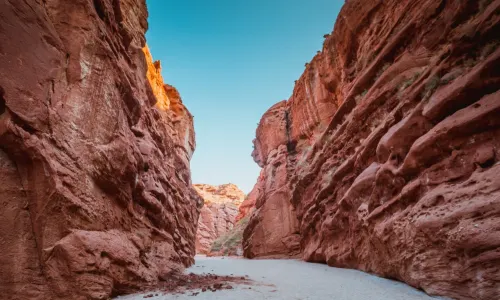
It's about an hour's drive north from Kuqa, and the scenery along the way is spectacular. You'll also pass the end marker of the Duku Highway. Camel riding and electric carts are available within the scenic area, but these aren't necessary for those with good mobility; a round trip takes 1-2 hours. Tickets are half price when purchased on Ctrip.
 4.7/5
4.7/5 克拉克米爾
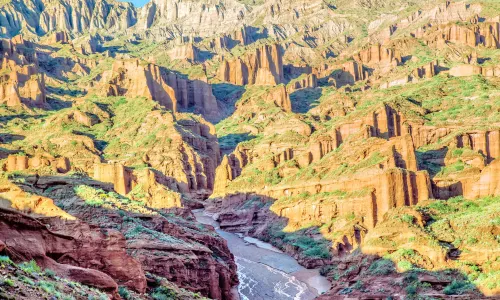
克拉克米爾You can drive your own car into the Tianshan Grand Canyon scenic area, stop wherever you want, and take photos wherever you want. The scenery here is truly unique.
 4.1/5
4.1/5 漫步小日记
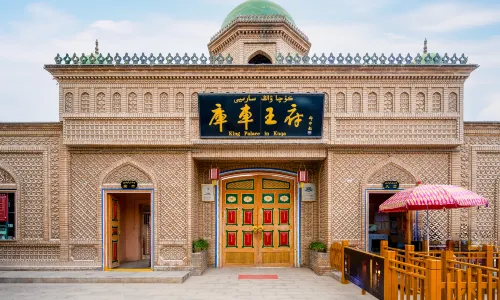
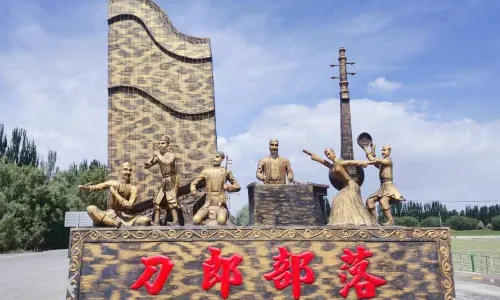
漫步小日记Once in Kuqa, a visit to the Kuqa Palace is a good option. It opens at 10:00 AM, and the opening ceremony begins at 10:30 AM. At the end, visitors are invited to dance together, and it's packed. Learn about the palace's history, take photos with the princess, and enjoy the beautiful gardens and a section of the ancient city wall. I highly recommend the freshly ground coffee, which is affordable and delicious.
 44.4/5
 M47***56
The theme is poplar trees and their spirit, and it tells the story of a group of primitive spiritualists who, amidst religious conflict, remain steadfast in their faith. The scenery is beautiful and well worth a visit. The entire tour takes about seven or eight hours. We spent five hours exploring, but still missed some attractions. It's perfect for family outings, with a botanical garden and zoo within the complex. Tickets are affordable.
 54.3/5
 M10***76
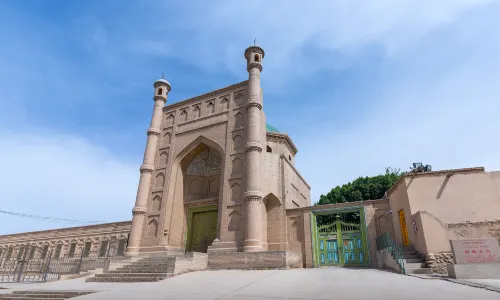
The Kuqa Grand Mosque is now a tourist attraction. It no longer has worship ceremonies for believers, so it is completely open to the public. It is still very interesting for non-believers who want to know what structures the mosque has.
 64.6/5
 旅游达人F4
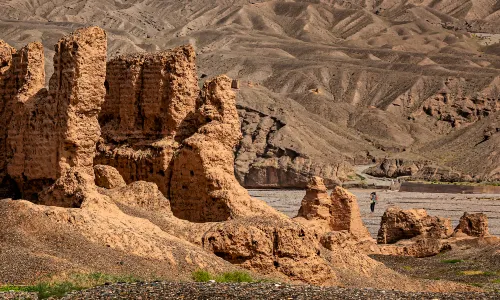
The Subashi Buddhist Temple Ruins, also known as the Zhaohuli Great Temple, are located 20 kilometers northeast of Kuqa City in Aksu Prefecture, Xinjiang Uygur Autonomous Region. Dating from the Northern and Southern Dynasties to the Tang Dynasty, the temple was first constructed during the Wei and Jin Dynasties and reached its peak during the Sui and Tang Dynasties. The site, centered around a pagoda, is surrounded by temples, caves, halls, monks' quarters, and other structures, all of which are relatively well-preserved. A river runs through the site, and the ruins are scattered on earthen mounds on the east and west banks of the river, designated the West Temple and the East Temple, with the main buildings concentrated in the West Temple. The Subashi Buddhist Temple Ruins are enormous and are the largest, best-preserved, and oldest surviving Buddhist architectural complex in Xinjiang. They possess significant historical, artistic, scientific, and social value, representing a prime example of earthen ruins in the arid region of northwest China and even in Central Asia. Their construction techniques encompass nearly all forms of earthen ruins. On November 20, 1996, the Subashi Buddhist Temple Ruins were designated as a fourth-batch National Key Cultural Relics Protection Site by the State Council of the People's Republic of China. On June 22, 2014, the Subashi Buddhist Temple Ruins were included in the World Heritage List as a site in the "Silk Road: Chang'an-Tianshan Corridor Road Network" jointly applied for by China, Kazakhstan and Kyrgyzstan.
 74.6/5
 202***80
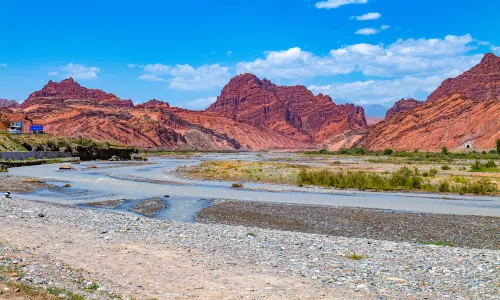
The scenery is quite nice, but the infrastructure of the scenic area is truly disappointing. While allowing private cars is convenient, there's a severe lack of signage. There are no road signs, and it's unclear which way to go at many intersections. The large rocks come in various shapes, and while the scenic area lists some names, there are no pictures or descriptions at their locations, so you have to guess which is which on the map. Such a large scenic area has only one restroom, and trash cans are extremely limited, leading to littering in some areas. Of course, the people littering are also quite inconsiderate.
 84.3/5
 吴青芸
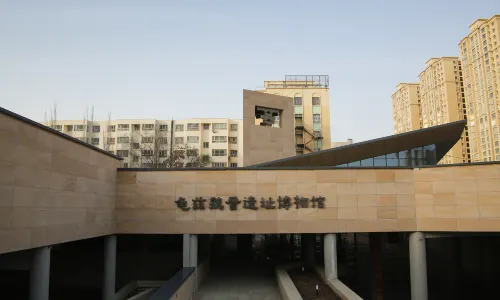
吴青芸@Aksu (Kuqa), Kucha Wei and Jin Dynasty Ruins Museum During the construction of Kuqa, this site was excavated, and the museum was subsequently established on the site. The exhibition hall offers scheduled guided tours (one at 2 p.m., I think) that are included with your admission ticket; no separate ticket is required. The entire hall utilizes 3D projection technology to explain the historical background and highlight key points of the exhibits. This innovative approach creates an artistic atmosphere, leaving a sense of spaciousness and depth. The museum uses objective evidence to demonstrate the spread and integration of ancient Kucha and Han civilizations, demonstrating the cultural significance of the ancient Silk Road.
 94.6/5
 M79***29
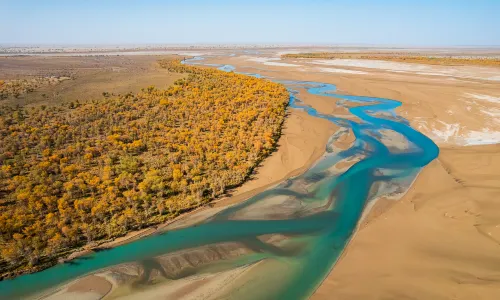
The Taklimakan Desert is located in southern Xinjiang and is the largest desert in China. The best tourist season is September to October when the temperature is moderate. It is recommended to experience desert camping, camel riding and watching the sunrise and sunset. Pay attention to sun protection and hydration. It is recommended to join a group tour to ensure safety. You can visit the Hetian Jade Market and the ancient city of Kashgar in the surrounding area. Special delicacies include roasted whole lamb and naan pit meat. The desert highway runs through the north and south, and the scenery along the way is magnificent.
 104.2/5
 游侠半仙
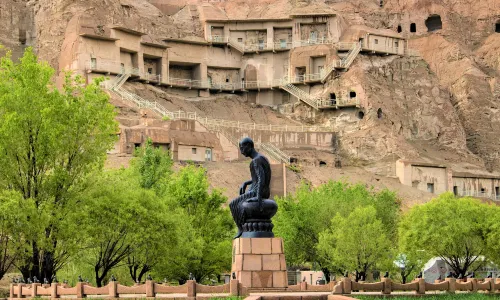
游侠半仙The largest Buddhist cave in Xinjiang, it was excavated between the cliffs on the banks of the Muzati River from the 4th to the 8th century, with 236 numbered caves. There are three types of caves: the Great Statue Cave, the Monk's Quarters Cave, and the Qiuci-style caves with spacious main rooms and two sides of the main wall opening to the back corridor. The Qiuci-style caves are the most numerous, with a picture of the heavenly palace preaching painted above the door wall, the stories of the Buddha's life painted in the squares on the left and right walls, and the stories of karma and the previous life painted in the diamond-shaped grids on the top of the vault. The outlines of the figures are mostly in the style of "bending iron and coiling silk", the skin is smudged, and the beams and rafters of the building are colored red and green to show the relationship between the front and back. [Fun] Religious belief activities. [Cost-effectiveness] The first batch of national key cultural relics protection units announced by the State Council in 1961.


 No. 1 of Family-friendly Attractions in Aksu Prefecture
 Kizilya Scenic Spot opens | Jun 28, 2024