





 4.7/5
4.7/5 _TI***0v
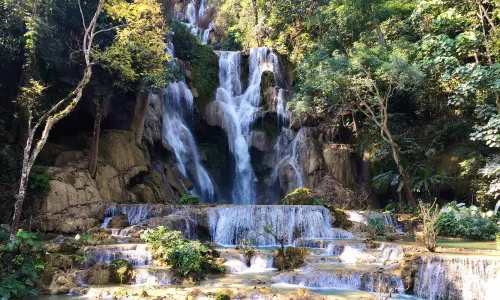
Kuang Si Waterfall – A Must-See Natural WonderKuang Si Waterfall is a stunning destination, perfect for photography and cooling off in its refreshing, turquoise pools. There are several natural basins where you can take a dip, making it a great spot to relax and enjoy nature.The location is a bit of a walk from the parking lot, but electric shuttles are available to take you close to the base of the waterfall. From there, it’s just a short hike. The trail is a dirt path, which can get slippery when it rains, so be cautious.The waterfall itself is quite unique—I’ve never seen anything like it anywhere else in the world. Its vibrant turquoise water and tiered cascades make it a truly memorable sight and a once-in-a-lifetime experience.The hike is easy for most, but it’s not accessible for wheelchairs. As for the viewpoint at the top, it’s hit or miss—some may find it scenic, but the real magic is definitely at the base of the falls.Entrance and parking fees are affordable, making it even more worth the visit.
 4.6/5
4.6/5 走遍天下XZ
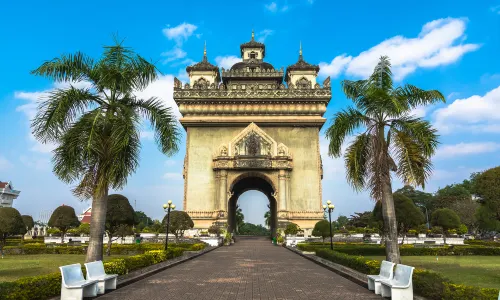
The most symbolic attraction in Vientiane, the capital of Laos, is the Arc de Triomphe, which was built to commemorate the country's independence and is located in the center of the entire city. It is said that between the airport and the Arc de Triomphe, the majority of the people chose to build the Arc de Triomphe first. At both ends of Lancang Avenue, one is the Presidential Palace and the other is the Arc de Triomphe. There is also the Prime Minister's Office next to the Arc de Triomphe. The square and the big fountain around the Arc de Triomphe are very beautiful. They were built with assistance from the Chinese government a few years ago. When the setting sun sets, it is also the most beautiful time for the Arc de Triomphe Square. Vientiane citizens bring their children to come and stroll around, and there is a peaceful scene. With the majestic gushing of the musical fountain ⛲️, the entire square also reached a climax. The happiest city, the happiest country, and the happiest people!
 4.5/5
4.5/5 一直在路上的猫
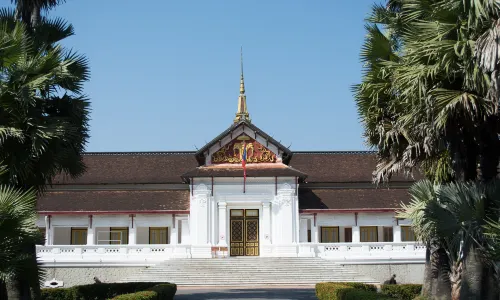
The Royal Palace of Luang Prabang, also known as the Royal Palace Museum, is a must-see attraction in Luang Prabang. The palace was built in 1904 as the residence of King Sisavongvong and has served as the residence of successive kings since then. After the Laotian monarchy was abolished in 1975, it was converted into a museum. Because of its French colonial past, the architecture has a strong French influence. It houses the main hall, meeting hall, and study. The palace is open daily from 8:00 AM to 11:30 AM and 1:00 PM to 3:30 PM, closing on Thursdays of every month. Admission is 60,000 kip. Long pants and long sleeves are required. Bags must be checked in when entering the inner halls. Phones are not allowed for photography. Listening to the guide's explanations is more interesting.
 44.4/5
 梨花落🍀
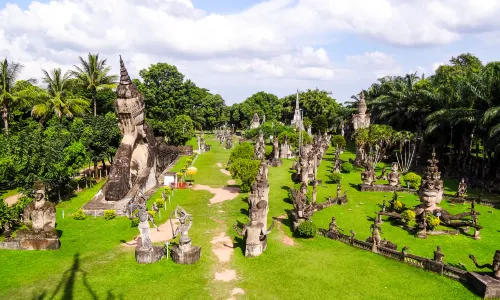
梨花落🍀Xiangkun Temple is also called the Ten Thousand Buddhas Park. The park is not very large. If you walk straight into the park, you will see the Mekong River at the end of the road, and Chiang Rai in Thailand is on the other side. There are various Buddhist and Hindu Buddha sculptures in the park, of different sizes and expressions. It is more like a stone sculpture park than a temple. The various sculptures are set off by colorful bougainvilleas and other tropical plants, making them more sacred and beautiful.
 54.5/5一直在路上的猫
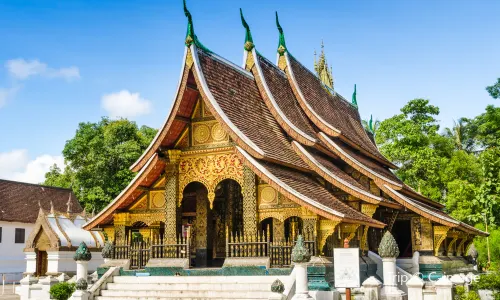
Wat Xieng Thong is Luang Prabang's most magnificent temple, built by King Setthathirath in 1560. It embodies classic Luang Prabang temple architecture. A magnificent Tree of Life motif is inlaid on the back wall, and ornate wooden pillars support a roof adorned with a Dharma wheel. Many local couples take artistic photos inside, perhaps wedding photos. The entrance fee is 30,000 thai dong (approximately 10,000 thai dong) and can be paid by credit card or cash. Listening to the tour guide's explanations is more interesting. The architecture and the artwork on the walls are all meaningful, and you can remove your shoes to visit the restaurant within the inner sanctum. The roadside ice cream on the way out is also delicious for 20,000 thai dong.
 64.4/5一直在路上的猫
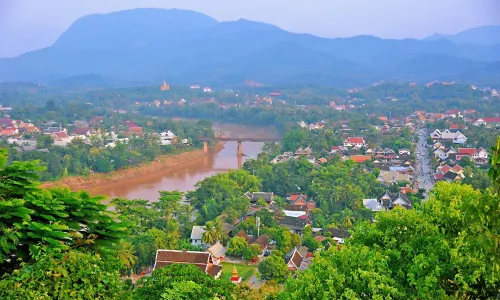
🌈 Mount Phousi is located at the highest point in Luang Prabang's old town, 100 meters above sea level. The climb to the top, with 329 steps, takes just over ten minutes. From the summit, you can overlook the Mekong River and the entire old town, making it a perfect spot for watching the sunrise and sunset. Admission is 30,000 local currency. The entrance is just off Foreigner Street. Climbing to the top, you'll find a temple and a prime photo spot. From the summit, you can enjoy the sunset and experience the tranquility and beauty of the town.
 74.5/5
 ariel423
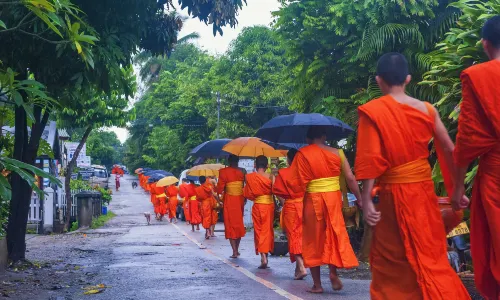
More than a decade ago, I wanted to go to Luang Prabang because I was attracted by a photo of alms. Now I finally have the opportunity to go. In order to see the alms, you need to get up early. The weather is super hot in summer. The only advantage is that it is bright when you get up early. After watching the alms, you can go directly to the morning market. Alms are the monks accepting food from people, but the monks only accept the amount they need, and then give the extra food back to other poor people who need it more. Feel the baptism of the soul and the power of faith in the simple ceremony.
 84.7/5
 俗话说呢好
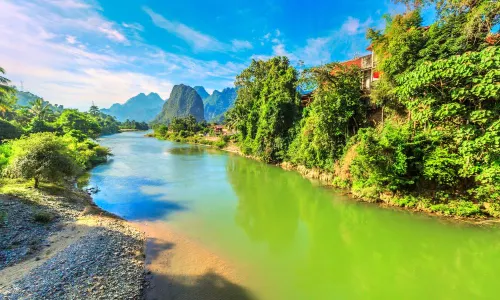
俗话说呢好Whether it is rafting long-tail boats or kayaking, they are all good activities. It is a good choice to avoid the rainy season. The cost of the project is not high. You can find a local merchant to choose your favorite day tour project. Let's go on a tuk-tuk.
 94.2/5一直在路上的猫
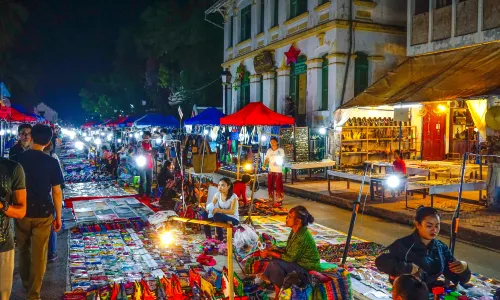
Sisavangvong Road, also known as Sisavangvong Road in English, is Luang Prabang's most distinctive and bustling street, and it's the place where most tourists wander. Due to its French colonial past, many buildings retain a strong French style while also incorporating local Laotian culture. The street boasts the famous Wat Xieng Thong. There's also a wealth of delicious food options, including cafes overlooking the Mekong River, affordable French restaurants, and authentic Laotian cuisine. At night, there's the Luang Prabang Night Market, and in the morning, you can watch the alms giving ceremony here. There are also money exchange shops, massage parlors, and more.
 104.6/5
 M43***18
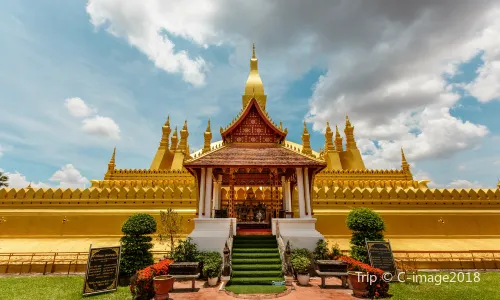
That Luang Temple is the most sacred Buddhist building in Laos and one of the national symbols. Its golden pagoda is 2. Historical background Origin: It was built in the 3rd century and was originally a small pagoda for worshipping Buddha bones. In the 16th century, it was expanded to its current size by King Saythathirat of the Lan Xang Kingdom. Reconstruction: After wars and colonial destruction, it was restored many times in the 19th and 20th centuries. The current appearance is the result of the restoration during the French colonial period in the 1930s. Symbolic significance: The That Luang pattern can be seen on the national emblem and currency of Laos, reflecting its national spirit and cultural core position. 3. Architectural features Main tower structure: The four-story base symbolizes the Buddhist "three realms" and "nirvana", the top lotus spire points directly to the sky, and the stupa-style tower body is inlaid with reliefs and religious patterns. Decorative details : The base of the tower is engraved with reliefs of Buddha statues, lotus flowers, mythical beasts, etc., and the murals in the corridors depict Buddhist stories and Laotian history. Attached buildings: The surrounding small Buddhist temples, scripture pavilions and Buddha statues are well preserved. Some buildings were newly built in recent years with a unified style. 4. Cultural significance That Luang Temple is not only a religious holy place, but also a symbol of Lao national identity. The That Luang Festival (Boun That Luang) in November every year is the grandest festival. Monks and believers from all over the country gather to hold ceremonies, parades and market activities, which are very lively. 5. Visiting experience Visual shock: The golden pagoda forms a sharp contrast with the blue sky. It is particularly magnificent at sunrise and sunset, which is suitable for photography. Cultural immersion: You can observe local believers praying and monks chanting scriptures, and feel the immersion of Buddhist culture. Suggestions for visiting: Avoid the scorching sun at noon, it is best to visit in the early morning or evening; the interior of the pagoda is not open, but you can visit around the outside. 6. Practical information Opening hours: 8:00-17:00 (daily) Tickets: 10,000 kip (about RMB 4) Transportation: Tuk-tuk takes about 15 minutes to reach the center of Vientiane, and the cost is less than 30,000 kip. Dress requirements: Wear long pants/long skirts, cover shoulders, and respect the etiquette of religious places. Duration of the tour: 1-2 hours (it is recommended to plan a half-day itinerary in combination with other temples in the surrounding area). 7. Precautions Respect customs: Avoid making noise, pointing at Buddha statues, and women should not touch monks. Sun protection and heatstroke prevention: The venue is open, and you need to prepare a hat, sunglasses, and drinking water. Guide service: You can hire an English guide at the entrance (about 50,000 kip) to explain the historical details in depth. Small vendors: There are stalls selling flowers, incense, candles and souvenirs outside the temple, and you can bargain appropriately. 8. Summary Recommendation Index: ★★★★★ That Luang Temple is a "must-visit place" in Vientiane and even Laos, with a heavy sense of history and visual impact. Although it is not as large as other famous temples in Southeast Asia, its sacred atmosphere and national symbolism are unique. Suitable for cultural enthusiasts, photography players and short-distance tourists. It is recommended to combine it with attractions such as the Vientiane Arc de Triomphe and Sisaket Temple to experience the charm of Laos. Tips: If you have enough time, you can participate in the That Luang Festival (during the full moon in November) to experience the most authentic religious culture and folk customs!
 Kuang Si Waterfall selected as one of the world's most beautiful waterfalls

 No. 1 of Night Attractions in Laos