





 4.8/5
4.8/5 jinranboy
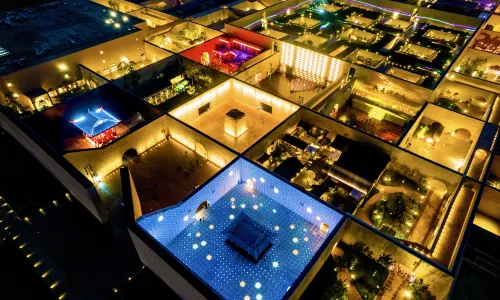
It's best to visit during the off-season, as you can enjoy the small theater performances at a more relaxed pace without the exhaustion of rushing from one show to another. The most difficult show to get a turn for, the red-faced one, only required a less than 30-minute wait; for most others, arriving a little early ensured a good viewing experience.
 4.4/5
4.4/5 彤彤公主的大保镖
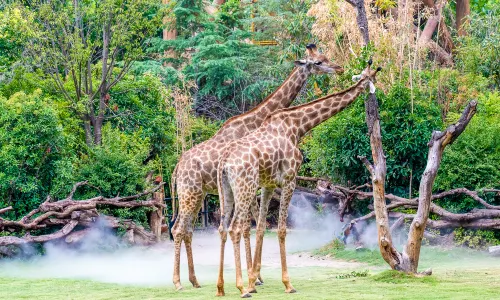
It's really good, one of the better ones in the province. It's like a zoo and amusement park complex. There weren't many people on the weekdays, so there was no need to queue. However, there aren't many animals at the moment, and the rides seem a bit noisy. I wonder if they'll disturb the animals?
 4.8/5
4.8/5 M52***87
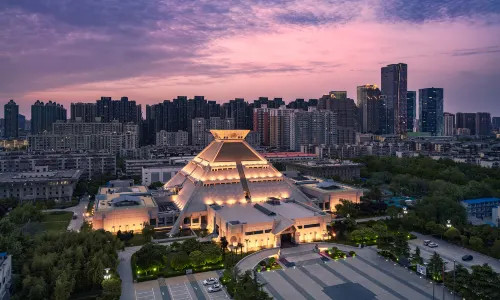
*The Analects, Yong Ye*: "When Confucius met Nanzi, Zilu was displeased. The Master swore an oath, saying, 'May Heaven punish you for what you have done! May Heaven punish you!'" The painting of Nanzi in *The Sacred Sites* is rather mediocre… This was a beauty who made Confucius exclaim, "I have never seen anyone who loves virtue as much as he loves beauty!" The State of Wei married many beauties from the State of Qi (the famous Zhuang Jiang and Xuan Jiang). Nanzi herself was a princess of the State of Song, so she should be considered a relative of Confucius? *Records of the Grand Historian* The *Annals of Confucius* states: "The wife of Duke Ling of Wei, a woman named Nanzi, sent someone to tell Confucius, 'Gentlemen from all directions who do not wish to be brothers with my lord must see my wife. My wife wishes to see you.' Confucius declined, but was forced to go. The lady was behind a fine curtain. Confucius entered, faced north, and bowed. The lady bowed twice from behind the curtain, her jade pendants jingling softly. Confucius said, 'I had previously refused to see her, but now I return the courtesy.'" Perhaps Nanzi herself wore such exquisite jade pendants back then. (Henan Museum) The main exhibition hall features more exquisite jade pendants unearthed from the Guo State cemetery in Sanmenxia, as well as jade pendants, bracelets, and rings from the Ying State cemetery in Pingdingshan. Nanzi could perhaps be referenced from Zhou Xun's portrayal in the film (however, the costume was too abstract...). Confucius is played by Chow Yun-fat... Yan Hui seems to be played by Ren Quan... The famous Mi Zixia (the one who shared the peach, actually Duke Ling of Wei's male favorite—considering Duke Ling was surrounded by beauties...) doesn't appear in the film.
 44.8/5
 Anonymous user
I had a great experience at Zhengzhou Fantawild Adventure. The park was at a low peak period, so there were very few people — which made the visit even more enjoyable with almost no queues. The weather was perfect, and all the rides were fun and worth trying. It was also very easy to get to the park. We bought our tickets from Trip.com, which was easy, breezy, and cheaper than purchasing on-site. Overall, it was a smooth, enjoyable, and hassle-free visit!
 54.7/5
 河洛一粟
河洛一粟It's a lot of fun, great value for money, and there are shows. It gets quite crowded on weekends. The security check at the entrance isn't like what you see online, where you can't bring this or that. It's just a normal security check, very simple.
 64.4/5
 春暖花开Y0518
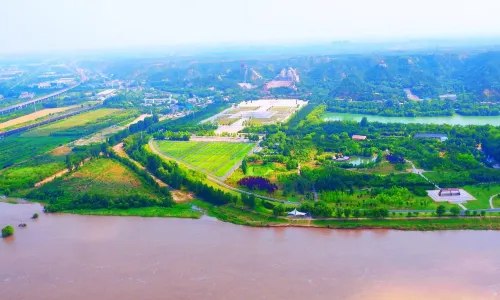
Review: Guangwu Mountain Scenic Area, Zhengzhou, Henan Guangwu Mountain, a historically significant mountain standing north of Xingyang, Zhengzhou, bears the dual charm of a thousand years of war and natural wonder. It is not only a landmark mountain marking the boundary between the middle and lower reaches of the Yellow River, but also the epic stage for the Chu-Han Contention, hailed as "China's First Ancient Battlefield Site." Here, history and nature intertwine, every inch of land whispering ancient stories. I. A Strategic Location in the Long River of History Guangwu Mountain's geographical location is a natural barrier, bordered by the Honggou Canal to the east, Xingyang to the west, the Yellow River to the north, and Songyue Mountain to the south. Its main peak, at 247 meters above sea level, is not particularly high, but its strategic location controlling the Yellow River crossing and the throat of the Central Plains made it a coveted spot for military strategists throughout history. During the Chu-Han Contention, Liu Bang and Xiang Yu confronted each other here, leaving behind the legend of "the Honggou Canal as the boundary." From the Han Dynasty onwards, Guangwu Mountain became a military fortress between Luoyang and Chang'an, witnessing countless bloody battles. Even today, the ruins of the Han-Ba King's City atop the mountain still tell the story of that magnificent history. The remaining city walls and rammed earth foundations seem to transport visitors back to an era of war and conquest. II. Harmonious Coexistence of Nature and Culture The natural scenery of Guangwu Mountain is equally captivating. From the summit, the Yellow River meanders eastward like a golden ribbon, forming a magnificent panorama with the majestic green mountains. The mountains are densely vegetated, with evergreen pines and cypresses, offering different scenery in each season: blooming wildflowers in spring, shady greenery in summer, vibrant autumn foliage, and a pristine white landscape in winter. The Peach Blossom Valley Scenic Area of Sanhuang Mountain is a highlight; when the peach blossoms are in full bloom, the pink and white petals fall in the wind, creating a scene of ethereal beauty. Furthermore, Guangwu Mountain marks the boundary between the middle and lower reaches of the Yellow River. The "Yellow River Middle and Lower Reaches Boundary Marker" at the summit has become a popular spot for tourists, symbolizing the geographical shift from a powerful to a gentler terrain. III. Profound Cultural Heritage Guangwu Mountain is not only a battlefield but also a cultural highland. The Guangwu Mountain Scenic Area at the summit integrates historical sites, ecology, and leisure. The Han-Ba Er Wang Cheng Museum displays unearthed artifacts, vividly recreating the historical scene of the Chu-Han Contention. At the foot of the mountain lies Taohuayu, named for its peach blossoms, and the legend of the "Peach Blossom Fairy" adds a romantic touch to the landscape. Guangwu Town, known as the "Hometown of Chinese Poetry," nurtured cultural figures such as Liu Yuxi. His poem, "A mountain is not famous for its height, but for the immortals who dwell there," aptly describes Guangwu Mountain—though not a precipitous peak, it is renowned worldwide for its history and culture. IV. Diverse Modern Tourism Experiences Today, Guangwu Mountain has become a popular destination for tourists around Zhengzhou. Visitors can hike up the mountain, experiencing the exhilaration of "Ascending to the summit, one can survey all the mountains below"; explore the Han-Ba Er Wang Cheng ruins, touching the warmth of history; or stroll through Taohuayu, enjoying the dual gifts of nature and legend. The scenic area boasts well-developed facilities and convenient transportation, just a one-hour drive from Zhengzhou. Whether you're a history buff, a nature explorer, or a family, you're sure to find something to enjoy here. V. Conclusion: A Mountain's Millennial Echo Guangwu Mountain, this "small" mountain at 247 meters above sea level, has become a shining pearl on the Central Plains due to its profound history and natural beauty. It is not only a witness to the Chu-Han Contention but also an epitome of Yellow River culture. Here, history is no longer just words in books but tangible city walls and legends; nature is no longer distant scenery but the breath of every inch of land beneath your feet. Guangwu Mountain is worth every traveler's visit to listen to its millennial echoes. Highlights: Historical Depth: Centered on the Chu-Han Contention, it connects the military and cultural threads of past dynasties. Integration of Nature and Culture: Highlighting distinctive landscapes such as the Yellow River boundary and Peach Blossom Valley, it strengthens cultural legends. Modern Values: Emphasizing convenient transportation and diverse experiences to attract different tourist groups. Language Style: Combining poetic and rational elements, it possesses both the grandeur of "clashing swords and galloping horses" and the gentle beauty of "blooming wildflowers." Guangwu Mountain, a mountain that encapsulates half of history. With its silent city walls and the surging Yellow River, it tells the eternal story of the Central Plains.
 74.5/5
 M75***22
I just don't understand why the music is so loud that it almost breaks my eardrums. As soon as the child goes in, he starts clamoring to get out. I coaxed him to watch a few shows, but he covered his ears the whole time.
 84.6/5Anonymous user
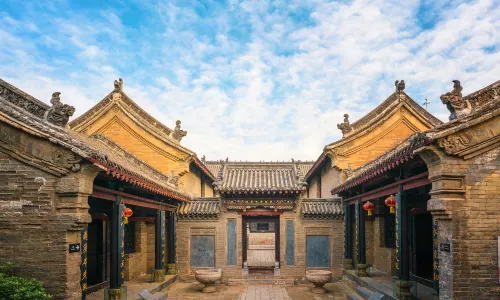
The name "Kang Baiwan" (meaning "Kang the Millionaire") originated from a jest by Empress Dowager Cixi about the Kang family, who were known as the "Living Gods of Wealth in Central China," but the name spread far and wide. The Kang Baiwan Manor, a nationally renowned manor of the wealthy, is now open to the public as a tourist attraction, showcasing a Ming and Qing dynasty manor complex. Facing the Luo River and backed by Mount Mang, the manor's feng shui is undoubtedly auspicious, and the decades-long inheritance of wealth is truly a remarkable story. The manor is not only vast but also incredibly complex. Courtyards connect to courtyards, main roads to side paths, winding and twisting, even revealing secret passages leading up the mountain and hidden treasure vaults—a truly eye-opening experience. There are also performances every day at 11 am, offering a deeper understanding of the history of the Republic of China era, which is quite moving.
 94.6/5
 hucuifang
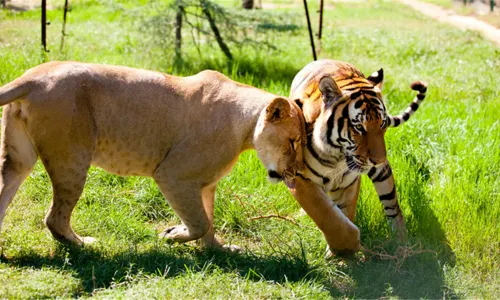
Construction was underway everywhere, with green corrugated iron sheets surrounding the area, making the experience less pleasant than usual. However, it was still worthwhile as a place to take a walk and see the animals along the way. I strongly recommend going after 2 PM; I went around 12 PM, and the animals were all taking their afternoon nap.
 Featured in 2026 China 100 - Night Attractions
