UK Trains New User Gifts 2% off trains
  • 2% OFF

    UK Train New User Promo Code

    2% OFF UK Train New User Promo Code

    Jun 19, 2024-Jan 1, 2027

UK train ticket types explained

Choosing the right UK train ticket comes down to balancing your budget with your need for travel flexibility. Compare the restrictions, savings, and ideal use cases for each fare type below to secure the best value for your journey.

Ticket TypeTime restrictionsFlexibilityWhen to bookPrice & SavingsBest for
AdvanceFixed train & dateLowBook earlyUsually cheapestFixed travel plans
Off-PeakOff-peak timesMedium - HighAnytime before travelCheaper than AnytimeFlexible schedules
Super Off-PeakMore restricted off-peak timesMedium - HighAnytime before travelOften very low faresQuieter travel times
AnytimeNoneHighestAnytimeUsually most expensiveMaximum flexibility
Open ReturnReturn within ticket validityHighBefore or close to travelPay more for flexibilityUncertain return plans
Season TicketGenerally none during validityVery HighWhen traveling regularlySignificant savings for frequent travelRegular commuters

How to Buy Cheap Train Tickets with Trip.com

Get up to 23% off your Railcard & save 1/3 on UK train fares
Purchasing a digital Railcard with Trip.com just got even better. For a limited time, enjoy 23% off 1-year Railcards and 10% off 3-year Railcards.
Browse various Railcards available for different ages, locations and purposes and work out which suits you. Best of all, you can conveniently store it in your Trip.com app, so you never have to worry about losing it.
Check out our extensive UK Railcard guide here, where you can find your perfect Railcard match, explore FAQs, and begin saving today. Choose the right Railcard for you below and get yours at up to 23% off!
*Average savings are based on Railcard holders using Railcards to book tickets on Trip.com between April 2023 and March 2024. This calculation excludes the price of the Railcard itself and applies only to selected train fares.

Trains to UK airports

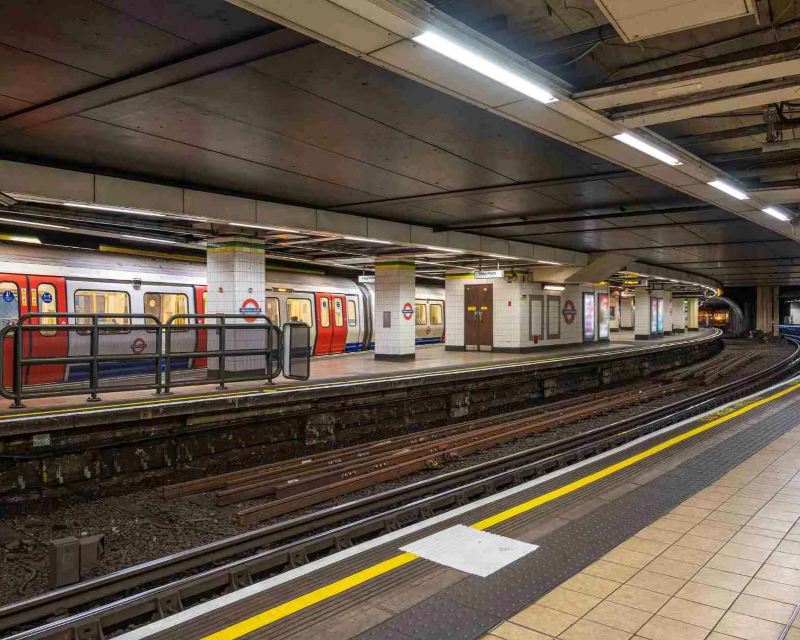
  • Trains to Heathrow Airport

    Trains to Heathrow Airport

    • Heathrow Express: Around 15 minutes from London Paddington to Heathrow Terminals 2 & 3; around 21 minutes to Terminal 5.
    • Elizabeth line: Direct services from central and east London, serving Heathrow Terminals 2 & 3, Terminal 4 and Terminal 5. A useful option for travellers staying away from Paddington.
    • Piccadilly line: Direct London Underground services to Heathrow, with stations serving Terminals 2 & 3 and Terminal 5, plus Terminal 4 services. Generally useful for travellers prioritising accessibility to the Tube network rather than the fastest journey.

    Our expert tip: Check which Heathrow terminal your flight departs from before booking. Terminal 2 & 3 are served by a shared station, while Terminal 4 and Terminal 5 require passengers to use their respective stations, so a bit of planning goes a long way.
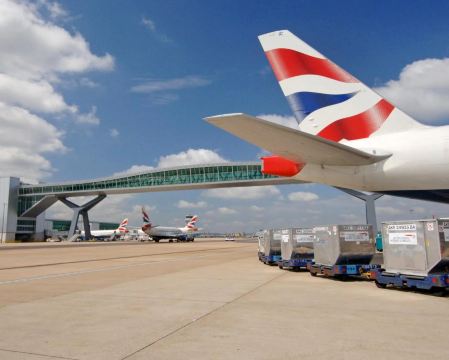
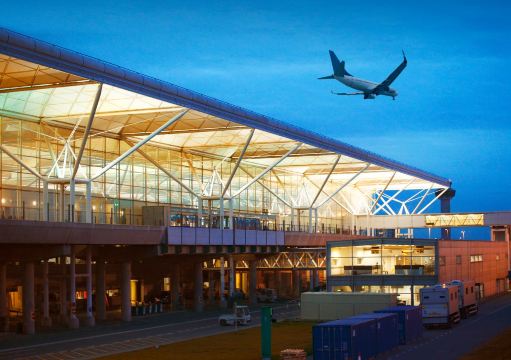
  • Trains to Gatwick Airport

    Trains to Gatwick Airport

    • Gatwick Express: Direct services between London Victoria and Gatwick Airport, taking around 30 minutes.
    • Southern: Regular services between London Victoria and Gatwick Airport, with journey times varying by service.
    • Thameslink: Direct services from stations including London Bridge, Blackfriars, City Thameslink and St Pancras International, offering convenient connections from different parts of London.

    Our expert tip: Gatwick Airport station is next to the South Terminal. If your flight departs from the North Terminal, allow extra time to use the free inter-terminal shuttle. Although it takes only two minutes, there will be time taken reaching the platform and potential queues to consider.

  • Trains to Stansted Airport

    Trains to Stansted Airport

    • Stansted Express: Direct trains between London Liverpool Street and Stansted Airport, taking around 48 minutes. Services also connect with Tottenham Hale, which offers access to the Victoria line.
    • Greater Anglia: Other rail services operate on parts of the route, but Stansted Express is the main dedicated airport service from London.

    Our expert tip: Stansted Airport railway station is directly beneath the terminal, so you won't need a separate shuttle bus after arriving by train. If you're travelling from elsewhere in London, remember to include the time needed to reach Liverpool Street or Tottenham Hale, though.

  • Trains to Luton Airport

    Trains to Luton Airport

    • Thameslink: Direct services connect Luton Airport Parkway with central London stations, including St Pancras International, Farringdon, City Thameslink and London Blackfriars.
    • East Midlands Railway: Services connect Luton Airport Parkway with London St Pancras International and destinations across the East Midlands.
    • Luton DART: This automated shuttle connects Luton Airport Parkway railway station to the airport terminal in around four minutes.

    Our expert tip: Remember to factor in the Luton DART transfer when planning your journey. Luton Airport Parkway is the railway station, not the terminal, so always allow extra time to reach check-in.

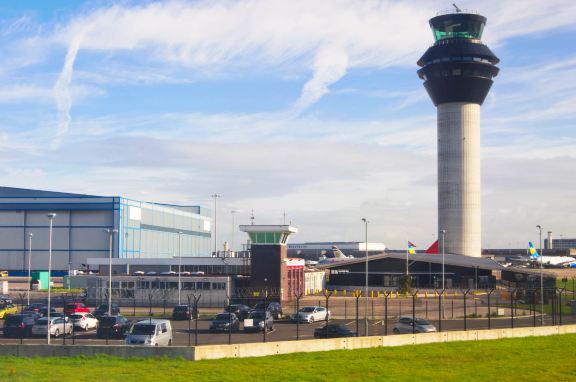
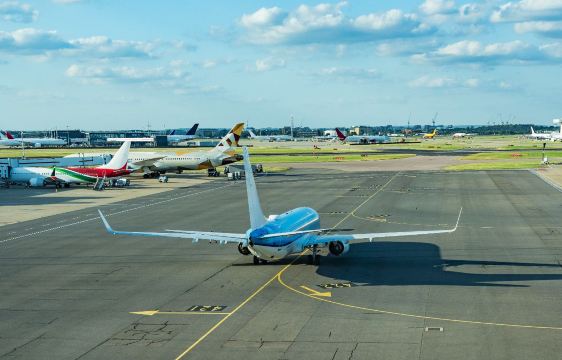
  • Trains to Manchester Airport

    Trains to Manchester Airport

    • TransPennine Express: Direct services connect Manchester Airport with Manchester Piccadilly and destinations across northern England and beyond.
    • Northern: Regular trains connect Manchester Airport with Manchester Piccadilly and other destinations across the North West.
    • Transport links to the terminals: Manchester Airport railway station is connected to the airport terminals by walkways, with the transfer typically taking around 5–15 minutes.

    Our expert tip: If you're travelling from Manchester city center, the train journey to Manchester Airport takes around 20 minutes, with services running approximately every 10 minutes. I'd recommend allowing additional time to walk from the station to your terminal.

Navigating UK train stations and boarding guide

How to board a UK train with an e-ticket

How to board a UK train with an e-ticket

The Basics: Your e-ticket is displayed on your smartphone and scanned at station ticket gates or shown to train staff during your journey. Open your ticket on the Trip app before reaching the station and make sure the barcode or QR code is clearly visible.

At stations with ticket gates, hold the barcode against the reader as instructed and wait for the gate to open. Keep your ticket accessible until you have completed your journey, as you may need to show it to a conductor or ticket inspector onboard.


Trip.com pro tips:
Kieran Read
Prep your screen
Kieran Read

Turn your phone's screen brightness up before scanning your e-ticket, and avoid placing the barcode too close to the reader. If it doesn't scan the first time, try adjusting the angle or distance of your phone. Don't worry if you're still having trouble - there are usually staff at larger stations who can check your ticket or scan it manually.

Lauren Ryan
Check your battery
Lauren Ryan

If your phone battery is running low, make sure your ticket is downloaded or readily accessible before boarding. If you cannot display your ticket, speak to station or train staff as soon as possible rather than boarding without a valid ticket.

Understanding platforms & departure boards

Understanding platforms & departure boards

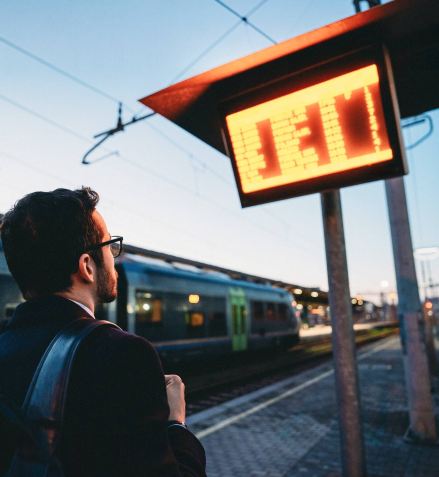
The Basics: UK train platforms are rarely confirmed hours in advance, particularly at busy stations, so check the main departure screens around 20 minutes before (and then regularly) for your train's latest platform, departure time and status. At larger stations, listen for announcements and follow the signs to your platform once it is confirmed.

Departure boards typically show the destination, scheduled departure time, calling points, platform number and any delays or cancellations. Some stations may also display coach information, which can help you find your reserved seat or First Class carriage.


Trip.com pro tips:
Kieran Read
Double-check your platform
Kieran Read

Don't rush straight to a platform just because you know where your train usually departs from as platforms can change at short notice. At major stations, always ensure you check the departure board again after reaching the platform, particularly if your train is due to split en route or has multiple destinations.

Lauren Ryan
Locate your seat early
Lauren Ryan

If your ticket includes a seat reservation, be sure to check the coach and seat number before boarding. At busy stations, knowing your coach in advance can help you position yourself on the platform before the train arrives and can save any last minute panicking or scrambling!

UK station facilities & accessibility

UK station facilities & accessibility

The Basics: Facilities vary significantly between UK railway stations. Major stations typically have toilets, cafés, shops, waiting areas, ticket facilities, Wi-Fi and charging points, while smaller stations may have little more than a platform, shelter and ticket machine. Larger stations are also more likely to have lifts, ramps and step-free routes.

If you need step-free access, a boarding ramp or other assistance, it is best to arrange Passenger Assist in advance. Assistance can cover different parts of the journey, including navigating the station, boarding and changing trains.


Trip.com pro tips:
Kieran Read
Find quieter waiting areas
Kieran Read

Arriving early at a major station doesn't necessarily mean spending your time in the busiest part of the concourse. Look around the station for smaller cafés and quieter seating areas - many large stations have tucked-away spaces that are much calmer than the main departure hall.

Lauren Ryan
Verify station accessibility
Lauren Ryan

Check the accessibility arrangements for both your departure and arrival stations before travelling. A station may have step-free access to some platforms but not necessarily every route through the station.

What to expect on different UK train classes

The UK rail network is highly fragmented and can be tough to get your head around, with different train operators providing their own onboard facilities, seating arrangements and First Class benefits. As a result, the experience of travelling in Standard or First Class can vary considerably depending on your route and operator.

Below, we've covered general guidance rather than a guarantee of what you'll receive on every service - but we think it serves as a pretty useful rule of thumb. When booking your ticket with Trip.com, check the specific train's onboard facilities, seat reservation options and ticket conditions before travelling.

Standard Class

Standard Class

What to expect: Standard Class is the most common way to travel by train in the UK and provides the basic onboard rail experience. You will generally have a designated seat, although a seat reservation does not always come with every ticket and trains can become busy during peak periods.

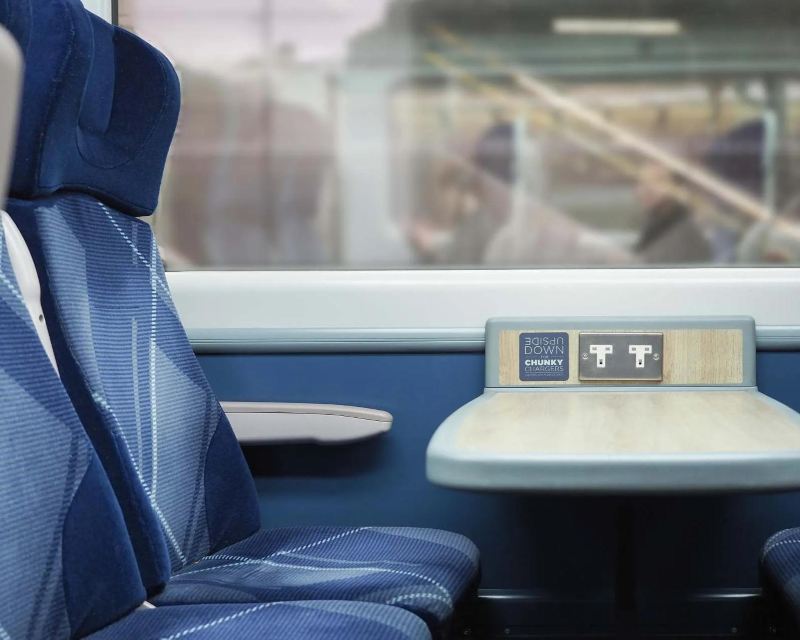
Depending on the train, expect a mixture of airline-style seats, tables, power sockets, luggage racks and overhead storage. Wi-Fi and catering are also available on some services but aren't guaranteed across the network.

Trip.com's insight: “Though it's tempting, don't put your headphones on and completely tune out the train announcements. On some UK services, the driver or conductor may announce important information about the journey, including where a train will divide. Be sure to keep an ear out even on established routes at least for a few minutes - it's unlikely anything will be different, but it's worth it for that rare occasion!”
First Class

First Class

What to expect: First Class offers a more spacious and premium experience, but the benefits vary considerably between operators and routes. On some long-distance services, such as LNER and GWR, First Class may include larger seats, more legroom, tables, power sockets and complimentary food and drinks. Selected operators also provide access to First Class lounges at major stations. For many others, it will simply be a more secluded area, so it's always worth checking as the exact benefits depend on the operator, route, time of day and train you're travelling on.
Trip.com's insight: “Don't assume First Class is always dramatically more expensive! On some weekend and off-peak services, the difference between Standard and First Class can be relatively small. If you're travelling at a quieter time, compare both fares before booking - you may find that the additional space and onboard service are worth the upgrade.”
Sleeper Train

Sleeper Train

What to expect: The UK operates two main overnight sleeper services: Caledonian Sleeper, connecting London with Scotland, and Night Riviera, connecting London Paddington with Cornwall. Unlike a conventional daytime train, sleeper services allow you to travel overnight in a dedicated sleeping accommodation or seated accommodation, depending on the ticket you book.
  • Caledonian Sleeper: Offers several accommodation options, from reclining seats to private rooms, including rooms with en-suite facilities on selected services. Routes connect London Euston with destinations including Edinburgh, Glasgow, Aberdeen, Inverness and Fort William.
  • Night Riviera: Runs overnight between London Paddington and Penzance, with seated accommodation and sleeper cabins available. The service provides an alternative to travelling to Cornwall during the day.
Trip.com's insight: “I'd recommend treating a sleeper train as part of the travel experience rather than simply a late departure. It may be a bit more expensive, but consider it two birds with one stone: no time wasted in the day travelling and a fairly unique experience all in one. Also, pack overnight essentials somewhere easily accessible rather than burying them in your main luggage. I've been caught out by this many times myself!”

Delay Repay

What happens if my train is delayed?

If you travel on a participating National Rail service and arrive at your destination later than scheduled, you may be entitled to compensation through Delay Repay. The amount you can claim depends on the train operator, your ticket type and the length of the delay. Delay Repay can apply regardless of what caused the delay, although individual schemes have their own eligibility rules and thresholds.

Importantly, compensation is generally based on how late you arrive at your final destination, rather than simply how late your train leaves its starting station. If your journey involves a connection, allow for the delay across your complete journey.

If your train is cancelled or delayed and you decide not to travel, this is generally handled as a ticket refund rather than a Delay Repay claim. If you travelled and were delayed, you may instead be able to claim compensation from the train company.

How to claim Delay Repay

You claim Delay Repay directly from the train operator, rather than Trip.com (or the retailer you purchased it from).

How to claim:

  1. Identify the train operator responsible for the service you travelled on.
  2. Visit its Delay Repay page and select the option to make a claim.
  3. Enter your journey details, including the date, route and scheduled service.
  4. Provide your ticket or booking information when requested.
  5. Submit your claim and wait for the operator to process it.
  6. Choose your compensation method, where options are provided.

For a greater breakdown of the process, check out our dedicated guide here. The exact compensation threshold and payment options vary between operators. Compensation may be paid by bank transfer, back to your payment card or in rail travel vouchers, depending on the operator and circumstances.

UK train travel guides

Looking for more detailed advice before booking your next UK train journey? Explore our collection of practical train travel guides for everything from train fares, Railcards and ticket types to luggage, seat reservations, station facilities and travelling with children. Whether you're planning your first UK train trip or regularly travel by rail, our guides provide useful information to help you book with confidence and make the most of your journey.

UK Train Travel FAQs

Are trains running today?

That depends, but unless it’s a specific Bank Holiday or there are Industrial Actions taking place, it’s highly likely trains are running today. If you’re concerned about a specific route, you can always check our Live UK Train Departures and Arrivals page, or keep an eye on our app for tickets you have purchased.

What are Off-Peak and Peak train times?

Off-Peak times, or simply when trains are at their least busy, can vary slightly between providers, so it’s always worth checking if you’re concerned, but typically Off-Peak train times are:

  1. Daytime (weekdays): 09:30-16:00
  2. Evenings (weekdays): Anytime from 19:00 onwards
  3. Weekends and Bank Holidays: Anytime

Peak times are roughly:

  1. Morning (weekdays): 06:30-09:30
  2. Evening (weekdays): 16:00-19:00

Want to know more about when to travel for the best fares or least crowded trains? Read our detailed guide on Off-Peak train times for all the essentials.

How to get cheap train tickets

We’re here to help you save as much as possible on your train journeys. Some of the easiest ways to rescue rail rates are:

  1. Book tickets in advance for the earliest rates
  2. Buy a Railcard for approximately ⅓ off ticket prices
  3. Buy a Season Ticket if you take the same route frequently
  4. Use Split Ticketing - we do this one automatically for you!
  5. Travel during Off-Peak times on weekdays

What is an Open Return train ticket?

An Open Return train ticket allows for flexible return travel within a specified time window - meaning you don’t have to pick a specific time on the return, though you often are required to pick a specific time for the outward journey.

This ticket type usually allows passengers the freedom to return within one calendar month and can be a bit more expensive, but it is perfect for passengers who are looking for flexibility or are unsure of their plans.

How fast do UK trains go?

Whilst this can vary between providers, most UK trains operate at speeds of up to 125 mph (200 km/h), though some can go as fast as 140 mph (225 km/h), especially if they are newer models (Southeastern’s 395 Javelin and GWR’s Class 800 IET), though typically won’t during regular services.

By quite a significant margin, the Eurostar is the fastest train service you can embark in the UK, achieving a speed of 186mph (300 km/h) along the HS1 high-speed line.

What platform is my train departing from?

You can work out which platform your train is on by checking your ticket on the app, by following our Live UK Train Departures and Arrivals page, or by checking the boards at the station’s terminal. Often, the platform number isn’t announced until a few minutes before departure, so don’t panic if you cannot see yours - just keep an eye out and wait patiently!

Where is my train?

Unfortunately, your train may be delayed or cancelled if it hasn’t arrived at its expected time. You can check the status of your upcoming journey by looking at the Ticket page on the Trip.com app or on our Live UK Train Departures and Arrivals page. You may be entitled to Delay Repay or compensation if so.

Alternatively, if you’re on board your service and not sure where you are, be sure to listen and look out for announcements regarding the next stop, or keep track of the journey with the Trip.com app by accessing the ticket page.

Do trains run on Boxing Day?

Most UK trains do not operate on Boxing Day, and those that do are typically on a very limited timetable. This is a popular time for major engineering works, so seeking alternative means of travel or keeping a close eye on any routes you’re planning to take is highly recommended.

Check our extensive guide on festive travel, including Boxing Day, Christmas Day (as well as the lead-up to the holidays) and New Year’s Day, too.

Can dogs travel on trains?

Absolutely! Most services allow for up to two dogs per passenger for free, though they must be kept on a lead or in a secure pet carrier and kept off chairs. For a more in-depth breakdown of whether pets are allowed on trains, check out our full guide here.

Why book train tickets on Trip.com?

  • Best Price Promise

    Best Price Promise

    Found tickets cheaper elsewhere? Let us know and we'll refund the difference*
  • key.train.uk.v2.home.why.book.split

    Split Tickets

    Save more by splitting up longer journeys.
  • National Rail Partners

    National Rail Partners

    Official train ticket sellers with 5-star customer service
  • No Booking Fees on the App

    No Booking Fees on the App

    Only pay for your train travel – no hidden fees