
Things to do in Daning
Explore top experiences
Top 10 attractions in Daning


Shaanxi History Museum
History background: Shaanxi History Museum is located in the northwest of the Dayan Pagoda in Xi'an. It is one of the landmark attractions of Xi'an. The museum was planned in 1983, started in the summer of 1986, and officially opened on June 20, 1991. It was named Shaanxi History Museum. In 2016, Shaanxi History Museum was selected as "China's 20th Century Architectural Heritage" by the Chinese Cultural Relics Society and the Chinese Architectural Society. Museum Features: Shaanxi History Museum is a large modern museum, and its completion marks a new milestone in the development of China's museum industry. This museum is a Tang-style building complex with a "central hall and four corner towers". The main and secondary buildings are well-organized, the heights are staggered, and the momentum is solemn. It integrates national traditions, local characteristics and the spirit of the times. The museum covers an area of 65,000 square meters, and houses more than 380,000 cultural relics ranging from simple stone tools used in the initial stage of ancient humans to various artifacts in social life before 1840, covering a time span of more than one million years. The cultural relics are not only numerous and diverse, but also of high quality and wide value. The collections in the museum are dazzling and exquisite. It is an art hall that showcases the history and culture of Shaanxi and ancient Chinese civilization, and is known as the "Pearl of the Ancient Capital, the Treasure House of China." There are many treasures in the museum, including bronzes from the Shang and Zhou dynasties, pottery figurines from various dynasties, gold and silver utensils from the Han and Tang dynasties, and murals from Tang tombs. Most of them are treasures from the prosperous periods of the Han and Tang dynasties, and some of them are fine items that are prohibited from leaving the country. Collection treasures: There are three exhibition halls in the center of the museum. The first exhibition hall displays cultural relics from the prehistoric civilization of Lantian ape-man 1.15 million years ago to the Qin Dynasty; the second exhibition hall displays cultural relics from the Han Dynasty and the Wei, Jin, Southern and Northern Dynasties; and the third exhibition hall is mainly cultural relics from the prosperous Tang Dynasty. Each exhibition hall has its own treasure. There are special exhibition halls on the east and west sides of the central hall. On the west side, there is a "Special Exhibition of Tang Dynasty Treasures (Treasure Hall, Cultural Relics Unearthed in Hejiacun)", where many fine gold and silver wares from the heyday of the Tang Dynasty were transferred to be exhibited. On the east side, there is a "Treasures of Tang Dynasty Murals Exhibition", which exhibits a number of authentic Tang Dynasty tomb murals. The tripod The tripod is placed in the first exhibition hall at the entrance of the museum, and it can be said to be the treasure of the first exhibition hall. The replica is placed here, and the original is kept in the warehouse. Inscription on the outer wall: The inscription "All under heaven is the king's land; all the people are the king's subjects" reflects the land ownership system in the Western Zhou Dynasty. There are four lines of inscriptions with 28 characters on the inner wall of the Yi Ding. The general meaning is: In early August of a certain year, Wang Jiang took back the land originally given to Shi Lu and gave it to Yi, who then made this tripod to commemorate it. Queen's Seal: One of the treasures worth seeing in the second exhibition hall is the jade seal of the empress of the Han Dynasty, which is displayed separately. The seal is made of Xinjiang Hetian mutton-fat jade and is engraved with a Chihu, symbolizing royal power. Three-color camel figurines carrying music: This world-famous tri-color camel figurine carrying music is located in the third exhibition hall of Shaanxi History Museum. Its overall appearance and color are well preserved. There are seven men sitting on the camel's back, holding different musical instruments in their hands. Among them, the figurine holding the clapboard is listening attentively, as if intoxicated by the wonderful music. The woman in the middle is performing, and the camel opens its mouth wide and looks up to the sky, as if it is also singing with its master. Gold-inlaid animal head agate cup: This cultural relic, located in the special exhibition "Tang Dynasty Relics Special Exhibition", is one of the first 64 national treasures listed by the State Administration of Cultural Heritage that are never allowed to be exhibited abroad. There are also many other treasures such as black-glazed oil-drip bowls, green-glazed porcelain pots with handles, gilded silver bamboo-joint copper incense burners, gold bowls with mandarin duck and lotus petal patterns, and so on.China · Xi'an

Dongyue Temple
Dongyue Temple is located on the top of Baishan Mountain, 2 kilometers east of Pu County, Shanxi Province. The mountain is covered with lush cypress trees, which are green all year round, so it is commonly known as Baishan Temple. The temple is large in scale and well-planned, with more than 60 buildings including the mountain gate, Lingxiao Hall, Music Tower, meeting hall, offering pavilion, Dongyue Palace Hall, Houtu Temple, Shengmu Temple, Qingxu Palace, Dizang Temple, Hell, corner towers and surrounding corridors. The founding date is unknown, but it was established in the fifth year of Jin Taihe (1205). This palace-style building, like other famous Dongyue Temples, is regarded as the traditional palace of Huang Feihu, the Emperor of Dongyue. Dongyue Temple is unique in design, with a prominent main body, symmetrical left and right, dotted with pavilions, two-story corridors, and towering corner towers at the four corners of the temple. Near the temple, Mengjue Temple, Taiwei Terrace, Huachi Temple, and Bifeng Tower stand on the top of the mountain. The green pines and cypresses all over the mountain are towering, making Dongyue Temple extremely beautiful.Pu County · 33.2km from Daning

Grand Tang Mall
Grand Tang Mall is a large-scale Tang-style architectural pedestrian street in Xi'an's Qujiang New District, built around the Giant Wild Goose Pagoda. It stretches from the Xuanzang Square at the foot of the pagoda in the north to the Tang City Wall Ruins Park in the south, connected by a approx. 1500 m central axis view boulevard running north-south. The boulevard itself resembles an open-air sculpture gallery, featuring themed sculptures arranged sequentially from north to south: Buddhist culture of the Tang Dynasty, Tang heroes, the Zhenguan era governance, Empress Wu's procession, and the Kaiyuan heyday. Statues of eminent monks like Xuanzang and Jianzhen stand at the front, followed by Tang luminaries such as Li Bai, Wu Daozi, Sun Simiao, and Lu Yu in the middle section, with ceremonial processions of Emperor Taizong, Empress Wu Zetian, and Emperor Xuanzong concluding the display. Walking through this boulevard is akin to reading a three-dimensional history of the Tang Dynasty. The block connects three themed squares from north to south—Xuanzang square, Zhenguan square and Kaiyuan square—with Tang-style pavilions lining both sides. Among them are four cultural venues: Xi'an concert hall, Shaanxi grand theater, Xi'an art museum and Qujiang cinema. Enjoying concerts, visiting exhibitions and shopping for photos can all be arranged along the same route. By day, admire the architecture and sculptures, but the real highlight of this street comes after nightfall—when the lights come on, the Tang-style pavilions glow with radiant colors, and the entire street seems to recreate the splendor of the Tang Dynasty. The area features year-round immersive street performances: a "Tumbler Girl" in Tang attire leans in to hold hands with travelers as she spins; Fang Xuanling and Du Ruhui from the "Secret Box of the Tang Dynasty" appear, posing riddles and bantering, with clever answers from selected travelers drawing cheers from the crowd; Hu Xuan dances and Tang-era music performances compete in a colorful parade; and actors dressed as the "Poet Immortal" may challenge you to a verse duel at any moment—strolling around, you might stumble upon a performance. This place gathers trending attractions, highlighting dazzling colors, fantasy, and a tech vibe. Through large-scale installations, it creates a stylish and dynamic interactive experience center, offering a sought-after photo spot for trendy young crowds. In the family-friendly tech zone, scene-based displays and hands-on actions spark children's imagination and creativity, combining play with skill development and experiential gains—making it an ideal destination for family-friendly fun.China · Xi'an

Xi'an Museum
Xi'an Museum is a modern comprehensive museum built upon the cultural relic protection site—the ruins of the Tang Dynasty Jianfu Temple and its iconic structure, the Small Wild Goose Pagoda. It integrates cultural relic collection and protection, academic research, exhibition and display, social education, and garden leisure. Its core area is the location of the original Tang Dynasty royal temple, Jianfu Temple, while the precious and striking historical relic existing within the temple—the Small Wild Goose Pagoda—has become the museum's unique landmark and soul. Therefore, the Jianfu Temple ruins and the Small Wild Goose Pagoda are not only the foundation and core carrier for the establishment of Xi'an Museum, but also important outdoor historical exhibition areas and focal points for visitors. The main building of the museum is located on the north side of the ancient temple ruins. The three elements (ancient temple ruins, ancient pagoda, and modern museum building) are organically integrated, jointly forming a unique cultural space that combines "museum, pagoda, temple, and garden," vividly showcasing the historical context of Xi'an from ancient times to the present. Xi'an Museum officially opened to the public on May 18, 2007. Its establishment aims to comprehensively showcase the glorious history and splendid culture of Xi'an (ancient Chang'an) as the capital of thirteen dynasties, filling the gap of a comprehensive museum of Xi'an's urban history. Collection highlights: The museum houses over 100,000 precious cultural relics from various historical periods of Xi'an. The collection spans from prehistoric times to the Ming and Qing dynasties, with particular emphasis on artifacts from the prosperous dynasties of Zhou, Qin, Han, and Tang, including bronze ware, jade articles, gold and silverware, ceramics, murals, stone steles, epitaphs, and Buddhist statues, systematically reflecting the political, economic, cultural, social life, and foreign exchanges of the ancient capital Chang'an. Main exhibition: The permanent exhibition "Ancient capital Xi'an" takes the urban development history of Xi'an as the main thread, showcasing the evolution and achievements of Xi'an as a capital (Zhou Fenghao, Qin Xianyang, Han Chang'an, Sui-Tang Chang'an) and a prefectural city (Song, Yuan, Ming, and Qing dynasties) through a large number of precious cultural relics, models, charts, and multimedia means. Unique environment: The museum's greatest feature lies in its surroundings. Travelers can not only visit modern exhibition halls but also stroll through the expansive heritage park encompassing the Small Wild Goose Pagoda, the ancient architectural complex of Jianfu Temple (including structures like the Ming dynasty bell tower housing a Jin dynasty ancient bell), an ancient stone sculpture art exhibition area, and garden views—experiencing the charm of the millennia-old capital at its historical site. The view of "morning bells at the Wild Goose Pagoda" is particularly renowned. Functional positioning: The museum is not only an important center for cultural relic collection, research, and display, but also an urban cultural park where citizens can relax, entertain, and immerse themselves in history and culture, undertaking significant social education and cultural exchange functions.China · Xi'an

Luoyang Museum
The Luoyang Museum was established in 1958 and fully opened to the public on April 16, 2011. It is a comprehensive museum integrating cultural relic collection, exhibition display, and social education. Its collections span the long history of Luoyang as an ancient capital of thirteen dynasties. The main building stands like a giant ding (ritual vessel), symbolizing the "establishment of the capital in Luoyang." Its solemn and majestic facade itself serves as a popular photo backdrop. The large-scale permanent exhibition "Heluo civilization" unfolds along the timeline of prehistoric times, the Xia, Shang, and Zhou dynasties, the Han and Wei dynasties, the Sui and Tang dynasties, and the Five Dynasties and Northern Song period, connecting thousands of years of Luoyang's capital history into a complete viewing experience. The treasure hall on the second floor rotates displays of representative artifacts from the collection, including the Cao Wei white jade cup, the Northern Wei clay Buddha face sculpture, and the vividly expressive Northern Wei painted pottery figurine of two women holding hands, affectionately called the "best friends figurine" by visitors, all worth pausing to admire. In the Tang tri-color ceramics hall, the rare and majestic black-glazed tri-color horse and the massive Eastern Han stone artifacts are equally popular. The palace artifacts hall displays Qing Dynasty imperial artifacts transferred from the Forbidden City, including a golden nanmu wood tower carved from a single log and adorned with gilded miniature Buddhas, exuding royal grandeur. The stone carving hall is rustic and imposing, while the Wang Xiu peony art exhibition brings Luoyang peonies into paintings, each showcasing a unique blend of strength and delicacy. You can start your visit from the "Heluo civilization" exhibition and stone carving hall on the first floor, then proceed to the second floor to explore the treasure hall, Tang tri-color glazed pottery hall, and imperial artifacts hall in detail. The treasure hall features rotating exhibitions, and the specific exhibits are subject to the on-site display. A thorough visit typically takes two to three hours, so it is recommended to allocate sufficient time. Luoyang Museum consistently organizes flexible and diverse temporary exhibitions, continuously providing the public with new cultural offerings. It has introduced exotic-themed exhibitions such as "Civilizations of Qin-Han and Rome," "Norwegian style painting exhibition," "African cultural relics and art exhibition," as well as independently curated large-scale temporary exhibitions like "The starting point of the Silk Road - the Silk Road and Luoyang" and "The hub of the Grand Canal - the Grand Canal and Luoyang," enriching the exhibition content and ensuring visitors always find something new. Adhering to its mission of reaching out, Luoyang Museum has independently or collaboratively held cultural relic exchange exhibitions in over 20 countries and regions, including the United States, France, Japan, South Korea, Italy, Belgium, Sweden, and Australia, generating positive impacts both domestically and internationally. Luoyang Museum adheres to the organic integration of collection preservation, scientific research, and social education for balanced development. Practicing a people-oriented service philosophy, it enhances integration and interaction with society while excelling in exhibition reception and educational promotion. The museum actively recruits volunteers passionate about museum education, establishes cooperative units, and extends its reach to communities, schools, rural areas, and military camps to expand its coverage and influence. Additionally, it hosts monthly traditional culture lectures to disseminate heritage knowledge and cultivate museum audiences, achieving remarkable results. Luoyang Museum boasts a team of professionals with high academic standards. It has published numerous works and collections, with over 1,000 papers and representative publications including: "Han tombs at Shaogou in Luoyang," "Luoyang tri-colored glazed pottery of the Tang dynasty," "Bronze mirrors unearthed in Luoyang," "Han dynasty murals in Luoyang," "A collection of essays commemorating the 40th anniversary of Luoyang Museum," "Cultural treasures of Luoyang," "The charm of Luoyang—highlights of archaeological achievements in the Heluo region," "A history of the ancient capital Luoyang," "Research on Western Zhou bronze ware," "Heluo civilization," and more, all widely recognized by society and academia. In the era of promoting cultural development and prosperity, Luoyang Museum is bound to play an even greater role in the construction of socialist spiritual civilization.China · Luoyang

Shanxi Museum
"Five thousand years of history can be seen in Shanxi." Located on Binhe West Road in Taiyuan, the Shanxi Museum showcases the essence of Shanxi's cultural relics. The museum consists of a main building and four corner annexes, with the main building resembling both a dipper and a ding vessel, serving as the primary venue for travelers to view the collection. The main building has four floors. The first-floor lobby features a general service desk, while the second and third floors host thematic exhibitions on history and culture. The fourth floor showcases art-themed exhibitions, which together form the permanent displays of the Shanxi Museum. After entering the first-floor lobby, proceed to the second floor via the stairs to begin the historical journey themed "Soul of Jin." The cultural and historical thematic exhibition showcases the highlights of Shanxi's five-thousand-year civilization through numerous precious artifacts, ranging from ancient human relics to the rise and fall of Shanxi merchants during the Ming and Qing dynasties over five centuries. During your visit, several exquisite artifacts are not to be missed. The bird zun, a bronze ritual vessel from the Western Zhou period, was used in the ancestral temple sacrifices of the Jin marquis. The bird zun features an exquisitely crafted design with a phoenix as its main form. On the phoenix's back rests a small bird, serving as the handle for the vessel's lid. At the tail of the phoenix, an elephant is depicted, with its long trunk perfectly balancing the phoenix's two legs to form a stable tripod base. This artifact is a representative piece among the bronze collections in the museum. In addition, you can also admire: the Houma covenant texts, which are oath documents from the Spring and Autumn period used by the ministers of the Jin state; the lacquered wooden panel paintings, a painted screen from the Northern Wei dynasty depicting colorful stories from the "Biographies of Exemplary Women"; the white marble sarcophagus, a relic from the Sui dynasty, belonging to a tomb occupant who was a member of the Central Asian Yu people, with intricate carvings both inside and outside the sarcophagus, featuring figures with deep-set eyes, high noses, and black hair, characteristic of the Mediterranean Caucasian race. In the cultural thematic exhibition, you can also learn about the origins and development of Buddhism and traditional opera in Shanxi. The fourth floor of the main hall features an art thematic exhibition area. Among them, the "Timber and earth splendor" - ancient architectural art thematic exhibition showcases Shanxi's status as a province rich in cultural relics and ancient structures. "For above-ground relics, look to Shanxi" - Shanxi is renowned as the "treasure trove of ancient Chinese architecture," boasting over half of China's above-ground ancient structures with comprehensive categories, especially in the quantity of religious buildings. If you're a fan of ancient architecture, this is a must-visit. The Shanxi Museum also hosts temporary exhibitions periodically. At the first-floor lobby service desk, services such as hiring on-site guides (Chinese and English) and renting audio guides are available. The main building also houses a restaurant and a tea house for visitors.China · Taiyuan

Xinzhou Ancient City
Xinzhou was called Xiurong in ancient times. It is located between Taiyuan and Mount Wutai. It is the seat of Xinzhou Administrative Office and Prefectural Committee. In the Spring and Autumn Period, Xinzhou belonged to Jin State. In the Warring States Period, it belonged to Zhao State. In the Qin and Han Dynasties, it belonged to Taiyuan County, Yanmen County, and Taiping County. In the Sui Dynasty, it was Xinxingdu and Yanmen. During the Tang, Five Dynasties and Song dynasties, it was called Dingxiang Prefecture of Xinzhou. During the Jin, Yuan, Ming and Qing dynasties, it was called Xinzhou, Daizhou and Baodezhou. During the Anti-Japanese War and the War of Liberation, most of the area belonged to Jinchaji, and the area to the west belonged to Jinsui. In 1949, Xinzhou Prefecture was established. The cultural relics and historical sites in Xinzhou City include: Xinzhou North Gate Tower. Located in Xinzhou City, on the Gongchen Gate of the old north city wall. The North Gate Tower was built in the 24th year of Wanli in the Ming Dynasty. The tower is located on the 12-meter-high city wall, which makes it more majestic and magnificent. The city wall stands tall and is painted red on the outside. There is a Voucher doorway below, with a very high top and a bottom width of more than 3 meters.China · Xinzhou

Taiyuan Ancient County
The ancient county seat of Taiyuan is located in Jinyuan District, covering an area of about 0.8 square kilometers. There are many relics of historical buildings in the city, the pattern of cross streets is clear, and the texture of streets and alleys is perfect. It follows the ancient architectural pattern of Jinyang ancient city "Phoenix Flying in the City", just like a phoenix with its head north and tail south. It has the reputation of "Phoenix City" since ancient times. It is the continuation of the 2500-year-old Jinyang ancient city. There are 79 existing cultural relics buildings in the city, and 49 historical buildings listed for protection by the Taiyuan Municipal Government. Among them, the Confucian Temple is listed as a national key cultural relics protection unit.China · Taiyuan

Baota Mountain
Baota Mountain is located in the center of Yan'an city, by the side of the Yan River, and is named after the pagoda on the mountain. The pagoda was first built in the Tang Dynasty, and the existing structure is a pavilion-style brick pagoda rebuilt in the Ming Dynasty. The pagoda, together with the mountain, the Yan River, and the bridge, forms the city skyline of Yan'an and is also a symbol of the revolutionary holy land in people's hearts. The poet He Jingzhi wrote in "Returning to Yan'an" the famous line, "How many times in my dreams have I returned to Yan'an, embracing Baota Mountain with both hands," adding emotional weight to this mountain. The mountain is densely scattered with historical sites, including Song dynasty cliff carvings, Fan Gong Well, beacon towers, Star-gazing Tower, Jialing Academy, ancient city walls, and the former site of the Japanese Workers' and Peasants' School. Among them, the inscriptions "Jialing Mountain" in clerical script and "My chest harbors tens of thousands of armored soldiers" by Fan Zhongyan of the Northern Song dynasty have long been renowned. An iron bell cast in the Ming dynasty still hangs beside the pagoda, which was used for timekeeping and alarms during the CPC Central Committee's Yan'an period. Ascending the mountain path to Star-gazing Tower and beacon tower areas offers panoramic views of Yan'an city and the Yan River. After nightfall, the mountain and pagoda illuminate, and gazing back at the lit pagoda from near Yan River Bridge remains a favorite photo spot for many travelers.China · Yan'an

Luoyi Ancient City
The ancient city of Luoyang is located in the old town of Luoyang. It is an ancient city and has many historical sites. "Luoyi" is the old name of ancient times in Luoyang. After the ancient capital of the 13th Dynasty, there proves Chinese culture. Walking in the ancient city of Luoyang, the city walls, ancient courtyards, old trees, these scenery is worthy to visit. The ruins of Wenfeng Tower, Confucian Temple and Tuoling Palace reflect the profound historical and cultural heritage of Luoyang.China · Luoyang
Experiences you can't miss in Daning
Featured Outdoor experiences in Daning
View all Outdoor experiences![Daning travel photo shoot[Daning Ancient City Daning River Exciting Rafting Photography with Multilingual Local Photographers]](https://ak-d.tripcdn.com/images/0353d12000o9950j6CAF6_C_568_320.jpg?_fr=wc)
Instant confirmation
Book now for today
From56.43 AZN
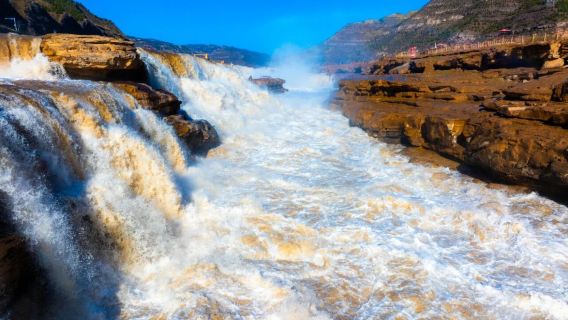
![Hukou Waterfall tourist area of the Yellow River 1-day tour [door-to-door pickup│optional skip-the-line]](https://ak-d.tripcdn.com/images/0350412000q8nl0kh22AB_C_568_320.jpg?_fr=wc)
5.0/5
· 2 reviews· 73 bookedFree cancellation
Instant confirmation
Book now for tomorrow
From73.13 AZN
5.0/5
· 4 reviews· 23 bookedFree cancellation
Instant confirmation
Book now for tomorrow
From80.75 AZN
5.0/5
· 2 reviewsFree cancellation
Instant confirmation
Book now for tomorrow
From207.74 AZN
Instant confirmation
Book now for tomorrow
Save 1.07 AZN
From105.40 AZN106.47 AZN
5.0/5
· 1 reviewFree cancellation
Book now for tomorrow
5% off
Limited-time sale
From515.30 AZN542.43 AZN
5.0/5
· 2 reviewsFree cancellation
Instant confirmation
Book now for tomorrow
From151.84 AZN
Free cancellation
Instant confirmation
Book now for tomorrow
From245.25 AZN
Free things to do in Daning
Shaanxi History Museum
China · Xi'anDongyue Temple
Pu County · 33.2km from DaningGrand Tang Mall
China · Xi'anXi'an Museum
China · Xi'anImmediate access, Book now for today, Cancel anytimeLuoyang Museum
China · LuoyangShanxi Museum
China · TaiyuanXinzhou Ancient City
China · XinzhouTaiyuan Ancient County
China · TaiyuanBaota Mountain
China · Yan'anImmediate access, Book now for today, Cancel anytimeLuoyi Ancient City
China · Luoyang
What travellers say about Daning

GH97060815 October 2026
5.0
Knowing that tickets to the Shaanxi History Museum are hard to get, I tried signing up for a guided tour. I was surprised by how reliable the service was from a large platform. The guide, Zhang Xiaojing, sent me the important information and meeting point the day before. He was also there early the next day to wait for everyone. Thanks to Xiaojing, the explanations were excellent, covering the most famous treasures and unique exhibits in Halls 1, 2, and 4 very clearly.
Shaanxi History Museum

山在穷游11 October 2026
4.0
Many people drive long distances to Xixian County to see Xiaoxitian (Little Western Paradise) and then sneak away. However, there are several other scenic spots worth visiting along the road from Linfen to Xixian County, one of which is Dongyue Temple. Located high in the mountains, it beautifully showcases Dongyue culture.
Dongyue Temple

呦未来可期15 October 2026
5.0
Take a stroll through the Tang Dynasty Never-Sleeping City on a pleasant autumn evening. The evening breeze is cool, the lights are dazzling, and the atmosphere of the Tang Dynasty is palpable. Street performances are everywhere, and tourists come and go, creating a lively scene. No need to plan a route; just wander around and explore as you please. Immersed in this world of lights, feeling the warmth of everyday life and ancient charm, this is what small satisfactions in ordinary days are all about. Chang'an's autumn nights are as bright as ever.
Grand Tang Mall

Anonymous user16 October 2026
5.0
This trip to the Xi'an Museum was so lucky! The guide I met was fantastic. She didn't just read the signs mechanically; her explanations were incredibly engaging.
Whether it was the tri-colored flying horse or the story of the Small Wild Goose Pagoda, she explained everything in a clear and easy-to-understand way. I thoroughly enjoyed listening to many of the historical anecdotes. She patiently answered all my questions. Normally, exploring on my own would only give you a superficial view, but with the guide, I truly understood these ancient artifacts. It was a very rewarding experience, definitely a five-star review!
Xi'an Museum

薛薛13 October 2026
5.0
Our guide at the Luobo Museum, Mr. Pei, was excellent. He was considerate of the artifact display cases, reminding the children in our group and others to keep a safe distance to avoid obstructing photos or leaving handprints. His explanations were engaging and detailed, although latecomers sometimes interrupted him. Overall, it was a good experience, and we saw all the museum's treasures and popular artifacts within the limited time – definitely worth it.
Luoyang Museum
Anonymous user7 October 2026
5.0
The tour guide was attentive and incredibly friendly, covering everything he needed to, and explaining things in considerable detail. With so many people during the National Day holiday, his experience helped us squeeze in every possible moment, and surprisingly, the trip wasn't crowded at all. The Yungang Buddha and the VR tour of Wutai Mountain were definitely worthwhile, and the Yanmen Pass Great Wall and Wang Family Courtyard were also very enjoyable. The driver was fantastic, incredibly experienced, and knew many shortcuts to Xiaoxitian, taking us directly to the scenic area entrance and saving us a lot of walking. The small group size meant it wasn't crowded, and the hotel arrangements were quite reasonable. The Yingxian Wooden Pagoda, the Yanmen Sunset, and the Wang Family Brick Carvings were all breathtakingly beautiful. The local tour guide was completely transparent and honest. I highly recommend this Shanxi tour; if you want to see ancient architecture but are afraid of doing research, book this tour without hesitation.
Shanxi Museum
Anonymous user17 September 2026
5.0
This is the most spectacular iron flower display I've ever seen! The program was diverse and engaging, the host was witty, the audience interaction was lively, the iron flower workers were incredibly skilled, and the iron flowers were dazzling and colorful – the effect was absolutely stunning! Thumbs up! 👍👍👍
Xinzhou Ancient City

楚云霁月21 August 2026
4.0
The old town was rather deserted. The art exhibition was quite nice, though a bit over the top. But the park at the exit was absolutely gorgeous. Winding paths led to secluded spots, and unexpected beauty unfolded.
Taiyuan Ancient County

夜阑月色溶溶7 October 2026
5.0
Because we had children with us, we opted to take the sightseeing bus up and down, which was very relaxing. We got a close look at the pagoda, took photos, and learned about its history, especially the plaques at the north and south gates: "Soaring high above the heavens, overlooking the mortal world"—for over 1000 years, the pagoda has achieved this.
Baota Mountain

Soh Kien Peng23 September 2026
5.0
From Yuntaishan, we boarded a bus bound for Luoyang. The journey was long — more than four hours on the road. We left at 2:30 pm and only arrived close to 7:00 pm, which meant our first day in Luoyang was largely consumed by travel. That evening, drained from the ride, I managed only a brief visit to Yingtianmen, illuminated against the night sky.The following day was devoted entirely to two of Luoyang’s most iconic sites: the Longmen Grottoes and the White Horse Temple. After exploring the temple, we caught bus no. 58 directly to Luoyi Ancient City. By then, the hours of walking through grottoes and temple grounds had left us physically exhausted. Still, the ancient city welcomed us with free admission and a promise of cultural immersion.Dinner was taken at a basement food court along Minzhu Street. By the time we finished, night had fallen, and Luoyi Ancient City had transformed. The streets glittered with lanterns, music pulsed through the air, and the atmosphere was electric. Crowds gathered near the lake to watch 天女散花 — the “Fairy Scattering Flowers” dance performance — though we chose not to linger.Luoyi Ancient City (洛邑古城) remains one of China’s most authentic living historic districts. Here, 3,000 years of dynastic history — from the Zhou to the Ming — can still be felt in its preserved city walls, pagodas, canals, and performances. It is not simply a relic of the past, but a vibrant cultural stage where history and daily life coexist.
Luoyi Ancient City


