Fenxi

Things to do in Fenxi

Search attractions or local attractions & tours
Search

Explore top experiences

Top 10 attractions in Fenxi

View all Attractions
Shi Family Courtyard

Shi Family Courtyard

4.2
4.8/5
36 reviews

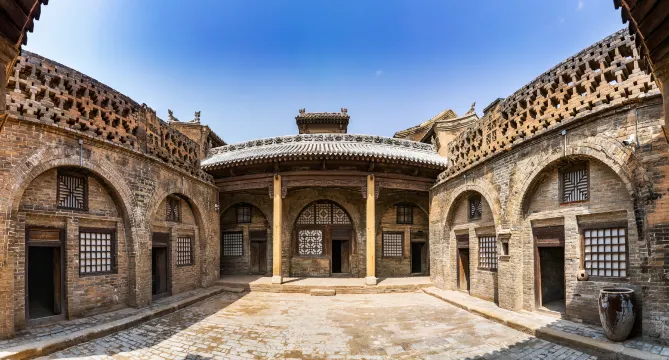
The cave dwellings in Shijiayuan were built in the 34th year of Emperor Qianlong's reign in the Qing Dynasty (1769). At that time, during the heyday of Emperor Qianlong, Shijia's family combined farming and business, and also operated banks and pawnshops, earning a lot of money. So they used the money to buy land, expand their family business, and build houses. It took them nearly 200 years to build a luxurious courtyard covering a large area. Its architectural style has typical northern and Shanxi residential features, and is divided into two parts: the main building and the ancillary buildings. The Shijia Courtyard has a total of 31 courtyards of various sizes, with quadrangle courtyards, two-entry quadrangle courtyards, second-floor quadrangle courtyards, and third-floor quadrangle courtyards as the main buildings, which are equipped with main rooms, living rooms, side rooms, halls, study rooms, embroidery towers, moon-viewing rooms, gatehouses, and stables for servants and other rooms. The most valuable art in Shijia Courtyard is the architectural sculpture art. Its wood carvings, stone carvings, and brick carvings are used to decorate the brackets, brackets, hangings, beams, screen walls, column bases, plaques, curtain frames, door covers, etc., with various styles and rich contents. For the character "Shou", there are as many as 108 different window lattice patterns. There are also many door plaques, plaques, and wood plaques, which are rare calligraphy works.

Fenxi · 5.2km from downtown
Guangsheng Temple
No. 3 of Best Things to Do in Linfen

Guangsheng Temple

7.4
4.7/5
2.4k reviews

Guangsheng Temple is located at the southern foot of Huo Mountain in Hongtong County, Linfen, Shanxi. It is said to have been initially built during the Eastern Han Dynasty and renamed to its current name in the Tang Dynasty. Despite being repeatedly destroyed by wars, fires, and earthquakes over the centuries, the surviving halls are primarily structures from the Yuan and Ming Dynasties. The attraction consists of the upper temple on the mountain peak, the lower temple at the foot of the mountain, and the Water God Temple, forming a high-low connection that creates a natural upward visiting route. The Feihong Pagoda in the upper temple is the visual center of the entire complex. This octagonal thirteen-story brick pagoda, standing over forty meters tall, is adorned with glazed tiles in yellow, green, blue, white, and other colors from the second floor upwards. Figures of Buddhas, bodhisattvas, celestial beings, coiled dragons, and lion-like beasts protrude from the brick surfaces layer by layer. When sunlight hits it on clear days, the entire structure refracts rainbow-like brilliance, which is said to be the origin of its name "Feihong" (Flying Rainbow). The 1986 TV adaptation of *Journey to the West* filmed the episode where Tang Monk sweeps the pagoda to uncover an injustice here. In the 1930s, Liang Sicheng and Lin Huiyin also highly praised the quality and craftsmanship of the pagoda's glazed decorations during their survey. Behind the pagoda, a row of dark red sutra cabinets still stands in the Amitabha Hall, where the Buddhist canon "Zhaocheng Golden Tripitaka" was once stored. This engraved Tripitaka from the Jin Dynasty lay forgotten for centuries until its rediscovery in 1933. During the Anti-Japanese War, to prevent it from falling into Japanese hands, local soldiers and civilians risked their lives to transport it overnight. Now housed in the National Library of China, it is regarded as one of the library's most treasured collections. The sutra cabinets remain in the hall, and this legendary tale is worth pausing to hear. The Water God Temple at the foot of the mountain, the Mingying Wang Hall, is adjacent to the Huo Spring outlet. Its walls are adorned with over ten Yuan Dynasty murals centered around themes of praying for rain, rainfall, and giving thanks to deities. These murals depict water god worship and urban life rather than the typical Buddhist or Taoist subjects found in ordinary temples. The eastern section of the southern wall features "The grand performance troupe Zhongduxiu performing here," showcasing over ten actors and musicians representing various role types (sheng, dan, jing, mo, chou) on the same stage. This is a precious image for studying Yuan Dynasty zaju performances and, along with "The ball-hitting game," has been included in history textbooks. The adjacent Great Buddha Hall of the Lower Temple is a Yuan Dynasty wooden structure. Its original large-scale murals were stripped and sold overseas in the late 1920s, with the famous "Illustration of the Bhaisajyaguru Sutra" now housed at the Metropolitan Museum of Art in New York. To appreciate Yuan Dynasty murals, focus your attention on the Water God Temple. A bottom-up route is recommended: first visit the water god temple and lower monastery, then ascend via stone steps or the mountain road to see the Feihong pagoda at the summit. The glazed colors appear especially vibrant on sunny days, making it easier to capture great photos.

Hongtong · 45.1km from Fenxi
Little Western Paradise
No. 8 of Best Things to Do in Shanxi

Little Western Paradise

8.2
4.8/5
7k reviews

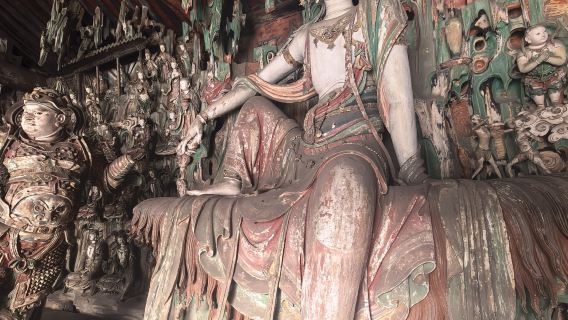
Little Western Paradise is perched atop Phoenix Mountain in Xi County, Linfen, Shanxi Province. This Buddhist temple, originally named the Thousand Buddha Nunnery, was established during the Chongzhen era of the Ming Dynasty. It earned its initial name from the thousand Buddha statues enshrined in its Main Hall of the Great Hero. Later, it was renamed due to the inscription "Entering the Western Paradise" above its gate and to distinguish it from another ancient temple, "Great Western Paradise," located south of the city. Surrounded by mountains on three sides and facing a river in front, the temple is compact yet ingeniously laid out across its upper and lower courtyards. Ascending the stone steps and passing through the secluded "Heavenly Grotto" corridor evokes a sense of gradually entering a Buddhist paradise. The upper courtyard centers around the Main Hall of the Great Hero, flanked by the Manjusri Hall and Samantabhadra Hall. The Main Hall is the temple's crowning jewel: within its modest 100-square-meter space, nearly 2,000 suspended sculptures adorn niches, gables, beams, and rafters, transforming the hall into a museum of suspended sculpture art. Five interconnected niches dominate the rear wall, housing the Medicine Buddha, Amitabha, Sakyamuni, Vairocana, and Maitreya seated on lotus thrones, with ten principal disciples standing beside them. The southern wall depicts Buddhist narratives featuring the Four Sages and Four Heavenly Kings, while the northern wall portrays the 33 celestial palaces of Mount Sumeru. Flying apsaras, divine birds, and musician bodhisattvas dance among clouds on the beams, their gilded polychrome surfaces retaining vibrant hues after centuries. This rare collection of late Ming to early Qing suspended sculptures has gained wider recognition since the temple became a filming location for the popular game Black Myth: Wukong, attracting many travelers for dedicated visits. The lower courtyard also rewards exploration: the Immeasurable Hall faces east, where dozens of bronze Buddha statues interplay with wooden celestial palaces in what was once the monks' meditation hall. Opposite stands the Skanda Hall, housing a single nanmu-carved statue of Skanda. The temple also preserves thousands of volumes from the Yongle Northern Canon, a Ming imperial gift. Visitors are advised to spend extra time in the Main Hall—dim lighting requires slow, upward gazes to appreciate the intricate details of the high-placed sculptures. After exploring both courtyards, one can ascend Solitary Paulownia Peak via the "Seemingly No Path" route behind Skanda Hall, where the Cloud-Touching Pavilion offers panoramic views of the rural landscape below.

Xi County · 56.6km from Fenxi
Hongtong Dahuaishu Ancestor Memorial Garden
No. 9 of Family-friendly Attractions in Shanxi

Hongtong Dahuaishu Ancestor Memorial Garden

6.9
4.6/5
3.7k reviews

Hongtong Dahuaishu Ancestor Memorial Garden is a national AAAAA-level tourist Attraction and a key cultural relic protection unit in Shanxi Province. The Attraction is located in Hongtong County, Shanxi Province, 2 kilometers away from Hongtong Railway Station, 3 kilometers away from Dayun Expressway Intersection, 8 kilometers away from Daxi High-speed Railway, and 22 kilometers away from Linfen Airport. The transportation is extremely convenient. The Attraction consists of four major theme sections: "Immigration Historic Site Area", "Ancestor Worship Activity Area", "Folk Customs Tour Area" and "Fenhe Ecological Area", with a total of more than 60 scenic and cultural attractions. It is the only folk worship holy place in the country with the themes of "seeking roots" and "worshiping ancestors". In recent years, Hongtong Dahuaishu Root-seeking and Ancestor-worshiping Park has achieved brilliant results with the joint efforts of all employees. It has been awarded "National Civilized Unit", "National Youth Civilized Unit", "National Primary and Secondary School Students' Research and Practice Education Base", "High-level Service Industry Standardization Demonstration Project", "China Overseas Chinese International Cultural Exchange Base", "China Couplet Cultural Garden", "National Model Workers' Home", "National Factory Affairs Open Democratic Management Demonstration Unit", "Second Shanxi Quality Award Nomination Award", "Shanxi May 1st Labor Award", "Shanxi Top Ten Quality Tourist Attraction", "Shanxi National Traditional Festival Protection Demonstration Site", "Shanxi Civilized Scenic Attraction", "Shanxi Civilized Tourism Advanced Unit", "Shanxi Cultural Industry Advanced Unit", "Shanxi Cultural System Reform Advanced Unit" and more than 100 other major brand honors. Its unique "Dahuaishu Ancestor Worship Custom" has been listed as the second batch of "Intangible Cultural Heritage". On the morning of October 29, 2018, the Ministry of Culture and Tourism held a plaque awarding ceremony for new 5A-level tourist Attraction, and Hongtong Dahuaishu Root-seeking and Ancestor-worshiping Park was officially promoted to a national 5A-level tourist Attraction. Nowadays, it has gradually formed a comprehensive tourism service area with Attraction, folk hotels and travel agencies as the main business sectors, tourism cultural and creative product development and cultural media development as the flanks, integrating food, accommodation, transportation, travel, shopping and entertainment.

Hongtong · 43.7km from Fenxi
Longmen Grottoes
2026 Asia 100 - Best Things to Do

Longmen Grottoes

8.9
4.7/5
62.4k reviews

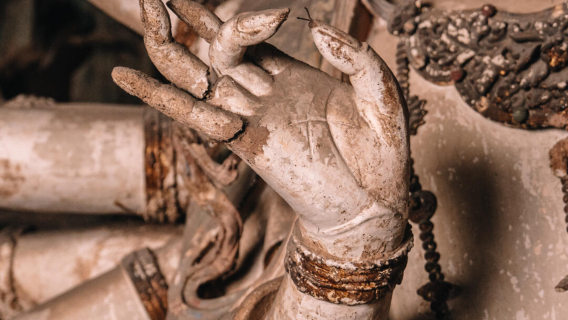
Longmen Grottoes are located in the southern suburbs of Luoyang, Henan Province, on the cliffs along both banks of the Yi River. As one of China's three major grotto art treasures, they were inscribed on the World Cultural Heritage list in 2000. The grottoes were first carved when Emperor Xiaowen of Northern Wei moved the capital to Luoyang, and construction continued through the Eastern Wei, Western Wei, Northern Qi, Sui, and Tang dynasties, with the vast majority of niches and statues left from the Northern Wei and Tang periods. Today, more than 2,000 niches and over 100,000 statues remain, along with a large number of inscriptions and steles, making the site an important representative of Chinese stone carving art. The attraction is divided by the Yi River into two parts: West Hill and East Hill. The West Hill Grottoes are the essence of the site, carved from the Northern Dynasties through the Sui and Tang periods. Famous caves include Guyang Cave, Binyang Cave, Lotus Cave, Wanfo Cave, and Fengxian Temple. The Lushena Buddha at Fengxian Temple stands about 17 m tall, making it one of the larger Buddha statues at Longmen Grottoes. Its face is dignified and serene, with a faint smile, and legend holds that it was modeled on the appearance of Wu Zetian, earning it the name "Oriental Mona Lisa." The inner walls of Wanfo Cave are densely covered with about 15,000 small Buddha statues, each only a few cm tall, neatly arranged and finely crafted. Guyang Cave is the earliest cave carved at Longmen, and its inscription calligraphy is exquisite; the selected "Twenty Masterpieces of Longmen" are representative works of Wei stele calligraphy. Binyang Cave consists of the South, Middle, and North caves and took more than twenty years to complete. Its original reliefs depicting emperors and empresses worshipping the Buddha were looted and lost overseas in the 1930s. In Binyang North Cave, a Buddha statue has a distinctive hand gesture, with the right index and middle fingers raised in a shape resembling the modern "scissors hand," though it is actually a Buddhist mudra, and it once sparked heated discussion online. The East Hill Grottoes are mostly Tang dynasty works and are smaller in scale than those on West Hill, but from the opposite bank visitors can enjoy panoramic views of West Hill from different angles, especially distant views of the Lushena Buddha. The attraction also includes Xiangshan Temple and Bai Juyi Memorial Park (Bai Garden). The Tang dynasty poet Bai Juyi lived in Luoyang in his later years and once praised it, saying, "Of the scenic splendors of Luoyang's surrounding mountains and waters, Longmen ranks first." When visiting, simply follow the route West Hill—East Hill—Xiangshan Temple—Bai Garden, proceeding in one direction without backtracking. The West Hill Grottoes are densely packed with content, so it is advisable to set aside ample time for a closer look; East Hill is quieter and more secluded, suitable for a brief visit and gazing across the river when energy is limited.

China · Luoyang
Pingyao Ancient City
2026 Asia 100 - Night Attractions

Pingyao Ancient City

8.4
4.6/5
27.3k reviews

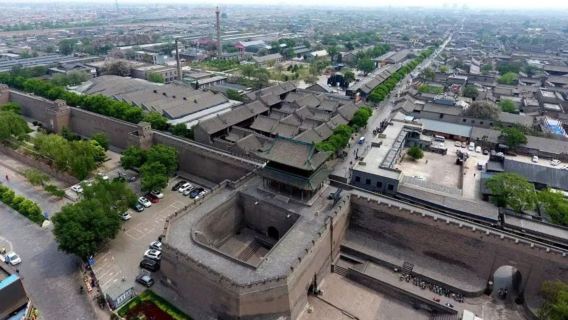
Pingyao Ancient City is one of the best-preserved ancient cities in China and, along with Lijiang Ancient City, is one of the two ancient cities in China to have successfully been designated as a World Cultural Heritage site in its entirety. Pingyao was once the financial center of China during the late Qing dynasty. Walking into this once-prosperous ancient city, you can feel the atmosphere of Shanxi merchant culture everywhere. The streets, shops, and residences within the ancient city still maintain their traditional layout and appearance. The overall street pattern is in the shape of the Chinese character 'tu', consisting of four main streets, eight small streets, and seventy-two lanes. The ancient city has six city gates in total, and the areas around the south gate and west gate are where visitors are concentrated. When touring, you usually enter the city through the lower west gate and walk along West Street to Rishengchang Exchange Shop, where you can learn about the development history of ancient banking and experience the legend of Shanxi merchants conducting business across the world. South Street, which runs north-south through the city, is the central axis of the ancient city. During the Ming and Qing dynasties, South Street gathered more than half of the country's financial institutions and was known as the "Wall Street of China" at the time. Today this street is called the Ming and Qing Ancient Street, and most of the ancient city's attractions are concentrated here. Centered on the landmark Market Tower, attractions such as Xietongqing Exchange Shop, Weitaihou Exchange Shop Museum, and the Chinese Escort Agency Museum are distributed around it, and a large number of shop buildings from the Ming and Qing periods are preserved along the street. At the Pingyao County Government Office in the south of the ancient city, you can see a large number of ancient documents and instruments of torture, and there is a daily performance of the county magistrate holding court; the City God Temple and the Confucian Temple in the east of the city have grand and refined architecture. The ancient city wall is very well preserved, and climbing the wall offers a panoramic view of the ancient city. The gate tower of Yingxun Gate at the south gate is especially exquisite, and watching the sunset from the city wall in the evening is a magnificent sight. In addition to the ancient city itself, the Zhenguo Temple and Shuanglin Temple outside the city are also part of the World Cultural Heritage. The Ten Thousand Buddha Hall of Zhenguo Temple is entirely made of wood, assembled with mortise and tenon joints without a single nail; Shuanglin Temple preserves painted sculptures from the Yuan to Ming dynasties, which are exquisite in form and renowned as a "treasure house of Eastern painted sculpture art."

Pingyao County · 82.4km from Fenxi
Jinci Temple Museum
2026 Asia 100 - Family-friendly Attractions

Jinci Temple Museum

8.7
4.8/5
21k reviews

Jinci Temple Museum is located at the foot of Xuanweng Mountain by the banks of the Jin River. It is an ancestral temple built to commemorate Tang Shuyu, the founding feudal lord of the State of Jin, and is also one of the earlier surviving royal sacrificial gardens in China. There is a saying that "you have not truly visited Taiyuan until you have visited Jinci." The ancient buildings in the museum are arranged in sequence along the central axis, among which the Xian Hall, the Flying Bridge over the Fish Pond, and the Hall of the Holy Mother are known as the "three treasures," while the Zhou Cypress, the Never-Aging Spring, and the Song dynasty attendant statues are known as the "three wonders"—these are the core highlights of any visit. The "Three Treasures" are located on the central axis and can be visited together. Xian Hall is the place where sacrificial offerings are placed. The hall is surrounded by railings instead of walls, making it well-ventilated and bright, and its beam structure is simple and lightweight. The Flying Bridge Across Fish Pond is on the west side of Xian Hall. It is a cross-shaped ancient bridge built over a square pond, resembling a modern overpass in form, and this type of bridge structure is extremely rare among surviving ancient buildings. The west end of the bridge connects to Shengmu Hall, the oldest surviving building in the museum. Wooden carved dragons coil around the porch columns in front of the hall, making them relatively early surviving examples of wooden coiled dragons. The hall interior was built using the reduced-column method, creating a rather spacious interior. It houses dozens of Song Dynasty colored sculptures, with the main statue of Shengmu seated in the shrine and the remaining attendants arranged on both sides with varied expressions. One attendant statue is half joyful and half sorrowful, vividly lifelike and moving. With Shengmu Hall as the center, you can also seek out the "Three Wonders." The Zhou Cypress is located on the north side of Shengmu Hall. It is said to have been planted in the Western Zhou Dynasty, and its trunk leans south like a reclining dragon, full of ancient majesty. The Never-Aging Spring is located on the south side of Shengmu Hall and is the main source of the Jin River. The museum also houses the Stele of the Inscription and Preface to Jinci, composed and handwritten by Emperor Taizong of Tang, Li Shimin, whose running-script calligraphy is vigorous and forceful. In the southern part is the Shifang Fengsheng Zen Temple, said to have originally been the villa of the Tang Dynasty general Yuchi Gong. In the Futu Courtyard, the Sarira ShengSheng Pagoda can be climbed for a distant view. The Jinci temple fair has been passed down to the present day and has been included in the national-level intangible cultural heritage list. The Water Mirror Stage, an ancient theater stage in the museum, is an important venue for activities during the temple fair.

China · Taiyuan

Experiences you can't miss in Fenxi

Featured Culture & history in Fenxi

View all Culture & history
Half-Day Tour of Pingyao Ancient City (English Guide)
󱌍
Duration: 5.5 hrs
English
Free cancellation
Instant confirmation
Book now for tomorrow
FromTRY 5,989.87

Jinzhong Jinyaoji ancient-style costume experience (multi-dynasty costume rental + ancient-style makeup and styling experience)
󱌍
FromTRY 828.32
Taiyuan Zhenguo Temple + Shuanglin Temple + Pingyao Ancient City Day Tour: Immersive Experience of Jinzhong's Cultural Essence
󱌍
FromTRY 3,422.79
Shuanglin Temple, Wang Family Compound & Pingyao Ancient City Pingyao Private Day Tour
󱌍
Duration: 9.5 hrs
English
Free cancellation
Instant confirmation
FromTRY 5,933.24
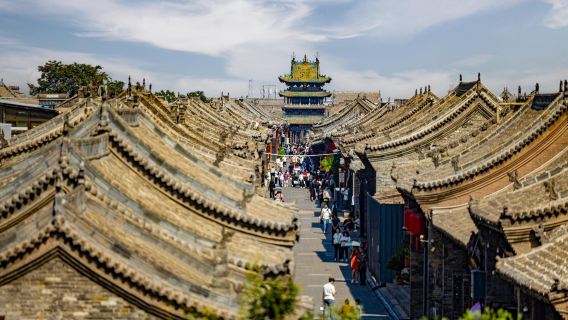
From Taiyuan: One-Day Trip to Pingyao Ancient City and Shuanglin Temple and Zhenguo Temple
󱌍
Duration: 13.5 hrs
English
Free cancellation
Instant confirmation
Book now for tomorrow
FromTRY 5,989.87
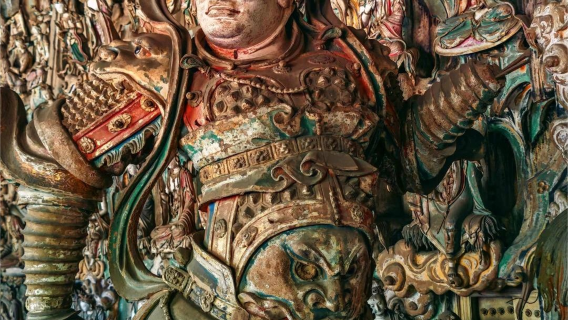
From Taiyuan: One-Day Trip to Pingyao Ancient City and Shuanglin Temple
󱌍
Duration: 11.5 hrs
English
Free cancellation
Instant confirmation
Book now for tomorrow
FromTRY 5,562.03
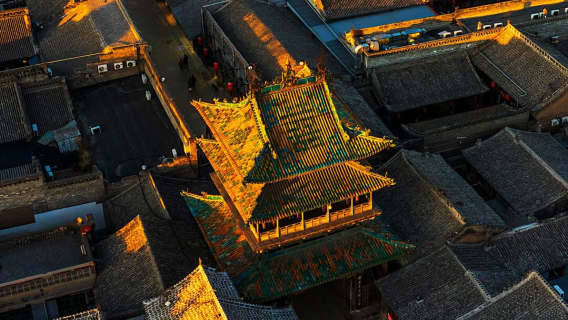
Taiyuan: Pingyao Ancient City & Wang Courtyard & Shuanglin Temple Day Trip by Train
󱌍
Duration: 9.8 hrs
English
Free cancellation
Instant confirmation
FromTRY 6,486.33
Fenxi Today's weatherClear 1-13℃
Fenxi weather for the next 2 days11/12: 4-14℃, 11/13: 5-15℃

Free things to do in Fenxi

What travellers say about Fenxi

user-avatar
Jessigz8 December 2019
5.0
Shijiayuan is located in the mountains, so it is a relatively unpopular scenic spot. It is free to visit. The residents inside have basically moved out, and it is well preserved. It's a pity that there is no detailed information to introduce it. Personally, I think it is no less than Wangjiayuan.

Shi Family Courtyard
user-avatar
昝 龙11 November 2026
5.0
Located in Jingsheng Town, Lingshi County, Shanxi Province, the Wang Family Compound was built by the Wang family of Jingsheng over three hundred years during the Ming and Qing Dynasties and is hailed as "the No. 1 residence of Chinese folk houses". The compound is built against the mountain and has a grand and orderly layout. The main buildings are Gaojiaya and Hongmenbao. The brick carvings, wood carvings and stone carvings are exquisite. It is a model of northern castle-style folk houses and there is a saying that "after visiting the Wang Family Compound, you don't need to see any other courtyards".

WANG JIA DA YUAN
user-avatar
老酒店收割机4 August 2026
5.0
There are many historical sites inside, including a seven-bay main hall, a three-story bell tower, a drum tower, and a stage. There is also a garden at the back, which is a well-preserved official garden and quite large. I only had time to visit it quickly.

Huozhou Ancient Government Office

user-avatar
andylinda10 May 2023
5.0
Driving here, you can see the Drum Tower right when you enter the city. It was built in the 11th year of the Wanli reign of the Ming Dynasty (1583), also known as the Wenchang Pavilion. It was rebuilt in the Qing Dynasty. The base is high and a cross-vaulted passage is built with a mixture of bluestone and blue bricks, which runs through in four directions. There are two floors of wooden pavilions on top, with a width and depth of five rooms each, three drips on the second floor, and a cross-shaped hip roof.

Huozhou Drum Tower

user-avatar
行走毛毛9 November 2026
4.0
One ancient building you absolutely must visit when you come to Linfen is Guangsheng Temple. It's truly stunning. From the pagoda to the murals and clay sculptures, it represents the pinnacle of ancient architecture in Linfen.

Guangsheng Temple

user-avatar
Anonymous user7 November 2026
5.0
Although the suspended sculptures at Xiaoxitian are only works from the late Ming and early Qing dynasties, they are still breathtaking when you visit in person. I entered the hall in the morning and saw the sunlight shining on the sculptures, making the trip worthwhile. I recommend visiting when there are fewer people and more sunshine, so you can take your time to appreciate them. The experience is definitely different from that during peak season.

Little Western Paradise

user-avatar
籍晨瑕11 November 2026
5.0
Ask me where my ancestors came from? The answer is the Big Pagoda Tree in Hongdong, Shanxi. The scenic area has a rich cultural heritage, the live performances are particularly moving, and the guides explain things in detail. The park is clean and tidy, and the Clan Garden and Ancestral Hall are very meaningful. It's worth a visit to trace your roots and experience the profound history of immigration! Would you like a simpler, more concise version?

Hongtong Dahuaishu Ancestor Memorial Garden

user-avatar
Auleef10 November 2026
5.0
We entered from the west gate first, visiting the West Hill Grottoes and getting close to the Vairocana Buddha. We skipped the evening lighting ceremony and arrived at 9 am to avoid the crowds and take better photos. Next, we visited the East Hill Grottoes. We rested and admired the sights at a leisurely pace, taking about 3-4 hours.

Longmen Grottoes

user-avatar
小宝19799 November 2026
5.0
Pingyao Ancient City is truly worth the trip! As the best-preserved ancient county town from the Ming and Qing dynasties, walking on the city walls and overlooking the panoramic view, one is overwhelmed by the weight of history. The underground vaults of Rishengchang Exchange House and Xietongqing Exchange House are eye-opening, allowing one to deeply appreciate the wisdom of Shanxi merchants in "connecting the world through finance." The courtroom performance at the county government office is very interesting and highly interactive. Although commercialization is inevitable, the core cultural charm remains rich. The atmosphere is even better when the lights come on at night, and the local delicacies, such as Pingyao beef and bowl-shaped rice cakes, are also very authentic. It is well worth spending two days slowly exploring and savoring this "living ancient city."

Pingyao Ancient City

user-avatar
Ye73510 November 2026
5.0
Having visited Jinci Temple twice, I personally believe it's absolutely the most worthwhile tourist attraction in Taiyuan. Hiring a professional guide is essential for a better understanding of this historically significant royal sacrificial garden. The exquisite carvings of dragons on the pillars of the Holy Mother Hall and the intricate details of the statues inspire genuine admiration for the wisdom and craftsmanship of the ancients. The 3,000-year-old Zhou Cypress is truly awe-inspiring up close! Every fold in its trunk tells a story spanning the Shang and Zhou dynasties. In the Zhenguan Baohan Pavilion, Li Shimin's self-written and inscribed "Inscription and Preface of Jinci" stands silently. The bluestone is silent, yet the ink flows, the spirit of a thousand years ago still vividly present.

Jinci Temple Museum

Trip Moments in Fenxi

Popular cities near Fenxi

Frequently asked questions

How can I contact Trip.com customer support?

Get help anytime, anywhere within 30 secondsContact customer support

Change and cancellation policies vary by attractions and tours. Please check the product details page for more information.

Ticket prices may vary between weekdays and weekends, as well as during peak and off-peak seasons. When booking with Trip.com, you can also use Trip Coins to get extra savings. For more tips on booking discounted tickets, please visit Trip.com for the latest information.