
Things to do in Jinzhou
Explore top experiences
Top 10 attractions in Jinzhou
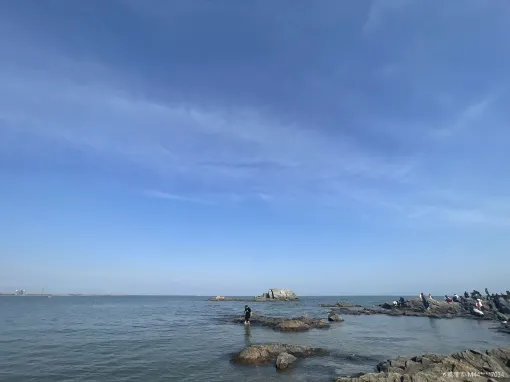




Jinzhou Today's weatherClear -4-2℃
Jinzhou weather for the next 2 days11/25: -1-9℃, 11/26: 0-9℃
Free things to do in Jinzhou
What travellers say about Jinzhou

老少皆宜()14 June 2023
5.0
There are many white sand beaches, among which there is a white sand beach in Yingkou, Jinzhou. The scenery here is beautiful. You can enjoy the beautiful scenery and relax yourself when you come to the white sand beach in the sunshine. Everyone is welcome to come here to play.
Baisha Bay Beach

可爱的旅游生活8910 October 2025
4.0
The highlight is that it focuses on snakes, bringing together a variety of snakes, lizards, crocodiles and other reptiles and amphibians. Some of the exhibits are relatively novel. The venue is planted with flowers, plants and trees to create a natural atmosphere. You can also experience special activities such as taking photos with a python.
Reptile House, Bijia Mountain

M49***669 July 2023
5.0
Jinzhou Museum has professional and administrative departments such as preservation, display, education, ancient building protection and security. Over the years, scientific management has been implemented to ensure that the collections are properly protected. It has successively launched basic exhibitions such as "Loyal Souls of the Sino-Japanese War of 1894-1895", "Historical Civilization of the Liaoxi Corridor", "Exhibition of Fine Collections", "Folk Customs of Liaoxi", "Porcelain Collections", "Religious Art", and "Songs of the Liaoxi Anti-Japanese Volunteer Army". At the same time, it has also introduced exhibitions such as "Fossils of Paleontology in Liaoxi" and "Cultural Relics Unearthed in the 25th Year of Daoguang".
Jinzhou Museum

202***819 October 2025
4.0
I went to the Jinzhou World Expo Park and felt that it was basically abandoned after being closed for three years during the epidemic (the pressure of subsequent maintenance costs must be very high), but you can vaguely see that the original construction and landscape planning layout were great.
Jinzhou Expo Park

迪肯孔裴矩3 September 2023
5.0
Enter from the north gate and walk to the left to see the bear enclosure, where black bears and brown bears are exhibited. There are two black bears now, and the mother brown bear gave birth to twin bear cubs at the end of last year. Now there are four of them in the family. The cubs are cute and the big bear is also the star animal of our park. They can wave, nod, and interact with tourists, often making tourists laugh. In order to meet the viewing needs of tourists, we have newly built a cute pet animal house, which is located opposite the bear enclosure and will be open to the public during the "May Day" holiday. There are Sulcata tortoises, Radiated tortoises, Alligator snapping turtles, Flower turtles, Mini hedgehogs, Slender-tailed mongooses, marmots, Call ducks, snow squirrels, Green-cheeked Conures, African Grey Parrots, Alexandrine Parrots, Sunflower-crested Cockatoos, Eclectus Parrots, Rhinoceros Lizards and other animals on display. It is definitely a good place for your "May Day" parent-child play.
Jinzhou Zoo

老刘一直在路上2 February 2025
5.0
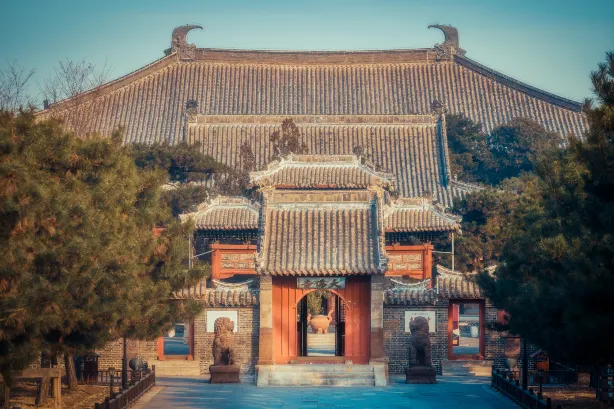
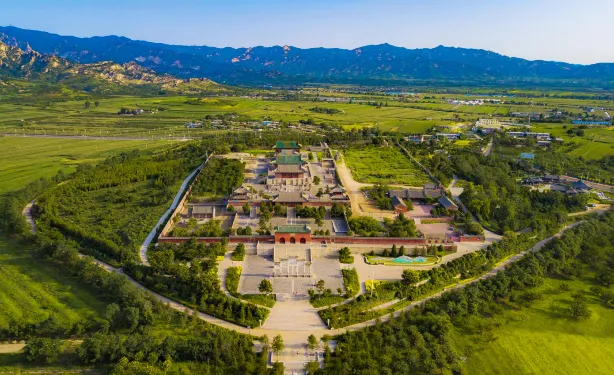
The "Five Mountains and Five Towns" are like natural sketches, outlining the contours of ancient China. The temples of the Five Sacred Mountains are still prosperous today, but among the temples of the Five Towns, there are very few ancient buildings of any scale that can still be seen. However, the Beizhen Temple at the foot of the Yiwulü Mountain was once glorious due to the enshrinement by successive Qing emperors, and it also left behind a treasure trove of mountain-guarding culture.
✨The Sanlu doctor chanted the poem "I set out from Taiyi in the morning and arrived at Weilu in the evening", and Wulv Mountain, the town of Youzhou, became a synonym for the end of the world.
💫Beizhen Temple, the third national temple, the existing buildings are relics of the Ming and Qing dynasties. The temple is ranked among the top national protected sites because it is the only remaining ancient building among the Wuzhenshan temples, and the huge number of inscriptions is very rare in the Northeast.
✨The mountain gate is three bays wide and has a single-eaved hip roof. The plaque "Beizhen Temple" in the Ming Dynasty is said to be written by Yan Song. There are four stone lions around the archway outside the mountain gate, each with a different expression, which is quite interesting.
💫Walking through the Shenma Temple, you can see four stele pavilions lined up in a row, staggered and orderly (Figure 1). These four pavilions contain four imperial steles from the Qing Dynasty, which are testaments to the three Qing emperors, Kangxi, Yongzheng and Qianlong, who worshipped Beizhen Mountain. However, the pavilion was severely damaged, and the stone tablet inside was pulled and broken in the 1970s, and the writing is slightly scattered.
✨In front of the Imperial Fragrance Hall, which is directly opposite the stele pavilion, there are many steles, most of which were written by Emperor Qianlong, with some from the reign of Emperor Kangxi. However, the themes are quite unified, all of which are poems and essays praising King Guangning, the god of the Medical Wulv Mountain. The Qing emperor believed that the Jianzhou Jurchens’ entry into the pass was inseparable from the protection of Beizhen Mountain. It is understandable that the Qing Taizu once served under Li Rusong in Guangning City and had a reverence for this famous mountain that was passed down from generation to generation. Not only did the three emperors Kangxi, Yongzheng and Qianlong favor Beizhen Mountain in their hometown, but even Jiaqing and Daoguang also left inscriptions on Yiwulü Mountain.
💫The main hall is five bays wide and three bays deep, with a single-eaved hip roof. The statue of Prince Guangning in this hall was rebuilt in recent years, but the murals of Thirty-two Heroes of the Ming Dynasty around the hall, although they underwent a certain degree of restoration in the 1980s and 1990s, have generally maintained the style of Qing Dynasty murals. Moreover, the murals use portraits of real meritorious officials as the theme, which is rare among many temple murals (Figures 13-16). There are also some Yuan Dynasty inscriptions hidden here.
✨The last one is the sleeping hall, which is second only to the main hall in size. It is now used to exhibit the works of Beizhen calligraphers and painters.
💫A large area of ruins can be seen in the east of Beizhen Temple. This is the Beizhen Guangning Palace where Emperor Qianlong stayed many times. His love for Yiwulü Mountain is evident. In the lush grass, the hundreds of years of connection between Beizhen and Qing history can be recalled. Looking west, the long Yiwulü Mountain shows its pale blue body under the dark clouds. The legend of this mysterious Youzhou town mountain spans It has survived the Warring States Period, the Liao and Qing Dynasties, and is still revered by people in Northeast China today. It can be said to be a legend in the mountain culture.
Beizhen Temple

郭润龙浪迹天涯9 December 2023
5.0
20230915 Full Day:
1. "Guanyin Cave" is located in the 4A scenic spot "Beiputuo Mountain". Beiputuo Mountain is a famous Buddhist mountain in Jinzhou City. It was called "Laomu Mountain" in ancient times. It is said that it was named after the temple of Guanyin Bodhisattva in the north. The main temple "Beiputuo Temple" is an ancient temple with a history of more than 1,400 years. The mountains are densely forested and the streams are gurgling. It is known as one of the "50 Best Places in Liaoning". It covers an area of 27.26 square kilometers and has a forest coverage rate of more than 95%. The highest peak "Jiguan Mountain" is 366 meters above sea level. It is a mountaineering scenic spot that integrates viewing photography, fitness and health, hiking and adventure, meditation and blessing, and walking with children. The scenic spot is known as the "No. 1 Buddhist Mountain Outside the Pass". The earliest temple recorded in historical records was built in the first year of Wude in the Tang Dynasty (618). In history, there are footprints of celebrities such as Emperor Qianlong of the Qing Dynasty, Yuan Chonghuan, Sun Chengzong, Wang Erlie, and Luo Ronghuan.
①Address: Zhongtun Township, Guta District, Jinzhou City, Liaoning Province.
②Transportation: Direct bus access, easy parking by car.
③Peak season: None.
④Duration: 1 day.
⑤Ticket price: 40 yuan.
⑥Notes: Online tickets can only be exchanged for tickets to enter the park at 8:30, so it is useless to go early.
2. "Guanyin Cave" is the place where Yelu Bei met Guanyin. It is known as the "First Cave Heaven in Western Liaoning". It is said that a supernatural event occurred in 2010. A person dreamed of Guanyin's mother and rushed here from Changchun. Sure enough, he found the pictographic stone resembling Guanyin in his dream under the stone. The route to Guanyin Cave is as follows:
①Shitang Daoyuan: a complex of buildings located at the entrance of the mountain trail. It was built by Gao Defan, the fourth-generation disciple of Qiu Chuji, a Taoist. After several damages, the current Daoyuan was rebuilt in 1997 and is currently an office area. There are "Cihang Hall" (currently a closed tourist souvenir shop), "Yuhuang Pavilion" (currently a restaurant), "Sanqing Hall" (currently a shop, which feeds many night cats around), and "Purple Air Coming from the East" (green ox colored sculpture).
②"Guanyin Cave Mountain" archway: the entrance of the mountain trail.
③Stone Stele Mountain Trail: The 233-meter-long, 587-step mountain trail and the "Jialiang Pavilion" at 2/3 were both built by local squire Wei Yangben in the 52nd year of Qianlong in the Qing Dynasty. A modern poem stele stands on one side of the road.
③Guanyin Cave: a complex of buildings under a large cave, currently under construction and renovation. Below the cave is a two-story attic with a golden Guanyin statue, the Bodhisattva Pavilion (with the door locked), the "Stone Shed Pine Snow" (one of the "Eight Old Scenic Spots of Jinzhou", there is a dwarf pine growing under the stone shed, it will be very beautiful after the snow), and the Yue Lao Temple (for those seeking marriage, the outside of the cave is hung with red prayer ribbons); outside the cave is the "Changxian Cave" (a small stone cave, dedicated to Changxian, who is another name for the snake fairy, also known as "Changxian" and "Liuxian". It is said that Changxian once practiced here. The word "Bodhi" is engraved outside the cave), and imitation bamboo slips stone carvings (with the Buddhist Heart Sutra engraved on them).
Jinzhou Beiputuoshan Tourist Area - Guanyin Cave Scenic Area

Anonymous user5 October 2024
5.0
Now it is getting better and better. You can stay for 24 hours for 61 yuan. You can find a place to stay at night. When you wake up the next morning, the water is clean and there are few people. It is very good to play.
Jintang Hot Spring Resort
M48***9912 September 2026
5.0
The best bathhouse in Jinzhou, with a beautiful environment and a spacious, bright, and clean bathing area.
Deshibao Bathhouse
山远日暮~20 January 2021
5.0
The Hanging Temple in the North is worth a visit. It is recommended to drive by yourself.
Baolin Building Scenic Area
Trip Moments in Jinzhou



Popular cities near Jinzhou


Frequently asked questions
How can I contact Trip.com customer support?
Get help anytime, anywhere within 30 secondsContact customer support
Can I change or cancel my booking?
Change and cancellation policies vary by attractions and tours. Please check the product details page for more information.
How can I get discounted prices?
Ticket prices may vary between weekdays and weekends, as well as during peak and off-peak seasons. When booking with Trip.com, you can also use Trip Coins to get extra savings. For more tips on booking discounted tickets, please visit Trip.com for the latest information.