Xia County

Things to do in Xia County

Search attractions or local attractions & tours
Search

Explore top experiences

Top 10 attractions in Xia County

View all Attractions
Wansuishan Martial Arts City
No. 1 of Family-friendly Attractions in Henan

Wansuishan Martial Arts City

8.6
4.6/5
16.7k reviews

Wansuishan Martial Arts City is located in the northwest of Kaifeng's urban areaWansuishan Martial Arts City, it is a large-scale attraction built with Song Dynasty culture and wuxia culture as its backdrop. Within the attraction, there are quaint and charming Song Dynasty garden streets and alleys, year-round exciting wuxia and period costume performances, as well as a wealth of entertainment facilities, making it a great place for relaxation and entertainment in Kaifeng, Zhengzhou, and surrounding areas. When visiting Wansuishan Martial Arts City, the first thing you will notice is the beautiful scenery of the attraction. Wansuishan Martial Arts City as a whole creates an atmosphere of the Song Dynasty, among which many views are very eye-catching, such as Wansui Temple, which recreates the splendor of a thousand-year-old ancient temple from the Song Dynasty, the Dragon Altar, which embodies the spirit of Buddhism, Confucianism, and Taoism, the relatively well-preserved ancient city wall of Kaifeng in China, and the "Nine Dragons Waterfall," one of the large man-made stream and waterfall groups in China. What is rare is that the attraction also has a very large area of forest and green space, with a quiet environment, and flowers bloom in season, making it very suitable for photography. Afterward, visitors will notice the unique wuxia features within the attraction. Year-round, multiple wuxia-themed performances are staged here, with several themed shows such as "Cross Slope," "Wu Song Drunkenly Beats Jiang the Gatekeeper," and "Wild Boar Forest" being quite spectacular—definitely not to be missed when visiting. Interactive performances like the "Wuxia Film and Television Experience Hall," "Martial Arts Champion," and "Li Kui Judges a Case" also allow visitors to participate in wuxia stories, offering plenty of fun. In the architectural design of the attraction, there are also many wuxia elements: the Wuxia Road built with large-scale weapons such as the "Heaven-Reliant Sword" and "Overlord Blade," the "Gallant Heroes Portrait" at the Great Song Martial Arts Hall, the "Sword Altar" at Cross Slope, Juxian Manor, and the Martial Arts Arena—all are uniquely distinctive. Additionally, every year during the Spring Festival periodWansuishanLarge-scale temple fairs are held, featuring grand performances, a rich variety of specialty snacks, a dazzling array of handicrafts, and highly distinctive entertainment activities, creating a lively atmosphere. It has now become one of the most popular temple fairs in the Central Plains region.

China · Kaifeng
Song Du Huangcheng Cultural Tourism Resort

Song Du Huangcheng Cultural Tourism Resort

8.6
4.6/5
181 reviews

Song Du Huangcheng Cultural Tourism Resort is located in the northern part of the old city of Kaifeng, precisely on the site of the imperial palace of the Northern Song Dynasty's Dongjing city. The millennium-old central axis of Kaifeng runs through this area, making it the core zone of the royal culture of the Song Dynasty. Here, you can find the Song-style imperial architecture of the Longting attraction, the tales of the Yang Family Generals at Tianbo Yang's residence, and the calligraphic steles of Han Yuan Stele Forest. The Shuanglong Lane historical and cultural block, 960 Cultural and Creative Park, and Qisheng Corner have transformed old streets and courtyards into Song-style blocks perfect for leisurely exploration. The resort also connects a series of Song culture attractions: Wansui Mountain Great Song Martial Arts City stages year-round martial arts live shows and intangible cultural heritage iron fireworks, while historic sites like the Iron Pagoda, Kaifeng city wall, Zhouqiao and Bian River ruins, Shanshangan Guild Hall, Yanqing Taoist Temple, and Fan Pagoda are scattered across the old city, along with niche spots like the underground wartime grain storage. These places are hard to cover in one day, so we recommend focusing on two or three key sites. After dark, a different experience awaits as the attractions light up in unison. Boarding a painted pleasure boat on the Great Song Imperial River to watch the illuminated pavilions and towers sway with the rippling water is a popular nightlife option here.

China · Kaifeng
Xi'an Museum
No. 1 of Family-friendly Attractions in Shaanxi

Xi'an Museum

8.6
4.6/5
4.3k reviews

Xi'an Museum is a modern comprehensive museum built upon the cultural relic protection site—the ruins of the Tang Dynasty Jianfu Temple and its iconic structure, the Small Wild Goose Pagoda. It integrates cultural relic collection and protection, academic research, exhibition and display, social education, and garden leisure. Its core area is the location of the original Tang Dynasty royal temple, Jianfu Temple, while the precious and striking historical relic existing within the temple—the Small Wild Goose Pagoda—has become the museum's unique landmark and soul. Therefore, the Jianfu Temple ruins and the Small Wild Goose Pagoda are not only the foundation and core carrier for the establishment of Xi'an Museum, but also important outdoor historical exhibition areas and focal points for visitors. The main building of the museum is located on the north side of the ancient temple ruins. The three elements (ancient temple ruins, ancient pagoda, and modern museum building) are organically integrated, jointly forming a unique cultural space that combines "museum, pagoda, temple, and garden," vividly showcasing the historical context of Xi'an from ancient times to the present. Xi'an Museum officially opened to the public on May 18, 2007. Its establishment aims to comprehensively showcase the glorious history and splendid culture of Xi'an (ancient Chang'an) as the capital of thirteen dynasties, filling the gap of a comprehensive museum of Xi'an's urban history. Collection highlights: The museum houses over 100,000 precious cultural relics from various historical periods of Xi'an. The collection spans from prehistoric times to the Ming and Qing dynasties, with particular emphasis on artifacts from the prosperous dynasties of Zhou, Qin, Han, and Tang, including bronze ware, jade articles, gold and silverware, ceramics, murals, stone steles, epitaphs, and Buddhist statues, systematically reflecting the political, economic, cultural, social life, and foreign exchanges of the ancient capital Chang'an. Main exhibition: The permanent exhibition "Ancient capital Xi'an" takes the urban development history of Xi'an as the main thread, showcasing the evolution and achievements of Xi'an as a capital (Zhou Fenghao, Qin Xianyang, Han Chang'an, Sui-Tang Chang'an) and a prefectural city (Song, Yuan, Ming, and Qing dynasties) through a large number of precious cultural relics, models, charts, and multimedia means. Unique environment: The museum's greatest feature lies in its surroundings. Travelers can not only visit modern exhibition halls but also stroll through the expansive heritage park encompassing the Small Wild Goose Pagoda, the ancient architectural complex of Jianfu Temple (including structures like the Ming dynasty bell tower housing a Jin dynasty ancient bell), an ancient stone sculpture art exhibition area, and garden views—experiencing the charm of the millennia-old capital at its historical site. The view of "morning bells at the Wild Goose Pagoda" is particularly renowned. Functional positioning: The museum is not only an important center for cultural relic collection, research, and display, but also an urban cultural park where citizens can relax, entertain, and immerse themselves in history and culture, undertaking significant social education and cultural exchange functions.

China · Xi'an
The Hukou Waterfall Scenic Area
No. 4 of Best Things to Do in Shanxi

The Hukou Waterfall Scenic Area

8.5
4.7/5
22.8k reviews

The Hukou Waterfall Scenic Area is located in the Jin-Shaan Grand Canyon in the middle reaches of the Yellow River and is the Shanxi-side section for viewing Hukou Waterfall. As the Yellow River rushes here, its surface suddenly narrows from several hundred meters wide to just a few dozen meters. The water, laden with silt, churns and pours down like water being poured into a giant kettle, which is how the name "Hukou" (Kettle Mouth) came to be. This is a rare yellow waterfall on the Yellow River, with muddy waves surging skyward and a roar like thunder, displaying magnificent momentum. The attraction is located on the east side of the waterfall, where the bank is relatively low, allowing visitors to look up and take in the full panorama of the Yellow River plunging downward. Below the waterfall, mist rises and fills the air, appearing like smoke or clouds from afar and creating the wondrous sight known as "smoke rising from the water"; on clear days, sunlight refracts through the mist to form a rainbow arching across the river, called "rainbow reaching the heavens." Within the attraction, Dragon Cave is a natural stone cave; following the stone steps down leads to a viewing platform close to the waterfall, where you can look up as the river pours down from above—an ideal spot to feel the force of the waterfall up close. Downstream from the waterfall, the Ten-Mile Dragon Trough is a deep channel formed by the river's long-term erosion of the riverbed; in the dry season, the trough floor is wide and flat, and ancients once used this terrain to haul boats along the bank, leaving behind the unique scene known as "sailing on dry land." Further downstream is Mengmen Mountain, where two huge rocks in the river split the Yellow River in two before the streams merge again; carved on the rock face are the four characters "Wo Zhen Kuang Liu" (Resting Here, Quelling the Raging Flow). The view of Hukou Waterfall is distinctive in each of the four seasons. Every year between April and May, peach blossoms bloom and the ice melts, coinciding with the "March peach blossom flood," when the abundant water volume makes the waterfall particularly spectacular. From September to November, the air is crisp in fall, and rainbows often appear in the mist, a phenomenon known as the "Hukou fall wind." Water volume is greater in spring and fall, and the sound of the water striking the rocks is like thunder, making these the best periods to admire the waterfall. The image of Hukou Waterfall once appeared on the CNY 50 banknote of the fourth series of the renminbi, making it a widely recognized classic symbol of Yellow River culture.

China · Ji County
Grand Tang Mall
2026 Global 100 - Night Attractions

Grand Tang Mall

8.5
4.5/5
2.3k reviews

The Grand Tang Mall is a large pedestrian district of Tang-style architecture built around the Giant Wild Goose Pagoda in Xi'an's Qujiang New District. It runs from Xuanzang Plaza at the foot of the pagoda in the north to the Tang City Wall Ruins Park in the south, with an approx. 1,500 m central landscape avenue running the full length from north to south. The avenue itself is like an open-air sculpture gallery, lined from north to south with themed sculpture groups such as Tang Buddhist culture, the Tang hall of fame, the Zhenguan era of good governance, Empress Wu's procession, and the Kaiyuan golden age: statues of eminent monks such as Xuanzang and Jianzhen come first, Tang luminaries including Li Bai, Du Fu, Wu Daozi, and Sun Simiao stand in the middle, and the ceremonial group portraits of Emperor Taizong, Empress Wu Zetian, and Emperor Xuanzong are laid out after them—walking the whole route is almost like reading a three-dimensional history of the Tang Dynasty. The district links three major themed plazas from north to south—Xuanzang Plaza, Zhenguan Plaza, and Kaiyuan Plaza—with rows of Tang-style pavilions spreading out on both sides. Four cultural venues—Xi'an Concert Hall, Shaanxi Grand Theatre, Xi'an Art Museum, and Qujiang Pacific Cineplex—are distributed among them, so catching a concert, seeing an exhibition, and strolling and taking photos can all fit into the same itinerary. By day, admire the architecture and sculptures, but nightfall is when this street truly shines — once the lanterns are lit, the Tang-style pavilions glow with dazzling color, and the whole street feels like a re-creation of the golden age of the Tang Dynasty. Immersive street performances run year-round: a "tumbler girl" in Tang attire leans out mid-spin to hold hands with visitors; in "The Tang Dynasty Mystery Box," performers dressed as famous Tang figures randomly pick visitors to come on stage and answer questions or trade witty banter, with clever answers drawing cheers from the crowd; in the float color contest, Hu-style spinning dances and Tang court music and dance compete across the square; and a performer dressed as the Poet Immortal may challenge you to a round of poetry at any moment. These performances are scattered across the plazas along the route, so you might stumble upon one as you wander, and the lineup of shows and characters is refreshed from time to time. Visitors in hanfu taking photos can be seen everywhere on the street, and the Tang-style pavilions paired with the night scenery make for easy, photogenic shots; after nightfall the crowds are dense, so if you want a front-row spot for the popular shows, arrive a little early to wait. If your itinerary is tight, it's best to come around dusk and walk south from Xuanzang Square all the way to Kaiyuan Square, taking in the sculptures, lights, and performances all at once.

China · Xi'an
Pingyao Ancient City
2026 Asia 100 - Night Attractions

Pingyao Ancient City

8.4
4.6/5
27.3k reviews

Pingyao Ancient City is one of the best-preserved ancient cities in China and, along with Lijiang Ancient City, is one of the two ancient cities in China to have successfully been designated as a World Cultural Heritage site in its entirety. Pingyao was once the financial center of China during the late Qing dynasty. Walking into this once-prosperous ancient city, you can feel the atmosphere of Shanxi merchant culture everywhere. The streets, shops, and residences within the ancient city still maintain their traditional layout and appearance. The overall street pattern is in the shape of the Chinese character 'tu', consisting of four main streets, eight small streets, and seventy-two lanes. The ancient city has six city gates in total, and the areas around the south gate and west gate are where visitors are concentrated. When touring, you usually enter the city through the lower west gate and walk along West Street to Rishengchang Exchange Shop, where you can learn about the development history of ancient banking and experience the legend of Shanxi merchants conducting business across the world. South Street, which runs north-south through the city, is the central axis of the ancient city. During the Ming and Qing dynasties, South Street gathered more than half of the country's financial institutions and was known as the "Wall Street of China" at the time. Today this street is called the Ming and Qing Ancient Street, and most of the ancient city's attractions are concentrated here. Centered on the landmark Market Tower, attractions such as Xietongqing Exchange Shop, Weitaihou Exchange Shop Museum, and the Chinese Escort Agency Museum are distributed around it, and a large number of shop buildings from the Ming and Qing periods are preserved along the street. At the Pingyao County Government Office in the south of the ancient city, you can see a large number of ancient documents and instruments of torture, and there is a daily performance of the county magistrate holding court; the City God Temple and the Confucian Temple in the east of the city have grand and refined architecture. The ancient city wall is very well preserved, and climbing the wall offers a panoramic view of the ancient city. The gate tower of Yingxun Gate at the south gate is especially exquisite, and watching the sunset from the city wall in the evening is a magnificent sight. In addition to the ancient city itself, the Zhenguo Temple and Shuanglin Temple outside the city are also part of the World Cultural Heritage. The Ten Thousand Buddha Hall of Zhenguo Temple is entirely made of wood, assembled with mortise and tenon joints without a single nail; Shuanglin Temple preserves painted sculptures from the Yuan to Ming dynasties, which are exquisite in form and renowned as a "treasure house of Eastern painted sculpture art."

China · Pingyao County
Hukou Waterfall tourist area of the Yellow River
No. 8 of Best Things to Do in Shaanxi

Hukou Waterfall tourist area of the Yellow River

8.3
4.6/5
18.2k reviews

The Hukou Waterfall tourist area of the Yellow River is located on the riverbed of the Yellow River in the Qin-Jin Grand Canyon, where the provinces of Shanxi and Shaanxi face each other across the river. The main stream of the Yellow River, originally hundreds of m wide, suddenly narrows to dozens of m and plunges into a deep trough with a drop of 20–30 m, resembling water being poured from a giant pot—hence the name "Hukou" (Pot Mouth). Due to the large amount of sediment carried by the river, the waterfall presents a rare golden-yellow view: the turbid waves roar down with a sound like distant thunder rolling through the valley, while the rising mist lingers before the cliff, earning the nickname "smoke rising from the water." On sunny days, sunlight casts a rainbow over the waterfall, known as "a rainbow playing in the water." The mist may drench visitors even without wind or rain, creating the wonder called "rainfall under a clear sky." Hukou waterfall is regarded as the symbol of the "soul of the Yellow River" and the spirit of the Chinese nation. In 1938, when poet Guang Weiran crossed the Yellow River, he witnessed the roaring waves of Hukou and the boatmen's chants, which inspired him to create the now-legendary Yellow River Cantata. Liang Heng's essay of the same name was selected for middle school Chinese textbooks, and the back of the fourth series CNY 50 banknote also features this scene. Many first learned about it through textbooks and currency before visiting in person. In the past, cargo ships had to leave the water and bypass the waterfall here, leaving behind the maritime memory of "sailing on dry land." The scenery here varies with the seasons: In early spring, the upstream ice melts and the water level rises sharply, coinciding with the blooming of mountain peach blossoms on both banks, known as the "March peach blossom flood." In midsummer, the rainy season brings abundant water, with muddy waves towering into the sky. After fall begins, the rainy season subsides, and the water becomes high and steady. As the fall breeze sweeps by, rainbows often appear, earning the name "Hukou autumn breeze." In deep winter, layers of ice form along the banks, and overflow freezes into inverted ice peaks, glistening under the sunlight, creating the spectacular "upside-down ice peaks." The viewing platform on the Shaanxi side stretches along the cliff top on the western bank, offering a commanding view of the "thousand-mile Yellow River funneled into one pot" and the ten-mile-long Dragon Trough below the waterfall. During high-water seasons, the mist is heavy, and clothes get soaked quickly, so remember to protect your camera and phone; the boardwalk is slippery, so watch your step while walking and taking photos.

China · Yichuan
Little Western Paradise
No. 8 of Best Things to Do in Shanxi

Little Western Paradise

8.2
4.8/5
7.1k reviews

Little Western Paradise is perched atop Phoenix Mountain in Xi County, Linfen, Shanxi Province. This Buddhist temple, originally named the Thousand Buddha Nunnery, was established during the Chongzhen era of the Ming Dynasty. It earned its initial name from the thousand Buddha statues enshrined in its Main Hall of the Great Hero. Later, it was renamed due to the inscription "Entering the Western Paradise" above its gate and to distinguish it from another ancient temple, "Great Western Paradise," located south of the city. Surrounded by mountains on three sides and facing a river in front, the temple is compact yet ingeniously laid out across its upper and lower courtyards. Ascending the stone steps and passing through the secluded "Heavenly Grotto" corridor evokes a sense of gradually entering a Buddhist paradise. The upper courtyard centers around the Main Hall of the Great Hero, flanked by the Manjusri Hall and Samantabhadra Hall. The Main Hall is the temple's crowning jewel: within its modest 100-square-meter space, nearly 2,000 suspended sculptures adorn niches, gables, beams, and rafters, transforming the hall into a museum of suspended sculpture art. Five interconnected niches dominate the rear wall, housing the Medicine Buddha, Amitabha, Sakyamuni, Vairocana, and Maitreya seated on lotus thrones, with ten principal disciples standing beside them. The southern wall depicts Buddhist narratives featuring the Four Sages and Four Heavenly Kings, while the northern wall portrays the 33 celestial palaces of Mount Sumeru. Flying apsaras, divine birds, and musician bodhisattvas dance among clouds on the beams, their gilded polychrome surfaces retaining vibrant hues after centuries. This rare collection of late Ming to early Qing suspended sculptures has gained wider recognition since the temple became a filming location for the popular game Black Myth: Wukong, attracting many travelers for dedicated visits. The lower courtyard also rewards exploration: the Immeasurable Hall faces east, where dozens of bronze Buddha statues interplay with wooden celestial palaces in what was once the monks' meditation hall. Opposite stands the Skanda Hall, housing a single nanmu-carved statue of Skanda. The temple also preserves thousands of volumes from the Yongle Northern Canon, a Ming imperial gift. Visitors are advised to spend extra time in the Main Hall—dim lighting requires slow, upward gazes to appreciate the intricate details of the high-placed sculptures. After exploring both courtyards, one can ascend Solitary Paulownia Peak via the "Seemingly No Path" route behind Skanda Hall, where the Cloud-Touching Pavilion offers panoramic views of the rural landscape below.

China · Xi County
Xi'an Bell Tower
2026 Global 100 - Night Attractions

Xi'an Bell Tower

8.2
4.5/5
25.5k reviews

Xi'an Bell Tower is one of the larger and well-preservedBell tower, originally built in 1384, during the Hongwu reign of the Ming Dynasty,Bell towerLocated in the heart of Xi'an, it is one of the landmarks of the ancient city, radiating east, south, west, and north streets from its center, connecting to the east, south, west, and north gates of the Xi'an city wall respectively. The Xi'an Bell Tower was originally located on Guangji Street in the west. As the city center shifted eastward, it was relocated toDrum towerEast side, today's location. The Xi'an Bell Tower features a typical Ming Dynasty architectural style, with a square brick-and-stone base at the bottom and a triple-eaved pyramidal roof structure at the top, covered with dark green glazed tiles. The gilded pinnacle at the roof's apex is particularly striking under sunlight. Each side of the base has a central arched doorway approx. 6 m high, which were interconnected and once served as passageways for the intersection of four major streets—east, south, west, and north—allowing pedestrian and vehicular traffic. These doorways are now sealed, with a traffic roundabout built around them and an underground pedestrian passage. The entrance to the Xi'an Bell Tower is located within this underground passage, accessible via a spiral staircase. Inside the tower, there is a replica of the "Jingyun Bell," whose original was cast in the second year of Emperor Ruizong's Jingyun era (711 AD) during the Tang Dynasty and is now housed in the Xi'an Beilin Museum. Standing on the Xi'an Bell Tower, you can see the four main streets extending east, south, west, and north from the Xi'an Bell Tower. Around the Xi'an Bell Tower, there are bustling commercial areas and not far awayDrum towerTravelers can also enjoy wonderful historical performances when visiting the Xi'an Bell Tower.

China · Xi'an

Experiences you can't miss in Xia County

Featured Culture & history in Xia County

View all Culture & history

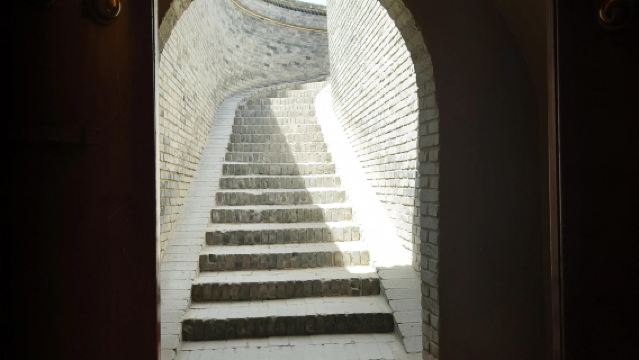
One-day private chartered car tour to Yongle Palace + Temple of Prince Guangren + Fengling Ancient Ferry + Yuncheng Salt Lake in Yuncheng, Shanxi
󱌍
From€ 120.80
1-day Tour to Sanmenxia Museum + Hangu Pass + Shan Zhou Silo-Cave in Henan with Chinese and English Services
󱌍
5% off
Limited-time sale
From€ 178.06€ 187.44
One-day private chartered car tour to Guan Gong's hometown, Yongle Palace and Guanque Tower in Yuncheng, Shanxi [Easy travel]
󱌍
From€ 113.25

Featured Day tours in Xia County

View all Day tours
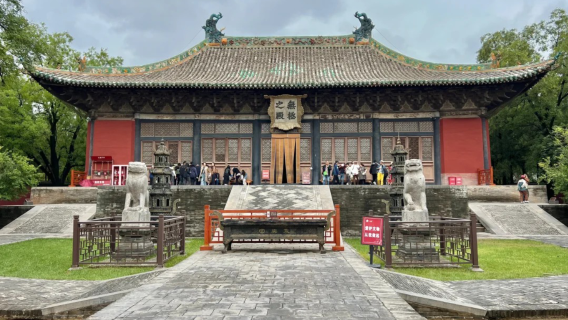
Luoyang, Henan: Longtan Grand Canyon & Red Rock Zhang Valley Geological Wonder Chinese Group Day Tour
󱌍
5.0/5
· 1 review
Duration: 6.5 hrs
English
Instant confirmation
Book now for tomorrow
From€ 60.92
Private One-Day Tour: Yongle Palace · Guan Emperor Temple · Yuncheng Salt Lake
󱌍
Duration: 9.5 hrs
English
Free cancellation
Instant confirmation
Book now for tomorrow
From€ 77.22
Luoyang Longtan Grand Canyon 1-day tour ◆ Premium small group/door-to-door transfer/pure play + English-speaking guide
󱌍
Duration: 8.5 hrs
English
Free cancellation
Instant confirmation
Book now for tomorrow
From€ 155.89
Xia County Today's weatherFoggy 5-15℃
Xia County weather for the next 2 days11/16: 3-9℃, 11/17: -1-9℃

Free things to do in Xia County

What travellers say about Xia County
user-avatar
侧手翻小子11 November 2026
5.0
The construction is absolutely stunning, especially the night view! The antique buildings and lanterns create a feeling of stepping back in time. The silver-threaded ancient buildings, combined with the lights and "snowflakes," are incredibly romantic. The NPCs' costumes are exquisite, they're very enthusiastic, and the interactions are excellent. Everywhere you go in the scenic area, they're incredibly helpful when you ask questions—they're practically the equivalent of Pang Donglai in the cultural tourism world! The Bianhe River cruise is fantastic value; definitely buy the combined ticket and take the Imperial River section. Every bridge and archway feels like stepping into a painting. There are also shows along the river. The experience is truly exceptional. The only downside is that Wansui Mountain Scenic Area gets incredibly crowded. Going during the off-season would be an even better experience.

Wansuishan Martial Arts City

user-avatar
M55***2018 August 2026
5.0
It's very worthwhile, but it's also very crowded, which might slightly detract from the overall experience. However, the people are incredibly welcoming, and there are many beautiful spots for taking photos. The food is also affordable and inexpensive, which kids enjoy. I'll definitely go back when it's less crowded.

Song Du Huangcheng Cultural Tourism Resort

user-avatar
_TI***gu14 November 2026
4.0
I think this place is worth a visit because of the history behind it and a once in a lifetime experience. I would do it again, just to know more of the history.

Xi'an Museum

user-avatar
Anonymous user13 November 2026
5.0
You can buy tickets at Hukou Waterfall in Shanxi or Shaanxi, which allows you to visit both waterfalls on either side of the province with one ticket. Shanxi currently offers cultural tourism vouchers with discounts, and booking is convenient and fast. You can simply use your ID card at the scenic area.

The Hukou Waterfall Scenic Area

user-avatar
呦未来可期15 October 2026
5.0
Take a stroll through the Tang Dynasty Never-Sleeping City on a pleasant autumn evening. The evening breeze is cool, the lights are dazzling, and the atmosphere of the Tang Dynasty is palpable. Street performances are everywhere, and tourists come and go, creating a lively scene. No need to plan a route; just wander around and explore as you please. Immersed in this world of lights, feeling the warmth of everyday life and ancient charm, this is what small satisfactions in ordinary days are all about. Chang'an's autumn nights are as bright as ever.

Grand Tang Mall

user-avatar
媛孩4 October 2026
1.0
It's a complete waste of money; it has absolutely no scenic value.

China Dead Sea, Yuncheng Salt Lake – Colorful Salt Lake Scenic Area

user-avatar
M2t***pr15 November 2026
5.0
My experience in Pingyao Ancient City was fantastic! The sightseeing bus was very convenient; the ancient city has long streets and alleys, so taking the bus saved energy, and you could stop whenever you wanted, saving both time and effort. The guide's explanations were professional and engaging, vividly recounting the Shanxi merchants' banks, the ancient city's architecture, and folk tales—not just dry recitation, but captivating the audience. The route was well-planned, the pace relaxed, and they even thoughtfully reminded us of key points and offered tips to avoid tourist traps. What was originally a rushed visit to the ancient city became much more meaningful after the explanations, with a deeper understanding of its historical significance. There was absolutely no hard selling throughout the entire tour. I highly recommend the sightseeing bus with a guided tour when visiting Pingyao; it's an immersive experience of the ancient city's charm and definitely worthwhile!

Pingyao Ancient City

user-avatar
_We***8614 November 2026
5.0
The parking lot is quite a distance from the actual attractions; it's too far if you don't take a car. However, the Yellow River is still breathtaking and definitely worth visiting, even though the water is truly yellow.

Hukou Waterfall tourist area of the Yellow River

user-avatar
Anonymous user7 November 2026
5.0
Although the suspended sculptures at Xiaoxitian are only works from the late Ming and early Qing dynasties, they are still breathtaking when you visit in person. I entered the hall in the morning and saw the sunlight shining on the sculptures, making the trip worthwhile. I recommend visiting when there are fewer people and more sunshine, so you can take your time to appreciate them. The experience is definitely different from that during peak season.

Little Western Paradise

user-avatar
童哥哥2313 November 2026
5.0
The Xi'an Bell Tower is absolutely worth a visit, a five-star rating is a must! 🌟 🏯 Rich in History: Built in 1384 (the 17th year of the Hongwu reign of the Ming Dynasty), it is the largest and best-preserved bell tower in China, with over 600 years of history. Its triple-tiered, four-sided pyramidal roof, covered with dark green glazed tiles and gilded with real gold, showcases the magnificent style of Ming Dynasty architecture. 📍 Excellent Location: Located in the heart of Xi'an, at the intersection of four main streets, it is the landmark core of the ancient city. From the tower, you can enjoy panoramic views of all four main streets, offering an unobstructed view of the ancient city's layout! 🌃 Breathtaking Night View: As night falls, the entire bell tower is illuminated, resplendent in gold, reflecting the bustling city lights. Every snapshot is a masterpiece; it's truly the pinnacle of Xi'an's nighttime scenery! 📸 Perfect for taking photos: During the day, climb the tower to admire the details of the ancient architecture; in the evening, watch the sunset cast golden light on the glazed tiles; and at night, enjoy the light show—each time of day offers a different kind of beauty. Nearby are the Drum Tower and the Muslim Quarter, so after visiting the Bell Tower, you can easily sample all of Xi'an's delicious cuisine! A visit to the Bell Tower is a must when in Xi'an; experience the unique charm of this ancient capital. Highly recommended! 👍

Xi'an Bell Tower

Trip Moments in Xia County

Popular cities near Xia County

Frequently asked questions

When choosing a tour, start with how much time you have and the kind of experience you're looking for. Trending options right now include Luoyang, Henan: Longtan Grand Canyon & Red Rock Zhang Valley Geological Wonder Chinese Group Day Tour, Private One-Day Tour: Yongle Palace · Guan Emperor Temple · Yuncheng Salt Lake, and Luoyang Longtan Grand Canyon 1-day tour ◆ Premium small group/door-to-door transfer/pure play + English-speaking guide. Check the real-time availability and itinerary before you book.

As of 15 November 2026, the reference price for day tours and activities in Xia County is around EUR 60.92 – EUR 176.04. Rates vary by duration, group size, transport, tickets, meals, and any special admission requirements. Before you book, please confirm the billing currency and whether the price is quoted per person or per group.

Get help anytime, anywhere within 30 secondsContact customer support

Change and cancellation policies vary by attractions and tours. Please check the product details page for more information.

Ticket prices may vary between weekdays and weekends, as well as during peak and off-peak seasons. When booking with Trip.com, you can also use Trip Coins to get extra savings. For more tips on booking discounted tickets, please visit Trip.com for the latest information.