Yichuan

Things to do in Yichuan

Search attractions or local attractions & tours
Search

Explore top experiences

Top 10 attractions in Yichuan
View all Attractions
Grand Tang Mall
2027 Global 100 - Night Attractions

Grand Tang Mall

8.5
4.5/5
2.3k reviews

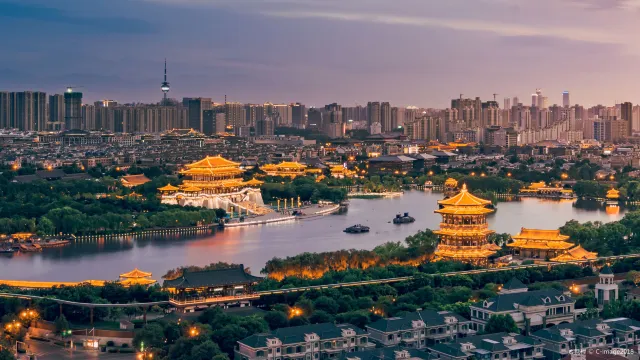
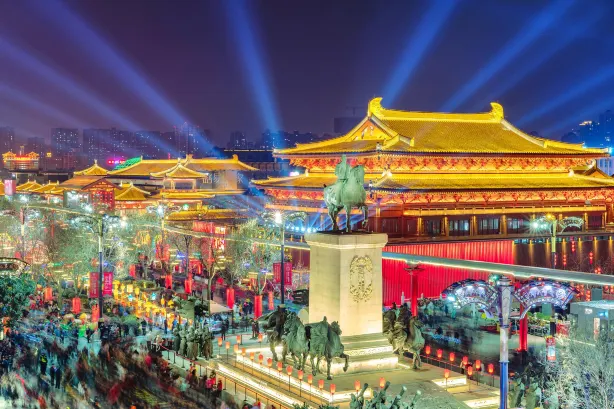
The Grand Tang Mall is a large pedestrian district of Tang-style architecture built around the Giant Wild Goose Pagoda in Xi'an's Qujiang New District. It runs from Xuanzang Plaza at the foot of the pagoda in the north to the Tang City Wall Ruins Park in the south, with an approx. 1,500 m central landscape avenue running the full length from north to south. The avenue itself is like an open-air sculpture gallery, lined from north to south with themed sculpture groups such as Tang Buddhist culture, the Tang hall of fame, the Zhenguan era of good governance, Empress Wu's procession, and the Kaiyuan golden age: statues of eminent monks such as Xuanzang and Jianzhen come first, Tang luminaries including Li Bai, Du Fu, Wu Daozi, and Sun Simiao stand in the middle, and the ceremonial group portraits of Emperor Taizong, Empress Wu Zetian, and Emperor Xuanzong are laid out after them—walking the whole route is almost like reading a three-dimensional history of the Tang Dynasty. The district links three major themed plazas from north to south—Xuanzang Plaza, Zhenguan Plaza, and Kaiyuan Plaza—with rows of Tang-style pavilions spreading out on both sides. Four cultural venues—Xi'an Concert Hall, Shaanxi Grand Theatre, Xi'an Art Museum, and Qujiang Pacific Cineplex—are distributed among them, so catching a concert, seeing an exhibition, and strolling and taking photos can all fit into the same itinerary. By day, admire the architecture and sculptures, but nightfall is when this street truly shines — once the lanterns are lit, the Tang-style pavilions glow with dazzling color, and the whole street feels like a re-creation of the golden age of the Tang Dynasty. Immersive street performances run year-round: a "tumbler girl" in Tang attire leans out mid-spin to hold hands with visitors; in "The Tang Dynasty Mystery Box," performers dressed as famous Tang figures randomly pick visitors to come on stage and answer questions or trade witty banter, with clever answers drawing cheers from the crowd; in the float color contest, Hu-style spinning dances and Tang court music and dance compete across the square; and a performer dressed as the Poet Immortal may challenge you to a round of poetry at any moment. These performances are scattered across the plazas along the route, so you might stumble upon one as you wander, and the lineup of shows and characters is refreshed from time to time. Visitors in hanfu taking photos can be seen everywhere on the street, and the Tang-style pavilions paired with the night scenery make for easy, photogenic shots; after nightfall the crowds are dense, so if you want a front-row spot for the popular shows, arrive a little early to wait. If your itinerary is tight, it's best to come around dusk and walk south from Xuanzang Square all the way to Kaiyuan Square, taking in the sculptures, lights, and performances all at once.

China · Xi'an
Free attraction
Pingyao Ancient City
2027 Asia 100 - Night Attractions

Pingyao Ancient City

8.4
4.6/5
27.4k reviews

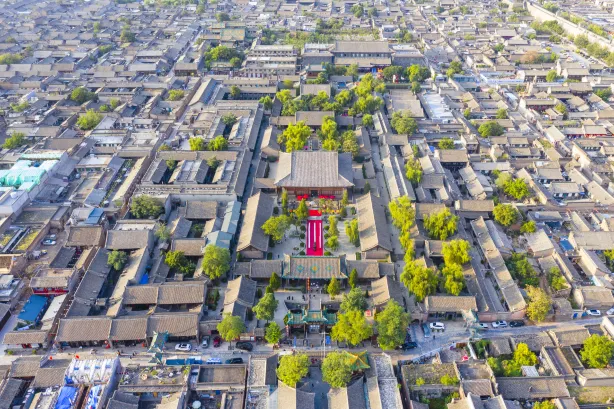
Pingyao Ancient City is one of the best-preserved ancient cities in China and, along with Lijiang Ancient City, is one of the two ancient cities in China to have successfully been designated as a World Cultural Heritage site in its entirety. Pingyao was once the financial center of China during the late Qing dynasty. Walking into this once-prosperous ancient city, you can feel the atmosphere of Shanxi merchant culture everywhere. The streets, shops, and residences within the ancient city still maintain their traditional layout and appearance. The overall street pattern is in the shape of the Chinese character 'tu', consisting of four main streets, eight small streets, and seventy-two lanes. The ancient city has six city gates in total, and the areas around the south gate and west gate are where visitors are concentrated. When touring, you usually enter the city through the lower west gate and walk along West Street to Rishengchang Exchange Shop, where you can learn about the development history of ancient banking and experience the legend of Shanxi merchants conducting business across the world. South Street, which runs north-south through the city, is the central axis of the ancient city. During the Ming and Qing dynasties, South Street gathered more than half of the country's financial institutions and was known as the "Wall Street of China" at the time. Today this street is called the Ming and Qing Ancient Street, and most of the ancient city's attractions are concentrated here. Centered on the landmark Market Tower, attractions such as Xietongqing Exchange Shop, Weitaihou Exchange Shop Museum, and the Chinese Escort Agency Museum are distributed around it, and a large number of shop buildings from the Ming and Qing periods are preserved along the street. At the Pingyao County Government Office in the south of the ancient city, you can see a large number of ancient documents and instruments of torture, and there is a daily performance of the county magistrate holding court; the City God Temple and the Confucian Temple in the east of the city have grand and refined architecture. The ancient city wall is very well preserved, and climbing the wall offers a panoramic view of the ancient city. The gate tower of Yingxun Gate at the south gate is especially exquisite, and watching the sunset from the city wall in the evening is a magnificent sight. In addition to the ancient city itself, the Zhenguo Temple and Shuanglin Temple outside the city are also part of the World Cultural Heritage. The Ten Thousand Buddha Hall of Zhenguo Temple is entirely made of wood, assembled with mortise and tenon joints without a single nail; Shuanglin Temple preserves painted sculptures from the Yuan to Ming dynasties, which are exquisite in form and renowned as a "treasure house of Eastern painted sculpture art."

China · Pingyao County
Save € 0.68From € 16.42
Little Western Paradise
No. 8 of Best Things to Do in Shanxi

Little Western Paradise

8.2
4.8/5
7.1k reviews

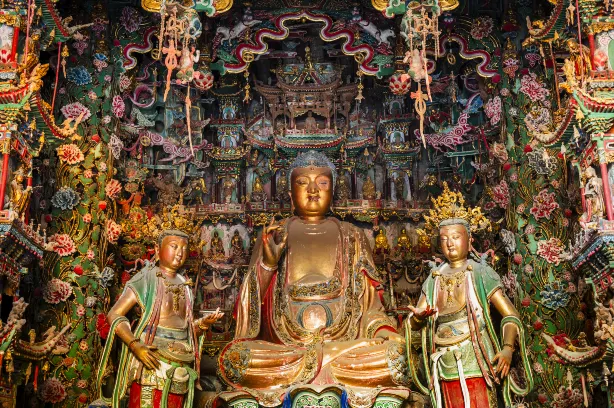
Little Western Paradise is perched atop Phoenix Mountain in Xi County, Linfen, Shanxi Province. This Buddhist temple, originally named the Thousand Buddha Nunnery, was established during the Chongzhen era of the Ming Dynasty. It earned its initial name from the thousand Buddha statues enshrined in its Main Hall of the Great Hero. Later, it was renamed due to the inscription "Entering the Western Paradise" above its gate and to distinguish it from another ancient temple, "Great Western Paradise," located south of the city. Surrounded by mountains on three sides and facing a river in front, the temple is compact yet ingeniously laid out across its upper and lower courtyards. Ascending the stone steps and passing through the secluded "Heavenly Grotto" corridor evokes a sense of gradually entering a Buddhist paradise. The upper courtyard centers around the Main Hall of the Great Hero, flanked by the Manjusri Hall and Samantabhadra Hall. The Main Hall is the temple's crowning jewel: within its modest 100-square-meter space, nearly 2,000 suspended sculptures adorn niches, gables, beams, and rafters, transforming the hall into a museum of suspended sculpture art. Five interconnected niches dominate the rear wall, housing the Medicine Buddha, Amitabha, Sakyamuni, Vairocana, and Maitreya seated on lotus thrones, with ten principal disciples standing beside them. The southern wall depicts Buddhist narratives featuring the Four Sages and Four Heavenly Kings, while the northern wall portrays the 33 celestial palaces of Mount Sumeru. Flying apsaras, divine birds, and musician bodhisattvas dance among clouds on the beams, their gilded polychrome surfaces retaining vibrant hues after centuries. This rare collection of late Ming to early Qing suspended sculptures has gained wider recognition since the temple became a filming location for the popular game Black Myth: Wukong, attracting many travelers for dedicated visits. The lower courtyard also rewards exploration: the Immeasurable Hall faces east, where dozens of bronze Buddha statues interplay with wooden celestial palaces in what was once the monks' meditation hall. Opposite stands the Skanda Hall, housing a single nanmu-carved statue of Skanda. The temple also preserves thousands of volumes from the Yongle Northern Canon, a Ming imperial gift. Visitors are advised to spend extra time in the Main Hall—dim lighting requires slow, upward gazes to appreciate the intricate details of the high-placed sculptures. After exploring both courtyards, one can ascend Solitary Paulownia Peak via the "Seemingly No Path" route behind Skanda Hall, where the Cloud-Touching Pavilion offers panoramic views of the rural landscape below.

Xi County · 99.6km from Yichuan
From € 4.80
Xi'an Bell Tower
2027 Global 100 - Night Attractions

Xi'an Bell Tower

8.2
4.5/5
25.5k reviews

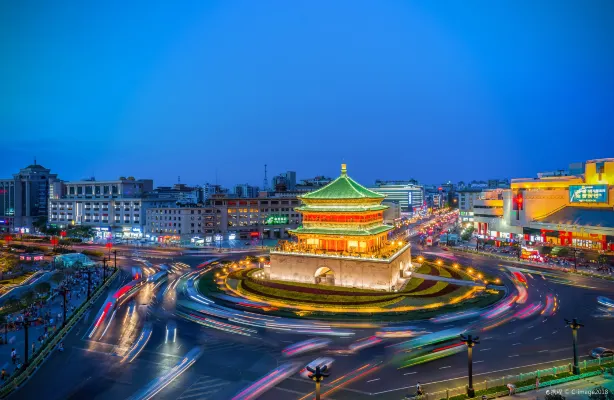
Xi'an Bell Tower is one of the larger and well-preservedBell tower, originally built in 1384, during the Hongwu reign of the Ming Dynasty,Bell towerLocated in the heart of Xi'an, it is one of the landmarks of the ancient city, radiating east, south, west, and north streets from its center, connecting to the east, south, west, and north gates of the Xi'an city wall respectively. The Xi'an Bell Tower was originally located on Guangji Street in the west. As the city center shifted eastward, it was relocated toDrum towerEast side, today's location. The Xi'an Bell Tower features a typical Ming Dynasty architectural style, with a square brick-and-stone base at the bottom and a triple-eaved pyramidal roof structure at the top, covered with dark green glazed tiles. The gilded pinnacle at the roof's apex is particularly striking under sunlight. Each side of the base has a central arched doorway approx. 6 m high, which were interconnected and once served as passageways for the intersection of four major streets—east, south, west, and north—allowing pedestrian and vehicular traffic. These doorways are now sealed, with a traffic roundabout built around them and an underground pedestrian passage. The entrance to the Xi'an Bell Tower is located within this underground passage, accessible via a spiral staircase. Inside the tower, there is a replica of the "Jingyun Bell," whose original was cast in the second year of Emperor Ruizong's Jingyun era (711 AD) during the Tang Dynasty and is now housed in the Xi'an Beilin Museum. Standing on the Xi'an Bell Tower, you can see the four main streets extending east, south, west, and north from the Xi'an Bell Tower. Around the Xi'an Bell Tower, there are bustling commercial areas and not far awayDrum towerTravelers can also enjoy wonderful historical performances when visiting the Xi'an Bell Tower.

China · Xi'an
From € 4.11
Museums in Xi'an
No. 1 of Activities in Shaanxi

Museums in Xi'an

8.2

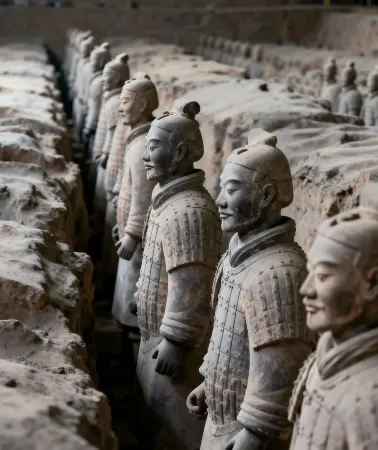
Xi'an Museum Tour explores imperial, archaeological, and artistic key museums with immersive activities, revealing the ancient capital's history across thirteen dynasties. Imperial Mausoleum Site Museums:Unearth the secrets of the Terracotta Army. At this UNESCO-listed site, witness the “Eighth Wonder of the World”—a stunning display ideal for history enthusiasts and families to explore the legacy of the Qin Dynasty. Archaeological Science & Art Museums:Get hands-on with the science of excavation. Here, visitors engage with restored artifacts, tech-assisted archaeology, and exhibits on cultural progress—highlighting the blend of science and art behind uncovering the past. Stele Calligraphy Art Museums:Dialogue with stone-carved classics. Home to steles, epitaphs, and calligraphic masterpieces, this museum offers a journey through the evolution of script, Confucian texts, and the legacy of Central Plains civilization. Prehistoric Sites & City History Museums:Trace the roots of ancient Chang'an. The Banpo Museum showcases a 6,000-year-old matriarchal village, while Xi'an Museum combines the Xiaoyan Pagoda landscape with artifacts from Zhou to Tang dynasties, illustrating the city's birth and growth. Museum Combo Tour: A curated combination of museum visits that weaves together iconic collections to form a holistic understanding of Chang'an from multiple perspectives, offering profound insights into the cultural legacy of this ancient capital of thirteen dynasties.

China · Xi'an
From € 11.64
Shanxi Museum
No. 9 of Best Things to Do in Shanxi

Shanxi Museum

8.2
4.8/5
3.5k reviews

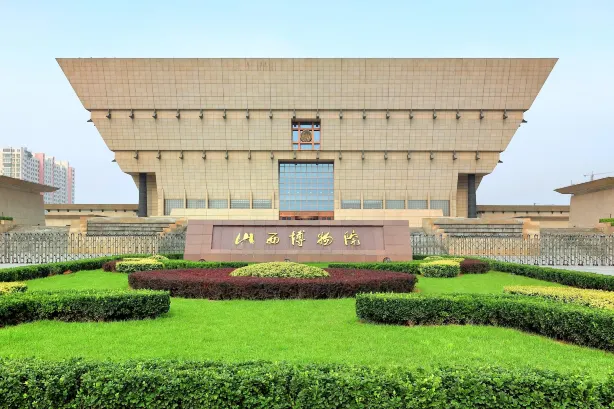
"Five thousand years of history can be seen in Shanxi." Located on Binhe West Road in Taiyuan, the Shanxi Museum showcases the essence of Shanxi's cultural relics. The museum consists of a main building and four corner annexes, with the main building resembling both a dipper and a ding vessel, serving as the primary venue for travelers to view the collection. The main building has four floors. The first-floor lobby features a general service desk, while the second and third floors host thematic exhibitions on history and culture. The fourth floor showcases art-themed exhibitions, which together form the permanent displays of the Shanxi Museum. After entering the first-floor lobby, proceed to the second floor via the stairs to begin the historical journey themed "Soul of Jin." The cultural and historical thematic exhibition showcases the highlights of Shanxi's five-thousand-year civilization through numerous precious artifacts, ranging from ancient human relics to the rise and fall of Shanxi merchants during the Ming and Qing dynasties over five centuries. During your visit, several exquisite artifacts are not to be missed. The bird zun, a bronze ritual vessel from the Western Zhou period, was used in the ancestral temple sacrifices of the Jin marquis. The bird zun features an exquisitely crafted design with a phoenix as its main form. On the phoenix's back rests a small bird, serving as the handle for the vessel's lid. At the tail of the phoenix, an elephant is depicted, with its long trunk perfectly balancing the phoenix's two legs to form a stable tripod base. This artifact is a representative piece among the bronze collections in the museum. In addition, you can also admire: the Houma covenant texts, which are oath documents from the Spring and Autumn period used by the ministers of the Jin state; the lacquered wooden panel paintings, a painted screen from the Northern Wei dynasty depicting colorful stories from the "Biographies of Exemplary Women"; the white marble sarcophagus, a relic from the Sui dynasty, belonging to a tomb occupant who was a member of the Central Asian Yu people, with intricate carvings both inside and outside the sarcophagus, featuring figures with deep-set eyes, high noses, and black hair, characteristic of the Mediterranean Caucasian race. In the cultural thematic exhibition, you can also learn about the origins and development of Buddhism and traditional opera in Shanxi. The fourth floor of the main hall features an art thematic exhibition area. Among them, the "Timber and earth splendor" - ancient architectural art thematic exhibition showcases Shanxi's status as a province rich in cultural relics and ancient structures. "For above-ground relics, look to Shanxi" - Shanxi is renowned as the "treasure trove of ancient Chinese architecture," boasting over half of China's above-ground ancient structures with comprehensive categories, especially in the quantity of religious buildings. If you're a fan of ancient architecture, this is a must-visit. The Shanxi Museum also hosts temporary exhibitions periodically. At the first-floor lobby service desk, services such as hiring on-site guides (Chinese and English) and renting audio guides are available. The main building also houses a restaurant and a tea house for visitors.

China · Taiyuan
Free attraction
Tang Paradise
2027 Asia 100 - Night Attractions

Tang Paradise

8
4.4/5
27.4k reviews

Tang Paradise, a national 5A attraction, is located in Qujiang New District in the south of Xi'an City, not far away from the Big Wild Goose Pagoda. It covers an area of ​​998 acres, including 300 acres of water area, 440 acres of green space, and a construction area of ​​nearly 100,000 square meters. The overall planning and architectural design of the park's architecture is by Mr. Zhang Jinqiu, an academician of the Chinese Academy of Engineering, and the garden landscape design is by Mr. Hiroshi Akiyama, a Japanese garden master. It is a large-scale cultural theme heritage park that comprehensively displays the style of the prosperous Tang Dynasty. Since its official opening to the outside world on April 11, 2005 (the third day of the third lunar month), it has been committed to creating high-quality, high-standard brand tourist attractions. Tang Paradise aims to build "a garden of history, a garden of spirit, a garden of nature, a garden of humanity, and a garden of art". It specially invited more than ten Tang historians, Tang poems, Tang paintings, etc. from the China Tang Dynasty Literature Society. An expert group composed of Tang construction experts, doctoral supervisors, researchers and tourism experts re-excavated and sorted out the historical and cultural content of Tang Paradise, re-planned and positioned the entire garden landscape, and divided into fourteen ares including the imperial cultural area, female Cultural area, poetry culture area, imperial examination culture area, tea culture area, song and dance culture area, food culture area, folk culture area, diplomatic culture area, Buddhist culture area, Taoism culture area, children's play area, gate landscape culture area and water show performance area, fully reproduce the splendid civilization of the Tang Dynasty. There are more than 20 scenic spots such as Ziyun Tower, Ladies Pavilion, Lu Yu Tea House, Apricot Garden, Caixia Corridor, Qujiang Drinking, Beauty Walk, Tang Poetry Gorge, Dogwood Terrace, etc. It displays the Tang Dynasty's dazzling spiritual outlook and splendid and unparalleled culture and art. It is known as a tourist attraction that “shocks the Chinese people and amazes the world”. The theme performance of the attraction is the large-scale water dance light and shadow show "Chasing Dreams of the Tang Dynasty", and you can take a boat trip to the dreamy holy land; the large-scale super-dimensional situation dance drama "Dreams of the Tang Dynasty" is majestic and dreamlike; the palace Yan music of the Tang Dynasty "Drums" performs Dongcang drum music, an intangible cultural heritage of mankind, as well as high-quality cultural tourism activities such as the New Year Festival, Shangsi Festival, and Qujiang Flower Moon Banquet. Brands and projects. The multiple Complimentary attractions and exciting performances every day are a warm invitation from the Tang Dynasty royal family to tourists, allowing them to experience the sacred and grandeur of royal culture in a shocking way. As a theme heritage park with excellent quality, full of personality and rich cultural connotation, Tang Paradise is a cultural window for Xi'an to show the world the ancient historical heritage of Chang'an and the prosperous Tang Dynasty, and a cultural gateway to attract the world to understand China...

China · Xi'an
18% offFrom € 13.38
Big Wild Goose Pagoda
No. 2 of Global Traveller-Picked Attractions in Xi'an

Big Wild Goose Pagoda

8
4.7/5
11.3k reviews

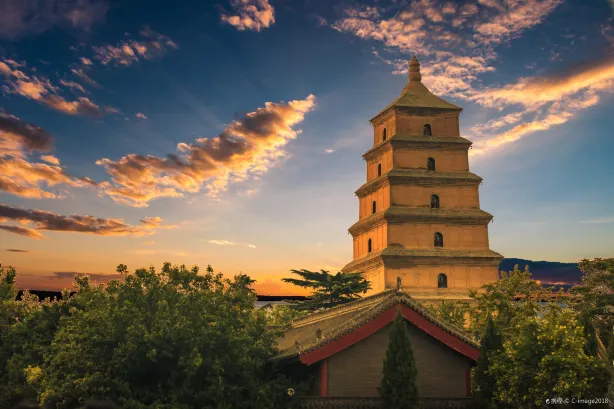
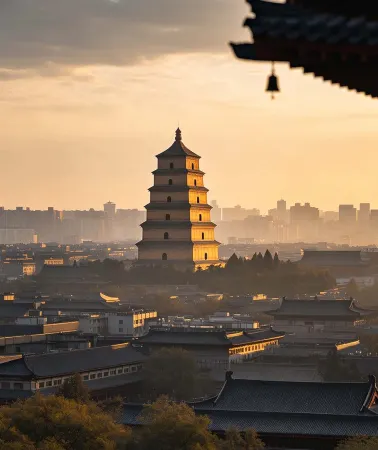
The Big Wild Goose Pagoda is located in the Da Ci'en Temple in the southern part of the city. The Da Ci'en Temple was a magnificent royal temple in Chang'an during the Tang Dynasty. It was built during the reign of Emperor Taizong of the Tang Dynasty by Crown Prince Li Zhi in memory of his mother, Empress Wende, and was first abboted by Master Xuanzang, who had returned from his journey to the West to seek Buddhist scriptures. During this period, the master supervised the construction of the Dayan Pagoda. Master Xuanzang translated Buddhist scriptures and promoted Buddhism in Da Ci'en Temple for 11 years, and founded the "Appearance-Only School" of Buddhism, making Da Ci'en Temple the ancestral temple of the Appearance-Only School (also known as the "Faxiang School"). During this period, the master personally supervised the construction of the Dayan Pagoda to enshrine the scriptures, statues and relics brought back from India. The current Da Ci'en Temple was built in the Ming Dynasty on the basis of the original temple "West Pagoda Courtyard", and most of the existing halls are buildings from the Qing Dynasty. The main buildings on the central axis of the temple are the Great Hall, the Dharma Hall, the Dayan Pagoda, and the Xuanzang Tripitaka Courtyard. Among them, the Buddha's relics enshrined in the Big Wild Goose Pagoda and the parietal bones of Master Xuanzang are respectively enshrined in the Xuanzang Tripitaka Courtyard, which are the "treasures of the temple" of Da Ci'en Temple. To the east of the central axis of the temple is the Pagoda Garden. Within the garden are nine stupas housing the relics of nine eminent monks of the temple since the Qing Dynasty. There are squares to the south and north of Da Ci'en Temple. There are also Shaanxi History Museum and Tang Paradise Souvenir .

China · Xi'an
From € 1.37

Experiences you can't miss in Yichuan

Featured Culture & history in Yichuan

View all Culture & history
More things to do

Private Tours in Yichuan

View More Private Tours in Yichuan
Group Tours in Yichuan

View More Group Tours in Yichuan

Yichuan Today's weatherOvercast -2-16℃
Yichuan weather for the next 2 days11/27: -8-11℃, 11/28: -6-8℃

Free things to do in Yichuan
What travellers say about Yichuan

user-avatar
呦未来可期15 October 2026
5.0
Take a stroll through the Tang Dynasty Never-Sleeping City on a pleasant autumn evening. The evening breeze is cool, the lights are dazzling, and the atmosphere of the Tang Dynasty is palpable. Street performances are everywhere, and tourists come and go, creating a lively scene. No need to plan a route; just wander around and explore as you please. Immersed in this world of lights, feeling the warmth of everyday life and ancient charm, this is what small satisfactions in ordinary days are all about. Chang'an's autumn nights are as bright as ever.

Grand Tang Mall

user-avatar
苇城春秋24 November 2026
4.0
The attractions included in the pass are quite similar, mostly consisting of Shanxi merchant banks, security escort agencies, and ancient residences, leading to repetitive content and easy aesthetic fatigue. Although the pass includes 22 attractions, most tourists only visit 7 or 8.

Pingyao Ancient City

user-avatar
Anonymous user7 November 2026
5.0
Although the suspended sculptures at Xiaoxitian are only works from the late Ming and early Qing dynasties, they are still breathtaking when you visit in person. I entered the hall in the morning and saw the sunlight shining on the sculptures, making the trip worthwhile. I recommend visiting when there are fewer people and more sunshine, so you can take your time to appreciate them. The experience is definitely different from that during peak season.

Little Western Paradise
user-avatar
新一代徐霞客123 November 2026
5.0
The Xi'an Bell Tower is a landmark in the city center of Xi'an. The Ming Dynasty bell tower features a vermilion pavilion with glazed tiles. It is most photogenic when lit up at night. Climbing the tower, you can overlook the traffic flow of the four main streets in the east, west, south and north, and feel the convergence of the ancient and the modern.

Xi'an Bell Tower

user-avatar
M33***9716 November 2026
5.0
Three hours of patient and meticulous explanations this morning, and Ms. Ma demonstrated her professional expertise. Timely interaction, engaging stories, insightful and independent analytical thinking, and a warm service attitude made our museum visit a perfect success. Thank you for your hard work!

Shanxi Museum

user-avatar
hys60014 November 2026
5.0
Excellent value for money! The quality is very good for this price, definitely worth buying again!

Tang Paradise

user-avatar
dangdangdangdangdangdang25 November 2026
5.0
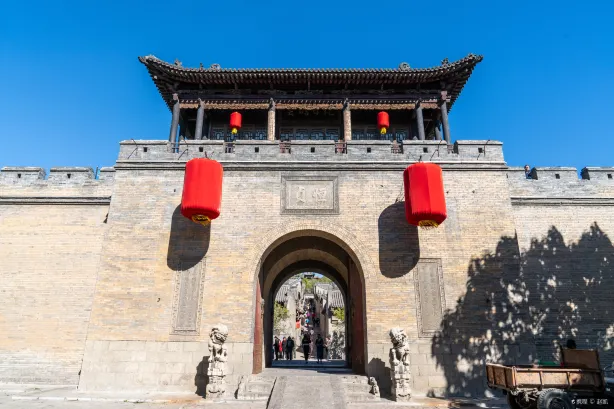
It's definitely worth the ticket price, and it is indeed the largest well-preserved group of ancient folk buildings and residences in China. However, it feels less developed than the Qiao Family Compound and lacks depth. The soul of the Wang Family Compound was not fully displayed, which is a bit of a pity.

WANG JIA DA YUAN

user-avatar
M48***0022 November 2026
5.0
This is my second visit, and I still feel like I haven't had enough. Each time, I'm drawn to the tranquil gardens and the sacred Big Wild Goose Pagoda. My favorite part is strolling around the pagoda, listening attentively to the crisp sound of the bronze bells on the eaves in the gentle breeze; it brings a special sense of peace and tranquility to my soul.

Big Wild Goose Pagoda

Popular cities near Yichuan

Frequently asked questions

How can I contact Trip.com customer support?

Get help anytime, anywhere within 30 secondsContact customer support

Change and cancellation policies vary by attractions and tours. Please check the product details page for more information.

Ticket prices may vary between weekdays and weekends, as well as during peak and off-peak seasons. When booking with Trip.com, you can also use Trip Coins to get extra savings. For more tips on booking discounted tickets, please visit Trip.com for the latest information.