Yuping

Things to do in Yuping

Search attractions or local attractions & tours
Search

Explore top experiences

Top 10 attractions in Yuping

View all Attractions
Fanjing Mountain
2026 Asia 100 - Best Things to Do

Fanjing Mountain

9
4.6/5
23k reviews

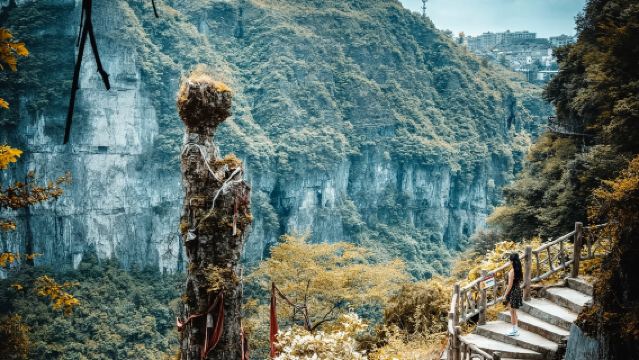
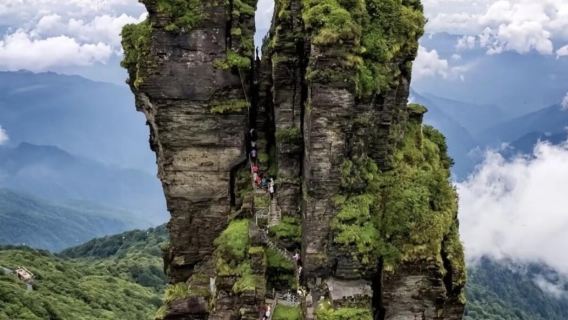
Fanjing Mountain is located in Tongren City in the northeastern part of Guizhou Province. It is the main peak of the Wuling Mountains, spanning the junction of three counties: Jiangkou, Yinjiang, and Songtao. Its highest peak, Fenghuang Mountain, rises over 2,500 meters above sea level; the Old Golden Summit is over 2,400 meters, and the New Golden Summit, also known as the Red Cloud Golden Summit, is over 2,300 meters. The three peaks stand side by side in majestic grandeur. Fanjing Mountain was originally named "Three Valleys Mountain," derived from "Fanjing Pure Land." Buddhism was introduced to this area during the Song Dynasty and flourished in the Ming Dynasty, when temples and monasteries dotted the mountain. Because its towering height rivaled the Five Great Mountains, the ancients honored it as "the patriarch of famous mountains." The Red Cloud Golden Summit is the iconic view of the entire mountain—a solitary peak rising straight from the ground and piercing the sky. The Golden Knife Gorge splits the summit from top to bottom into two halves, with only a narrow canyon where one can climb up along iron chains, and the gorge tops are connected by a flying bridge, making it extremely precipitous. At the summit, the Shakyamuni Hall and the Maitreya Hall face each other, serving as the core symbol of the Maitreya sacred site. The three main peaks connect to form a reclining Maitreya statue stretching over 10,000 m, which locals call "Fanjing Mountain." The Mushroom Stone is another representative view—a sandy slate pillar that is large at the top and small at the bottom, shaped like a mushroom, approx. 10 m tall, appearing on the verge of toppling yet having stood for many years. The surrounding stone forest peak clusters, such as the Ten Thousand Scrolls of Scriptures and Eagle Rock, are geological relics formed over a billion years ago and sculpted by wind and rain erosion. The mountain also preserves a well-intact subtropical primary ecosystem, where the Guizhou golden snout monkey is distributed, and ancient rare plants such as the dove tree also thrive and reproduce here. In fall, the layered forests are dyed in brilliant colors, and the red leaves in the mountains set off the ancient temple; you can take a cable car to overlook the autumn colors across the mountain, or follow the mountain trails to experience them up close.

Jiangkou · 73.7km from Yuping
Tianmen Mountain National Forest Park
2026 Global 100 - Best Things to Do

Tianmen Mountain National Forest Park

9.3
4.6/5
55.1k reviews

Tianmen Mountain National Forest Park is named after the natural wonder "Tianmen Mountain National Forest Park - Tianmen Cave." When visiting the attraction, you can enjoy a bird's-eye view of the winding Heaven-Linking Avenue and the stunning mountain scenery from the cable car. The brave can also walk along the cliff-hugging glass skywalk for an exhilarating aerial experience. Tianmen Mountain National Forest Park is located close to Zhangjiajie city. The Tianmen Cave in the park is a natural karst cave, and locals believe it leads directly to heaven. For ordinary travelers, Tianmen Cave is not open year-round. During winter each year, due to snow and icy roads, both Tianmen Cave and the Avenue toward Heaven (a winding mountain road with 99 turns) leading to it are closed. The lower station of the attraction's cableway is located in Guanliping, Yongding District, and the upper station isTianmen MountainTop. In 2020, the attraction opened the express cableway. The lower station of the express cableway is near the entrance to Tianmen Mountain, and the upper station is atTianmen CaveNear the parking lot. Tianmen Mountain National Forest Park is filled with ancient towering trees and intertwined vines. The attraction is divided into several main areas, including Tianmen Mountain National Forest Park - Tianmen Cave, central route, eastern route and western route. Travelers can choose different routes and areas to explore based on their preferences and physical condition. The core attraction along the central route is Tianmen Mountain Temple. Nearby lies the "Child-seeking cave," where folk legends claim Guanyin, the child-giving bodhisattva, manifested her divine power—devout prayers here are believed to grant offspring. The western route's highlight is a 60 m-long glass walkway clinging to sheer cliffs, with fully transparent flooring that induces both vertigo and exhilaration as visitors tread above abysses. Currently, the eastern route and Panlong Cliff each feature their own approx. 60 m glass walkways. No stay is allowed in the attraction, so it can only be visited within one day. There is a "Cherry Bay Restaurant" near Tianmen Mountain Temple, which offers snacks and fast food. Near the lower station of Tianmen Mountain cableway, there is transportation to the "Grand Canyon Theater", where you can watch the live show and magical musical "Tianmen Fox Fairy". Adapted from the mythological tale "Liu Hai cuts firewood", it tells a touching love story between a human and a fox. With live music, lighting effects, and captivating scenes like a giant moon, fox spirit transformations, snowflakes filling the sky, and high-altitude flying bridges, this legendary romance is vividly brought to life.

China · Zhangjiajie
Dong Ethnic Culture Park

Dong Ethnic Culture Park

2.8
5.0/5
1 reviews

Yuping Dongxiang Folk Customs Park is located in Tianping Town, Yuping Dong Autonomous County, Guizhou Province, one of the five Dong Autonomous Counties in China. It is known as the "Hometown of Chinese Flute", "Hometown of Chinese Oil Tea", "Hometown of Dong Culture and Art", and "Hometown of Chinese Yellow Peach". It is a key town for rural tourism in China. The Attraction is 30 kilometers away from Yuping County, 13 kilometers away from Xinhuang County, and 30 kilometers away from Tongren City. It is adjacent to the Yutongsong Intercity Expressway and is located in the center of Tongren South High-speed Railway Station, Xinhuang West Station, and Zhusha Ancient Town Station. The drive time is within 25 minutes. The total planned area of ​​the Attraction is 1.87 square kilometers. It mainly builds a 20,000-square-meter contiguous traditional Dong wooden building complex, a tourist service center, a drum tower square, the folk lanes of the Northern Dong Village, the Dong Village health and wellness farm, the Dongshui Leyang Valley, the aromatherapy base, the waterside resort, the Tianmu Education Practice Complex, the service base, the heartbeat valley, the Linze Wooden House Hotel (Art Forest), the endless rural market, the Huang Family Courtyard Traditional Village, the Yuping Oil Tea Exhibition Center, the Dong Village Outlets Mall, the Internet celebrity live broadcast incubation base, ethnic characteristics experience, health and leisure facilities, etc. It is a comprehensive scenic Attraction that will create a health and wellness resort in the southwest region with the theme of "Golden Dong Village, Health and Wellness Yuping".

Yuping · 889m from downtown
Zhangjiajie National Forest Park
2026 Global 100 - Best Things to Do

Zhangjiajie National Forest Park

9.1
4.6/5
40.1k reviews

Zhangjiajie National Forest Park is where Zhangjiajie tourism starts. "The world knows Zhangjiajie, but who knows Wulingyuan?" Many travelers cannot distinguish the relationship between Zhangjiajie and Wulingyuan. Generally, Zhangjiajie has two concepts: Zhangjiajie City and Zhangjiajie Scenic Area. Zhangjiajie Scenic Area refers to Zhangjiajie National Forest Park, which together with Tianzi Mountain, Suoxiyu, and Yangjiajie forms the Wulingyuan attraction. Because Zhangjiajie National Forest Park was developed early and is well-known, even Zhangjiajie City was renamed after it, and people are accustomed to using Zhangjiajie National Forest Park or Zhangjiajie Scenic Area to refer to the Wulingyuan attraction. "Three thousand exotic peaks and eight hundred beautiful waters." The three thousand exotic peaks, in particular, are renowned worldwide. The mountains of Wulingyuan are entirely different from famous mountains around the world. Within its 398-square-kilometer area, more than 3,000 dense and intact sandstone peak pillars are scattered throughout, including 243 peak pillars over 1,000 meters tall. When the sea of clouds surges, these peak pillars appear to have no base, rising abruptly from the ground and piercing straight into the sky. Together with the redwood forests of North America and the glacial landscapes of Greenland, they constitute one of the world's four major natural geological wonders. Wulingyuan has a low elevation and is located in the subtropical zone. The area features lush forests and abundant water sources, and is home to a large number of endangered animal and plant species. Every peak pillar is full of vitality. Peak pillars, natural bridges, gorges, waterfalls, streams, pools, caves, and dense broad-leaved forests are often shrouded in mist and clouds on site, enhancing the beauty of the view. Together with the unique landforms, they form a distinctive view characterized by "steep mountains, elegant waters, wondrous peaks, secluded gorges, and beautiful caves," and are hailed as "an enlarged bonsai and a miniature fairyland." On December 14, 1992, the UNESCO World Heritage Committee unanimously approved the inclusion of Wulingyuan in the World Heritage List, filling the gap of China having no World Natural Heritage sites. The recognized outstanding universal value is: the quartz sandstone peak forest landform is rare in the world and has extremely high aesthetic value. UNESCO points out: "In terms of scenery, Wulingyuan can be compared with several national parks and monuments in the United States, such as the Grand Canyon, and can also be compared with the prominent sandstone peak areas of the Kimberley in Western Australia. However, because Wulingyuan has a lower elevation and is located in the subtropics, it has lush forests and abundant water sources. It also possesses a large number of peaks, displaying a more vertical profile than the heritage sites of the United States and Australia." At the end of 2009, the mesmerizing planet Pandora in the globally popular movie "Avatar" attracted countless viewers, and the prototype of its floating mountains originated from Wulingyuan. Meanwhile, Wulingyuan is also a live-action filming location for the Chinese classics "Dream of the Red Chamber" and "Journey to the West," as well as for films and TV dramas such as "Zhong Kui: Snow Girl and the Dark Crystal" and "Monster Hunt." In 2010, the unique landform of Wulingyuan was named "Zhangjiajie landform," becoming a globally recognized term and a rare landform type in the world named after a region. Attraction highlights Yuanjiajie: Landing on Pandora, the planet of Avatar Yuanjiajie is the filming location for the "Hallelujah Mountain" in the movie "Avatar," where you can explore the magical world of floating and scattered mountains from the film. If you happen to encounter a light rain in the mountains, or wait until the sky clears after the rain, you can enjoy the beautiful scenery of misty fog and layered peaks even more. The Mihun Platform is an ideal viewing spot; standing on it, you are surrounded by hundreds of towering stone peaks with magnificent momentum. Tianzi Mountain: once you've seen Tianzi, no other mountain will do When visiting Tianzi Mountain, you will see various uniquely shaped geological views and oddly formed peaks, such as Yubi Peak, Fairy Presenting Flowers, Dianjiang Terrace, Hanging Garden, and Immortal Bridge. There is no need to worry too much about whether these natural formations resemble what they are named after, because "the primitive scenery and natural beauty" are what make Tianzi Mountain so captivating. Especially in the hazy fog after a fresh rain, it feels as if you are in a fairyland. By winter, when the mountain is covered in silvery white, the scenery becomes even more enchanting. Huangshizhai: see all the other mountains as small from the summit "If you don't climb Huangshizhai, your trip to Zhangjiajie is in vain." Huangshizhai is a viewing platform in Zhangjiajie National Forest Park, surrounded by sheer cliffs and lush trees, and the top of the village is often shrouded in mist and clouds. Standing atop Huangshizhai and looking around, you can experience the lofty sentiment of "seeing all the other mountains as small." Yangjiajie: Thrills found in danger Yangjiajie is primarily known for its pristine natural beauty. With high mountains and narrow paths, it is famous for being "perilous" and is deeply favored by backpackers and adventurers. Wulong Village within the attraction is a very magical place in Zhangjiajie. It was once inhabited by bandits from western Hunan, and was later renamed after the TV series "Tales of Suppressing Bandits in Wulong Mountain." The village is built along the mountain, and there is a path up and down the mountain that requires using both hands and feet to climb to the summit. Suoxiyu: A natural ink wash landscape painting Suoxiyu is also called Suoxi, named because the stream within the attraction is shaped like a rope. Unlike other parts of the forest park, which are so steep and rugged, this place is shrouded in mist and clouds year-round, with clear streams flowing continuously through all four seasons and graceful peaks visible everywhere. Ten-Mile Gallery is the highlight attraction of Suoxiyu; within the 5 km-long gorge, wildflowers fragrance the air and fantastic peaks and unusual rocks abound. Walking through it is like stepping into a natural landscape painting. Golden Whip Stream: filming location of Journey to the West Jinbian Stream Gorge is the earliest developed area in the attraction. A clear stream runs through the valley, with towering peaks on both sides and lush greenery as far as the eye can see. This is also one of the filming locations for the classic version of Journey to the West, where fans can come and see iconic scenes such as the Water Curtain Cave and Cleaving the Mountain to Save the Mother.

China · Zhangjiajie
Elephant Hill Scenic Area
No. 1 of Best Things to Do in Guilin

Elephant Hill Scenic Area

8.9
4.6/5
25.7k reviews

The Elephant Hill Scenic Area is located in the heart of Guilin, at the confluence of the Li River and the Peach Blossom River. It derives its name from its resemblance to a giant elephant stretching its trunk to drink from the sweet waters of the Li River. In his work "Records of Elephant Hill," Shu Shu, a Qing Dynasty official from the Ministry of Works, wrote: "The marvels of Guangxi lie in its mountains; the marvels of Guangxi's mountains lie in their rocks, and the elephant-shaped hill facing the provincial capital is the most marvelous of all." With its lifelike form, the attraction captivates visitors and stands as a quintessential representation of Guilin's landscape. In 1995, it was designated as the city emblem of Guilin. The main attractions in the scenic area include: Elephant Hill and Water Moon, Puxian Pagoda, Elephant Hill Scenic Area and Guilin Sanhua Liquor, Elephant Hill Scenic Area - Love Island, and Elephant Hill Scenic Area - Yunfeng Temple Taiping Heavenly Kingdom Exhibition Hall. Elephant trunk hill and water moon cave "Elephant trunk hill and water moon" is a spectacular wonder here, as described in the poem by Ji Bei Hermit of the Song Dynasty.Harmony of water, moon and caveThe poem reads: "The moon is beneath the water, the moon floats upon the water. The water flows but the moon stays, the moon departs yet the water still flows." On a moonlit night, visiting the Water Moon Cave at the Elephant Trunk Hill attraction presents a magical scene where the moon in the sky, the cave, and the water reflect each other beautifully. Inside the cave, you can find the "Poem and Preface of the Morning Sun Pavilion" by Zhang Xiaoxiang from the Song Dynasty and works by Fan Chengda.Inscription on the water and moon caveAnd over 50 precious cliff carvings including Lu You's poetry manuscripts. Xiangshan scenic area - Puxian pagoda Winding up along the rocky cliffs, you can see the Puxian pagoda standing tall amidst the greenery from afar. Built during the Ming dynasty, this 13.6m-high solid brick lama-style pagoda has a history of over 400 years. On the northern side of the pagoda, there is a line-engraved bluestone statue of a bodhisattva, with the mantra "Namo Puxian Bodhisattva" inscribed above it, hence the name Puxian pagoda in the Xiangshan attraction. Buddhist scriptures record that Puxian bodhisattva's mount is a six-tusked white elephant, making the pagoda's location atop Xiangshan mountain a perfect embodiment of this scripture. Elephant Hill Scenic Area and Guilin Sanhua liquor This is a natural wine cellar, with two-thirds of the mountain being hollow. It stays warm in winter and cool in summer, maintaining a constant temperature of 19°C and humidity above 90% year-round. Since the Song Dynasty, it has served as an official cellar for storing Sanhua wine. Sanhua wine is colorless and transparent, with a fragrant yet spicy taste. It drawsLi RiverWith the essence of the mountains and the soul of the Li River, it has become a representative of China's rice-aroma liquor. The cellar liquor was designated as a tribute to the imperial court as early as the Northern Song Dynasty and is one of the three treasures of Guilin. To date, nearly a thousand tons of liquor are stored in the caves. Love island Love island is located on the north side of the attraction, adjacent toLi RiverIt is another scenic viewpoint for distant viewing. The island boasts a beautiful environment and lush vegetation, making it a popular dating spot for locals in the 1970s, hence the name "love island". Today, it serves as an outdoor photography base for wedding celebrations against the backdrop of Guilin's landscape, where couples make their vows of love under the witness of the elephant trunk hill and the moon reflected in the water.

China · Guilin
Xijiang Qianhu Miao Village
2026 Global 100 - Night Attractions

Xijiang Qianhu Miao Village

8.6
4.3/5
26.6k reviews

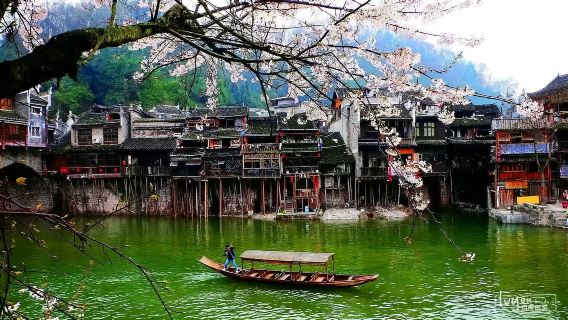
Xijiang Qianhu Miao Village is a collection of over ten natural villages built along the mountainside, inhabited by the "Xi" clan of the Miao people. The village features layers of wooden stilt houses on the slopes, with coffee-colored old houses nestled against lush green mountains. The Baishui River divides the village in two. The side of the river (to the left after entering the Xiaobei Gate for travelers) is mainly a commercial pedestrian street, while the opposite side (to the right after entering the Xiaobei Gate for travelers) is primarily the viewing platform overlooking the village. Upon arriving at Xijiang Qianhu Miao Village, you'll see a gate with the plaque "Xijiang Qianhu Miao Village" after getting off at the parking lot. From this gate to the village is a 1.5 km walk, which you can cover either by electric bikes or on foot. After this 1.5 km stretch, you'll encounter another gate similar to the one at the parking lot, also bearing the "Xijiang Qianhu Miao Village" plaque—this marks the true entrance to the village. First drink the welcoming wine, then enter the village. The first thing you see is the commercial pedestrian street, selling a dazzling array of Miao ethnic specialty products. The most eye-catching are the Miao silver ornaments. Kongbai in Xijiang town of Leishan near the Miao village is a well-known silversmith village, where almost all the men master the silver ornament making techniques, and the craftsmanship of Miao silver is exquisite. The performance venue in the pedestrian street area offers Miao ethnic song and dance shows. You can also visit the Xijiang Miao Ethnic Museum and the Drum Head's House (the Miao king's residence, where a bronze drum is enshrined). Alternatively, take a stroll along the Baishui River to see the wind-and-rain bridges with roofed eaves sheltering from the elements, or the low, narrow wooden plank bridges. At the end of the village lies a pastoral landscape, where even during peak season few visitors come. Across the river is a station for electric bikes to the viewing platform, but walking there isn't far, and several spots along the way offer excellent views. Upon reaching the viewing platform, wait for nightfall—the grand spectacle of Xijiang is just beginning. Thousands of lights illuminate from beneath the eaves of wooden stilt houses, dotted like stars to outline the entire Miao village in the shape of an ox head. It's hard to imagine such a brilliantly lit scene in a mountain village. Returning to the viewing platform at dawn, the Miao village is shrouded in mist as the first sunlight gilds the wooden houses golden. Smoke curls up from chimneys, marking the start of a new day. In Miao villages, you can often see Miao women with their hair buns coiled on top of their heads and adorned with large flowers. Just looking isn't enough—you can also rent a few sets of Miao costumes to dress up as a Miao woman yourself. It's especially beautiful and very popular among young women. Xijiang Qianhu Miao Village has mature tourism development, with no worries about food and accommodation. For dining, the famous option is the long-table banquet. Restaurants in the village will often ask if you'd like to try it—simply joining tables to make them longer counts as a long-table banquet, serving as a fun experience. The authentic long-table banquet is held outdoors, with dozens of tables connected end-to-end, sometimes so long that you can't see from one end to the other. These are set up during important festivals or when significant group tours visit, so don't miss the chance if you encounter one. The cuisine of southeastern Guizhou tends to be sour, and the village's specialty dishes include sour fish soup, pickled vegetables, and cured meat.

China · Leishan
Libo Xiaoqikong Scenic Area
2026 Global 50 - Cool Water Escapes

Libo Xiaoqikong Scenic Area

8.7
4.7/5
24.4k reviews

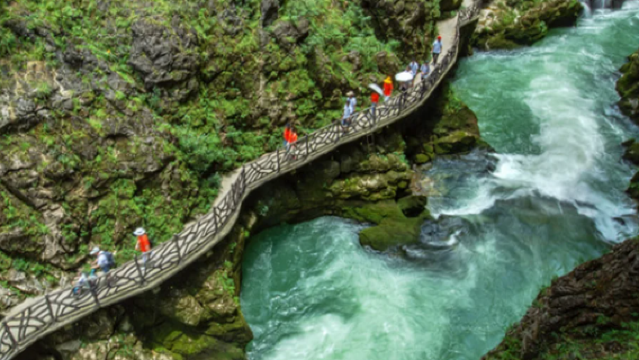
Libo Xiaoqikong Scenic Area is located among the peaks in the southern part of Libo County and is named after a seven-arch stone bridge built during the Daoguang era of the Qing Dynasty over the Xiangshui River. Set against a karst landscape, the scenic area brings together mountains, waters, forests, caves, lakes, and waterfalls, and is known as the "emerald on the Earth's belt." The Xiaoqikong ancient bridge is the attraction's signature view. The seven-arch stone arch bridge, built of bluestone, spans the Xiangshui River. Beneath the bridge, the water of Hanbi Pond is deep blue, and ancient trees tower on both banks, making it a classic photo spot. Following the Xiangshui River downstream, the 68-tier waterfall cascades in overlapping layers, with the river water dropping step by step over the karst rock surface with a roaring sound. Nearby, the Laya Waterfall pours down from the cliff beside the path, and visitors can feel the mist on their faces up close. The water forest is another unique view in the attraction, where trees take root among the streams in the water. Visitors walk along the stone stepping path through the forest, with babbling water beneath their feet and a canopy of green shade overhead. Mandarin Duck Lake is formed by two large lakes, the Male Mandarin Duck Lake and the Female Mandarin Duck Lake, connected with several small lakes. The lake surface is emerald green and serene, and boats can pass through the trees growing in the water. Wolong Pond is the surface outlet of an underground karst river. An arc-shaped stone embankment encloses the underground river water into a deep pond, and the water is as green as jade. Where the water overflows the stone embankment, a rolling-water waterfall forms, creating a striking contrast between the still pond and the moving waterfall. The area around the attraction is home to ethnic minorities such as the Bouyei and Yao, and villages like Yaoshan Ancient Village retain traditional dwellings and ethnic customs, adding cultural richness to the natural scenery. The attractions are distributed along the Xiangshui River; touring from Wolong Pond and Yuanyang Lake all the way down to the Xiaoqikong Ancient Bridge, walking along the stream is relatively effortless.

China · Libo
Wulong Karst Tourism Area

Wulong Karst Tourism Area

8.3
4.6/5
5.3k reviews

Wulong Karst Tourism Area is located in Wulong District, Chongqing, downstream of the Wu River, a tributary of the Yangtze River. It features a typical karst landscape, with magnificent natural bridges, vast sinkholes, and steep, deep gorges. You can descend into a 100 m deep sinkhole and look up at the towering cliffs surrounding you like clouds. Alternatively, you can explore the valley floor within the gorges, following the underground river along the rock walls, and experience the wonders of nature. Tiankeng attractionIt features natural bridge clusters and sinkhole clusters. The area gained widespread recognition after serving as a filming location for the movie Curse of the Golden Flower. It was also used as a filming location for Transformers: Age of Extinction. Longshuixia ground fissure offers a distinct experience: first take the sightseeing elevator down to the mountainside, then hike deep into the valley bottom, following the underground river along cliffside walkways with waterfalls and streams accompanying the journey, their sounds echoing between steep walls. Xiannü mountain presents a rare alpine grassland in southern China, averaging nearly 2 km in elevation where forests meet meadows, with summer temperatures around 20°C and winter ski opportunities; Furong cave is renowned for its cave deposition views, featuring stalactite marvels like Coral jade pool and Giant curtain waterfall, each displaying unique formations.

China · Chongqing
Three Natural Bridges
No. 2 of Global Traveller-Picked Attractions in Chongqing

Three Natural Bridges

8.3
4.6/5
17.4k reviews

Three Natural Bridges is located in Xiannüshan Town, Wulong, Chongqing, and is a typical karst landscape attraction. The three natural stone arch bridges—Tianlong Bridge, Qinglong Bridge, and Heilong Bridge—are arranged longitudinally and span the Yangshui River gorge in parallel, with each bridge standing more than 200 m tall, connecting the mountain masses on both banks into one whole and forming the unique view known as "three bridges flanking two pits." The huge depressions enclosed between the bridges are what people commonly call "heavenly pits." It is quite rare to find three giant natural bridges appearing in succession within such a short stretch of gorge—such a bridge cluster view is truly uncommon. The three bridges each have a distinct form: Tianlong Bridge is tall and massive, with a through-cave developed beneath it; after rain, waterfalls often cascade down from the deck of Qinglong Bridge, and the mist catches the sunlight to form a rainbow—hence the bridge's name; Heilong Bridge takes its name from its deep, dark arch cave, with several mountain springs hanging along its walls. At the bottom of the pits, streams murmur and trees are lush and green; looking up, you see nearly vertical cliff faces, with mountain springs plunging down from the cliff tops—walking through feels like passing through a gorge at the center of the earth. Tours usually begin by taking the sightseeing elevator down to the bottom of the sinkhole, then following the valley-floor trail through three bridge arches in succession, looking up at the bridge arches and cliff faces. Tianfu Post Station at the bottom of Tianlong Bridge sinkhole is a faux-antique quadrangle courtyard with gray-tiled roofs, gray walls, and upturned eaves. A post station once stood here during the Tang Dynasty, and the courtyard has been restored to its original appearance. Director Zhang Yimou's film "Curse of the Golden Flower" was shot on location here, and it is also a filming location for "Transformers: Age of Extinction" and the film adaptation of "Ten Miles of Peach Blossoms." After the tour, visitors can walk up the trail to exit the attraction and transfer to a shuttle bus back to Xiannüshan Town Visitor Center, or make a side trip to the adjacent Longshuixia Ground Fissure to see both karst landscapes—the "sinkhole" and the "ground fissure"—in one visit.

China · Chongqing

Experiences you can't miss in Yuping

Featured Culture & history in Yuping

View all Culture & history
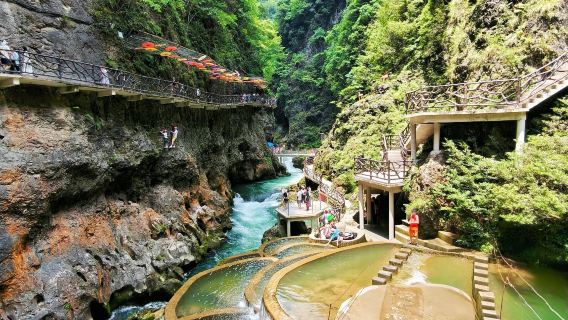
Must-Visit Twin Attractions in Tongren: Private Day Tour to Tongren Grand Canyon and Cinnabar Ancient Town
󱌍
From€ 70.42
Private Guided Day Tour from Guiyang to Zhenyuan Ancient Town, Qinglong Cave Scenic Area, and Shiping Mountain
󱌍
From€ 64.74
Zhangjiajie Private Day Tour to Fenghuang Ancient Town(including a Xiangxi batik activity)
󱌍
Duration: 9.7 hrs
English
Free cancellation
Instant confirmation
Book now for tomorrow
From€ 90.00
Yuping Today's weatherOvercast 12-17℃
Yuping weather for the next 2 days11/13: 12-18℃, 11/14: 12-22℃

Free things to do in Yuping

What travellers say about Yuping

user-avatar
ajohn111211 November 2026
4.0
The unique geological structure creates the special landscape of Fanjingshan. The three major scenic spots, Old Golden Summit, Red Cloud Golden Summit, and Mushroom Rock, each have their own unique style and charm. The scenic area management, including the entrance, cable car, and shuttle bus, is very mature, and the staff at each point are also very enthusiastic.

Fanjing Mountain

user-avatar
claire.bear9412 November 2026
4.0
Was a lovely day out at Tianmen mountain, a shame lines a and b were down, would have been good if they could compensate and discount the line c option since it’s the less fun route of the 3. Still all in all a good experience

Tianmen Mountain National Forest Park

user-avatar
_YX***0214 May 2022
5.0
Well worth a visit

Dong Ethnic Culture Park

user-avatar
JC Riano11 November 2026
5.0
An unforgettable experience, even in the mist!Visiting Zhangjiajie National Forest Park was an incredible experience! Despite the very misty and cloudy weather, it was wonderful to be surrounded by such an extraordinary natural landscape. Climbing the famous 999 steps was definitely one of the highlights!It was a shame that the weather didn’t allow us to fully enjoy the breathtaking views or explore everything as we would have liked, but the experience was still absolutely worth it.I truly hope to come back one day, hopefully with clearer skies, to admire the spectacular scenery in all its glory. Definitely a place worth visiting!

Zhangjiajie National Forest Park

user-avatar
可爱的旅游生活8931 October 2026
5.0
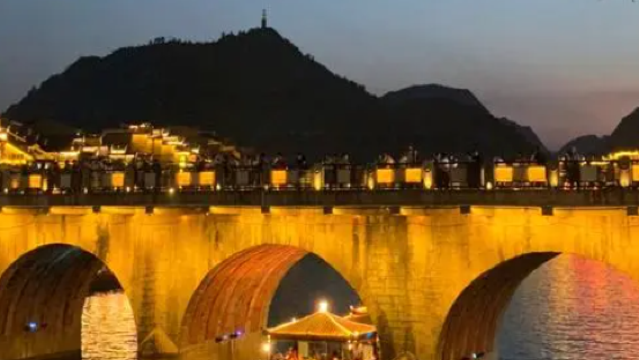
Zhenyuan Ancient Town is a 5A-level ancient town in Guizhou with a history of over a thousand years. The S-shaped water system of the Wuyang River creates a unique Tai Chi landscape. The biggest highlight is that the ancient town is open to the public free of charge, with restrained commercialization, preserving a strong local atmosphere. The stilted buildings, ancient alleys, and Zhusheng Bridge are highly recognizable, and the night view has a remarkable atmosphere, making it suitable for leisure, relaxation, and photography.

Zhenyuan Ancient Town

user-avatar
M45***4825 September 2026
5.0
When visiting Guilin, a must-see is Elephant Trunk Hill, the city's iconic landmark. It truly lives up to its reputation as the face of Guilin's landscape; only by seeing it in person can one truly appreciate the wonders of nature. The entire mountain sits on the banks of the Li River, resembling a giant elephant bowing to drink from the water. The Water Moon Cave cuts through the mountain, its reflection shimmering in the water, creating the famous Elephant Trunk Hill and Water Moon spectacle—a flowing ink painting. The scenic area is clean and comfortable, with walking paths built along the Li River, shaded by lush trees, making for a delightful stroll. You can climb the mountain for panoramic views of Guilin, or find classic vantage points along the riverbank to capture stunning, atmospheric photos. Boat trips are also available, offering a different and breathtaking perspective of Elephant Trunk Hill from the river. The scenic area is conveniently located in the city center, with excellent transportation and comprehensive facilities. Every step reveals a new vista, allowing you to truly experience the unparalleled beauty of Guilin's landscape. Don't miss it when traveling to Guilin; it's definitely worth a visit.

Elephant Hill Scenic Area

user-avatar
_TI***4711 November 2026
5.0
We really enjoyed visiting Xijiang Miao Village! During the day, the village is relatively quiet and peaceful, but as evening approaches, it truly comes to life and takes on a special charm, with its beautiful atmosphere and illuminated traditional houses.While the main streets are lovely to explore, we highly recommend wandering off the beaten path and walking further up into the village. This is where you get a better glimpse of the traditional houses and everyday local life, beyond the more touristy areas.We were also lucky enough to catch a traditional performance in the village square, which was a lovely and interesting experience.Overall, a wonderful place to visit, especially if you take the time to explore beyond the main streets and discover the quieter, more authentic corners of the village. We would definitely recommend it!

Xijiang Qianhu Miao Village

user-avatar
Anonymous user7 November 2026
4.0
A beautiful escape into nature! 💚Crystal-clear turquoise water, waterfalls, green forests and breathtaking scenery everywhere.Libo Xiaoqikong is such a beautiful place to slow down, enjoy nature and appreciate the little moments. Every stop was worth exploring.A must-visit when travelling to Guizhou!

Libo Xiaoqikong Scenic Area

user-avatar
Anonymous user7 November 2026
5.0
Wulong boasts stunning scenery, a testament to the breathtaking artistry of nature. With its fresh air, spectacular views, excellent visitor experience, and attentive service, it's definitely worth a visit to experience the unique charm of karst landforms.

Wulong Karst Tourism Area

user-avatar
美儿11 November 2026
5.0
The Three Natural Bridges are definitely worth a visit; a leisurely 4-hour tour is all it takes! There's no backtracking, and shuttle buses to all attractions are free, so you don't need to buy separate tickets. I wouldn't recommend the Earth Fissures, as they're pretty much the same everywhere.

Three Natural Bridges

Trip Moments in Yuping

Popular cities near Yuping

Frequently asked questions

How can I contact Trip.com customer support?

Get help anytime, anywhere within 30 secondsContact customer support

Change and cancellation policies vary by attractions and tours. Please check the product details page for more information.

Ticket prices may vary between weekdays and weekends, as well as during peak and off-peak seasons. When booking with Trip.com, you can also use Trip Coins to get extra savings. For more tips on booking discounted tickets, please visit Trip.com for the latest information.