





 4.7/5
4.7/5 奔波的蜗居蟹
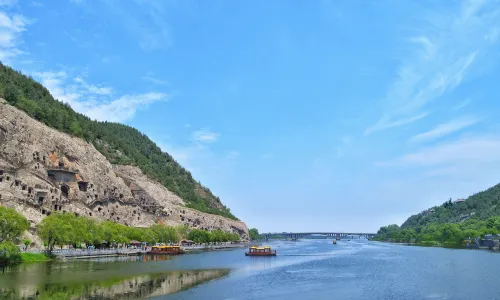
The Longmen Grottoes, located in Luoyang, Henan Province, are the world's largest and most abundant repository of stone carvings, recognized by UNESCO as "the pinnacle of Chinese stone carving art" and ranking first among China's major grottoes. Longmen was carved by Yu the Great during his flood control efforts, and the legend of the fish leaping over the Dragon Gate also originated here. The grottoes themselves were first carved during the reign of Emperor Xiaowen of the Northern Wei Dynasty, when he moved the capital to Luoyang (493 AD). Large-scale expansion occurred during the Tang Dynasty, and wooden structures were added during the Song Dynasty. The total carving period was over 400 years. Currently, there are 2,345 grottoes and niches, more than 100,000 statues, and over 2,800 inscriptions. The grottoes stretch for 1 kilometer from north to south, and the total area of the park is 31.7 square kilometers. The Longmen Grottoes scenic area mainly consists of four major attractions: the West Hill Grottoes, the East Hill Grottoes, Baiyuan Garden, and Xiangshan Temple. Most of the grottoes were built by royal families and nobles, including the Vairocana Buddha sculpted by Empress Wu Zetian based on her own appearance; the Guyang Cave carved by Emperor Xiaowen for Empress Dowager Feng; the statues made by the grandson of Prince Lanling in the Wanfo Cave; the Binyang South Cave built by Li Tai for Empress Zhangsun; the Jingshan Temple carved by Consort Wei; and the Amitabha Buddha carved by Gao Lishi for Emperor Xuanzong of Tang. It also saw construction by foreigners from India, Silla, Tochariah, and Kangguo, and European patterns, ancient Greek columns, and Nestorian burial sites have been discovered, making it the most internationalized grotto complex in the world. I highly recommend it.
 4.7/5
4.7/5 silly-hui
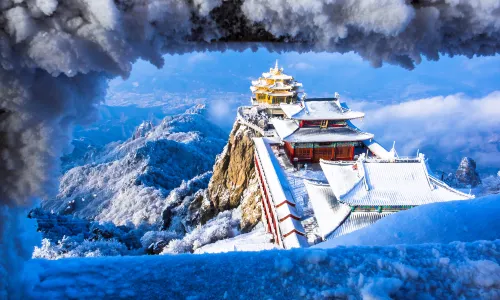
Laojun Mountain is a famous Taoist mountain and tourist destination in China, located in Luanchuan County, Luoyang City, Henan Province. It has an altitude of approximately 2217 meters. It is named after Laozi, the founder of Taoism, who is revered as Taishang Laojun and is said to have once practiced Taoism in seclusion here. Emperor Taizong of Tang bestowed the name Laojun Mountain upon it, and it is hailed as "an unparalleled sacred place under heaven and the world's number one immortal mountain." Legend has it that Laozi wrote the *Tao Te Ching* here. Throughout history, numerous emperors and literati have visited the mountain, leaving behind poems, inscriptions, and stone tablets.
 4.7/5
4.7/5 Anonymous user
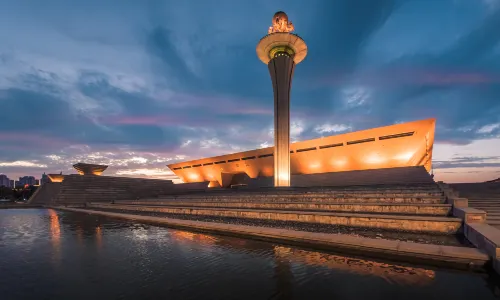
The Luoyang Museum is an absolute underrated treasure! As a concentrated essence of the ancient capital of thirteen dynasties, it tells the story of the "Divine Capital's" glory in the most direct way. The unearthed Northern Wei clay Buddha face, though incomplete, possesses a serene and compassionate beauty that touches the soul—a "Mona Lisa of the East." Be sure to allocate at least 3 hours; the exhibits are incredibly informative! If you are a history enthusiast, this is paradise; if you are just passing through, it is enough to plant a seed of wonder in your heart—that the pulse of Chinese civilization once beat so powerfully here.
 44.6/5
 小强
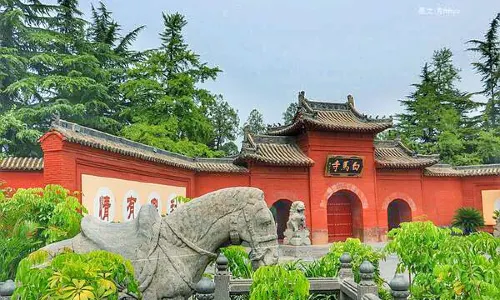
小强The hotel is conveniently located, within walking distance of Yingtianmen, Lijingmen, and Jiuzhouchi, and is also a pick-up point for day trips around Luoyang. The rooms were very clean, the service was excellent, and a complimentary gift was given upon check-out.
 54.3/5
 lin***ie
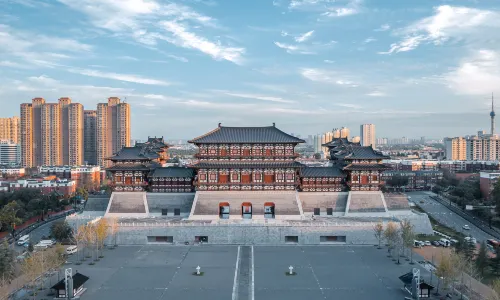
The park is very large and has a Han and Tang Dynasty style. The night views of Mingtang Paradise and Yingtian Gate are charming, and the Yingtian Gate light show is worth seeing. The martial arts field experience project at Jiuzhou Pond has a good design and is suitable for going at night. It is too hot during the day.
 64.5/5
 M62***31
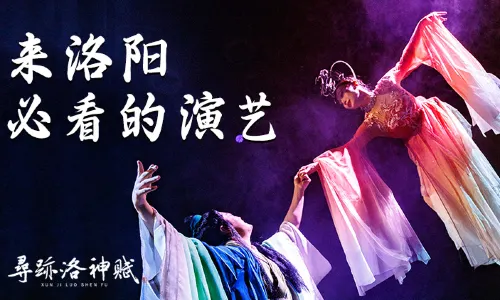
It innovatively creates a form that integrates exhibition, performance, and show. With the help of technologies such as VR, AR, and holographic imaging, and combined with traditional art elements such as guzheng and opera, it allows the audience to say goodbye to fixed seats, walk around and watch, and immerse themselves in the real scene and digital scene.
 74.5/5
 大胖耐
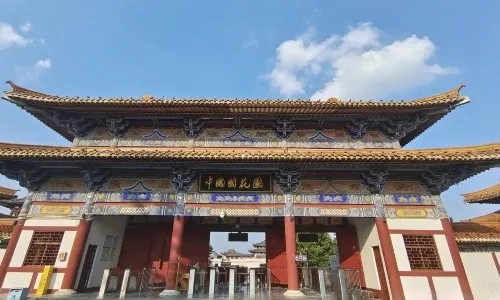
大胖耐The peonies in the National Flower Garden are very beautiful. The garden is not too big. We took a sightseeing bus. When we went there early in the morning, we could see the peonies in full bloom. They were very beautiful. In the afternoon, the flowers might have wilted a little.
 84.7/5
 M11***30
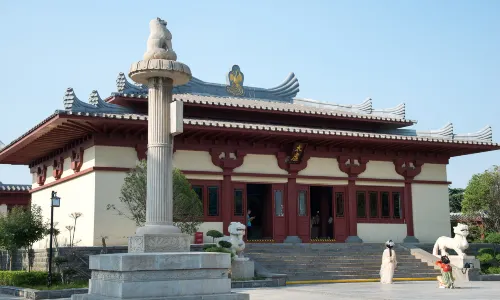
The environment was great, and the museum was huge. The guide led us through all the exhibits, and her explanations were excellent. Not only were there many exhibits, but the legendary ancient tomb artifacts were also truly impressive. Most importantly, there were few people, so we could explore at our own pace – that's better than anything else!
 94.2/5
 跌落凡间的🐱
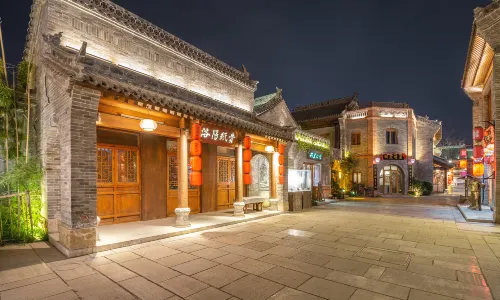
Since admission is free, let's not discuss the value for money. Let's discuss the history of Luoyi Ancient City. The origins of Luoyi Ancient City date back to the Western Zhou Dynasty. After King Wu of Zhou conquered the Shang Dynasty, he planned to build a new capital in the Yi and Luo regions to consolidate his rule in the east. After Duke Zhou quelled the rebellion of the Three Guards, construction of Luoyi began in the fifth year of King Cheng's reign. Duke Zhao selected the site, and Duke Zhou oversaw the construction, completing the city in about a year. After its completion, Luoyi became the Eastern Capital of the Western Zhou Dynasty. It consisted of the Royal City and Chengzhou. The Royal City, located east of the Jian River and west of the Chan River, served as the place where princes met with the king and where the Western Zhou nobles resided. Chengzhou, located east of the Chan River, housed the military and settled the people of Yin. Since then, Luoyang has remained one of China's political centers, flourishing through multiple dynasties. The current Luoyi Ancient City is a comprehensive historical and cultural ancient city built on the basis of the original historical sites, with the architectural styles of the Tang, Song, Yuan, Ming and Qing dynasties as the main tone. It has preserved the protected buildings of many historical periods, such as the Henan Prefecture Confucian Temple, Tuling Palace, Four-Eyed Well, and the ruins of the ancient city wall of Jin and Yuan Dynasties.
 104.6/5
 wR8023
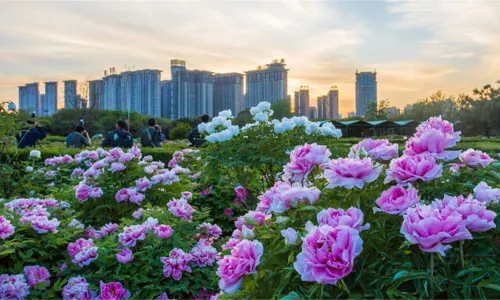
The peonies were absolutely gorgeous!! The first time I went, the flowers weren't in bloom yet, so I went back a month later specifically to see them! There were many varieties, and I even saw the silver thread peonies. The queue was very long, but it was worth it.
 See the snow at Longmen for a limited time, and find yourself in nature | Dec 2025-Jan 2026
 Achieved a 3-year streak on the annual lists
