





 4.8/5
4.8/5 洪虹
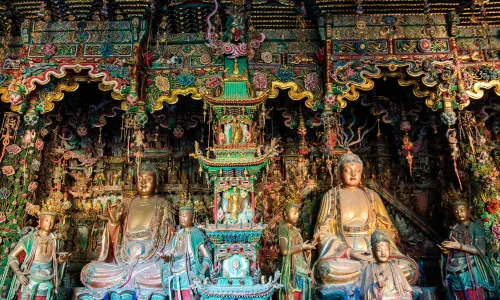
洪虹We left Guangsheng Temple and drove to Xiaoxitian. What should have been a smooth two-hour drive turned into a road construction trip less than 20 minutes from our destination. After much detours, it took us nearly three hours to finally arrive at Xiaoxitian in Xi County. Xiaoxitian is like a magical treasure box, containing a vast world within a small room. In this mere 169.6 square meters, our eyes couldn't take it all in; we were completely immersed, reluctant to leave. We also followed wave after wave of tourists, listening to their explanations intermittently. From the very beginning, the hall was packed with people, and we stayed until evening when the crowds gradually dispersed before finally leaving. This wondrous journey to Xiaoxitian was truly unforgettable.
 4.7/5
4.7/5 Anonymous user
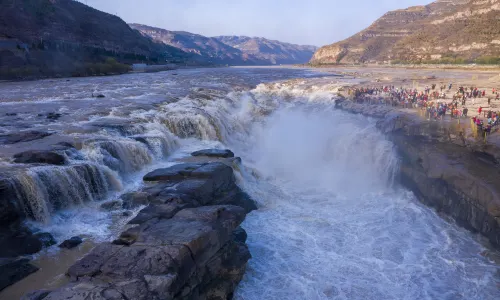
Hukou Waterfall, the second largest waterfall in China and the world's largest yellow waterfall, is renowned for its magnificent spectacle, described as "the Yellow River flowing for a thousand miles, all contained in a single pot." A visit here is definitely worthwhile!
 4.6/5
4.6/5 M26***62
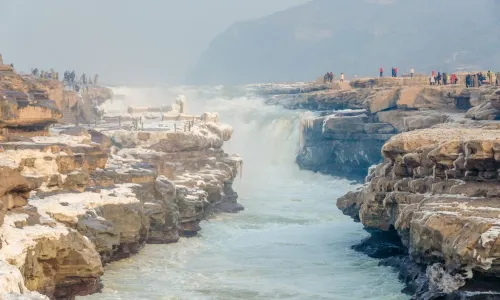
Generally speaking, the main waterfall is best viewed from the west side of Hukou Waterfall, offering a more direct and beautiful view. On the Shaanxi side, there are steps leading down from a height halfway down the waterfall, which also provides a good vantage point for photos. The shuttle bus takes 15 minutes one way, but departures are infrequent due to the off-season. When I visited in early December, there were fewer visitors and lower water levels, so the Yellow River wasn't yellow. Some sections of the riverbank were frozen.
 4.5/5
4.5/5 M30***69
The Big Locust Tree is a place where one can forget their troubles and purify their soul. Its sacredness and tranquility soothe everyone who comes to worship their ancestors. If you also yearn for inner peace, then come to the Big Locust Tree; I believe you will find it rewarding. The景区 service is excellent! 👍💕
 4.7/5Anonymous user
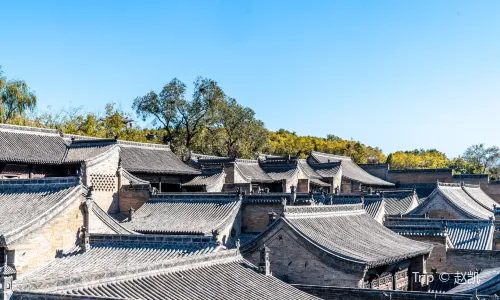
The Wang Family Compound is an outstanding example of Qing Dynasty residential architecture in China. Located in Jingsheng Town, Lingshi County, Jinzhong City, Shanxi Province, it was built by the Jingsheng Wang family, descendants of the Taiyuan Wang clan, over a period of approximately 300 years, from the Kangxi to the Jiaqing reigns. It is hailed as "China's First Residence of Folk Architecture," "China's Folk Palace," and "Shanxi's Forbidden City." Its grand scale covers an area of 250,000 square meters, encompassing five alleys, five forts, and five ancestral halls. Currently, it contains 231 courtyards and 2,078 rooms. The open area centers on the three major architectural complexes of Gaojiaya (Phoenix), Hongmenbao (Dragon), and Chongningbao (Tiger), showcasing the traditional "front hall, rear chamber" layout and the overall "王" (Wang) shaped design.
 4.7/5
4.7/5 156***02
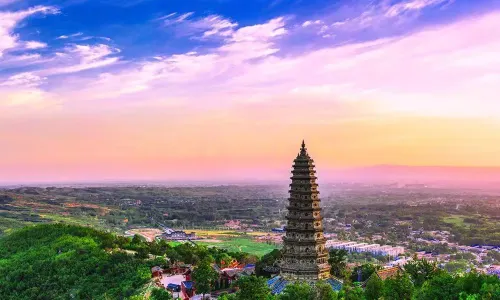
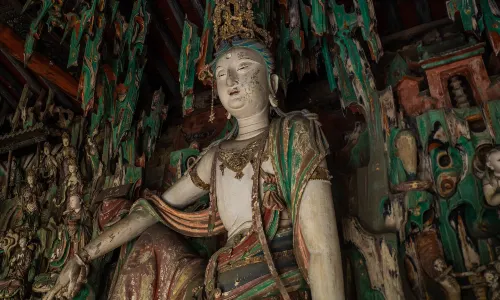
It's worth a visit. The murals from the Yuan Dynasty are exquisite. The Feihong Glazed Pagoda of the Upper Temple was built in the Ming Dynasty. The Zhaocheng Buddhist Canon was discovered here, and the cabinet that once housed the Tripitaka is still in the Amitabha Hall.
 4.8/5
4.8/5 大白
大白The full-price ticket for Shuanglin Temple in Pingyao is 35 yuan. Tickets can be purchased online through the "Pingyao Ancient City Scenic Area Official Service Platform" with real-name registration, with a 2 yuan discount, bringing the price down to 33 yuan. Tickets can also be purchased on-site. Seniors over 60 years old and active-duty military personnel are admitted free of charge upon presentation of valid identification. Students receive a 50% discount. Tickets are valid only on the day of purchase.
 4.7/5
4.7/5 东篱把酒@
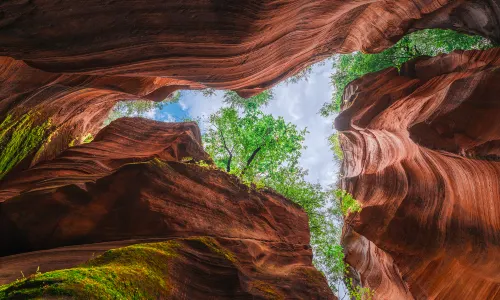
东篱把酒@On a crisp autumn morning, I once again stepped into the Ganquan Grand Canyon. The morning light slanted into the Birch Gully, making the ochre and dark green veins on the rock walls resemble ancient verses ablaze. As a seasoned visitor, I've witnessed its transformation from a pristine, hidden paradise into a place that blends wildness and warmth. Compared to my last visit, I noticed the scenic area has made significant efforts to enhance the experience: 1. Cultural revitalization, breaking the monotony. The lively and enthusiastic Shaanxi folk dance in front of the visitor center, and the skillful finger movements of the inheritors at the intangible cultural heritage paper-cutting stalls—these added a cultural touch, allowing the geological wonders to be heard before they were seen; 2. Concrete services, ensuring peace of mind. Clear signage and staff on key routes reduced the anxiety of exploring the diverse canyons like Longba Gully and Mudan Gully, allowing for a more relaxed experience; 3. Inclusive policies, demonstrating sincerity. The free admission policy, covering children, the elderly, journalists, and other groups, along with the rise of guesthouses and farmhouses run by villagers, such as "Fengmeizi Courtyard," allows tourists to experience the Loess Plateau's charm more deeply and has genuinely boosted the income of local villagers. Travel Tips: If time is limited, Birch Valley is a must-see, especially the 300-meter stretch of scenery that is particularly classic, with its streams, green moss, and ever-changing light and shadow. It's recommended to avoid the morning rush on holidays to better appreciate the valley's tranquility. Based on my observation, weekdays are a better time to visit. You can also try the guesthouses run by local villagers or sample local delicacies such as potato pancakes and mixed noodles to experience authentic Shaanxi flavors. A small suggestion for operators: Currently, tourism products are still somewhat monotonous, with "valley sightseeing" dominating the market. Consider combining resources such as Laoshan National Forest Park to develop in-depth products like ecological health and wellness and geological research to extend tourists' stay. There is still room for improvement in tourism infrastructure; for example, road congestion and parking difficulties still occur during holidays. The cultural significance of the valley has not yet been fully explored. Beyond the natural scenery, consider adding brief explanatory signs about the formation of Danxia landforms and the ecological protection of the canyon at suitable locations to enhance the depth of the visit. The beauty of Ganquan Grand Canyon lies not only in its breathtaking natural landscape, but also in its efforts to make this beauty more inclusive and approachable. If the attractions and experiences can be further enriched and deepened, this "Chinese Antelope Canyon" will undoubtedly offer travelers an even more profound experience.
 4.7/5
4.7/5 xiaowangcnjp
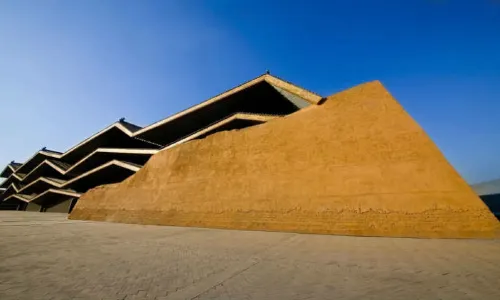
A huge park was built specifically for this show, like a large movie studio. The idea was good, and the environment was nice, but the content felt a bit monotonous. In short, it's about watching the bodyguards take a bath, then watching the bride take a bath, the bride having a beauty pageant, and finally the bodyguards' souls returning home.
 4.6/5
4.6/5 _We***34
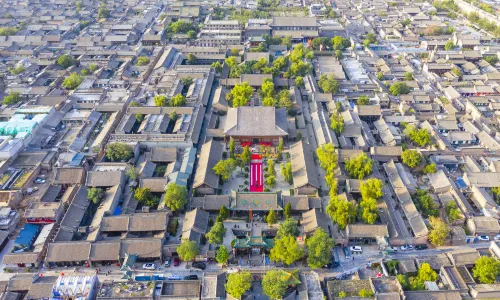
This is a combined ticket, and you definitely can't see everything in one day; you'll need at least two days. The attractions are quite far apart, and if you don't visit these sites, the old town is basically just a commercial area. There's not much to see there. Try to avoid eating inside the old town. But the problem is, there don't seem to be many good restaurants outside either.

