Hezuo

Things to do in Hezuo

Search attractions or local attractions & tours
Search

Explore top experiences

Top 10 attractions in Hezuo

View all Attractions
Milariba Buddha Pavilion
No. 5 of Best Things to Do in Gannan

Milariba Buddha Pavilion

5.4
4.5/5
204 reviews

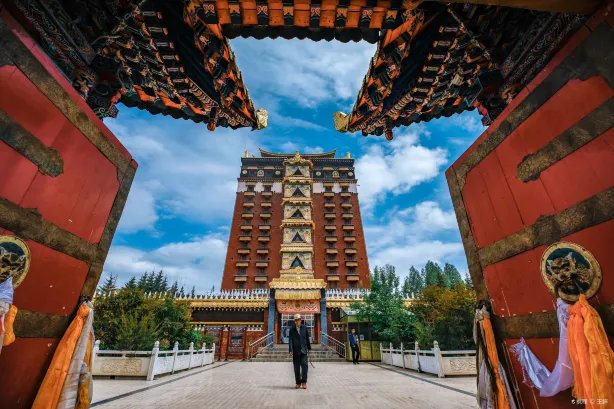
Milariba Buddha Pavilion is a nine-story Tibetan-style blockhouse pavilion built to commemorate the Tibetan Buddhist Kagyu school (commonly known as the White Sect) master Milarepa. It was first built in the 42nd year of the Qianlong reign of the Qing Dynasty (1777), and the existing structure was rebuilt in later generations. The pavilion is dark red throughout, which is relatively rare among monasteries in Tibetan areas. The hall enshrines over 1,000 statues, with the patriarchs of all major Tibetan Buddhist sects worshipped together in the same pavilion, along with numerous historical and cultural figures of Tibet. In the center of the first floor is a tall statue of Jampa Buddha (Maitreya Buddha), depicted in a solemn and dignified bodhisattva appearance. Flanking it are statues of Tibetan kings such as Songtsen Gampo and Princess Wencheng, as well as figures like Thonmi Sambhota, who created the Tibetan script, and Thang Tong Gyalpo, the founder of Tibetan opera. The second through fifth floors correspond to different sects. The fifth floor is dedicated to the White Sect, where the statues of Milarepa and his master Marpa are gaunt, and the murals on the walls depict the process of Milarepa's body changing from fat to thin during his ascetic practice. The sixth to eighth floors enshrine the Dharma kings, yidams, and protectors of Tibetan Buddhist Tantra, with statues of Hayagriva, Mahakala, and others often appearing in wrathful forms. The ninth floor is not an independent floor, but a mandala painting on the roof of the eighth floor. You can visit the interior by climbing the stairs floor by floor, or simply admire the exterior architecture. The Hezuo Monastery is located right next to the west side of the pavilion; if you have enough time, you can visit both.

Hezuo · 756m from downtown
Qinghai Tibetan Culture Museum
No. 2 of Best Things to Do in Qinghai

Qinghai Tibetan Culture Museum

8.2
4.8/5
10.3k reviews

Qinghai Tibetan Culture MuseumIt is a comprehensive museum themed on Tibetan medicine culture and featuring Tibetan culture.Qinghai Tibetan Culture Museum(also known as Qinghai Tibetan Culture Museum) is located in Xining, the capital of Qinghai Province in the eastern part of the Qinghai-Tibet Plateau. It officially opened in September 2006. The museum has basically formed a "one museum with two halls" layout, featuring 16 exhibition halls including the Silk Road and Tibetan civilization, the grand view of Chinese Tibetan art painting, and the history of Tibetan medicine.Qinghai Tibetan Culture MuseumThe collection is rich, historic, and diverse, possessing high historical, scientific, and artistic value. The museum houses the Guinness World Record-holding thangka masterpiece, "The Grand Thangka of Tibetan Culture and Art," which is 618 m long. It was planned by renowned thangka master Zongzhe Lajie and completed by 400 painters over four years. Its content encompasses the Tibetan understanding of the universe, the formation of the Qinghai-Tibet Plateau, history, religion, medicine, culture, art, and folklore. With its intricate details and brilliant colors, it is a magnificent sight and can be called an encyclopedia of Tibetan culture, hailed as a "contemporary national treasure." Through four major series—ancient books and documents, Tibetan medical thangkas, ancient Tibetan medical instruments, and Tibetan material specimens—the museum comprehensively displays the long history, profound theoretical system, clinical practice, and unique preparation techniques of Tibetan medicine, with four ancient books included in the National Catalogue of Precious Ancient Books. The Silk Road and Qinghai-Tibet Civilization exhibition hall uses history as its temporal dimension and the vast plateau landscape as its geographical dimension. Through thousands of precious cultural relics such as silk, gold and silver ware, and coffin paintings, it highlights Tibetan cultural elements and showcases the origin, inheritance, rise, and prosperity of the Qinghai-Tibet Plateau civilization throughout the long river of history. The Tibetan carpet exhibition hall is one of the largest exhibitions of ancient carpets in China, displaying more than 400 Tibetan carpet artifacts from different periods and eras, featuring magnificent patterns, intense colors, and unique ethnic styles and local characteristics. At the same time, there are also Tibetan-style architectural exhibition halls, Tibetan calligraphy art exhibition halls, as well as temporary exhibition halls, multimedia screening rooms, academic lecture halls, and cultural relic storage rooms, providing strong capabilities for inheritance, protection, and research, as well as conditions for cultural exchange.Qinghai Tibetan Culture MuseumIt will continuously improve the level of cultural relic preservation, exhibition design, scientific research, and management operations, becoming a platform for promoting ethnic unity and social development, a broad stage for cultural dissemination and academic exchange, a research center for cultural relic protection and Tibetan studies, and an exhibition center for treasured literature and collections, showcasing the splendid civilization and culture of the Tibetan Plateau to the world.

China · Xining
Kumbum Monastery
No. 3 of Best Things to Do in Qinghai

Kumbum Monastery

8.2
4.7/5
18.7k reviews

Kumbum Monastery is one of the important monasteries of the Gelug (Yellow Hat) sect of Tibetan Buddhism and the birthplace of Tsongkhapa, the founder of the Yellow Hat sect. The monastery features magnificent architecture, abundant treasures, and a strong religious atmosphere, making it one of the more popular travel destinations in Xining. Overview of the visit It has distinct differences in architectural layout compared to Han Chinese Buddhist temples in inland China: the complex here is not symmetrically arranged along a central axis. The monastery is an ancient architectural complex composed of numerous halls, scripture halls, stupas, and colleges, with each sutra hall, main hall, and stupa irregularly distributed on a small hill. Travelers can explore the site in a relatively free manner rather than following a straight path along a central axis. The Great Golden Roof Hall of Kumbum Monastery is the center of the entire architectural complex. It is said that Master Tsongkhapa was born here, and when he was born, his umbilical cord blood dripped on this spot, from which a bodhi tree grew. Later, a stupa was built around the tree, and a monastery was constructed, hence the name. Believers hold that this tree and stupa are the embodiment of the master. The three unique features of the attraction: butter sculptures, murals, and appliqué embroidery. Butter sculptures are made by mixing butter with various pigments to mold and carve into figures of Buddhas, people, flowers, birds, animals, and pavilions. Travelers can admire exquisite butter sculptures at the butter sculpture hall inside the temple (located far from the main gate). Vibrant centuries-old murals can be appreciated in the main halls, corridors, and front galleries of the temple. Appliqué embroidery involves cutting colored satin into desired shapes, such as Buddha figures or animals, stuffing them with wool or cotton, and embroidering them onto cloth hangings. In the temple's great sutra hall, two rare large appliqué embroidery pieces—"Sixteen Arhats Displaying Divine Powers" and "Eight Immortals Crossing the Sea"—hang on either side. The four major religious festivals (based on the lunar calendar): 1. Cham dance (14th day of the first month) and butter sculpture exhibition (15th day of the first month); 2. Cham dance (14th day of the fourth month), Buddha unveiling, and Cham dance (15th day of the fourth month); 3. Buddha unveiling, Cham dance (6th day of the sixth month), and golden Buddha procession (8th day of the sixth month); 4. Full-day Buddha unveiling (22nd day of the ninth month) and Cham dance (23rd day of the ninth month). During these festivals, activities like Buddha unveiling and ritual dances take place, attracting large crowds of devotees and travelers, creating a lively atmosphere.

China · Xining

Experiences you can't miss in Hezuo

Featured Outdoor & sports in Hezuo

View all Outdoor & sports
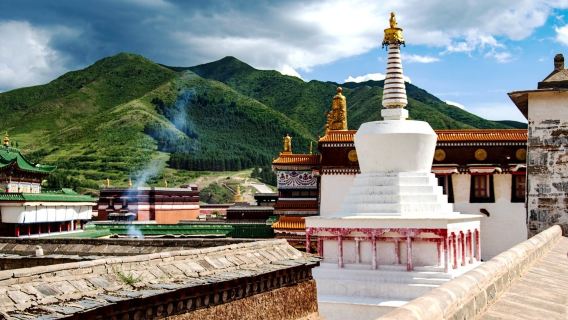
[Lanzhou Departure] Labrang Monastery & Sangke Grassland & Ganga Mijing Day Tour
󱌍
FromMXN$3,025.47
[Departing from Lanzhou] Gannan Labrang Monastery + Sangke Grassland + Sangke Wetland Park One-Day Tour
󱌍
Duration: 11.5 hrs
English
Free cancellation
Instant confirmation
Book now for tomorrow
FromMXN$1,230.38
Private 1-day tour from Lanzhou to explore the sacred land of Gannan, featuring Labrang Monastery and Sangke Grassland
󱌍
FromMXN$4,700.68

Featured Day tours in Hezuo

View all Day tours
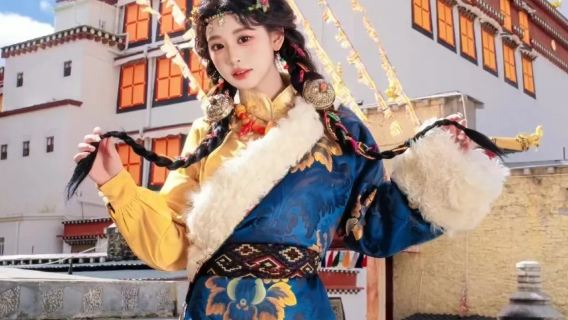
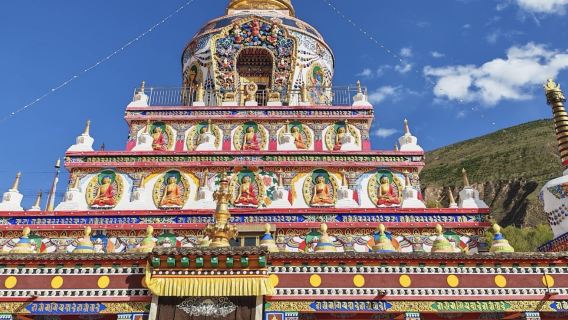
Gannan (private charter) 1-day tour [Labrang Monastery + Sangke Grassland + Ganga Secret Scenic Spot + genuine pure fun]
󱌍
4.8/5
· 224 reviews· 1.1k booked
Duration: 9.1 hrs
English
Free cancellation
Instant confirmation
28 consecutive positive reviews
FromMXN$2,443.09
1-day private tour of Tibetan culture exploration in Tongren, Qinghai (departing from Xining)
󱌍
Save MXN$67.82
FromMXN$1,288.75MXN$1,356.57
Private Tour to Labrang Monastery and Sangke Grassland (Departing from Lanzhou)
󱌍
Duration: 6 hrs
English
Free cancellation
Instant confirmation
Book now for tomorrow
9% off
Limited-time sale
FromMXN$1,174.36MXN$1,304.84
Hezuo Today's weatherFoggy -2-4℃
Hezuo weather for the next 2 days11/16: -12-1℃, 11/17: -11-5℃

Free things to do in Hezuo

What travellers say about Hezuo
user-avatar
闻嘉流浪Noel13 August 2026
4.0
This is a well-known Tibetan temple in Hezuo City, Gannan Prefecture. It's quite unique, with white stupas somewhat similar to those in Thai temples, and the red monastery exudes a solemn and dignified atmosphere. Taking photos against the backdrop of blue skies and white clouds would definitely be a great experience. Since I have no religious affiliation, I didn't buy a ticket to go inside; I just wandered around the outside. However, I absolutely respect the beliefs of the Tibetan people.

Milariba Buddha Pavilion

user-avatar
M10***512 July 2026
5.0
This high-altitude grassland, characterized by frost-covered hills and small grassy mounds, sits at an altitude of 3600m. In June, wildflowers such as the alpine meconopsis bloom across the grassland, creating a stunningly beautiful scene. Highly recommended!

Meiren Grassland

user-avatar
滇国剑客22 October 2021
5.0
Because the grass on the grassland here grows well, it gives people a feeling of looking into the distance. This feeling of taking in endless scenery is so enjoyable. The world is so big that there are all kinds of wonders, and this is proven in this scenic spot.

Dangzhou Grassland

user-avatar
melindaz28 December 2022
4.0
The museum has stone tools, bone tools, pottery and bronze tools from the Neolithic Age and the Bronze Age; copper seals, bronze mirrors, inscriptions, bronze bells, bronze swords, and Persian silver coins from the Han and Tang dynasties; porcelain from the Wei and Jin dynasties; porcelain from the Song and Yuan dynasties; and porcelain from the Ming and Qing dynasties. Among the ethnic cultural relics are ethnic costumes, Buddhist statues, thangkas, ritual implements and other religious artworks.

Gannan Tibetan Autonomous Prefecture Museum

user-avatar
M22***1613 November 2026
5.0
I spent the whole day in Jiuzhaigou today, and the overall experience was truly wonderful. It's the kind of place you'd want to visit again and again; such scenic spots are rare. Entry is by time slot from 8:00 AM to 10:00 AM, and the crowd control system is excellent. You can enter directly by scanning your ID card at the second-floor ticket gate. If you don't have your ID card, there's a dedicated lane for quick processing, so it's efficient and doesn't cause any delays. Each sightseeing bus has a guide who reminds passengers not to use backpacks to reserve seats, ensuring everyone has an equal seat. Safety reminders are given repeatedly throughout the journey, and before getting off, they remind passengers to check their phones, wallets, and other valuables. During the 20-odd minute ride, the guide tells stories about the attractions and local legends, and the short cultural and creative films about Jiuzhaigou played on the bus are also very well made. At Rilang Central Station, tour routes are randomly assigned; we were assigned to the left route to Changhai Lake, going directly to the top to see the lake. Each major attraction has two tour routes, allowing you to explore at your own pace or quickly take your time. Staff are available at the intersections to guide you. The restrooms in the scenic area were very clean, and the voice prompts were particularly thoughtful. Some restrooms were entirely equipped with toilets, and the disposable seat covers were changed after each use. If you're not used to that, the announcements will tell you where the squat toilets are. The area has significant elevation changes, and many trails have numerous steep steps; there were warning signs about the steps everywhere, demonstrating meticulous attention to safety. I also have two small concerns: could there be more power banks in the rest areas? And the queue for hot water for instant noodles at the Rilang Center was quite long; maintaining order would be even better. Overall, the park management, sightseeing bus service, and other facilities were all very well done, making it well worth a visit. I would definitely like to come back again.

Jiuzhaigou National Park

user-avatar
🦉Clare13 November 2026
5.0
Huanglong truly lives up to its reputation as a fairyland on earth; it's incredibly beautiful and ethereal, with exquisite details. The scenic area is well-managed, and both of my visits here have been excellent experiences 👍. Highly recommended.

Huanglong National Scenic Area

user-avatar
Bolton Chen7 October 2026
5.0
Labrang Monastery is truly a dream destination when the weather is perfect! The golden roofs gleam under the blue sky and white clouds, and the entire monastery appears exceptionally solemn and magnificent in the high-altitude sunshine. As a world-renowned center of Tibetan studies, its prayer wheel corridor stretches for 3.5 kilometers with over 2,000 prayer wheels. Walking clockwise with the pilgrims, the sunlight filters through the eaves, casting warm glow on the prayer wheels and red walls, creating an incredibly atmospheric experience. Climbing the Gongtang Pagoda offers a panoramic view of the golden roofs, white stupas, and brown-red monks' quarters layered upon each other, with rolling mountains and grasslands in the distance – a truly expansive vista. If you're lucky, you might even witness monks debating, their gestures and clapping adding to the captivating atmosphere.

Labrang Monastery

user-avatar
Anonymous user14 November 2026
5.0
I never expected to spend two hours just looking at the Thangka paintings on the fourth floor 🥲 The beauty and awe are truly beyond what can be captured in photos. The costumes on the second floor were a dazzling array. I basically spent three hours in the South Hall, and I was too tired to walk around the North Hall, so I only managed an hour.

Qinghai Tibetan Culture Museum

user-avatar
Anonymous user13 November 2026
5.0
Kumbum Monastery is a must-see attraction in Xining, and many people who travel the Qinghai-Gansu Grand Loop make it their first stop. When I visited, one area of ​​the monastery was under renovation, but it didn't prevent me from seeing the key sights. A thorough visit might take several hours, as you can't walk too fast at high altitudes.

Kumbum Monastery

Popular cities near Hezuo

Frequently asked questions

When choosing a tour, start with how much time you have and the kind of experience you're looking for. Trending options right now include Gannan (private charter) 1-day tour [Labrang Monastery + Sangke Grassland + Ganga Secret Scenic Spot + genuine pure fun], 1-day private tour of Tibetan culture exploration in Tongren, Qinghai (departing from Xining), and Private Tour to Labrang Monastery and Sangke Grassland (Departing from Lanzhou). Check the real-time availability and itinerary before you book.

As of 15 November 2026, the reference price for day tours and activities in Hezuo is around MXN 1,174.36 – MXN 9,606.41. Rates vary by duration, group size, transport, tickets, meals, and any special admission requirements. Before you book, please confirm the billing currency and whether the price is quoted per person or per group.

Get help anytime, anywhere within 30 secondsContact customer support

Change and cancellation policies vary by attractions and tours. Please check the product details page for more information.

Ticket prices may vary between weekdays and weekends, as well as during peak and off-peak seasons. When booking with Trip.com, you can also use Trip Coins to get extra savings. For more tips on booking discounted tickets, please visit Trip.com for the latest information.