Business Class vs First Class: Which Is Better Value and How to Book Smart

Contents
- Business Class vs First Class: What is business class?
- Business Class vs First Class: What is first class?
- Business Class vs First Class: What is the real difference?
- What is the real difference: Seats and privacy
- What is the real difference: Food, drinks and service
- What is the real difference: Lounges and airport experience
- Business Class vs First Class: Price
- Business Class vs First Class: How to buy cheaper business class
- Business Class vs First Class: Best time to book flights for premium cabins
- Business Class vs First Class: Which should you book?
Show more
Choosing between business class and first class? Compare price, comfort, service, lounges and smart booking tips to find the premium cabin that suits you best.
Whether you are after better prices or an easier booking experience, Trip.com helps you sort your trip in one place.
(CR/Trip.com)
If you are comparing business class vs first class, the main difference is fairly simple: business class is designed to make long-haul travel comfortable and efficient, while a first class flight is built to feel more exclusive, private and luxurious. Both offer a major step up from economy, but they do not serve exactly the same purpose. For most travellers, business class is the more practical premium choice. First class, by contrast, is usually the top-end option for people who want the best available experience and are willing to pay for it.
That is why so many travellers ask not only what separates the two cabins, but also whether first class is actually worth the extra money. In many cases, modern business class is already extremely good, with lie-flat seats, lounge access, better food, priority services and a much smoother airport experience. On the other hand, some first class airlines still offer a very noticeable upgrade, especially on flagship products such as Emirates First Class. The key is knowing what you are really paying for — and when it makes sense to book one over the other.
Business class is the cabin above economy and premium economy, and on many airlines it is now the highest class available. It was originally aimed at business travellers, but today it is popular with leisure travellers as well, especially on long-haul routes.
A business-class ticket typically includes priority check-in, extra baggage allowance, lounge access and a larger seat on board. On many long-haul flights, the biggest advantage is the lie-flat bed, which makes overnight travel much easier. This is why products such as United Business Class are so popular: they combine comfort, rest and efficiency.
A first class flight sits above business class and is the most luxurious cabin an airline can offer. However, true first class is now much less common than before, as many airlines have chosen to improve business class instead.
When available, first class usually offers more space, more privacy and more attentive service. It may include a private suite, higher-end dining and access to more exclusive lounges. Among first class airlines, Emirates First Class is one of the best-known examples, thanks to its private suites and premium service.
(CR/Trip.com)
The main difference between the two comes down to experience. Business class is designed to help you travel comfortably. First class is designed to make the journey itself feel special.
Modern business class often includes a fully flat bed and direct aisle access, which is already a huge step up from economy. For many travellers, this is more than enough.
First class usually goes further, offering more personal space, more privacy and sometimes a fully enclosed suite. The cabin is often smaller and quieter, which makes the experience feel more exclusive.
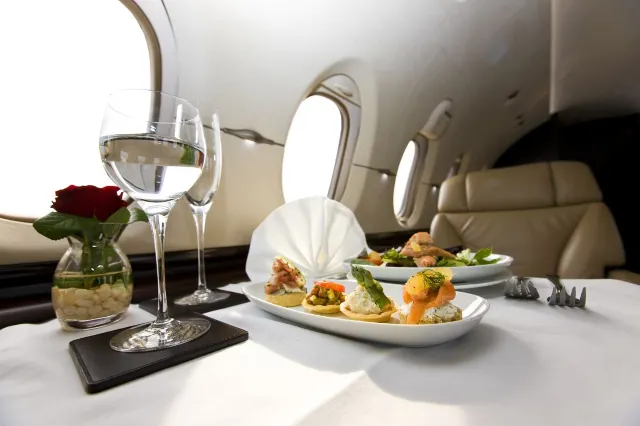
Both cabins offer better food and drinks than economy, but first class usually feels more refined. Business class dining is comfortable and upgraded, while first class often offers more personalised service and a more flexible dining experience.
Business-class passengers normally get lounge access, priority check-in and priority boarding. These benefits already make the airport journey much smoother.
First class often adds a more exclusive lounge experience and more personalised ground service. For travellers who value the full premium journey, this can be a major advantage.
(CR/Trip.com)
Price is where the decision becomes much easier. Business class is expensive, but it often offers strong value for long-haul travel. First class is usually much more expensive, and the difference in price is often greater than the difference in practical comfort.
That is why business class is usually the better choice for most travellers. It delivers the main premium benefits without the much higher cost. First class can still be worth it when the fare gap is smaller, or when you want the most luxurious experience possible.
If your goal is to travel well without overspending, it is usually smarter to learn how to buy cheaper business class than to chase rare first-class bargains. Business class is where most travellers will find the best mix of comfort and value, and it is also where airlines are more likely to offer competitive fares or occasional promotions.
The first rule is to be flexible. If you can shift your departure date by a day or two, fly midweek, or use a different airport, you may find a noticeably lower fare. Premium-cabin prices can vary a lot depending on the route and travel day, so a little flexibility can make a real difference. The more fixed your plans are, the more likely you are to end up paying a high premium.
The second rule is to compare carefully rather than booking the first decent fare you see. Look at one-way fares as well as return fares, compare nearby airports, and check whether different airlines price the same route very differently. Sometimes the best premium deal is not on the airline you expected. A traveller who checks several options usually does much better than one who searches once and books immediately.
The third rule is to pay attention to upgrades. In some cases, it may be cheaper to buy premium economy or a lower business-class fare and then upgrade with miles, points or a cash offer. This can be especially useful if you want to enjoy a premium cabin without paying the highest published price. Some of the best premium experiences come from smart upgrades rather than full-fare bookings.
If you are treating yourself to a premium cabin, why spend ages doing the hard work? Skip the hassle and book it all in one place on Trip.com.
When people ask about the best time to book flights, they often hope for a single trick or secret booking day. In reality, premium-cabin pricing is much more complicated than that. There is no guaranteed formula that always produces a cheap fare. What matters more is starting early enough to watch price trends and booking when the fare looks competitive for that route.
For business and first class, it is usually wise to monitor flights earlier than you would for economy. Premium seats are fewer in number, and once the cheaper fare buckets disappear, prices can rise sharply. This is especially true during school holidays, festive seasons and other busy travel periods. If you leave it too late, the premium you pay can become much larger than expected.
At the same time, booking too early is not always best either. The most sensible approach is to start tracking fares early, compare different dates and stay alert to good pricing rather than waiting for a mythical perfect moment. In premium travel, success usually comes from timing plus flexibility, not from a universal rule.
For most travellers, business class is the smarter choice. It gives you the biggest jump in comfort, usually includes lounge access and priority services, and is much easier to justify financially. If your priority is travelling well rather than travelling extravagantly, business class is likely to be the right answer.
First class is best for travellers who specifically want the most exclusive experience, or who find a strong deal, upgrade or redemption that makes the price gap manageable. In other words, the answer to business class vs first class is not that one is always better than the other. It is that business class is usually the best-value premium option, while first class is the indulgent choice when the experience itself is part of the reward.
(CR/Trip.com)
Popular recommendations

Most Beautiful Natural Landscapes Around the World
 Trip.com