Sydney Light Rail Guide: Map, Opal Fare, Lines & Stops

See all flights

Sydney Light Rail Map
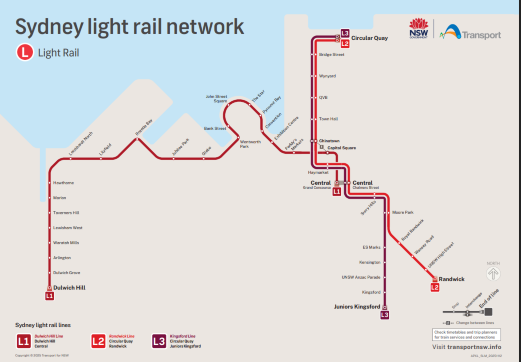
Source from transportnsw info
Sydney Light Rail is a light rail transit system serving Sydney, New South Wales, Australia. It currently consists of three lines: the L1 Dulwich Hill Line, the L2 Randwick Line, and the L3 Kingsford Line, featuring a total of 42 stations across a 24.7-kilometer network. It is the second-largest light rail system in Australia, surpassed only by the Melbourne tram network. Additionally, the first stage of the Parramatta Light Rail opened on 20 December 2024 and connects Westmead to Carlingford via the Parramatta CBD and Camellia, while Stage 2 is currently under construction.
Sydney Light Rail Lines & Stops
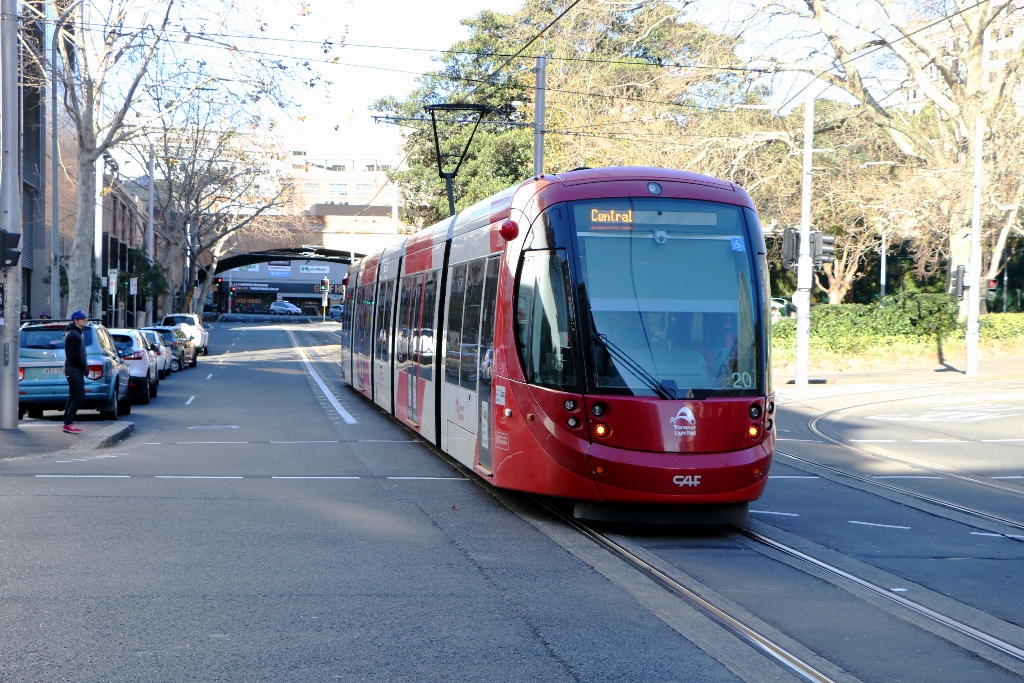
Four new light rail vehicles for Sydney's line 1 - Urban Transport ...
Line 1: Dulwich Hill Line
The L1 Dulwich Hill Line was the first passenger line in the Sydney Light Rail network. The initial stage, running between Central Station and Wentworth Park in Pyrmont, opened in August 1997. It operates along the 12.8 km Inner West Light Rail corridor between Central and Dulwich Hill, stopping at 23 stations. The line connects Sydney’s Inner West with the Pyrmont Peninsula, Darling Harbour, and the southern end of the CBD.
This line follows an old freight rail corridor and is perfect for foodies and those looking for a relaxed vibe.
- Paddy’s Markets: Located right at the edge of Chinatown. It’s the go-to spot for cheap souvenirs, fresh produce, and street food.
- Darling Harbour: Drops you right in the middle of Sydney’s premier entertainment precinct. Perfect for the SEA LIFE Aquarium and the Maritime Museum.
- Fish Market: A "must-visit" for seafood lovers. You can see the daily fish auction or enjoy fresh sashimi and oysters on the wharf.
- The Star: This stop serves Sydney’s main casino, luxury hotels, and high-end dining.
- Glebe: Famous for its bohemian atmosphere, historic terrace houses, and the massive Glebe Saturday Markets.
Reviews of Darling Harbour
4.7/5
596 reviews
5/5
Sydney, where I went on a family trip last Lunar New Year!!
The most Sydney-like place is Darling Harborㅎ
A hotel stay near Darling Harbor is a must
A place with great restaurants and parks nearby
I want to go again~ I highly recommend it
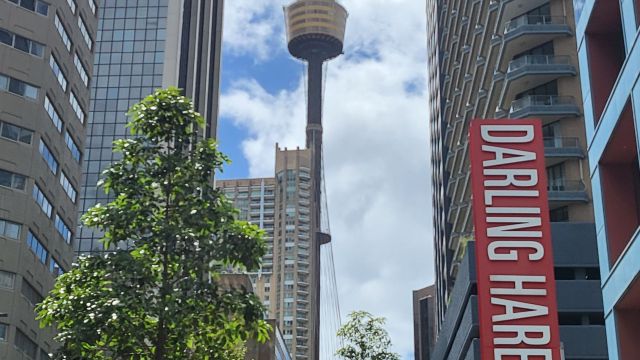

5/5
Darling Harbour, also known as Lover's Harbour, is located in Sydney. It is a large leisure area integrating entertainment, dining and shopping. Darling Harbour consists of port terminals, green spaces, flowing water and various buildings. King Street Wharf is one of the popular locations. There are many restaurants here, which is a good place for dining and sightseeing. After eating, you can also walk around the pier.
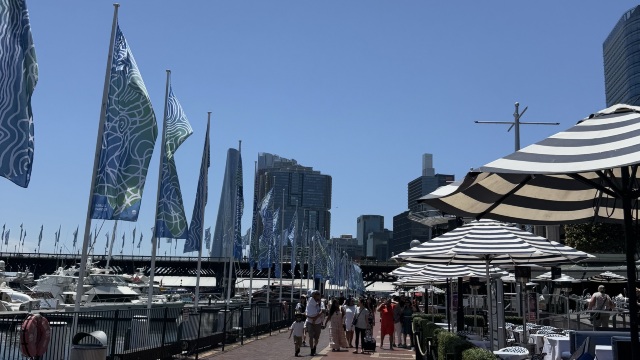
5/5
best!
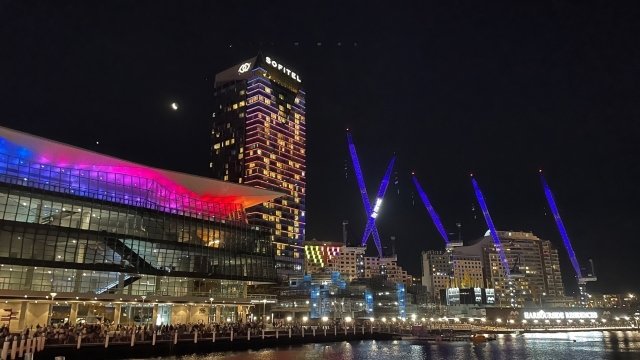

4/5
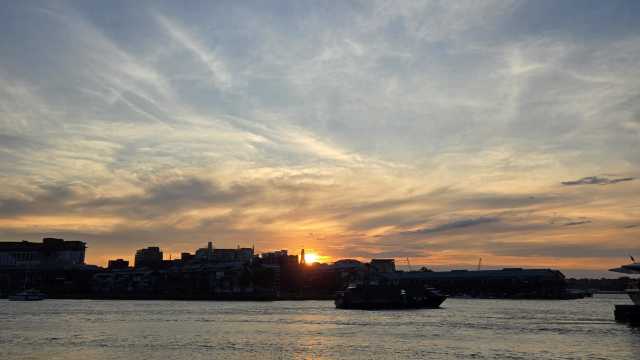
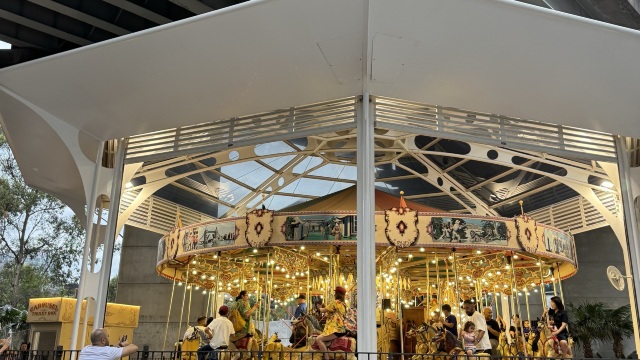
Darling Harbor is an area integrating diverse tourism elements! There are gourmet restaurants, shopping malls, zoos, amusement parks, etc. The night view here is also very famous. The scene of lighting up the lights is very charming. Fireworks shows are held from time to time every week. You can’t miss it. The city night view as the background is very beautiful. It is worth visiting the harbor and is very popular among tourists.
4/5
Darling Harbor is an area integrating diverse tourism elements! There are gourmet restaurants, shopping malls, zoos, amusement parks, etc. The night view here is also very famous. The scene of lighting up the lights is very charming. Fireworks shows are held from time to time every week. You can’t miss it. The city night view as the background is very beautiful. It is worth visiting the harbor and is very popular among tourists.
Line 2: Randwick and L3 Kingsford Lines
The L2 Randwick and L3 Kingsford lines are the newest additions to the Sydney Light Rail network. Major construction for both lines began in October 2015. The L2 Randwick Line commenced operations on December 14, 2019, followed by the L3 Kingsford Line on April 3, 2020. These lines operate along the CBD and South East Light Rail corridor, stretching from Circular Quay at the northern end of the CBD to Central Station, before continuing to the southeastern suburbs.
The construction of these lines connect to major venues such as the Sydney Football Stadium, Sydney Cricket Ground, Randwick Racecourse, and the University of New South Wales (UNSW)—areas previously served only by buses. Unlike the Inner West Light Rail, these lines primarily run on-street, following paths similar to those used by the city's former tram network.
This line runs straight down George Street—the spine of the city—before heading toward the prestigious eastern suburbs.
- Circular Quay: The northern terminus. Just steps away from the Opera House, Harbour Bridge, and ferry wharves.
- QVB (Queen Victoria Building): The heart of Sydney’s high-end shopping. The station is located right next to this stunning 19th-century Romanesque building.
- Town Hall: The ultimate central hub for shopping at The Galeries, Westfield, and Pitt Street Mall.
- Moore Park: The primary stop for sports fans heading to the Sydney Cricket Ground (SCG) and Sydney Football Stadium (Allianz Stadium).
- Royal Randwick: Located directly across from the historic Randwick Racecourse.
Reviews of Sydney Harbour Bridge
4.7/5
642 reviews
5/5
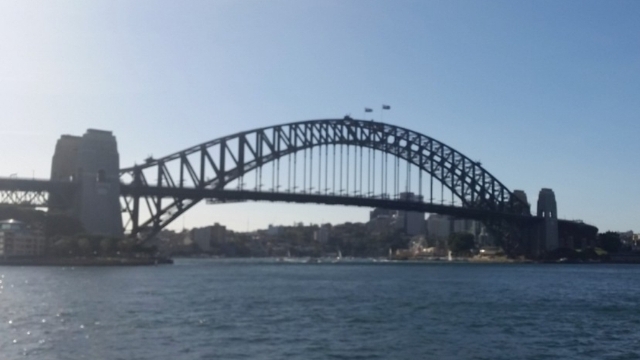
I'm uploading a photo of the Thaddeus Harbour Bridge I took long before the COVID-19 pandemic began. It's still so beautiful, even when I look at it again.

5/5
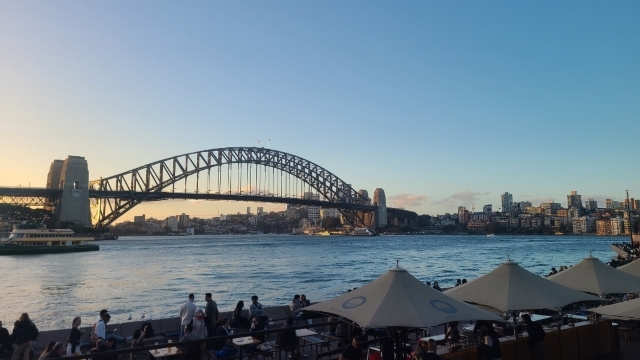
In addition to the Sydney Opera House, another landmark worth visiting is the magnificent bridge.
5/5
This is the magnificent Saber Bridge, visible next to the Opera House. It's bigger and more spectacular than you might think.

5/5
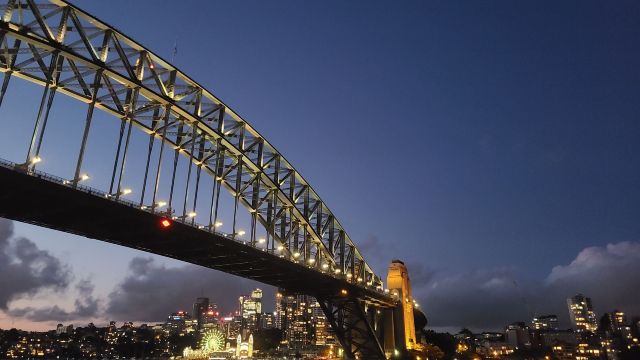
beautiful view and vibrant scenery. i love to sit there and watch the world goes by.

4/5
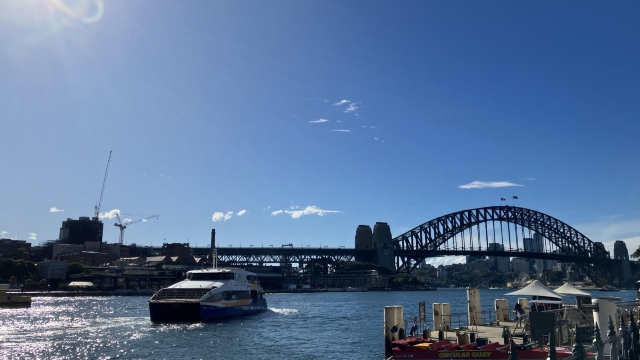
There's a special market open on weekends! The handmade eco-bags and various souvenirs were fun to see. The food wasn't great, but the view was great. The only downside is that there aren't many seats.
Line 3: Kingsford Line
The L3 shares most of its city stops with the L2, but branches off after Moore Park toward the academic and residential heart of the southeast.
- Surry Hills: (Shared with L2) Located on Wardell St, this stop is a gateway to Sydney’s coolest neighborhood, filled with award-winning restaurants and "hole-in-the-wall" coffee shops.
- UNSW Anzac Parade: The main stop for the University of New South Wales. It is bustling with students and affordable, diverse Asian eateries.
- Juniors Kingsford: The terminus of the line, located near the famous South Sydney Juniors Club and a great starting point for exploring the food scene in Kingsford.
How to Take Sydney Light Rail?
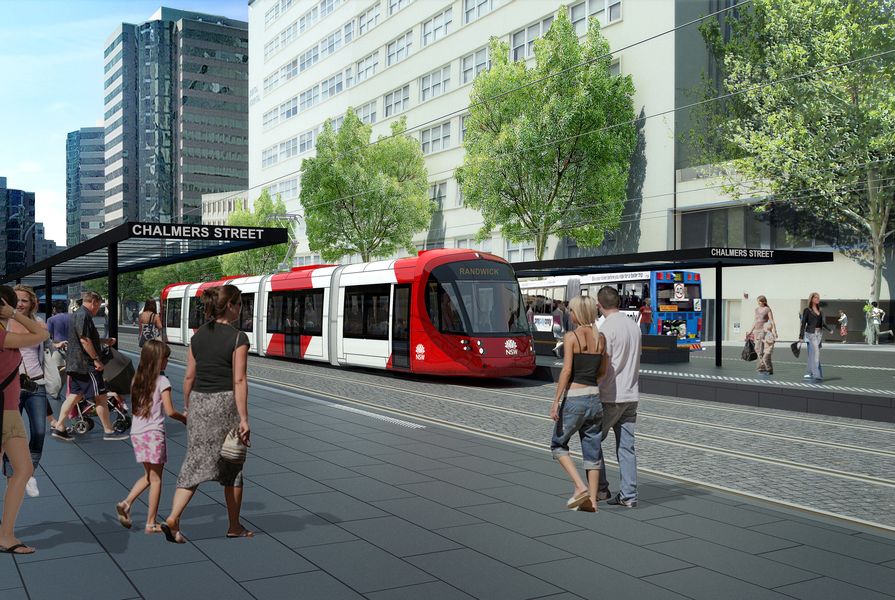
Sydney extends the light rail network | ArchitectureAu
To take the Sydney light rail, use a contactless credit/debit card, mobile device, or an Adult Opal card to tap on at the platform reader before boarding and tap off immediately upon exiting to pay the correct fare. Lines L1, L2, and L3 run frequently through the city centre, Circular Quay, and to suburbs like Randwick, Kingsford, and Dulwich Hill.
Key Steps for Using Sydney Light Rail:
- Payment Methods: You do not need to buy a physical ticket. Use a contactless credit/debit card (Visa, Mastercard, Amex) or a linked mobile device (Apple Pay, Google Pay) to tap on and off.
- Locating Stops: Look for the red 'L' sign to find light rail stations.
- Tap On/Off Procedure: Always tap on at the platform reader before boarding and tap off when exiting. Failure to tap off can result in a maximum fare.
- Lines and Routes:
- L1 Dulwich Hill: Connects Central to Pyrmont Bay and Dulwich Hill.
- L2 Randwick & L3 Kingsford: Run through the CBD along George Street, connecting Circular Quay to the southeast suburbs.
- Service Frequency: Trams generally run every 6 to 15 minutes, depending on the time of day and line.
- Safety Tips: Be aware of your surroundings, use designated crossings, and hold onto handrails while the tram is moving.
How Much is Sydney Light Rail?
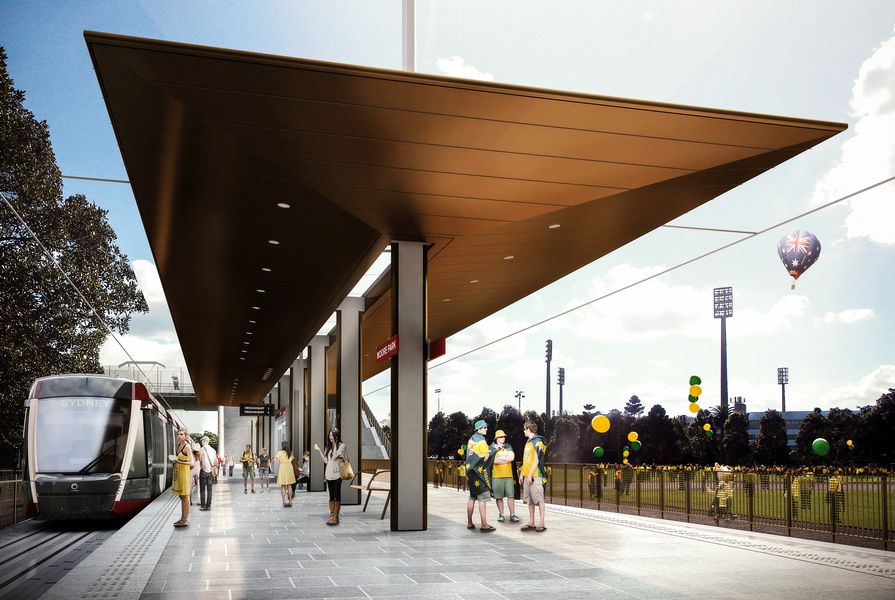
Grimshaw designs light rail stations for Sydney's CBD and south ...
Sydney Light Rail uses the same fare structure as Sydney Buses (though their fares are calculated independently), which differs from other transport modes such as Sydney Trains or Sydney Ferries. Light rail stations are equipped with Opal top-up machines. In addition to recharging cards, these machines sell Opal Single Trip Tickets. These single-trip tickets are more expensive than standard Opal fares, are valid for light rail travel only, and must be used on the day of purchase.
Sydney Bus & Light Rail Fare Table
Fare Category | 0–3 km | 3–8 km | 8 km + |
Adult Opal / Contactless (Peak) | $3.20 | $3.93 | $5.05 |
Adult Opal / Contactless (Off-Peak) | $2.24 | $2.75 | $3.53 |
Concession Opal (Peak) | $1.60 | $1.96 | $2.52 |
Concession Opal (Off-Peak) | $1.12 | $1.37 | $1.76 |
Senior / Pensioner Opal | $2.50 | $2.50 | $2.50 |
Adult Single Trip Ticket | $4.00 | $4.70 | $6.10 |
Child / Youth Single Trip Ticket | $2.00 | $2.30 | $3.00 |
Only for reference, please check the latest information on official website.
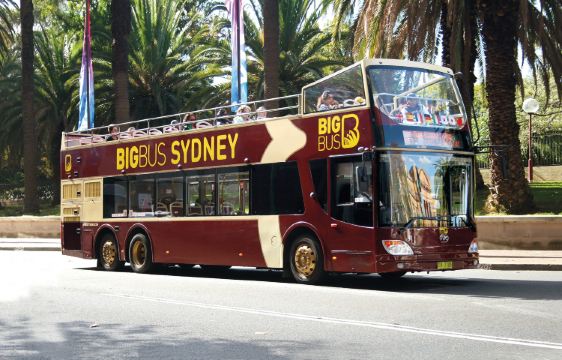
BigBus Sydney and Bondi Beach Double-Decker Sightseeing Bus 24/48-Hour Pass
5/5
1 reviewsIf you go to Sydney, you must recommend the big bus You can see all the tourist attractions at once, and you can hear the explanation of the tourist attractions in Korean, so everything is a perfect bus.
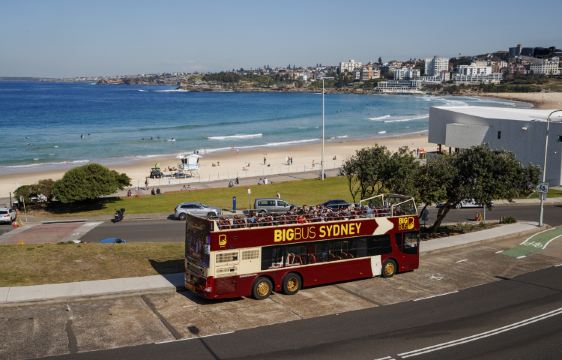
BIG BUS Sydney hop-on hop-off sightseeing bus
4.8/5
7 reviewsI was so, so satisfied that I would want to use it in other countries in the future. I highly recommend it. There is no reason to hesitate.
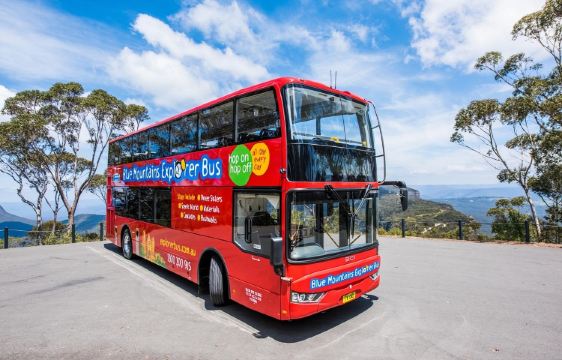
Sydney Blue Mountains National Park 1-hour sightseeing bus tour (Boomerang Pass)
4/5
1 reviewsA fantastic experience.
Sydney Light Rail Card: Opal Card
The Opal Card is the smartcard ticketing system for public transport in New South Wales (NSW), Australia. Similar to Taiwan’s EasyCard or Japan’s Suica, it is an essential item for anyone traveling in Sydney. It can be used across the entire public transport network, including trains, buses, light rail, and ferries.
- The Opal network covers Sydney, the Blue Mountains, Central Coast, the Hunter, and the Illawarra regions.
- There are four types of Opal cards: Adult, Child/Youth, Senior/Pensioner, and Concession.
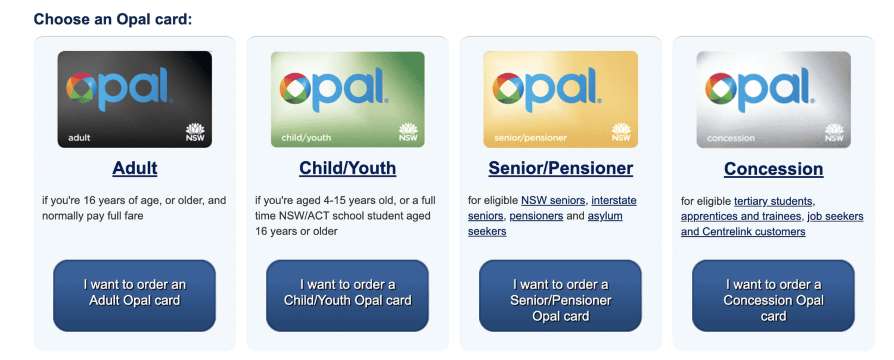
Where to Buy an Opal Card
- Opal Retailers: Most newsagencies, post offices, convenience stores, and supermarkets sell Adult and Child/Youth Opal cards. Look for the Opal sign displayed at the shop entrance or near the counter. You can use the Opal Travel app or visit the official website at transportnsw.info/opal-retailers to find an Opal retailer near you.
- Online Ordering: You can also order an Opal card online, and it will be mailed to you free of charge. Shipping to an address within Australia typically takes 5 to 7 working days.
- Special Concession Cards: Please note that Concession cards and Gold Senior/Pensioner cards are not available from retail stores. These must be ordered online, and you will be required to provide proof of eligibility to receive the discounted fares.
See all attractions
 14093 booked

What are Sydney Light Rail Operating Hours?
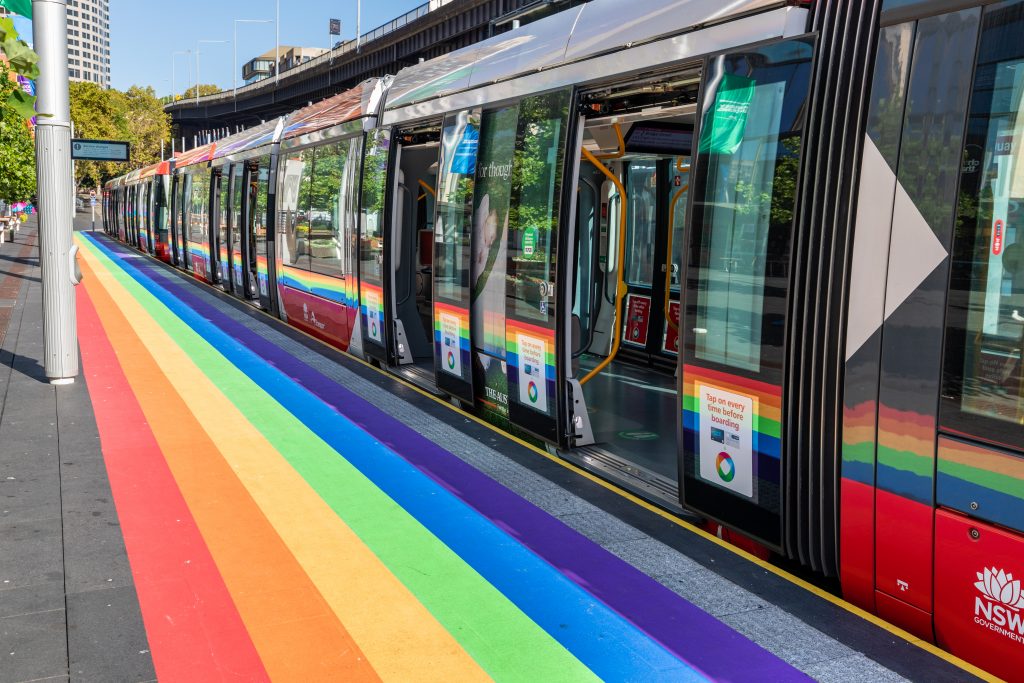
Sydney ferries and light rail unite to make public transit shine
Sydney Light Rail services (L1, L2, and L3 lines) generally operate 7 days a week from 5 AM to 1 AM. Services run regularly throughout the day and into the night to support the city's evening economy, with increased frequency (every 15 minutes) during late-night hours between 11 PM and 1 AM.
Key Service Details:
- Operating Hours: 5:00 AM – 1:00 AM, Monday to Sunday.
- Lines: Includes L1 Inner West (Dulwich Hill), L2 Randwick, and L3 Kingsford lines.
- Frequency: Generally high frequency, with roughly every 15 minutes during early morning (5 AM-6 AM) and late-night (11 PM-1 AM) periods.
- Key Locations: Covers CBD, Central Station (Chalmers St), Chinatown, Surry Hills, Moore Park, Randwick, and Kingsford.
- Updates: Service times may be affected by special events or maintenance; check apps like Trip Planner for live data.
Sydney Hotel Recommendation
Sydney Hotels
5 star
Very Good107 Reviews
Sydney|0.25km from downtown
The hotel is old and the equipment is average. The location is very good, just by the pier. It is very convenient to eat nearby. The restaurant on the first floor of the hotel is also OK. We didn't go out to eat one day in heavy rain. We tried it and felt it was not bad. Parking is charged. There is also a Japanese restaurant nearby. It is good to try.FromAU$ 178
Great105 Reviews
Sydney|0.15km from downtown
Facilities: Very good
Hygienic: clean and tidy
Environment: Too satisfied 👍, the bed is very comfortable, watching the sea, so beautiful!
Service: Very good, the handsome guy at the front desk forgot to ask the name, very thoughtful and careful! I originally booked for two nights, and stayed for 3 nights decisively. The hotel is very close to the violin 🎻 square, more than 10 minutes along the seaside boardwalk.FromAU$ 190
104 Reviews
Sydney|0.64km from downtown
The staff were super nice and helpful, but the bed wasn't comfortable.FromAU$ 136
46 Reviews
Sydney|0.13km from downtown
The location is close to the cruise terminal, one kilometer away from the ship station at the lobster market port, and the supermarket and department store banks are very close. The service attitude is as warm and thoughtful as the family.FromAU$ 158
121 Reviews
Sydney|1.77km from downtown
Great stay, thanks to the team there, we really enjoyed the our stay over there.
Keep the great work up.
Thanks
AymanFromAU$ 172
Business travel
104 Reviews
Sydney|1.93km from downtown
The room is on the first floor, it feels a bit depressing, but the service of the hotel is very good. It's okay for girls to be accompanied by male friends, but if there are two girls, you should be more cautious, it doesn't feel very practicalVery Good104 Reviews
Sydney|1.41km from downtown
Facilities: Parking is convenient and free
Service: The service is very good, the deposit is much faster than other hotels
Environment: Sydney town, good location, behind the hotel is a port, no time to stay more, come back next time ~~FromAU$ 190
Great111 Reviews
Sydney|1.66km from downtown
Location: In fact, in a palm-sized place like Sydney, location is not very important. Is the museum next to Mick Mac Aboriginal a plus?
Cleanliness: 100 points
Service: 99 points, generally good, but one point is deducted when breakfast only has eggs as a source of protein. I asked the service staff, there is no meat, ham, meat, none at all.
Facilities: It looks clean, but the swimming pool is too crowded and the gym is a bit small.
Probably the best hotel in Sydney. Overall it exceeded my expectations.FromAU$ 177
Very Good31 Reviews
Sydney|1.97km from downtown
Centrally located to the Regional hospital, Sydney River shopping center and to the waterfront.Few minutes to Cabot Trail, you can stay for a night and head down to Cabot Trail.20 minutes to Ski Ben Eion.In the summer time , it is closer to Mira beach, Kennington Cove and Dominion beach.You can bring your pet.About pets:Pets allowed: less than 999 lbs per pet (limit 3 pets total).About checkOut:Check out before 11:00 AM.About children:Children allowed: ages 0-17.About checkIn:Check in after 5:00 PM.About smoking:Smoking is not permitted.About events:No events allowed.0 Reviews
Sydney|3.33km from downtown
Welcome to our sweet homeAbout the space:This 3-bedroom, 1-bathroom house is a cozy spot for families or small groups. Each bedroom has a comfortable bed with clean, fresh bedding. The living room is a great place to relax after cooking, and the kitchen has all the basics — stove, fridge, microwave, pots, pans, and dishwashing so you can cook instead of dining out. 5 Minutes dry to downtown.Newly renovated, spacious and bright.The whole house and backyard. There is a long driveway so it fit two or three cars to park. Laundry room in the basementThe better way is contact by phoneThe laundry room is located in the basement.Rental license number: STR2627D4045Family friendly
Great105 Reviews
Sydney|0.15km from downtown
Facilities: Very good
Hygienic: clean and tidy
Environment: Too satisfied 👍, the bed is very comfortable, watching the sea, so beautiful!
Service: Very good, the handsome guy at the front desk forgot to ask the name, very thoughtful and careful! I originally booked for two nights, and stayed for 3 nights decisively. The hotel is very close to the violin 🎻 square, more than 10 minutes along the seaside boardwalk.FromAU$ 190
104 Reviews
Sydney|1.93km from downtown
The room is on the first floor, it feels a bit depressing, but the service of the hotel is very good. It's okay for girls to be accompanied by male friends, but if there are two girls, you should be more cautious, it doesn't feel very practicalVery Good107 Reviews
Sydney|0.25km from downtown
The hotel is old and the equipment is average. The location is very good, just by the pier. It is very convenient to eat nearby. The restaurant on the first floor of the hotel is also OK. We didn't go out to eat one day in heavy rain. We tried it and felt it was not bad. Parking is charged. There is also a Japanese restaurant nearby. It is good to try.FromAU$ 178
121 Reviews
Sydney|1.77km from downtown
Great stay, thanks to the team there, we really enjoyed the our stay over there.
Keep the great work up.
Thanks
AymanFromAU$ 172
Very Good104 Reviews
Sydney|1.41km from downtown
Facilities: Parking is convenient and free
Service: The service is very good, the deposit is much faster than other hotels
Environment: Sydney town, good location, behind the hotel is a port, no time to stay more, come back next time ~~FromAU$ 190
Hot spring
104 Reviews
Sydney|1.93km from downtown
The room is on the first floor, it feels a bit depressing, but the service of the hotel is very good. It's okay for girls to be accompanied by male friends, but if there are two girls, you should be more cautious, it doesn't feel very practicalVery Good107 Reviews
Sydney|0.25km from downtown
The hotel is old and the equipment is average. The location is very good, just by the pier. It is very convenient to eat nearby. The restaurant on the first floor of the hotel is also OK. We didn't go out to eat one day in heavy rain. We tried it and felt it was not bad. Parking is charged. There is also a Japanese restaurant nearby. It is good to try.FromAU$ 178
121 Reviews
Sydney|1.77km from downtown
Great stay, thanks to the team there, we really enjoyed the our stay over there.
Keep the great work up.
Thanks
AymanFromAU$ 172
Great105 Reviews
Sydney|0.15km from downtown
Facilities: Very good
Hygienic: clean and tidy
Environment: Too satisfied 👍, the bed is very comfortable, watching the sea, so beautiful!
Service: Very good, the handsome guy at the front desk forgot to ask the name, very thoughtful and careful! I originally booked for two nights, and stayed for 3 nights decisively. The hotel is very close to the violin 🎻 square, more than 10 minutes along the seaside boardwalk.FromAU$ 190
Very Good104 Reviews
Sydney|1.41km from downtown
Facilities: Parking is convenient and free
Service: The service is very good, the deposit is much faster than other hotels
Environment: Sydney town, good location, behind the hotel is a port, no time to stay more, come back next time ~~FromAU$ 190
Gym
Very Good107 Reviews
Sydney|0.25km from downtown
The hotel is old and the equipment is average. The location is very good, just by the pier. It is very convenient to eat nearby. The restaurant on the first floor of the hotel is also OK. We didn't go out to eat one day in heavy rain. We tried it and felt it was not bad. Parking is charged. There is also a Japanese restaurant nearby. It is good to try.FromAU$ 178
121 Reviews
Sydney|1.77km from downtown
Great stay, thanks to the team there, we really enjoyed the our stay over there.
Keep the great work up.
Thanks
AymanFromAU$ 172
Great105 Reviews
Sydney|0.15km from downtown
Facilities: Very good
Hygienic: clean and tidy
Environment: Too satisfied 👍, the bed is very comfortable, watching the sea, so beautiful!
Service: Very good, the handsome guy at the front desk forgot to ask the name, very thoughtful and careful! I originally booked for two nights, and stayed for 3 nights decisively. The hotel is very close to the violin 🎻 square, more than 10 minutes along the seaside boardwalk.FromAU$ 190
Great111 Reviews
Sydney|1.66km from downtown
Location: In fact, in a palm-sized place like Sydney, location is not very important. Is the museum next to Mick Mac Aboriginal a plus?
Cleanliness: 100 points
Service: 99 points, generally good, but one point is deducted when breakfast only has eggs as a source of protein. I asked the service staff, there is no meat, ham, meat, none at all.
Facilities: It looks clean, but the swimming pool is too crowded and the gym is a bit small.
Probably the best hotel in Sydney. Overall it exceeded my expectations.FromAU$ 177
104 Reviews
Sydney|1.93km from downtown
The room is on the first floor, it feels a bit depressing, but the service of the hotel is very good. It's okay for girls to be accompanied by male friends, but if there are two girls, you should be more cautious, it doesn't feel very practicalSwimming pool
Great105 Reviews
Sydney|0.15km from downtown
Facilities: Very good
Hygienic: clean and tidy
Environment: Too satisfied 👍, the bed is very comfortable, watching the sea, so beautiful!
Service: Very good, the handsome guy at the front desk forgot to ask the name, very thoughtful and careful! I originally booked for two nights, and stayed for 3 nights decisively. The hotel is very close to the violin 🎻 square, more than 10 minutes along the seaside boardwalk.FromAU$ 190
104 Reviews
Sydney|1.93km from downtown
The room is on the first floor, it feels a bit depressing, but the service of the hotel is very good. It's okay for girls to be accompanied by male friends, but if there are two girls, you should be more cautious, it doesn't feel very practicalVery Good107 Reviews
Sydney|0.25km from downtown
The hotel is old and the equipment is average. The location is very good, just by the pier. It is very convenient to eat nearby. The restaurant on the first floor of the hotel is also OK. We didn't go out to eat one day in heavy rain. We tried it and felt it was not bad. Parking is charged. There is also a Japanese restaurant nearby. It is good to try.FromAU$ 178
121 Reviews
Sydney|1.77km from downtown
Great stay, thanks to the team there, we really enjoyed the our stay over there.
Keep the great work up.
Thanks
AymanFromAU$ 172
Very Good104 Reviews
Sydney|1.41km from downtown
Facilities: Parking is convenient and free
Service: The service is very good, the deposit is much faster than other hotels
Environment: Sydney town, good location, behind the hotel is a port, no time to stay more, come back next time ~~FromAU$ 190
Breakfast
104 Reviews
Sydney|1.93km from downtown
The room is on the first floor, it feels a bit depressing, but the service of the hotel is very good. It's okay for girls to be accompanied by male friends, but if there are two girls, you should be more cautious, it doesn't feel very practicalVery Good107 Reviews
Sydney|0.25km from downtown
The hotel is old and the equipment is average. The location is very good, just by the pier. It is very convenient to eat nearby. The restaurant on the first floor of the hotel is also OK. We didn't go out to eat one day in heavy rain. We tried it and felt it was not bad. Parking is charged. There is also a Japanese restaurant nearby. It is good to try.FromAU$ 178
121 Reviews
Sydney|1.77km from downtown
Great stay, thanks to the team there, we really enjoyed the our stay over there.
Keep the great work up.
Thanks
AymanFromAU$ 172
Great105 Reviews
Sydney|0.15km from downtown
Facilities: Very good
Hygienic: clean and tidy
Environment: Too satisfied 👍, the bed is very comfortable, watching the sea, so beautiful!
Service: Very good, the handsome guy at the front desk forgot to ask the name, very thoughtful and careful! I originally booked for two nights, and stayed for 3 nights decisively. The hotel is very close to the violin 🎻 square, more than 10 minutes along the seaside boardwalk.FromAU$ 190
Very Good104 Reviews
Sydney|1.41km from downtown
Facilities: Parking is convenient and free
Service: The service is very good, the deposit is much faster than other hotels
Environment: Sydney town, good location, behind the hotel is a port, no time to stay more, come back next time ~~FromAU$ 190
FAQs about Sydney Light Rail
-
How do I pay for light rail in Sydney?
-
Where do you catch the light rail at Central Station?
-
Is Sydney light rail still running?
-
Can I use a credit card instead of an Opal?
Disclaimer: This article has been provided by an individual contributor or third party platform. If there is any discrepancy regarding the copyright, please contact us directly and we will delete the content immediately.
Trending Searches
-
Popular Attractions
-
Top Flight Routes
-
Popular Hotels
-
eSIM/SIM card
- Forbidden City Tickets
- Universal Studios Japan
- Shanghai Disneyland Fast Pass
- Hutong Beijing
- Tokyo Disneyland Ticket
- Zhangjiajie National Forest Park
- Shanghai Disneyland Ticket
- Taronga Zoo Sydney minisite
- Canton Tower
- Puffing Billy Tickets
- Shanghai Tower
- Summer Palace Beijing
- Universal Beijing Resort
- Yu Garden
- Canggu Bali
- Jersey to Sydney Flights
- Phnom Penh to Sydney Flights
- Siem Reap to Sydney Flights
- Xining to Sydney Flights
- Broken Hill to Sydney Flights
- Lae to Sydney Flights
- Guam to Sydney Flights
- Seville to Sydney Flights
- Najaf to Sydney Flights
- Astana to Sydney Flights
- Kayseri to Sydney Flights
- Sunshine Coast to Sydney Flights
- Tel Aviv to Sydney Flights
- Krabi Town to Sydney Flights
- Esperance to Sydney Flights
- Central Studio Hotel Sydney
- Rydges Darling Square Apartment Hotel
- Metro Hotel Marlow Sydney Central
- The Star Grand Hotel and Residences Sydney
- YHA Sydney Central
- Wake up! Sydney Central
- Space Q Capsule Hotel
- Crown Towers Sydney
- The Capsule Hotel
- Adge Hotel & Residence
- Big Hostel
- Park Regis City Centre
- Veriu Central
- Meriton Suites World Tower
- Ibis Sydney World Square
- Orange Stay Sydney CBD
- Meriton Suites Kent Street
- Meriton Suites Sussex Street
- APX Darling Harbour
- Amora Hotel Jamison Sydney