Soft Sleeper vs Hard Sleeper in China Trains: 2026 Guide

Planning an overnight train trip in China? This comprehensive comparison guide breaks down the key differences between berth layouts, privacy, pricing, and comfort—so you can pick the perfect sleeper option for your journey.
Hard Sleeper vs Soft Sleeper on China Trains: Which Should You Book?
For foreign travelers taking overnight trains in China, upgrading to a Soft Sleeper is generally worth the extra cost. While both options cover the same routes, they differ significantly in privacy, comfort, and layout.
Choose a Soft Sleeper if you are:
- A first-time visitor seeking a hassle-free, comfortable experience.
- A light sleeper who needs a quieter cabin with a closing door.
- Traveling with family or young children and prefer extra space.
- Carrying valuable gear or luggage that requires extra security.
- Taking a long overnight journey where getting quality rest is essential.
Choose a Hard Sleeper if you are:
- A budget traveler or backpacker looking to cut accommodation costs.
- An adventurous traveler eager to experience authentic, local culture.
- A frequent rail user already familiar with open-plan bunk layouts.
Hard Sleeper vs Soft Sleeper on China Trains: Key Differences at a Glance
Sleeper berths on Chinese trains are found mainly on T (Tekuai), K (Kuaisu), and Z (Zhida) trains, which are slower overnight services rather than high speed rail. A small number of overnight D trains also offer soft sleeper berths. Sleeper classes are:
- Hard sleeper (硬卧). Open compartment with six berths in three tiers (upper, middle, lower). No door. Standard for budget overnight travel.
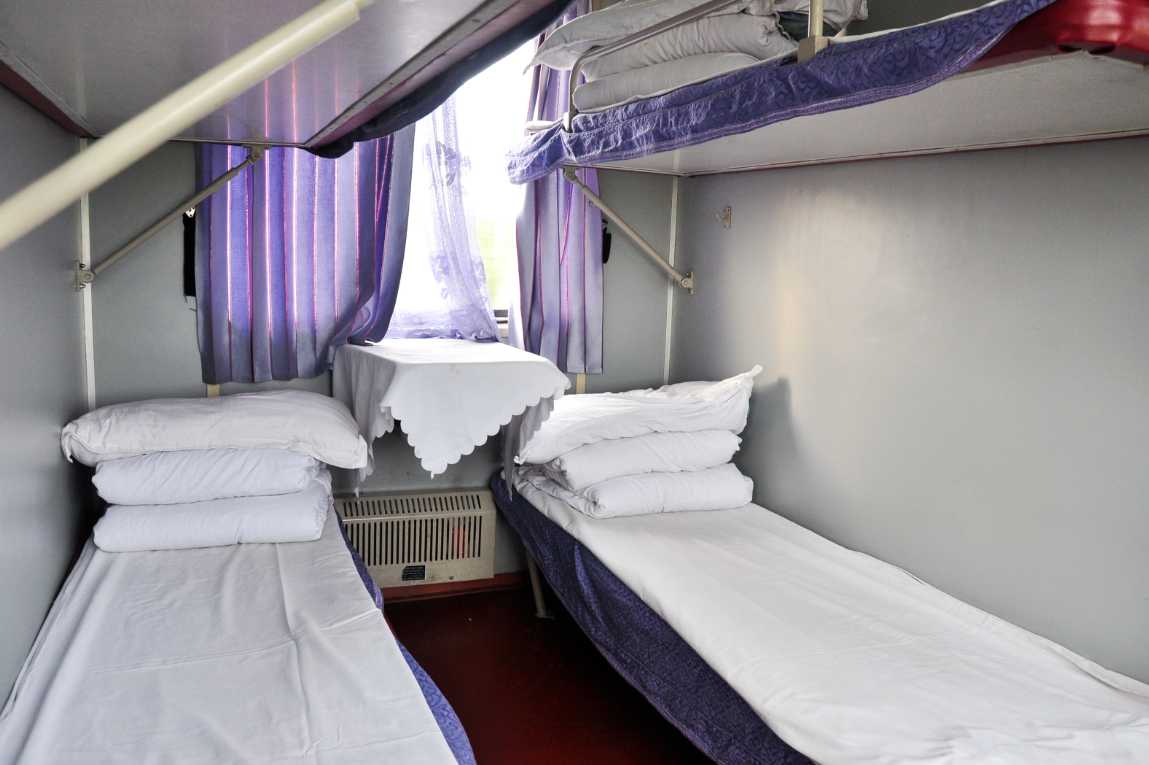
source: China Train Booking
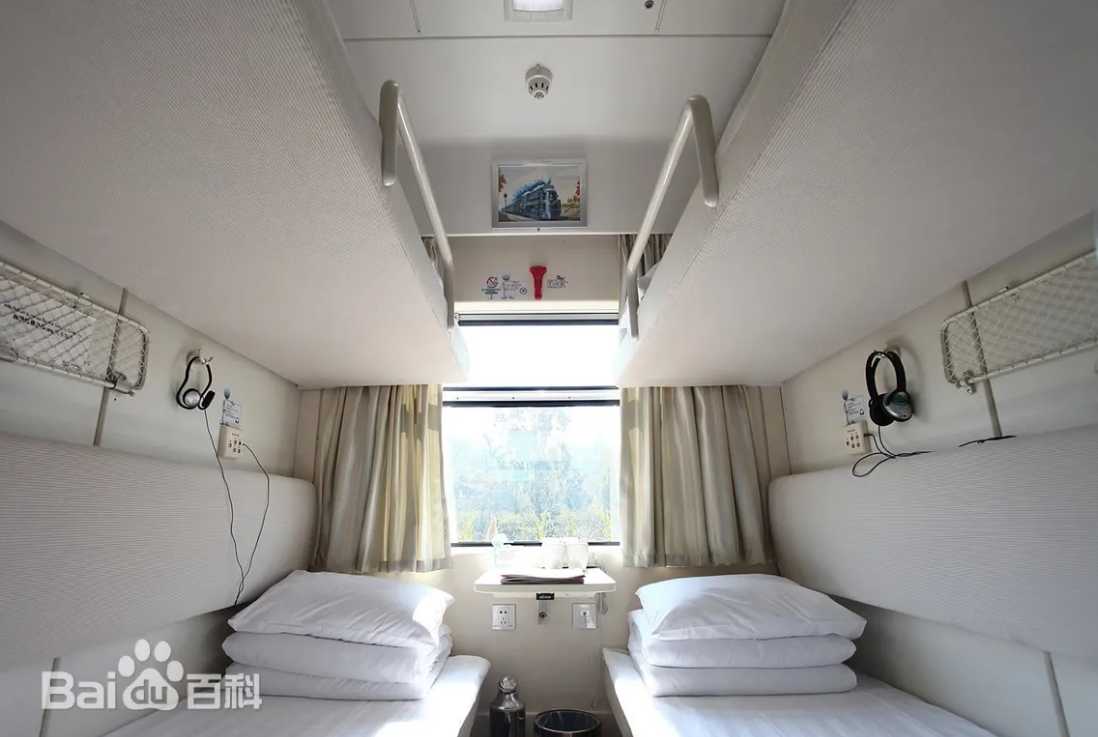
- Soft sleeper (软卧). Enclosed compartment with four berths in two tiers (upper, lower). Sliding door that locks from inside.
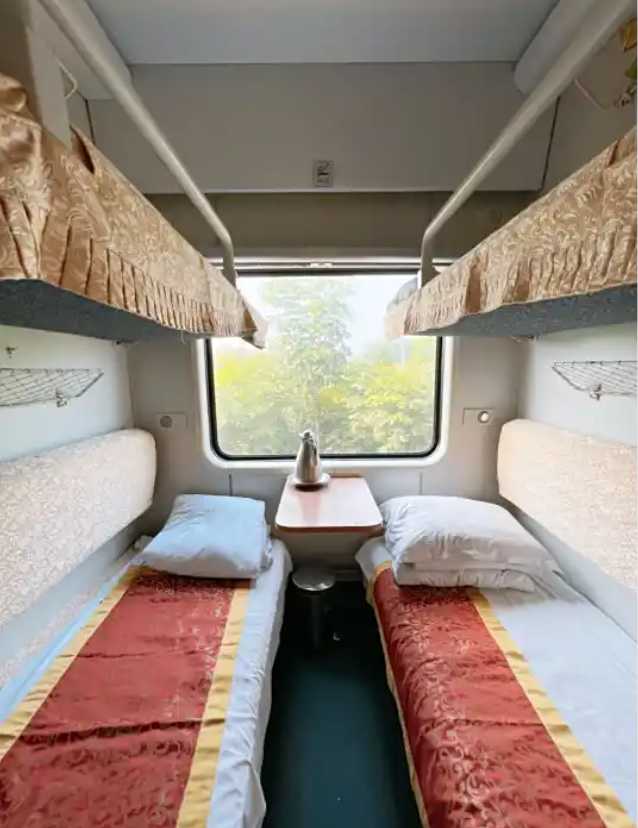
source: Baidu
- Deluxe soft sleeper (高级软卧). Two berth private compartment with attached or shared washroom. Available on a small number of premium routes including Beijing to Shanghai and the Tibet train.
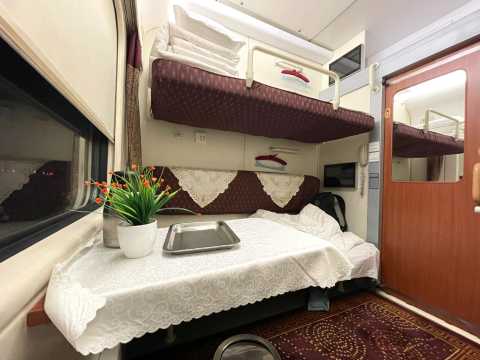
source: Baidu
Despite the name, hard sleeper berths are not actually hard. Both classes include a mattress, pillow, sheet, and blanket. The terms refer to the historic standard of the carriages rather than the current bedding quality.
Quick comparison:
Hard Sleeper | Soft Sleeper | |
|---|---|---|
Berths per compartment | 6 (open) | 4 (enclosed) |
Tiers | Upper, middle, lower | Upper, lower |
Door | No | Yes, lockable |
Berth width | About 60 cm | About 70 cm |
Berth length | About 180 cm | About 190 cm |
Bedding | Included | Included, better quality |
Power outlets | 1 to 2 per compartment, shared | 1 to 2 per compartment, shared |
Price (vs hard sleeper) | 1x | 1.5 to 1.8x |
Hard Sleeper and Soft Sleeper Berths: Layout, Privacy, and Onboard Comfort
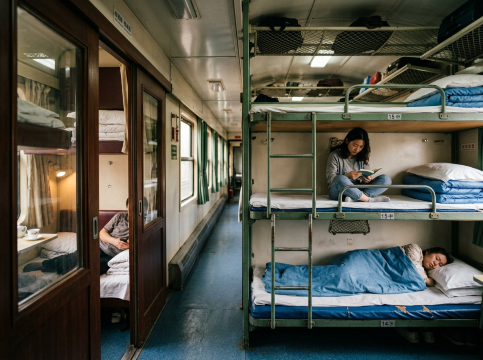
Feature | Hard Sleeper (硬卧) | Soft Sleeper (软卧) |
Cabin Layout | Open-plan carriage with 6-berth compartments (~11 compartments per car) | Private 4-berth cabins with lockable sliding doors |
Berth Setup | 3 tiers: Upper, Middle, Lower | 2 tiers: Upper, Lower |
Daytime Seating | Fold-down seats along the open corridor | In-cabin seats only; doors can remain closed |
Privacy Level | Low; open to the main aisle and passing passengers | High; fully enclosed private compartment |
Berth Comfort | Standard padding; Middle/Upper bunks have limited headroom | Extra width, thicker mattresses, and upgraded bedding |
Night Environment | Central lights dim ~22:00 and turn on ~06:00; higher noise levels | Quieter and peaceful with individual cabin lighting controls |
Price Point | Budget-friendly (Lowest cost) | 50%–80% higher than Hard Sleeper |
Best Suited For | Backpackers, solo budget travelers, and social experiences | Families, light sleepers, and comfort-focused tourists |
Key On-Board Practical Tips
- Mixed-Gender Cabins: Both sleeper classes use non-gender-segregated compartments. Solo female travelers should keep this in mind. To secure an exclusive cabin, families or groups can book all 4 berths in a Soft Sleeper compartment together.
- Luggage Space: Oversized luggage fits underneath the bottom berths or on the overhead racks above the aisle entrance.
- Power & Charging: Outlets are limited (often 1–2 per compartment or along the corridor). Bringing a multi-port USB charger and a long charging cord is strongly advised.
- Toilets & Facilities: Older K and T trains feature mostly squat toilets, while newer Z and overnight D trains offer Western-style options. Cleanliness tends to decline toward the end of long journeys.
- Food & Drinks: Complimentary hot water dispensers (ideal for instant noodles or tea) are located at the end of every carriage. A dining car is available, alongside regular cart services selling boxed meals, drinks, and snacks.
[10% OFF] China Hotel Recommendations
Book 10% Off on Hotels for your next trip!
Search Top 10 China Hotels
See All Hotels
 NO.1
NO.1


China Sleeper Train Price Comparison: Hard Sleeper vs Soft Sleeper
Source: Baidu
Route | Average Duration | Hard Sleeper | Soft Sleeper | Price Multiplier |
Beijing to Shanghai (Z Train) | ~12 hrs | AU$69 – AU$78 | AU$105 – AU$110 | ~1.4x |
Beijing to Xi'an (Z Train) | ~11 hrs | AU$55 – AU$58 | AU$86 – AU$93 | ~1.6x |
Shanghai to Chengdu (Z Train) | ~30 hrs | AU$95 – AU$109 | AU$150 – AU$170 | ~1.6x |
Beijing to Lhasa (Z21 Train) | ~40 hrs | AU$151 – AU$160 | AU$240 – AU$249 | ~1.6x |
Guangzhou to Chongqing (Z Train) | ~24 hrs | AU$82 – AU$86 | AU$130 – AU$137 | ~1.6x |
Understanding Berth Pricing Structure
Ticket prices vary slightly depending on your bunk position within the same cabin category.
- Lower berths command the highest price due to easy access and sitting comfort.
- Middle berths (hard sleeper only) are mid-priced.
- Upper berths offer the lowest fares.
The price gap between berth levels on the same train is minor, typically ranging between AU$4 and AU$11.
Is Soft Sleeper Better than Hard Sleeper on Chinese Overnight Trains?
Why Soft Sleeper Offers Great Value
Upgrading from a Hard Sleeper to a Soft Sleeper usually incurs a 1.5x to 1.8x multiplier. Compared to High-Speed Rail—where upgrading from Second Class to Business Class costs 2.5x to 3.5x more—the Soft Sleeper upgrade represents exceptional value. For routes exceeding 10 hours, the modest price jump delivers a vastly superior sleep environment.
Is the Soft Sleeper Upgrade Worth It?
A simple framework to guide your decision based on route length and travel style:
Decision by Journey Length
- Under 10 Hours: Either option works well. A Hard Sleeper is completely adequate, and the absolute dollar savings between classes are minor.
- 10 to 24 Hours: Soft Sleeper is noticeably superior. Light sleepers, families with kids, and travelers who prioritize personal space will appreciate the upgraded comfort.
- Over 24 Hours (Multi-Day Journeys): Soft Sleeper is strongly recommended. On epic routes like Shanghai to Chengdu, Beijing to Lhasa, or Guangzhou to Kunming, having a lockable door, wider mattress, and quieter cabin significantly improves your sleep and overall travel energy.
Choose a Soft Sleeper if you are:
- A light sleeper sensitive to hallway noise and foot traffic.
- A solo traveler carrying high-value gear (the lockable door provides peace of mind).
- Traveling as a family or small group (booking all 4 bunks secures an exclusive private cabin).
- Planning to work, read, or relax quietly during daytime hours.
- On a multi-night journey across mainland China.
Choose a Hard Sleeper if you are:
- A budget-focused traveler or backpacker stretching your AUD funds.
- Keen to experience authentic local life and socialize with fellow passengers.
- Taking a shorter overnight ride under 10 hours.
- An easy sleeper who can rest comfortably anywhere.
The Bottom Line: Upgrading to a Soft Sleeper is one of the highest-value comfort upgrades on China's rail network. On most overnight routes, the price difference equals the cost of a casual pub dinner in Australia, yet it makes a world of difference to your rest quality.
Get Your eSIM Instantly – Stay Connected in China
See all attractions





Common Mistakes Foreign Travellers Make When Booking Sleeper Trains
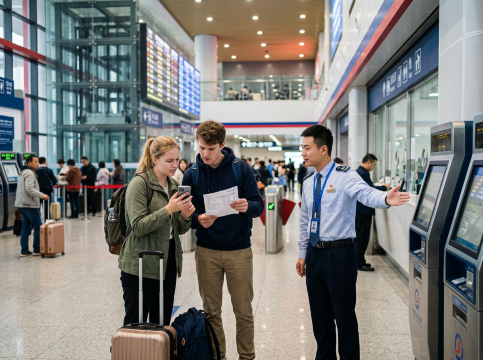
Booking an overnight train in China for the first time? Avoid these frequent missteps to ensure a smooth, comfortable journey:
- Assuming Compartments Are Gender-Segregated: Sleeper compartments in China are strictly mixed-gender across both Soft and Hard Sleeper classes. If you are a solo traveler seeking privacy, upgrading to a Soft Sleeper or booking a full 4-berth cabin with travel companions is recommended.
- Choosing the Wrong Berth Tier:
- Hard Sleeper Upper Berths have extremely restricted headroom, making it nearly impossible for taller passengers to sit upright.
- Hard Sleeper Lower Berths offer easy access but double as shared daytime seating for cabin mates, leading to heavy foot traffic.
- Hard Sleeper Middle Berths often provide the ideal balance of privacy, headspace, and accessibility.
- Packing Essentials in Checked Luggage: Sleeper trips typically last anywhere from 12 to over 30 hours. Always keep snacks, bottled water, medications, chargers, and entertainment in your hand-carry bag so you don't have to retrieve stowed suitcases mid-transit.
- Passport Name Mismatches: Your train reservation details must match your physical passport 100% exactly (including middle names added to the given name field). Station staff will deny entry for name discrepancies, and corrections cannot be made at the boarding gate.
- Confusing Train Speed Types: Sleeper berths operate primarily on slower conventional trains (denoted by Z, T, or K prefixes) rather than High-Speed Rail (G or D trains). A journey that takes 4 hours on a bullet train could take 12 hours on a Z train. The main advantage is trading travel time for a free night’s accommodation.
How to Book Hard Sleeper and Soft Sleeper Tickets as a Foreign Traveller
Planning an overnight train journey in China? Follow these practical steps to ensure a seamless booking and boarding experience:
- Book on an English-Friendly Platform: Use a service like Trip.com that accepts major international credit cards and provides complete trip details—including train numbers, travel durations, berth choices, and cancellation policies—entirely in English.
- Secure High-Demand Routes Early: Popular sleeper itineraries (such as Beijing to Lhasa, Shanghai to Lhasa, or overnight Z-series trains between Beijing and Shanghai) sell out fast during peak seasons. Tickets go on sale 15 days prior to departure, so plan ahead.
- Select Your Berth Mindfully:
- Lower berths cost slightly more but offer maximum accessibility and convenience.
- Upper berths are budget-friendly but feature restricted headroom.
- For Soft Sleeper cabins, paying the minor premium for a lower bunk is generally well worth it.
- Format Your Passport Name Accurately: Enter your name exactly as it appears on your passport. Place any middle names directly into the Given Name field to avoid registration errors.
- Carry Your Physical Passport for Boarding: Your physical passport acts as your electronic ticket. While most major railway stations feature automated gates that scan foreign passports, staffed manual channels are always open if the scanner encounters an issue.
- Review Change & Cancellation Policies: China Railways (12306) sets all official refund and modification rules. Be sure to review these terms on Trip.com before confirming your payment.
Choosing Between Hard Sleeper and Soft Sleeper on Your China Train Journey
For short overnight trips and budget travel, hard sleeper offers good value and a more social atmosphere. For long journeys, light sleepers, families, and travellers carrying valuables, soft sleeper provides a meaningful upgrade in privacy, space, and rest quality. On most routes the additional cost is modest, which makes soft sleeper one of the better value upgrades on the Chinese rail network.
FAQs about Hard Sleeper vs Soft Sleeper
-
What is the difference between hard sleeper and soft sleeper on China trains?
-
Is hard sleeper safe on Chinese trains?
-
Are sleeper compartments gender separated on Chinese trains?
-
Is bedding included in hard sleeper and soft sleeper?
-
What is the best way for foreigners to book hard sleeper and soft sleeper tickets?
Disclaimer: This article has been provided by an individual contributor or third party platform. If there is any discrepancy regarding the copyright, please contact us directly and we will delete the content immediately.
Trending Searches
-
Trending Searches
-
Most Viewed Hotels
-
Cheap Flights to Popular Countries
- China Train Booking
- China Train Tickets Change Refund Cancellation
- China High Speed Rail
- China Sleeper Train
- China Train Luggage
- China Train Classes
- China Train Facilities
- China High Speed Rail Map
- Chengdu Train Station
- What to do If China Trains are Sold Out
- China Train Seat
- China Train Soft Sleeper vs Hard Sleeper
- Hong Kong West Kowloon Station
- Xian Train Station
- Hangzhou Train Station
- 12306
- Shanghai Maglev
- Chongqing Train Station
- Zhangjiajie West Railway Station
- China Train Transfer
- Shanghai Hotels
- Bali Hotels
- Guangzhou Hotels
- Bangkok Hotels
- Beijing Hotels
- Tokyo Hotels
- Chongqing Hotels
- Hong Kong Hotels
- Melbourne Hotels
- Chengdu Hotels
- Shenzhen Hotels
- Ho Chi Minh City Hotels
- Singapore Hotels
- Zhangjiajie Hotels
- Kuala Lumpur Hotels
- Osaka Hotels
- Sydney Hotels
- Seoul Hotels
- Phuket Hotels
- Xi'an Hotels