China Train Transfer Guide: Types, Times & Passport Tips


This guide breaks down everything you need to know about navigating train transfers: identifying your connection type, estimating minimum layover times, handling security checks, and navigating requirements for foreign passport holders. Plus, you’ll learn exactly what steps to take if your initial train is delayed or if you miss your connecting train.
How Much Time Do You Need Between Trains in China?
Connection Type | Overview & Process | Recommended Buffer Time |
Seat Switch Onboard (车内换座) | Remain on the same train; move to a new assigned seat when the train number changes mid-route. | 0 mins (No extra time needed) |
Direct In-Station Transfer | Follow "Transfer" (换乘) overhead signs straight to the waiting lounge—no station exit or secondary security required. | 30–45 mins (30 mins min / 45 mins ideal) |
Standard Station Re-entry | Exit ticket gates, head to the main entrance, and pass through standard security screening again. | 60+ mins |
Cross-City Station Transfer | Exit the arrival station, travel across the city via local transit (metro/taxi), and complete security at the new terminal. | 2–3 hours minimum |
Note: These are general estimations from our editorial team, not official times given by China Railway.
🎁 Browse Cheap Flights to China | Check out the Most Popular Hotels in China | Stay connected with a fast China eSIM
Check Your Ticket for Exact Station Names
When booking train connections in China, always double-check the precise station names rather than relying solely on the city. Major metropolitan hubs operate multiple railway terminals that are often miles apart and cannot be used interchangeably.
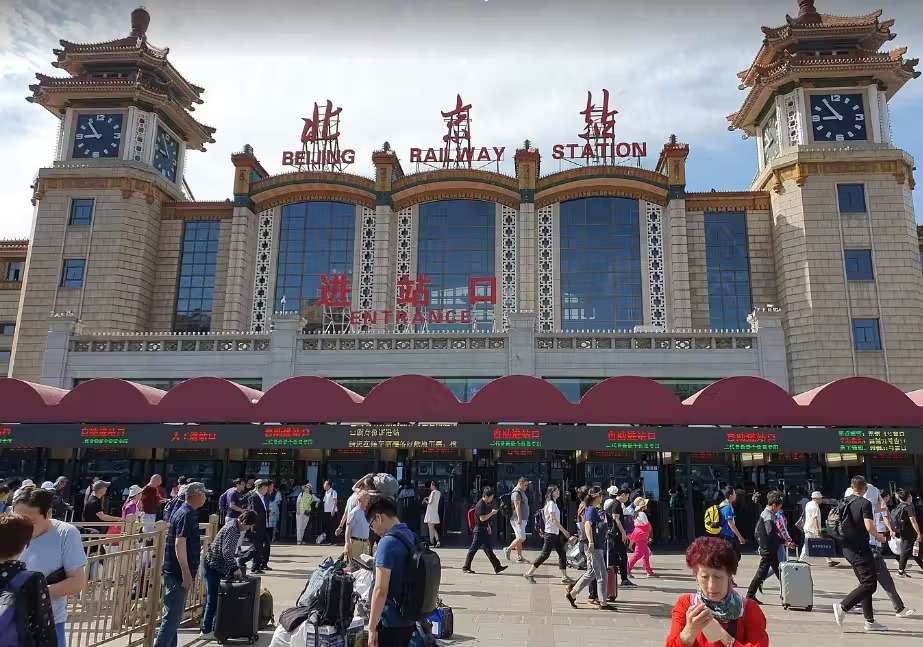
For instance, Beijing features several key hubs—including Beijing South, Beijing West, Beijing Railway Station, Beijing Chaoyang, and Beijing Fengtai. Similarly, Shanghai Station and Shanghai Hongqiao are two completely separate facilities. Chengdu is served by four primary terminals: Chengdu East handles the majority of high-speed rail, Chengdu Station sits downtown, while Chengdu South and Chengdu West manage specific regional lines.
A same-city connection might appear doable at first glance with what looks like a reasonable layover window, but transferring between different terminals often takes much longer than expected, leaving you at risk of missing your train.
What Kind of Transfer Do You Have?
Understanding the three main types of train transfers in China is essential for planning a smooth connection:
- In-Train Seat Switch: The simplest type of connection requires no station navigation at all. This occurs when a single physical train changes its route number mid-journey. Though booked as two separate tickets, you remain on board the entire time and simply move to your newly assigned seat.
- Same-Station Connection: This involves arriving at and departing from the exact same railway station. After stepping off your first train, follow the overhead "Transfer" (换乘) signs, present your passport and ticket for verification, and enter the main departure hall. Depending on the station design, you may use a direct internal transfer corridor or be required to exit the platform and clear security once again.
- Cross-City Station Transfer: This connection requires traveling between two different railway stations within the same metropolitan area. You will exit your arrival station and commute to your departure station using local transportation, such as the subway, city bus, or a taxi.
✅Claim 5% Off your China eSIM and stay connected and up-to-date on your trains while in China!
China eSIMs
See all attractions
 1976081 booked



Can Transfer Without Leaving the Station?
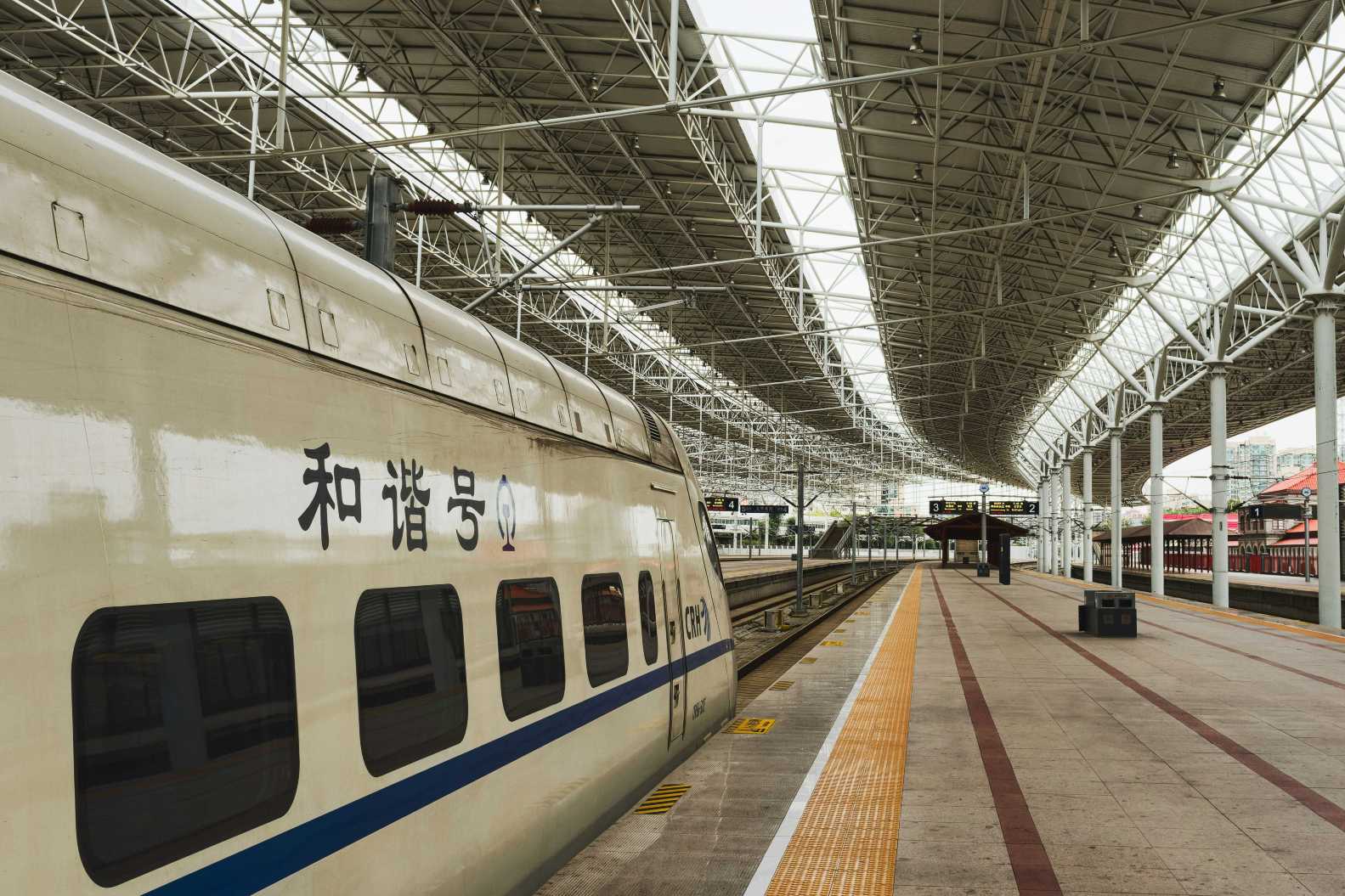
While direct transfers are widely available, not every station offers them. Approximately 120 of China's major high-speed rail hubs feature dedicated transfer corridors. These fast-track channels allow you to move directly from your arrival platform into the main departure lounge—saving time by bypassing standard station exits and secondary security checkpoints.
As you step off the train, keep an eye out for these key signs:
- Transfer
- 换乘 (Huànchéng)
- 便捷换乘 (Biànjié Huànchéng – Easy/Convenient Transfer)
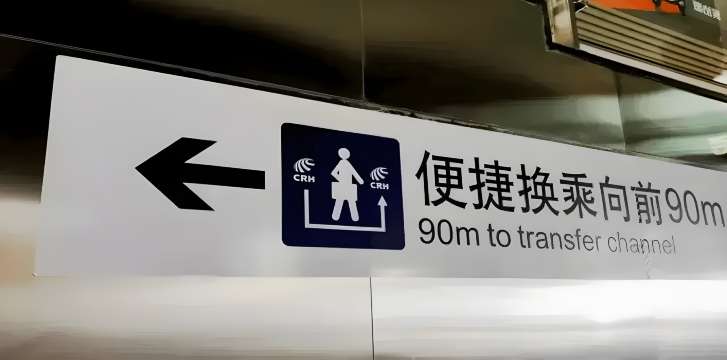
✨ Got your train transfer sorted? Now it's time to start planning what to see in your next destination with The best Things to do in China!
The Best Things to do in China

Badaling Great Wall
4.7/5
12077 reviewsEasy to get to, very beautiful, plenty of food around at reasonable prices

Summer Palace
4.7/5
7352 reviewsWell, I wouldn't say it's anything special; other parks in Beijing are more interesting.



Jiuzhaigou National Park
4.8/5
20670 reviewsJiuzhaigou is truly a magical place. With early autumn vibes and the magnificent view of the crystal clear lakes it difficult to get over this experiences.There are so many stops that make it difficult for you to spend it on just one day..but make sure you stop by the most worthy one for sure (although its hard to decide)

The Bund
4.8/5
5935 reviewsBến Thượng Hải rất đẹp vào buổi đêm. Và bạn có thể đi bộ một đoạn rất dài dọc theo bờ sông để ngắm cảnh. Đặc biệt nếu có điều kiện cũng có thể thử trải nghiệm đi thuyền trên sông Hoàng Phố.
How Much Time Should You Allow for a Same-Station Transfer?
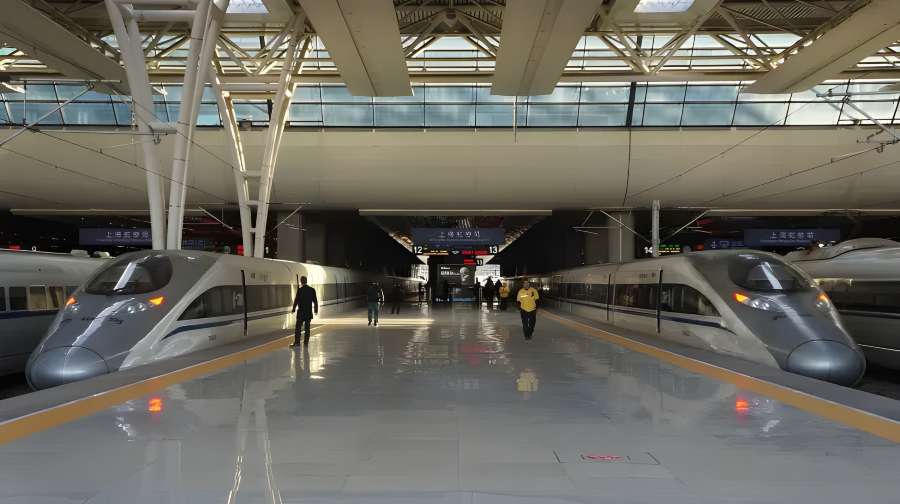
When making a same-station train transfer in China, the absolute minimum time you should allow is 30 minutes, though 45 to 60 minutes is significantly safer and far less stressful.
Because Chinese high-speed railway stations are massive multi-story transportation hubs, your layover time depends heavily on whether the station supports direct fast-track transfers (便捷换乘) or requires you to exit and re-screen through security.
Transfer Scenario | Minimum Buffer | Recommended Buffer | Why? |
Convenient Transfer Corridor (便捷换乘) | 30 Minutes | 45 Minutes | Straight from platform to departure hall via internal stairs/escalators; no security re-check. |
Standard Exit & Re-entry | 60 Minutes | 75–90 Minutes | Must exit platform to main public hall, re-queue for ticket/passport verification, and clear security. |
Peak Travel / Foreign Passport | 60 Minutes | 90 Minutes | Manual ID verification lanes and holiday crowds (Spring Festival, Golden Week) add significant delay. |
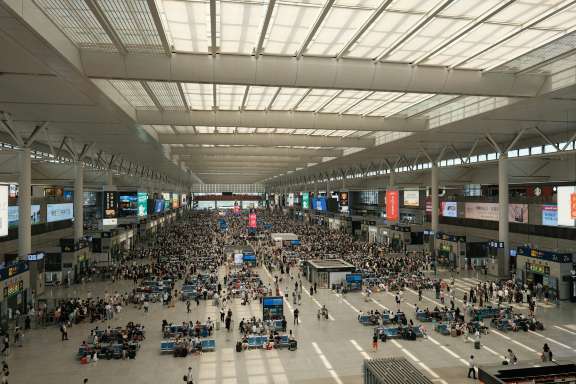
Image sourced from Unsplash.
Cheap Flights in China
Flights from Shanghai
Flights from Beijing
Flights from Guangzhou
See all flights


How Much Time Do You Need Between Different Railway Stations?
When changing trains between two different stations in the same city, you should allow at least 2 to 3 hours, depending on the distance between terminals.
A cross-station transfer involves far more than just transit time. To calculate a realistic transfer window, you must account for:
- Exiting your arrival terminal
- Locating and boarding local transit (subway, taxi, or ride-share)
- In-transit delays, local traffic, and walking between connections
- Navigating the entry gates and security screening at your second station
- Manual passport and document verification
- Arriving at your boarding gate before ticket checks close
Navigating major Chinese metropolitan hubs can consume time rapidly. Factors like metro line transfers, long taxi queues, peak rush-hour traffic, and the sheer scale of modern mega-stations can quickly eat into your layover window.
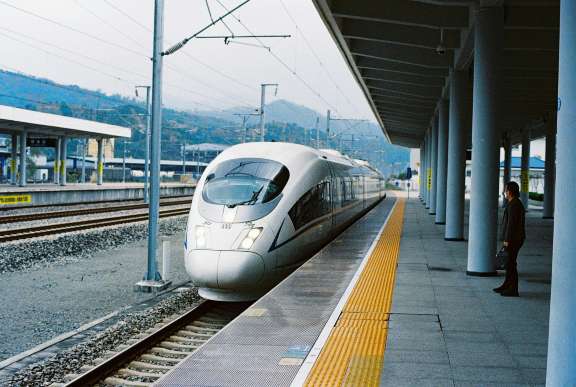
Image sourced from Unsplash.
Do You Need to Go Through Security Again?
- Direct In-Station Transfer: NO. Stations equipped with fast-track transfer corridors allow you to skip standard security lines completely.
- Standard Same-Station Connection: YES. If you are required to exit the platform gates into the public hall, you must go back through security to re-enter.
- Cross-City Station Transfer: YES. Changing stations across town always requires passing through standard security at your departure terminal.
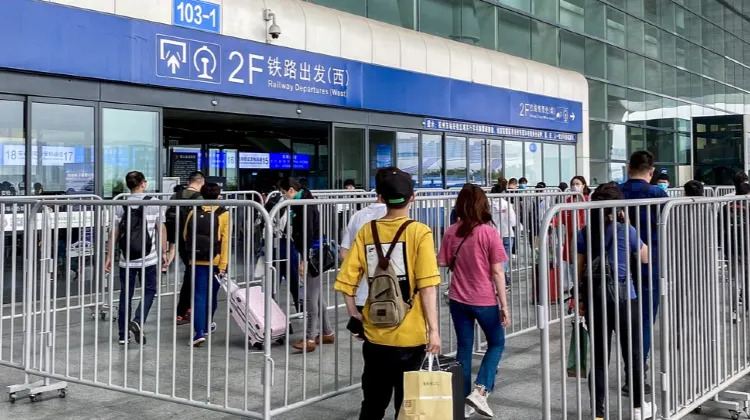
What Changes If You're Traveling With a Foreign Passport?
Foreign passport holders can book and travel on China's railway network just as easily as locals. However, gate procedures differ slightly: automated ID turnstiles often struggle to read international passports. When this happens, simply look for a staff-assisted manual check lane.
📋 Checklist for Foreign Passport Holders Making a Transfer:
- Keep Your Passport Accessible: Store your physical passport in an easily reachable pocket or pouch—never deep inside checked or heavy luggage.
- Match Your Booking Details: Ensure the passport number on your train ticket exactly matches the document in your hand; even minor discrepancies can delay gate boarding.
- Head Straight to Manual Lanes: If an automated gate fails to scan your passport, move directly to a staff-operated lane rather than repeatedly retrying the machine.
- Don't Panic at Crowds: Seeing local passengers breeze through facial-recognition or automated ID gates in adjacent lines is completely normal—you are still in the right place.

Do You Need to Collect or Recheck Luggage?
On Chinese trains, there’s no checking-in of your luggage; you take it with you on the train, and are expected to carry it off with you.
That’s why it’s important to give yourself some extra time for a transfer if you’re traveling with several pieces of luggage, or a particularly heavy suitcase.
Common Transfer Mistakes
Common Transfer Mistake | Why It Harms Your Journey | The Safer Alternative |
Mixing Up Similar Station Names | Leaves you stranded across town (e.g., arriving at Beijing South when your next train departs from Beijing West). | Double-check the exact, full station name on both ticket confirmations every time. |
Assuming In-Station Transfers Exist Everywhere | Forces an unexpected exit and full security re-screening without enough time. | Verify whether an internal transfer corridor exists—if not, budget extra layover time. |
Following "Exit" (出站) Signs Instead of "Transfer" | Triggers an unnecessary exit and forces you through main security lines again. | Look specifically for Transfer or 换乘 (Huànchéng) platform overhead signs upon arrival. |
Booking a 10–15 Minute Connection | Gives almost zero room for error; even locals struggle to make tight layovers this short. | Allow 30 minutes minimum, though 45 minutes is far safer and less stressful. |
Burying Your Passport Deep in Luggage | Creates delays and frustration at manual ticket inspection checkpoints. | Keep your physical passport in a easily accessible coat pocket, cross-body bag, or neck pouch. |
Expecting All Automated Turnstiles to Read Passports | Waste time trying gates that only accept domestic Chinese National IDs. | Head straight for the staff-assisted manual verification lane if an automated gate stutters. |
Estimating Cross-City Transit Time on Metro Duration Alone | Ignores walking distances inside mega-stations, queue times, security checks, and traffic jams. | Add 45 to 60 extra minutes on top of any raw subway or taxi navigation estimate. |
Assuming Unconnected Bookings Are Delay-Protected | A delay on your first train will not automatically qualify you for a free transfer on the second. | Build a generous layover buffer between separate bookings or book directly through official channels like 12306. |
The Best Hotels in China
The Best Hotels in China
Top Shanghai Hotels
Top Beijing Hotels
Top Guangzhou Hotels
See All Hotels




















FAQs About China Train Transfers
-
Is 20 minutes enough to change trains in China?
-
Is 30 minutes enough for a China high-speed train transfer?
-
Do I have to exit the station when changing trains in China?
-
How much time should I allow between different railway stations?
Disclaimer: This article has been provided by an individual contributor or third party platform. If there is any discrepancy regarding the copyright, please contact us directly and we will delete the content immediately.
Trending Searches
-
Trending Searches
-
Most Viewed Hotels
-
Cheap Flights to Popular Countries
- China Train Booking
- China Train Soft Sleeper vs Hard Sleeper
- Hong Kong West Kowloon Station
- Shanghai Maglev
- China High Speed Rail
- Shenzhen North Railway Station
- China Train Luggage
- China High Speed Rail Map
- Nanjing Train Station
- China Train Transfer
- 12306
- Xian Train Station
- China Train Classes
- China Train Facilities
- Shanghai Hongqiao Railway Station
- China Train Seat
- China Sleeper Train
- Chengdu Train Station
- What to do If China Trains are Sold Out
- China Train Types
- Shanghai Hotels
- Bali Hotels
- Guangzhou Hotels
- Bangkok Hotels
- Beijing Hotels
- Tokyo Hotels
- Chongqing Hotels
- Hong Kong Hotels
- Melbourne Hotels
- Chengdu Hotels
- Ho Chi Minh City Hotels
- Shenzhen Hotels
- Singapore Hotels
- Zhangjiajie Hotels
- Kuala Lumpur Hotels
- Osaka Hotels
- Sydney Hotels
- Seoul Hotels
- Phuket Hotels
- Xi'an Hotels