China Train Facilities Guide: Wi-Fi, Power Outlets, & Toilets

If you’ve got a train journey in China coming up, you might be wondering what kind of facilities they have on board. The good news is that China’s trains are modern, comfortable, and designed with a sense of service in mind. This guide walks through the facilities on Chinese trains: power sockets and charging, Wi-Fi, toilets, air conditioning, and what to expect on an overnight sleeper.
What's Onboard a China Train
China train facilities depend on which train you board, so it helps to get your bearings on the train types first. When booking, look at the letter in front of your train number, which tells you what kind of train you’re on if you don’t already know.
- G, D and C trains are the modern high-speed services in China (the ones most visitors ride), and they're the best equipped: air conditioning, power at every row, western toilets, and Wi-Fi on many of them.
- Z, T, and K trains are the older and slower long-distance services. These are where you’ll find the classic sleeper cabins for overnight journeys.
Finally, keep an eye out for a few more terms that hint at what to expect on board. You'll see "EMU" and "Fuxing" mentioned a lot. EMU just means the high-speed train sets, and Fuxing is the newest generation of them, the ones with the best onboard kit.
Here's how the facilities compare across the two families of train:
Facility | High-speed (G/D/C trains) | Regular & overnight (Z/T/K trains) |
Power sockets | Yes, every row (shared in 1st/2nd class, private in business) | Limited, usually only at carriage ends on older stock |
USB ports | On newer Fuxing sets | Rare |
Wi-Fi | On many Fuxing and some Hexie trains | Generally none |
Toilets | Western and squat, plus accessible on many | Western and squat, mostly squat on older K trains |
Air conditioning | Yes | Yes on most, older stock varies |
Hot water | Every carriage | Every carriage |
Sleeper berths | Overnight D trains only | Hard and soft sleeper on Z/T/K |
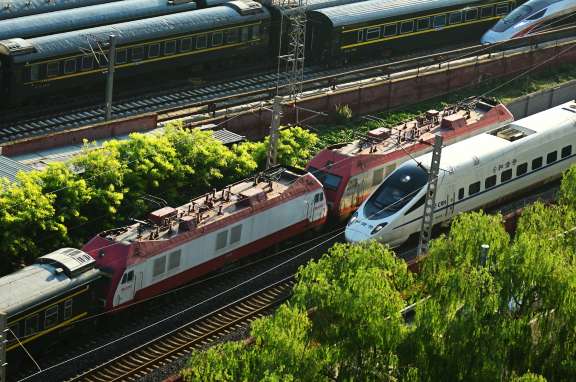
Image from Unsplash.
🎁 Search the Cheapest Flights to China | Browse the Best Chinese Hotels | Book Discounted China Trains | Get a fast China eSIM
Do China’s High-Speed Trains have Power Outlets?
Yes, China's high-speed trains have power outlets; on the G, D and C trains you'll find them at every row. Usually, in first and second class, there’s one or two sockets shared between seats, tacked under the back of the seat in front of you, so sometimes you might be sharing with your neighbour.
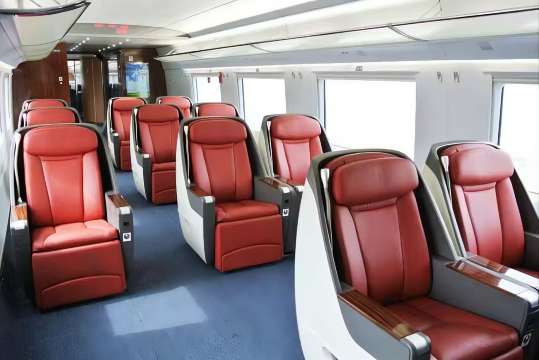
Business class travelers will have their own socket, and if you’re on a new Fuxing train class, there are USB ports as well, so a cable alone is enough.
It’s important to note that sockets run at 220V, the same range at home in Australia, so your devices will charge perfectly fine at the voltage.
On the older Z, T, and K trains, don't count on having an outlet at your seat. Often, the power points are only at the ends of the carriage, where a small crowd tends to gather around them. I always travel with a power bank as a backup, in case there are no available power points to use; I’d recommend you do the same to.
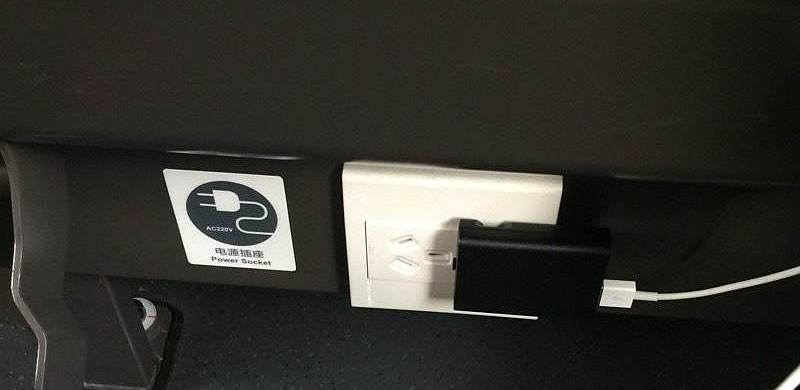
Image from China Airline Travel.
Booking Your China Train Ticket
Do Chinese Trains Have Wi-Fi?
Free Wi-Fi is usually only available on the newer Fuxing high-speed trains; it’s not standard on the older high-speed trains, so don’t count on it, and on regular long-distance trains, you generally won’t have it at all.
There is a catch, though. To login into the Wi-Fi, it asks for a Chinese mobile number to receive a verification code. So your best bet for staying connected during your train trip in China is to have an eSIM installed and ready to go.
📱 eSIMs in China
See all attractions
 2018184 booked

Toilets on China Trains
China trains have both western-style and squat toilets, sitting at the ends of each carriage. On high-speed G and D trains you'll usually find both types, and many sets also have a larger accessible toilet. The older K trains lean more heavily on squat toilets, which is good to know if you’re considering a longer journey on one of those trains.
The toilets are compact but stocked: toilet paper, a mirror, a washbasin, and a bin, with a baby changing table on many high-speed sets. A lot operate like in planes, with a green light outside indicating it’s available, and a red light indicating it’s occupied. If there aren’t any lights, look for the characters “有人”(somebody), and “无人”(nobody).
Toilets are locked when the train is pulling into or leaving a station, so don't leave it to the last minute as you approach your stop.
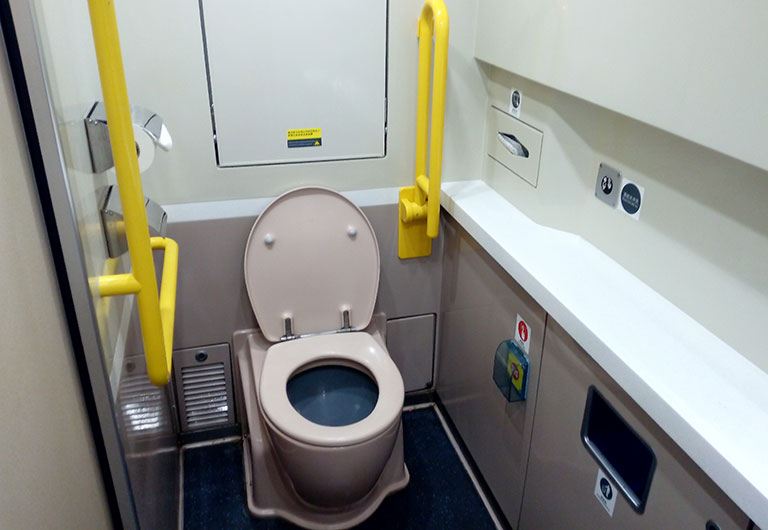
Image from China Discovery.
Onboard Comfort on Chinese Trains
Again, when it comes to comfort, expect a lot more from the newer high-speed trains. Air conditioning is standard across most high-speed and long-distance services, so the carriages stay climate-controlled year round. The temperature is set automatically, and attendants can’t change it, so it’s a good idea to have a light layer ready to go in case you run cold.
Seats have fold-down tray tables on the seatback, much like a plane, and there are also reading lights.
High-speed trains take things up another level with LCD screens throughout the carriage. If you’re in Business Class, congratulations, you’ll have your own personal screen built into the armrest.
Cheap Flights to China
Flights from Sydney
Flights from Melbourne
Flights from Brisbane
See all flights


Overnight and Sleeper Train Facilities
China's sleeper trains are where you can save the cost of accommodation for a night, perfect for a long-distance journey across the country. When booking a sleeper, there are two different types you can choose from.
- Hard sleepers: Six berths in an open bay with no door, and three on each side stacked on top of each other.
- Soft sleepers: Four berths in a closed compartment with a lockable sliding door, wider beds, and nicer bedding.
Don't let the name "hard sleeper" put you off, though; both options come will give you a mattress, pillow, sheet, and a quilt. It’s just the name used for the old carriages.
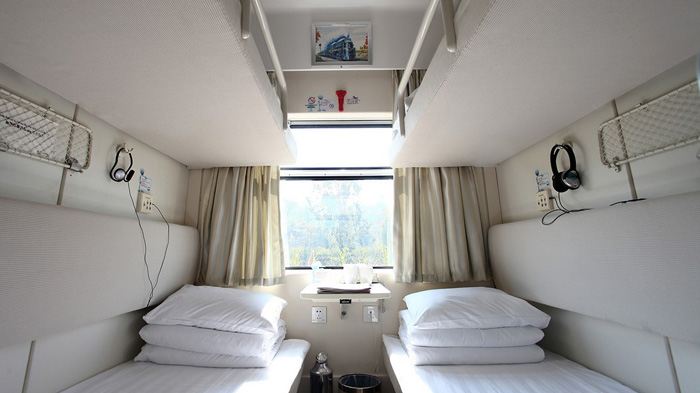
Soft sleeper carriage on a Chinese Train. Image sourced from Tibet Visa.
Here's what you’re working with for a night on a Chinese sleeper train:
- Hot water is available at the end of each carriage, so you can make a cup of tea or some instant noodles whenever you like.
- For washing, on both hard and soft sleepers, it’s basin-only. Toiletries aren’t provided, and showers are only on the rarer premium cabins.
- Toilets sit at the carriage ends, mostly squat on the older T and K trains, with some western toilets on Z and overnight D services.
- Luggage goes under the lower berth and on a rack above the corridor entrance.
What about overnight high-speed trains? Then you’re looking at the D-category services, which have the same setup for sleeping under different names. Second class is the hard sleeper setup, and first class is the soft sleeper. Even the entry-level second-class sleeper has a USB port at each berth and cleaner fixtures throughout, and the first-class and deluxe versions add reading lights, more privacy, and extra sockets on top.
One more tier worth a mention: the deluxe cabins, both the deluxe soft sleeper on some newer ordinary trains and the high-speed deluxe sleeper, are the only ones with a private toilet and, on some, a shower. They're rare and run mostly on a handful of long routes, so most travellers won't cross paths with one.
The Best Things To Do In China
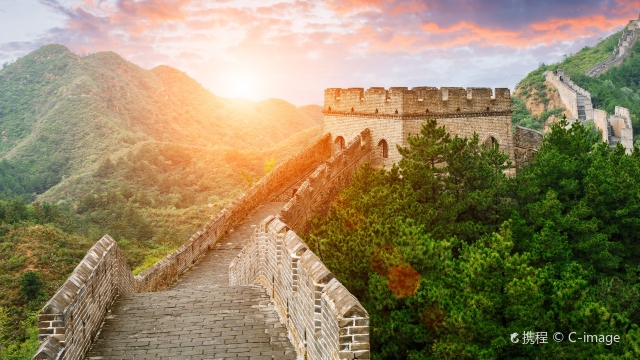
Badaling Great Wall
4.7/5
12032 reviewsVery beautiful, but too crowded in my personal taste. We chose this part of the wall bcz we had limited time. Overall it was amazing to see, if I'll have opportunity to come back to China I'll choose other less crowded parts of the wall.


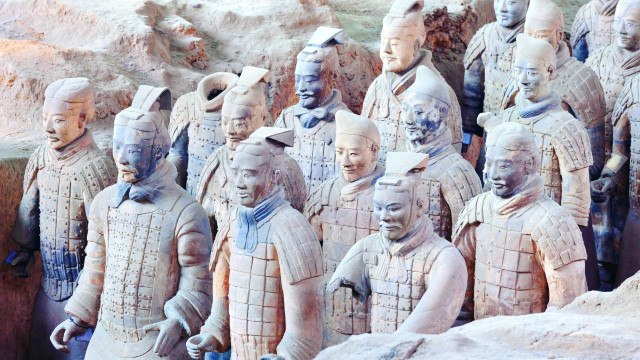
Emperor Qinshihuang's Mausoleum Site Museum
4.7/5
29903 reviewsAmazing piece od history! Worth the visit, even if you are not interested in history generally.



The Palace Museum
4.9/5
47493 reviewsWe definitely think this is a must-see place in Beijing. It's best to arrive early in the morning, as there are fewer people. Book tickets in advance. The site is enormous, and it's definitely worth the money. The views and the scale of the buildings are breathtaking, and this type of experience sparks a deep interest in Chinese history. Overall, we're thrilled 😍😍😍
Accessibility on China Trains
China's high-speed trains are set up for wheelchair users, with facilities that have improved a lot across the network. Newer G and D trains carry designated wheelchair spaces and a larger accessible toilet fitted with handrails, an automatic door, and an SOS call button. There are also belts to secure a wheelchair at the carriage ends.
The stations help too. High-speed stations are newly built with ramps, lifts, and mostly level boarding onto the train, disabled passengers get priority boarding, and staff can assist. Folding wheelchairs travel free. Smaller and older stations are less consistent, so it's worth confirming your specific stations before you go.
Book ahead and let staff know your needs, and the high-speed network is one of the easier ways to move around China.
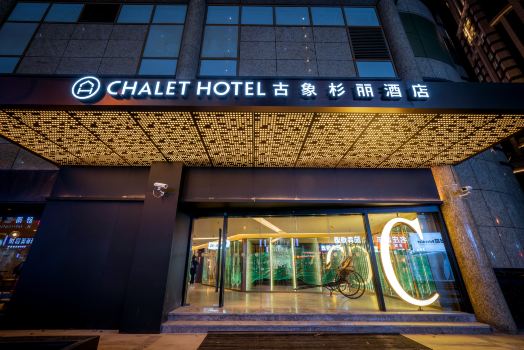
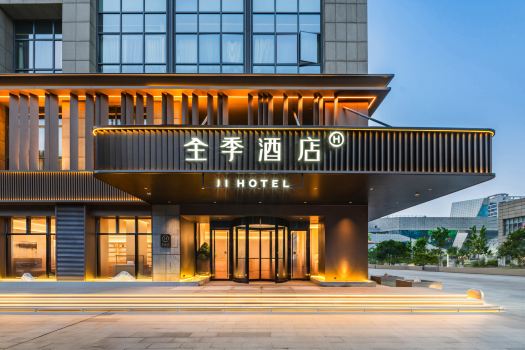
The Best Hotels in China
The Best Hotels in China
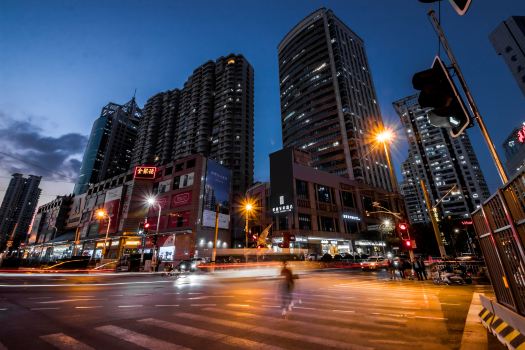
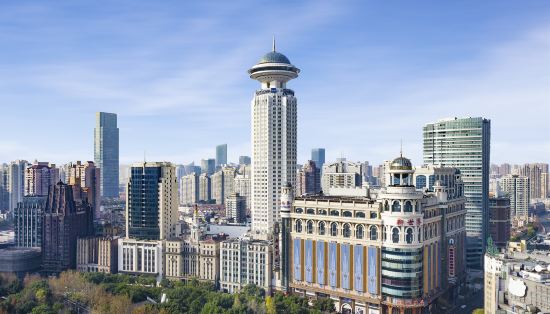
Top Shanghai Hotels
Top Beijing Hotels
Top Guangzhou Hotels
See All Hotels

FAQs About China Train Facilities
-
Do China trains have Wi-Fi?
-
Are there power outlets on China trains?
-
Do China trains have squat or western toilets?
-
Do overnight sleeper trains provide bedding?
Disclaimer: This article has been provided by an individual contributor or third party platform. If there is any discrepancy regarding the copyright, please contact us directly and we will delete the content immediately.
Trending Searches
-
Trending Searches
-
Most Viewed Hotels
-
Cheap Flights to Popular Countries
- China Train Booking
- China Train Soft Sleeper vs Hard Sleeper
- China Train Tickets Change Refund Cancellation
- Xian Train Station
- China High Speed Rail
- China Train Classes
- China High Speed Rail Map
- Chongqing Train Station
- Zhangjiajie West Railway Station
- What to do If China Trains are Sold Out
- China Train Seat
- China Train Schedule
- Hangzhou Train Station
- Shenzhen North Railway Station
- Shanghai Hongqiao Railway Station
- 12306
- Shanghai Maglev
- China Train Luggage
- China Train Transfer
- China Train Facilities
- Shanghai Hotels
- Bali Hotels
- Guangzhou Hotels
- Bangkok Hotels
- Beijing Hotels
- Tokyo Hotels
- Chongqing Hotels
- Hong Kong Hotels
- Melbourne Hotels
- Chengdu Hotels
- Shenzhen Hotels
- Ho Chi Minh City Hotels
- Singapore Hotels
- Zhangjiajie Hotels
- Kuala Lumpur Hotels
- Osaka Hotels
- Sydney Hotels
- Seoul Hotels
- Phuket Hotels
- Xi'an Hotels